
Tackling barbed wire without the right hand protection is a gamble that almost always ends with torn skin, embedded rust fragments, and an afternoon of digging out tiny fibers. The layered steel barbs on this specific fencing material aren’t just sharp — they’re designed to catch and tear, which means a standard leather work glove or a thin gardening glove simply fails the moment you apply tension. You need a glove that is engineered to stop a puncture from a needle-point object, resist tearing from lateral force, and still give you the dexterity to tie knots or pull staples without stripping the glove off your hand.
I’m Mohammad Maruf — the founder and writer behind Drink4Good. My research process for this category focuses on translating third-party lab certifications (ANSI cut, puncture, and abrasion levels) into real-world performance predictions, and I analyze hundreds of customer testimonials to identify which gloves actually survive repeated contact with aggressive wire.
Below, I’ve broken down the mechanics of what makes a glove genuinely barbed-wire-ready, from the palm material’s resistance to lateral tearing to the cuff’s ability to keep debris out. This guide covers the top-rated options on the market today, and by the end you will know exactly which pair of gloves for barbed wire fits the specific type of work you are doing.
How To Choose The Best Gloves For Barbed Wire
Choosing the right glove for barbed wire isn’t about picking the thickest leather you can find. It’s about matching the glove’s engineered resistance to the specific type of hazard — barbed wire presents a combined threat of puncture from the point, cut from the wire edge, and abrasion from the wire’s surface. Understanding a few key metrics will save you from buying a glove that looks tough but fails on the first strand.
Prioritize ANSI Puncture and Cut Ratings
Barbed wire demands an ANSI puncture rating of at least Level 3. Level 3 means the material withstood a force of 25 to 30 Newtons from a standard test needle. At Level 5, that jumps to 40 to 50 Newtons. For cut resistance, look for A5 or higher on the ANSI scale, which tests how many cycles a sharp blade takes to cut through the material. Leather thickness alone is not a reliable predictor — a thin glove with a proprietary composite weave can stop a needle point that would sail right through 1.5mm of cowhide.
Match the Cuff Style to Your Work Depth
If you are reaching deep into a tangle of wire to untie a knot, a gauntlet-style cuff that extends past your wrist and forearm is critical. It keeps barbs from hooking into the gap between your glove and sleeve. For general fence repair or stretching wire, a shorter cuff with a secure hook-and-loop or Velcro closure is enough — the closure prevents the glove from slipping off when you pull against a barb. A loose cuff is dangerous because a barb can catch and pull the glove partially off, exposing your hand.
Balance Dexterity with Protection Density
Barbed wire work involves threading wire, tying knots, and pulling staples. A glove that is too stiff or thick will force you to remove it for every fiddly task, which defeats the purpose. The best gloves for barbed wire use a targeted armor approach — dense puncture protection on the palm and fingers, with a more flexible back-of-hand material. Pre-curved fingers and a textured grip palm also help you maintain control of the wire without having to squeeze so hard that the barb finds a weak seam.
Quick Comparison
On smaller screens, swipe sideways to see the full table.
| Model | Category | Best For | Key Spec | Amazon |
|---|---|---|---|---|
| TAILI Level 3 Needle | Premium | Heavy puncture & cut work | ANSI Puncture Level 5 / Cut A7 | Amazon |
| HexArmor ThornArmor 3092 | Premium | Thorny plant & wire handling | SuperFabric liner / Abrasion Level 6 | Amazon |
| HWI Gear HPG100 | Premium | Hypodermic needle protection | ANSI Puncture Level 5 | Amazon |
| Palmer Safety Cowhide | Mid-Range | General heavy-duty ranch work | 1.2mm top grain cowhide leather | Amazon |
| WZQH 23.6″ Leather | Mid-Range | Animal handling & welding | 23.6″ gauntlet-length cuff | Amazon |
| Needle Puncture & Thorn Proof | Mid-Range | Cut & puncture combo tasks | Level 3 Needlestick / A9 Cut | Amazon |
| Vgo Ladies’ Leather | Budget | Light gardening with thorns | Pigskin leather back / 2.5mm padding | Amazon |
In‑Depth Reviews
1. TAILI Level 3 Needle, Level 5 Puncture Resistant Work Gloves

The TAILI glove is the most complete barbed-wire solution in this lineup because it combines ANSI Level 5 puncture resistance with A7 cut resistance in a single layer. The proprietary “Somor” composite fabric hardens on impact from a sharp object, which means a barbed wire point triggers the material’s defense mechanism rather than just relying on thick leather to stop it. The silicone-printed synthetic leather palm gives you the grip you need to pull wire taut without slipping, and the breathability rating of 27.4mm/s means your hands won’t be swimming in sweat during a long fencing session.
Real-world testers reported that this glove survived barberry thorns and sharp metal edges that shredded their previous gloves. The touchscreen-compatible fingertips let you glance at fence-line plans or call for help without exposing your skin. The paste cuff makes donning and doffing fast, which matters when you are moving between sections of fence and need to check tension frequently.
At this price point, you are paying for certified lab-tested protection rather than guesswork. The only trade-off is that the Somor material is not as abrasion-resistant as thick leather for dragging wire across rocks, so pair these with a leather over-glove for demolition-level tear-downs. For daily barbed wire repair and installation, this is the sharpest tool in the shed.
Why it’s great
- Certified to ANSI Puncture Level 5, the highest standard for needle-point threats.
- Smart coating stiffens on impact, stopping barbs before they penetrate the weave.
- Excellent breathability and touchscreen compatibility for long workdays.
Good to know
- The material is not cut-proof — it is cut-resistant, so extreme lateral stress can still tear it.
- Some users reported the fit runs slightly large, so consider sizing down if between sizes.
2. HexArmor ThornArmor 3092 Heavy Duty Landscaping Gloves
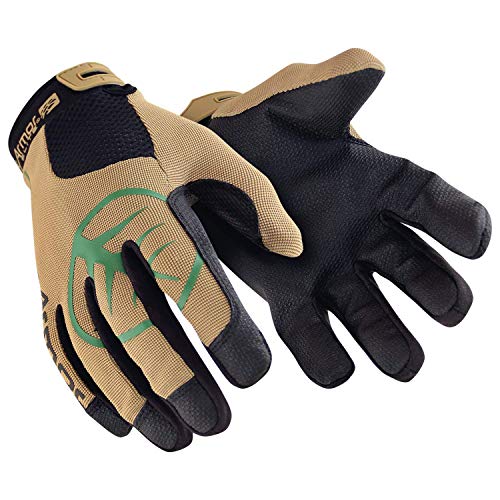
The HexArmor ThornArmor 3092 is specifically engineered for plants that fight back — cactus, mesquite, roses — but its capabilities translate perfectly to barbed wire work. The difference is in the SuperFabric liner, a material made of tiny hard plates embedded in a flexible fabric base. When a barb presses against it, the plates lock together and distribute the force, preventing penetration. The TP-X outer palm adds grip and lets you brush off dirt and rust without clogging the weave.
What sets this glove apart is the HexVent back-of-hand panel, which keeps your hands cool even under direct sun. Real users handling cactus and barberry confirmed that no puncture occurred through the palm and fingers. The Airprene cuff with a hook-and-loop closure keeps debris and wire splinters out, and the elastic wrist seal ensures the glove stays put when you yank on a stubborn strand. The overall fit is pre-curved, so your hand is in a relaxed grip position from the start — no fighting the glove to close your fist around wire pliers.
The trade-off is that the back of the glove is less armored than the palm, so reaching into a dense wire tangle with the back of your hand leading can result in penetration. Also, the price tag is stiff for a work glove. But if your primary task involves handling prickly materials alongside barbed wire, this is the most specialized tool you can strap on.
Why it’s great
- SuperFabric plates lock under pressure, creating a distributed defense against barbs.
- Ventilated back-of-hand keeps hands cool during hot fence work.
- Airprene cuff prevents debris from entering the glove interior.
Good to know
- Back of hand provides less puncture protection — avoid back-first contact with sharp wire.
- Some users found that tiny glochids from prickly pear could still embed in the palm fabric.
3. HWI Gear HPG100 Puncture Pro Duty Glove

The HWI Gear HPG100 was originally designed for correctional officers and security personnel who face hypodermic needles, but the same engineering that stops a needle point also stops a barbed wire tip cold. The glove achieves ANSI Level 5 puncture resistance with a lightweight, flexible build that doesn’t feel like you are wearing a tank mitt. That flexibility is critical for barbed wire work — you need to thread wire through staples and tie knots, and the HPG100 lets you do that without removing the glove every five minutes.
The neoprene construction is both breathable and comfortable, and the Velcro wrist closure provides a secure seal that prevents the glove from sliding off when you pull against a barb. Touchscreen compatibility means you can check fence tension specs or take a call without exposing your skin. Real-world reviews from outdoor workers handling sharp metal and rough materials confirm that the glove holds up under repeated stress without delamination at the seams.
The main drawback for barbed-wire-specific use is that the thumb tips are a bit thick, which can make fine motor tasks like manipulating a staple or threading a wire end through a tight loop slightly clumsy. Additionally, the glove’s cut resistance rating is not as high as some dedicated cut-resistant models, so if you are also dealing with sharp-edged metal sheeting, you may want to layer this with additional protection. For pure puncture defense from barbed wire, however, this is exceptional.
Why it’s great
- ANSI Level 5 puncture resistance in a flexible, lightweight package.
- Neoprene construction is breathable and comfortable for all-day wear.
- Velcro wrist closure keeps the glove secure during heavy pulling.
Good to know
- Thicker thumb tips reduce dexterity for very fine knot-tying tasks.
- Cut resistance rating is moderate — not ideal for handling sharp metal edges alongside wire.
4. Palmer Safety Heavy Duty Cowhide Leather Work Gloves

The Palmer Safety cowhide gloves represent the old-school approach to barbed wire protection — thick, dense leather that simply absorbs abuse. Made from 1.2mm top-grain cowhide, these gloves offer excellent abrasion resistance, which matters when you are dragging wire across the ground or pulling it through tight spaces. The leather is soft and pliable from the first wear, not stiff like some cheaper welder’s gloves, which means you get decent dexterity right out of the package.
Real users in Hawaii, where barbed wire is a constant companion for livestock fencing and property lines, reported that a single pair lasts months of almost daily use. The adjustable cuff allows you to cinch the glove tight against your wrist, preventing barbs from snagging the opening. These gloves also handle welding and chainsaw work, making them a versatile choice if you are on a ranch where the line between fence work and general maintenance is blurry.
The limitation is that cowhide leather, even at 1.2mm, is not puncture-proof. A sharp, thin barb can still push through, especially if it hits a seam or a stretched area. Also, the sizing runs small, so order at least one size up from your standard glove size. If you need certified puncture protection, this isn’t it. But for general heavy-duty barbed wire handling on a budget, this is a workhorse.
Why it’s great
- Thick 1.2mm top-grain cowhide provides outstanding abrasion and tear resistance.
- Softens quickly and conforms to your hand for improved dexterity over time.
- Adjustable cuff keeps debris and barbs out of the glove interior.
Good to know
- Not puncture-proof — a thin, sharp barb can still penetrate the leather.
- Sizing runs small; order one size larger than your usual fit.
5. WZQH 23.6 Inch Leather Welding Gloves
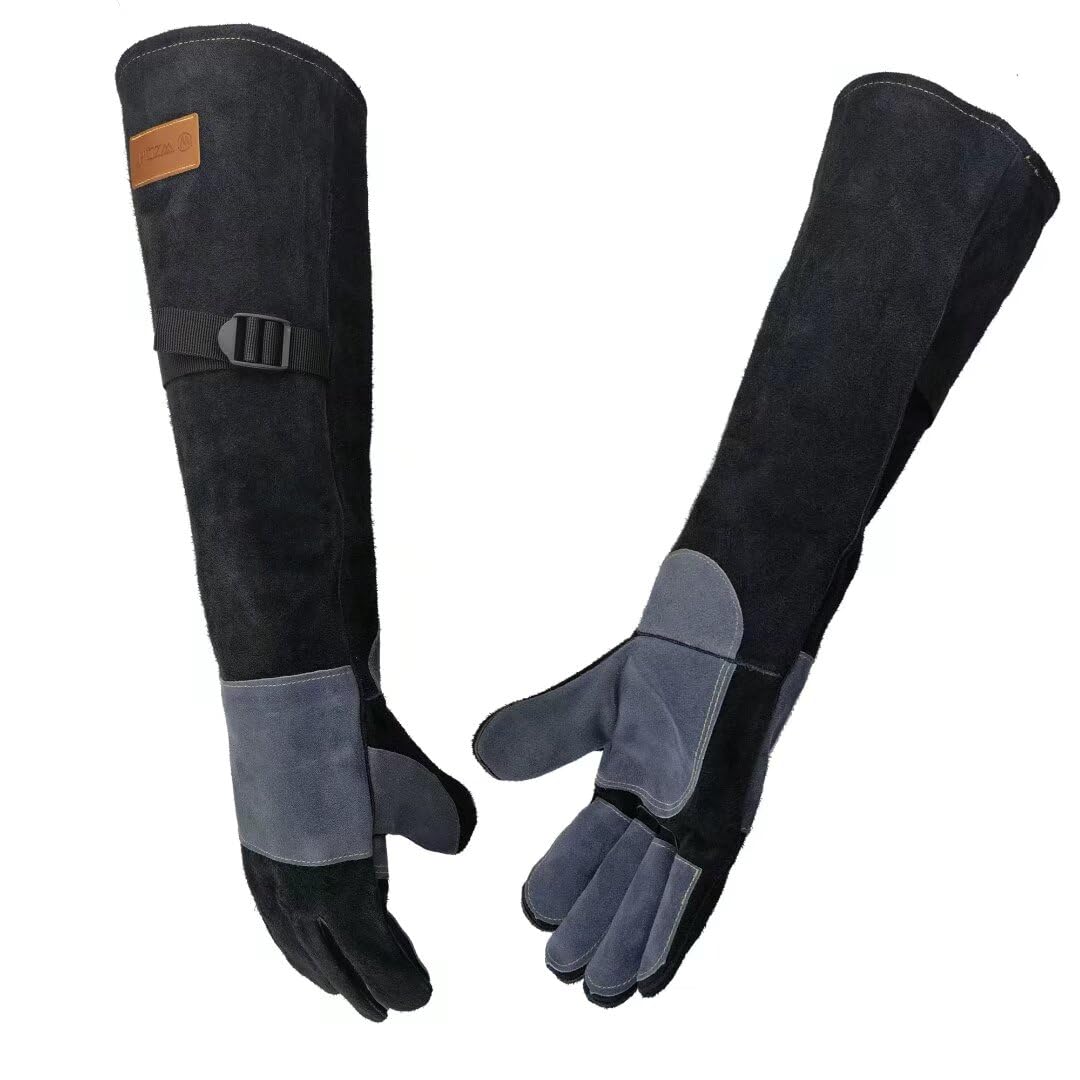
The WZQH glove is built for extreme reach — its 23.6-inch gauntlet length covers your entire forearm, which is a game-changer when you are working deep inside a wire spool or reaching through a dense tangle to free a snag. The 1.2mm shoulder split cowhide leather is thick and reinforced with double leather on the fingers and palms, and the Kevlar stitching prevents seam blowout under tension. The adjustable cuffs let you cinch the glove tight, so even if a barb catches the cuff, it won’t pull the whole glove off.
Despite its heavy-duty construction, users consistently report that these gloves are not overly stiff or bulky. Heat protection (ANSI Heat Level 4) is a bonus if you are also welding, but the real value for barbed wire work is the puncture and scratch resistance. The glove’s ability to handle thorns up to an inch long without penetration was confirmed in user tests with thorny plants. The extra-long cuff also means you can confidently reach into a pile of scrap wire without worrying about your forearm getting sliced.
On the downside, the gauntlet length adds weight, and your hand will fatigue faster than with a short-cuff glove. The thick leather also reduces tactile feedback, making it hard to pick up small objects like staples or wire ends. This is not a dexterity-focused glove — it is a brute-force protection tool for when you need to reach into the danger zone without fear.
Why it’s great
- 23.6-inch gauntlet provides full forearm protection from wire and barbs.
- Double leather reinforcement and Kevlar stitching for extreme durability.
- Proven to stop thorns up to one inch in length from penetrating.
Good to know
- Heavy design can cause hand fatigue during long work sessions.
- Thick leather reduces tactile feedback for fine motor tasks like picking up staples.
6. Needle Puncture & Thorn Proof Gloves, Level 3 Needlestick Resistant

These gloves hit a sweet spot between cost and certified protection. With an ANSI Level 3 puncture rating and an A9 cut resistance rating, they exceed the minimum requirements for safe barbed wire handling at a fraction of the cost of premium models. The Level 3 rating means the glove stopped a test needle at between 25 and 30 Newtons of force — enough to resist most barbed wire points, which are typically thicker and blunter than a hypodermic needle but still dangerous at an angle.
Real-world users include law enforcement officers who trust these gloves for searching suspects, which speaks to their reliability under stress. For barbed wire work, the Velcro wrist closure keeps the glove secure, and the material allows reasonably good dexterity for tying knots and manipulating wire. Users also reported success using these gloves for grooming aggressive dogs, confirming that they can handle sharp teeth — a comparable threat to a barbed wire point.
The main issue is inconsistent sizing. Multiple reviews note that the gloves run small, so ordering a size up is a must. Also, while the Level 3 puncture rating is sufficient for most barbed wire, a particularly sharp or thin strand could still find its way through if applied with enough force. If you are dealing with heavy-gauge, aggressively barbed wire, a Level 5 glove is a safer bet.
Why it’s great
- Certified to ANSI Level 3 puncture resistance, ideal for most barbed wire tasks.
- A9 cut resistance rating provides excellent protection against wire edges.
- Velcro wrist closure ensures a secure fit during pulling and twisting motions.
Good to know
- Sizing runs small — order at least one size larger than your normal fit.
- Level 3 puncture may not stop very thin or sharp barbs under extreme pressure.
7. Vgo Ladies’ Synthetic Leather Gardening Gloves

The Vgo gardening gloves are the entry-level option in this list, and they occupy a very specific niche: light barbed wire work that involves occasional contact with wire rather than sustained handling. The pigskin leather patches on the knuckles and finger backs provide puncture resistance against thorns and light barbs, and the synthetic leather palm with anti-shock padding adds a layer of comfort for weeding and pruning around fence lines. The touchscreen compatibility on the thumb, forefinger, and middle finger is a practical bonus for checking reference materials without removing the glove.
Real users reported that these gloves held up well for rose gardening and handling thorny plants in winter, suggesting they can handle incidental barbed wire contact without immediate failure. The 2.5mm anti-shock neoprene padding in the palm reduces vibration from tools, and the breathable synthetic leather keeps your hands from getting sweaty. The fit is tailored for smaller hands, which makes them a good choice for anyone who struggles to find puncture-resistant gloves that fit properly.
The catch is that these gloves are not designed for repeated, high-force contact with barbed wire. The puncture protection is limited to the reinforced patches, and the main palm material is faux leather, which can tear against a sharp barb if you pull hard against it. If your barbed wire work is occasional — trimming a single strand or moving a small tangle — these will work. For a full day of fence repair, upgrade to a heavier model.
Why it’s great
- Pigskin leather patches on high-wear areas provide targeted puncture protection.
- Touchscreen compatibility across four fingertips for convenient phone use.
- Lightweight and breathable construction reduces hand fatigue during light tasks.
Good to know
- Faux leather palm is not durable enough for repeated high-tension barbed wire work.
- Limited arm coverage — no gauntlet extension for forearm protection.
FAQ
Can I use standard leather work gloves for barbed wire?
What length of glove cuff is best for barbed wire fencing?
What does the ANSI Puncture Level 5 rating actually mean for barbed wire?
Final Thoughts: The Verdict
For most users, the gloves for barbed wire winner is the TAILI Level 3 Needle because it combines the highest ANSI puncture and cut ratings with breathability and touchscreen convenience in a single, certified package. If you need forearm protection for deep-reach work, grab the WZQH 23.6 Inch Leather for its exceptional gauntlet length. And for heavy-duty ranch work where puncture certification is secondary to abrasion resistance, nothing beats the Palmer Safety Cowhide for its all-day durability and comfort.