
Dragging six 63-pound lead-acid batteries around the course isn’t just heavy—it directly robs your cart of speed, torque, and climbing ability. Switching to a single 48-volt lithium battery transforms the driving experience by cutting more than 300 pounds of dead weight while delivering consistent voltage that never sags on a steep hill.
I’m Mohammad Maruf — the founder and writer behind Drink4Good. I analyze lithium-iron-phosphate cell configurations, BMS topologies, and energy density specs to help you cut through the marketing fog and pick the real upgrade.
Below, I’ve drilled into nine kits and packs to find the best golf cart batteries 8v, comparing everything from 200A BMS peak ratings to the physical fit inside a Club Car DS battery tray.
How To Choose The Best Golf Cart Batteries 8V
The jump from a six-battery 8-volt lead-acid string to a single 48V lithium pack is the single most impactful upgrade you can make. Before you buy, focus on three pillars: the BMS current rating, the physical dimensions of the case, and the included accessories like a charger and monitor.
BMS Continuous Current: The Real Power Limiter
A 200A BMS is the new standard for 48V golf cart lithium packs. That continuous rating supports a 5kW motor under load—climbing a steep grade without a voltage sag that slows you to a crawl. A 100A BMS works for lighter carts or flat-course cruising, but anything over a stock motor with 20-inch tires benefits from the 200A ceiling.
Physical Dimensions and Tray Fit
Most 48V lithium packs measure roughly 20.5 x 10.6 x 8.7 inches. That’s the GC8 footprint designed to drop into the same space as six 8V batteries. But some metal-cased packs are a few tenths of an inch taller or wider. Always measure your battery tray depth and width before ordering, especially for Club Car DS or Yamaha G29 models where the battery compartment has molded ribs.
Included Charger and Monitoring
A 58.4V 18A LiFePO4 charger fills a 100Ah pack in about 5.5 to 6 hours, which is reasonable for overnight charging. Kits that bundle a 20A charger cut that time by about an hour. Bluetooth app monitoring is table-stakes now—it lets you check state of charge without lifting the seat. A physical LCD touchscreen monitor is a nice backup if you don’t want to pull out your phone every time.
Quick Comparison
On smaller screens, swipe sideways to see the full table.
| Model | Category | Best For | Key Spec | Amazon |
|---|---|---|---|---|
| LiTime 48V 100Ah Kit | Premium | Maximizing range and longevity | 15,000 cycles at 50% DoD | Amazon |
| Cloudenergy 48V 105Ah | Premium | Highest capacity and 250A BMS | 105Ah capacity, 250A BMS | Amazon |
| DC HOUSE Metal Case 48V | Mid-range | Durability and safety with metal case | Metal case, 670A peak for 0.5s | Amazon |
| LOSSIGY 48V 100Ah Kit | Mid-range | High peak current for demanding controllers | 1000A peak for 3-5 seconds | Amazon |
| TEMGO 48V 100Ah Kit | Mid-range | All-in-one kit with solar compatibility | 10.24kW max power output | Amazon |
| CHINS 48V 100Ah | Mid-range | Value-focused with reliable support | 2000+ deep cycles | Amazon |
| Elefast 48V 100Ah Kit | Mid-range | Complete kit with LCD touch screen | 6000 cycles, 200A BMS | Amazon |
| WEIZE 48V 30Ah Bluetooth | Budget-friendly | Lightweight upgrade for utility carts | 30Ah capacity, 30 pounds | Amazon |
| Banshee T875 6-Pack | Entry-level | Simple drop-in replacement using lead-acid | 170Ah per battery, 63 lbs each | Amazon |
In‑Depth Reviews
1. LiTime 48V(51.2V) 100Ah Golf Cart Lithium Battery Kit
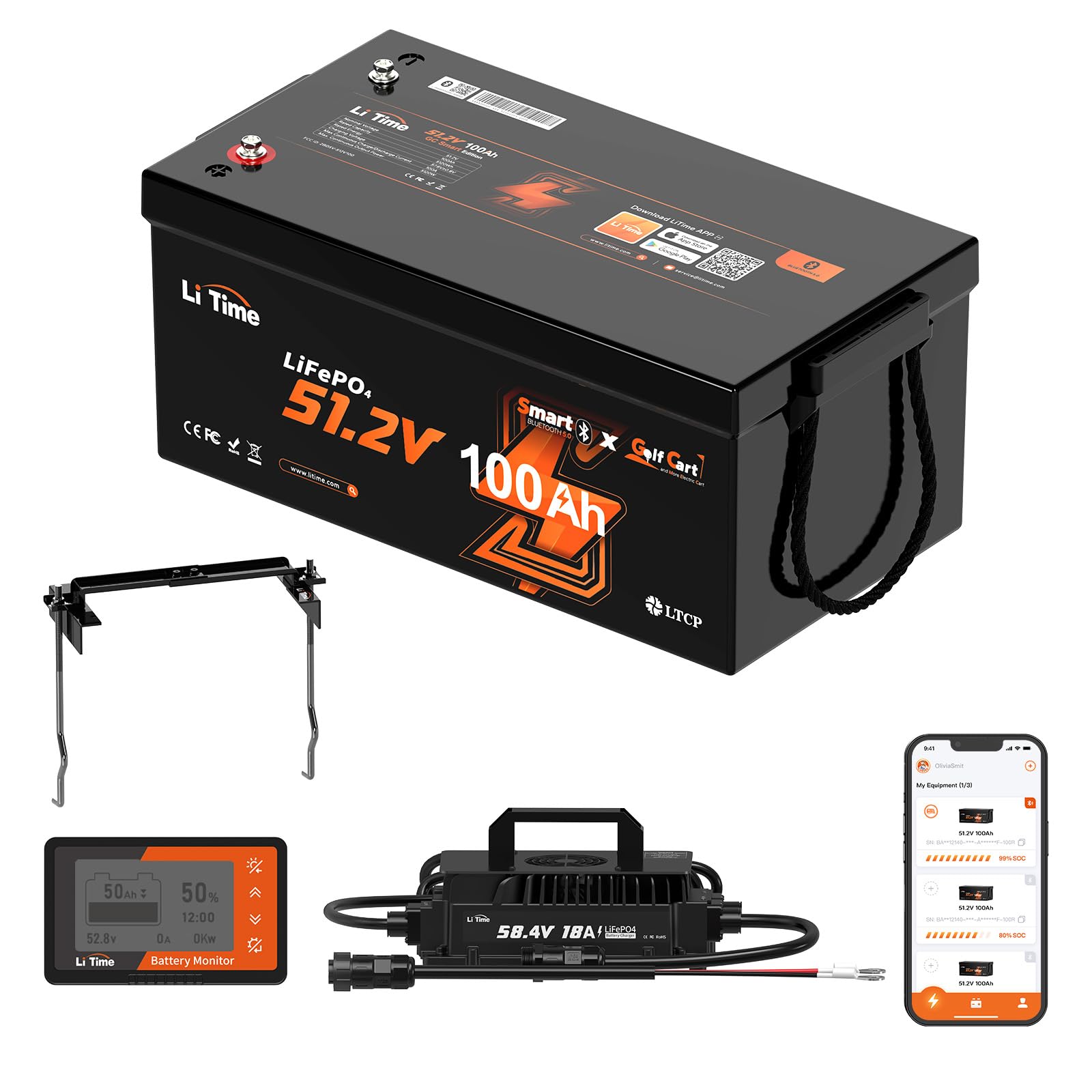
LiTime’s 48V 100Ah kit is the benchmark for a reason. It uses EV grade-A square aluminum cells—a construction method that distributes heat more evenly than cylindrical cells, leading to better long-term reliability. The included 58.4V charger, Bluetooth monitor, and hold-down kit make it a true one-box solution.
The 200A continuous BMS handles a 5kW motor without breaking a sweat, and the peak discharge of 600A for one second covers hard acceleration from a dead stop. Real-world reviews report 12-plus miles of driving with 76% charge remaining, indicating the 40–47 mile range estimate is realistic on flatter terrain.
One shortcoming is the monitor connection—it requires a separate shunt with oversized bolts, which adds a step to the install. The Bluetooth app works flawlessly though, so most users end up checking state of charge on their phone anyway.
Why it’s great
- 15,000 cycles at 50% depth of discharge dwarfs every other pack in this roundup
- Complete kit includes charger, monitor, and hold-down hardware
- 35% lighter than lead-acid, dropping roughly 220 pounds from the cart
Good to know
- Monitor requires a separate shunt for direct wired connection
- Premium pricing reflects the top-tier cycle life and cell quality
2. Cloudenergy 48V(51.2V) 105Ah LiFePO4 Golf Cart Battery
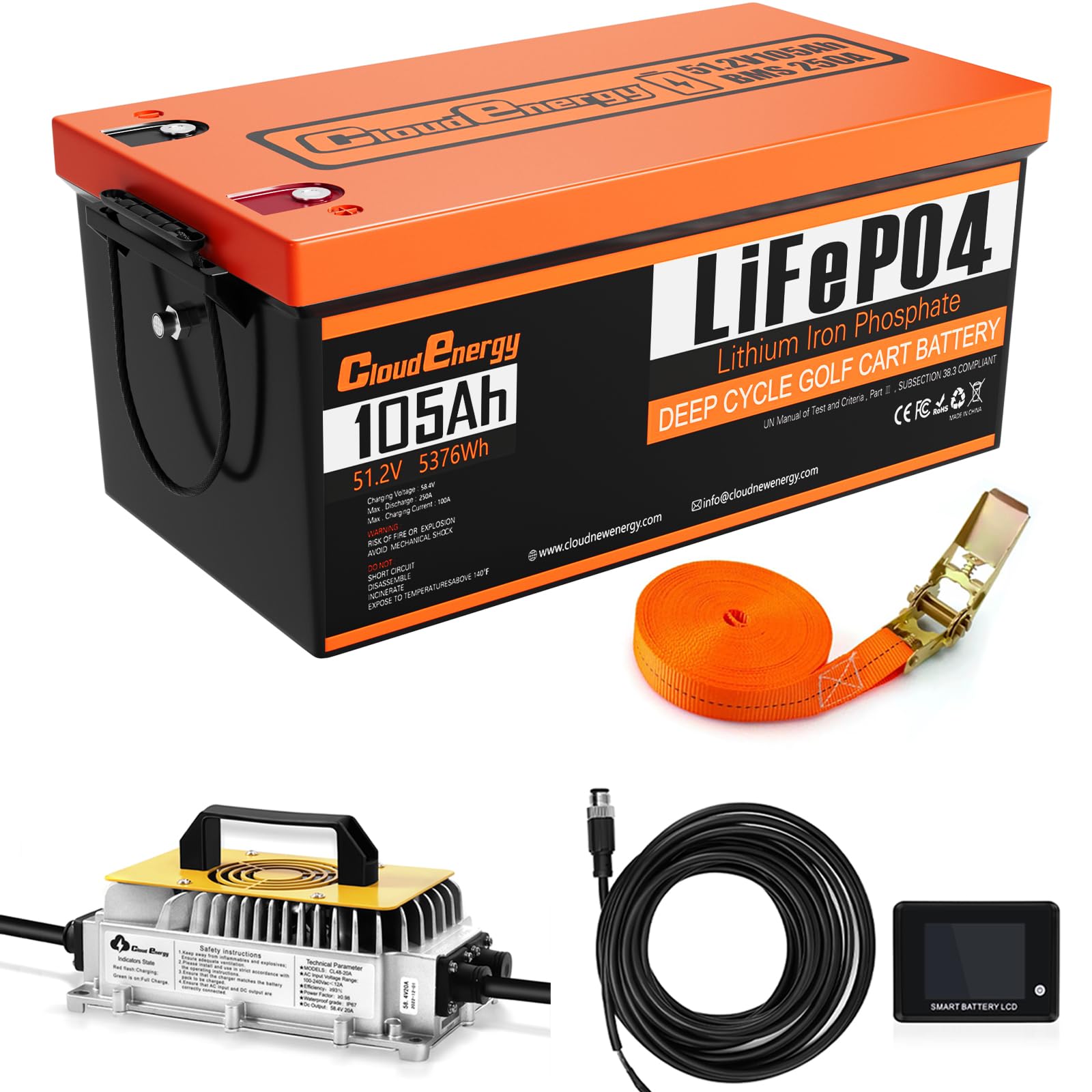
Cloudenergy offers 105Ah of capacity—5 extra amp-hours over the standard 100Ah packs—paired with a 250A BMS that sustains 250A continuous and peaks at 600A for three seconds. That extra headroom matters if you own a cart with a larger-than-stock motor or regularly climb steep inclines with passengers.
The kit includes a 58.4V 20A quick charger, a 2.8-inch LCD touchscreen, and a 78.74-inch battery strap. The 20A charger cuts charging time to about 5 hours from empty. IP67-rated ABS case offers solid dust and water ingress protection, and the low-temperature cutoff prevents charging below freezing.
One user with a Yamaha G29 reported a range increase from 8–10 miles on lead-acid to 40–45 miles on this pack, with a 3 mph top speed gain. The only hiccup reported after a year of use was a sudden cutout at low state of charge, which was resolved with a BMS firmware update pushed through the app.
Why it’s great
- 250A continuous BMS is the highest in this comparison
- 20A charger reduces fill time by roughly an hour versus 18A units
- IP67 rating adds peace of mind for wet course conditions
Good to know
- Slightly taller case may require seat risers in some older Club Car models
- Firmware updates needed occasional app-side troubleshooting
3. DC HOUSE Metal Case 48V 100Ah Pro Lithium Golf Cart Battery
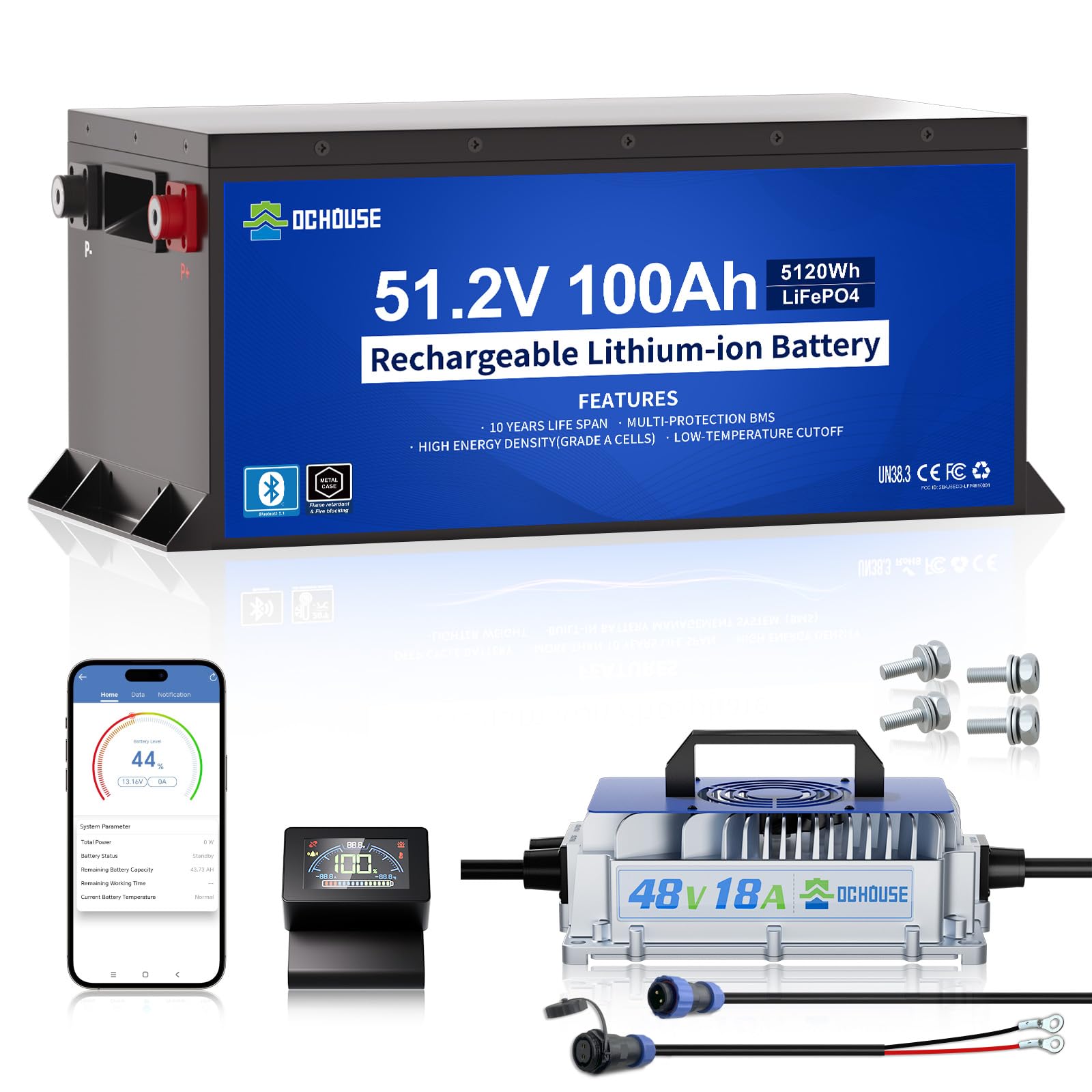
DC HOUSE takes a different approach with a metal case instead of ABS plastic. The sheet-metal housing is fireproof, anti-collision, and includes a one-key safety switch that physically isolates the battery when the cart is parked, reducing vampire drain. Metal fixtures clamp the internal Grade A cells, lowering the swelling risk that can deform plastic cases over time.
The 200A BMS supports 250A for 30 seconds and a peak of 670A for half a second—enough for a hard launch. The kit includes a 48V 18A charger, a wireless Bluetooth LCD monitor, and a physical on-off switch. Users report a 74% weight reduction versus six 8V lead-acid batteries, translating to a 56-mile range estimate on flat ground.
A real-world install on a 2004 Club Car DS needed a 1.5-inch seat riser because the metal case is 9.2 inches tall—slightly taller than the plastic competitors. The wireless Bluetooth monitor connects to the battery remotely, but the wired communication port is only available with a separate purchase.
Why it’s great
- Metal case reduces swelling risk and adds physical protection from road debris
- Physical on-off switch prevents parasitic drain during storage
- 3-year warranty is longer than most competitors in this bracket
Good to know
- Taller case may require seat modification in some carts
- Monitor is wireless-only unless you buy the separate wired communication kit
4. LOSSIGY 48V Lithium Battery Golf Cart Conversion Kit
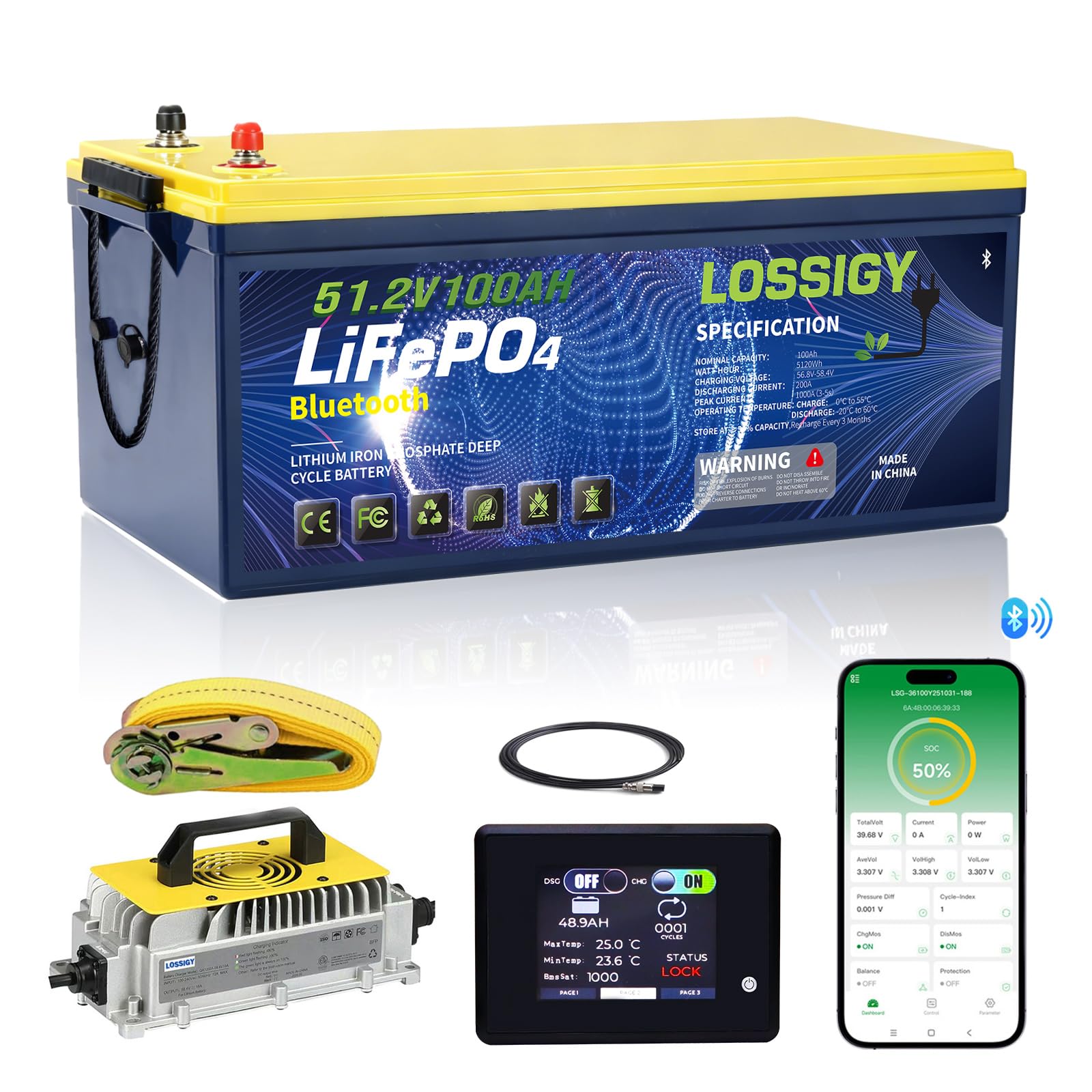
LOSSIGY pushes the peak current envelope to 1000A for 3–5 seconds—substantially higher than the typical 600A to 700A we see from other packs. That surge capacity matters for controllers that demand a high inrush current when the pedal hits the floor, especially in carts with larger tires or lifted suspensions.
The pack uses auto grade-A cells and includes a 200A smart BMS with Bluetooth monitoring. The 48V 100Ah kit ships with a charger and a separate remote monitor. Users report a 24 mph top speed with three adults on board against 20 mph before the swap, and the quicker start is immediately noticeable.
Some buyers noted that the kit’s included photos showed a ratchet strap, but the actual package contained a simpler nylon strap. The monitor’s USB cable routing is designed for a flush dashboard mount, but the connector is bulky for tight spaces. Customer service honored warranty replacements for a failed internal temp sensor in one unit, which is reassuring for the 5-year warranty term.
Why it’s great
- 1000A peak handles high-draw controllers without voltage sag
- Grade A cells with 4000 cycles at 100% depth of discharge
- 5-year warranty backs the pack for the long haul
Good to know
- Monitor USB cable is awkward for flush dashboard installation
- Some early units required replacement parts for the temp sensor
5. TEMGO 48V(51.2V) 100Ah LiFePO4 Lithium Golf Cart Battery Upgrade Kit
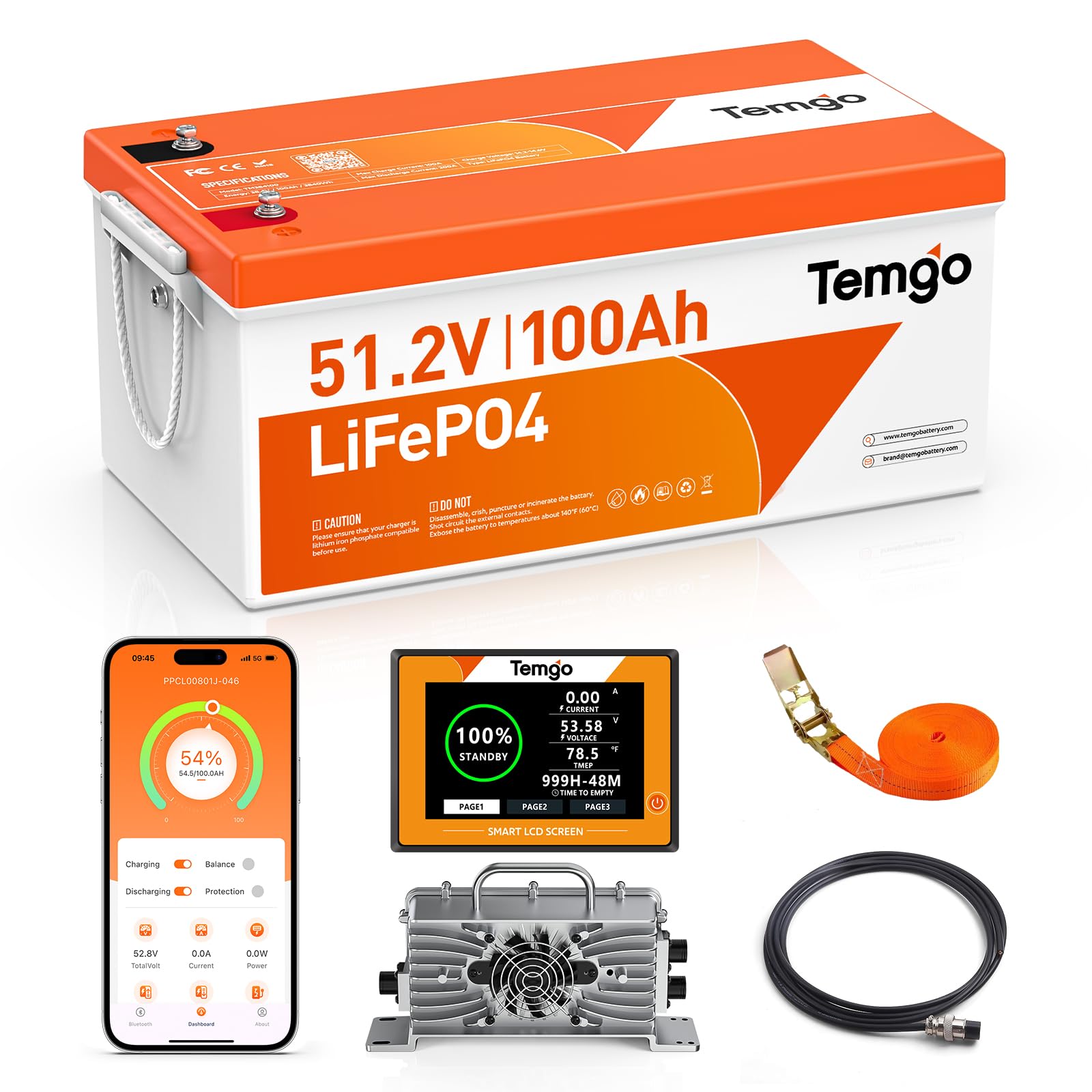
TEMGO’s kit is engineered for maximum power delivery: 10.24kW continuous output from a 200A BMS that peaks at 600A for 3 seconds. That’s enough for a 5kW motor under sustained load, and the 5000+ deep cycles at 80% depth of discharge mean this battery outlasts lead-acid by a factor of 10.
The package includes a 58.4V 18A charger, a 2.8-inch LCD touch display, and a retention strap. One user measured a 14.8-second incline time on a 2003 Club Car DS versus 20.4 seconds before the swap—a 27% improvement in hill-climbing speed. The same cart gained 32 mph top speed from a standing start.
The 61.7-pound weight is about 20 pounds lighter than the 82-pound packs from LiTime and Cloudenergy, but the trade-off is a slightly smaller footprint that may leave gaps in the battery tray. The display connects via Bluetooth, not a wired harness, which simplifies install but requires the screen to be within app range to work.
Why it’s great
- 10.24kW output handles sustained hill climbs without thermal throttling
- Lightest 100Ah kit at 61.7 pounds
- Compatible with solar charging for off-grid use
Good to know
- 1-year warranty is shorter than the 3–5 year terms from competitors
- Not compatible with carts that require CAN communication protocols
6. CHINS 48V Lithium Golf Cart Battery 100Ah
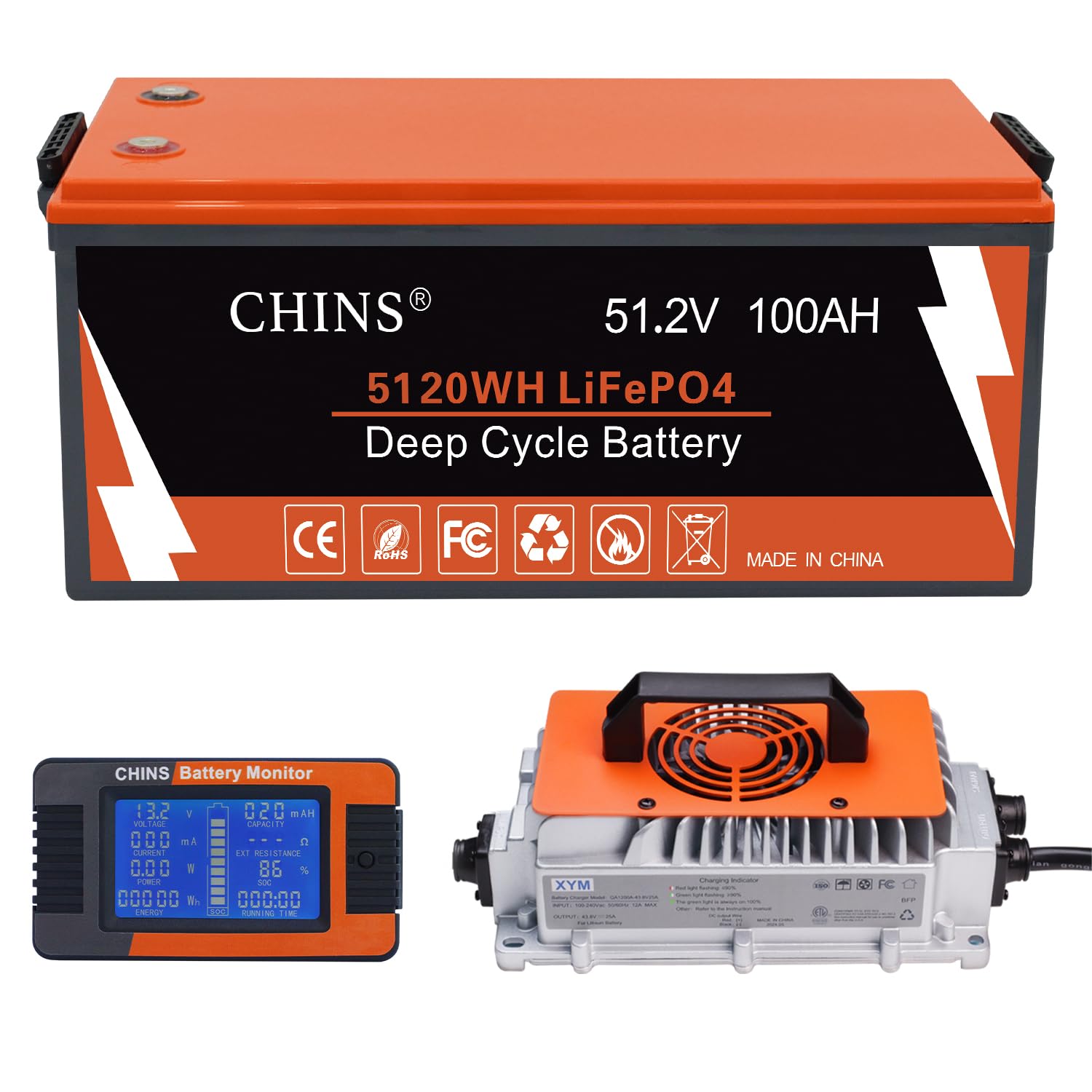
CHINS delivers a 200A BMS with a 1000A peak for 3–5 seconds at a price point that undercuts many 100Ah competitors. The 200A continuous discharge handles a 8kW golf motor, and the included 58.4V 18A charger fills the 100Ah pack in about 6 hours flat. The pack weighs 87 pounds.
The app provides real-time diagnostics including individual cell voltages, temperature, and cycle count. That level of detail is rare at this price tier. Users report roughly 20 miles of range with more than 50% charge remaining, and the acceleration improvement over lead-acid is immediate—one user described it as “a lot more torque.”
The BMS on one unit failed to wake after winter storage, but CHINS support diagnosed the issue and sent a replacement charger that revived the pack. The physical on/off switch is absent, so you have to rely on the BMS’s auto-wake function. The charger fan continues running after the battery reaches full charge, which is audible in a quiet garage.
Why it’s great
- Aggressively priced for a 100Ah kit with a 200A BMS
- Detailed cell-level data in the app
- Customer service honored warranty replacements for BMS issues
Good to know
- No physical on/off switch, relying entirely on BMS logic
- Charger fan stays on after full charge, creating audible noise
7. Elefast 48V Lithium Battery Golf Cart 100Ah Kit
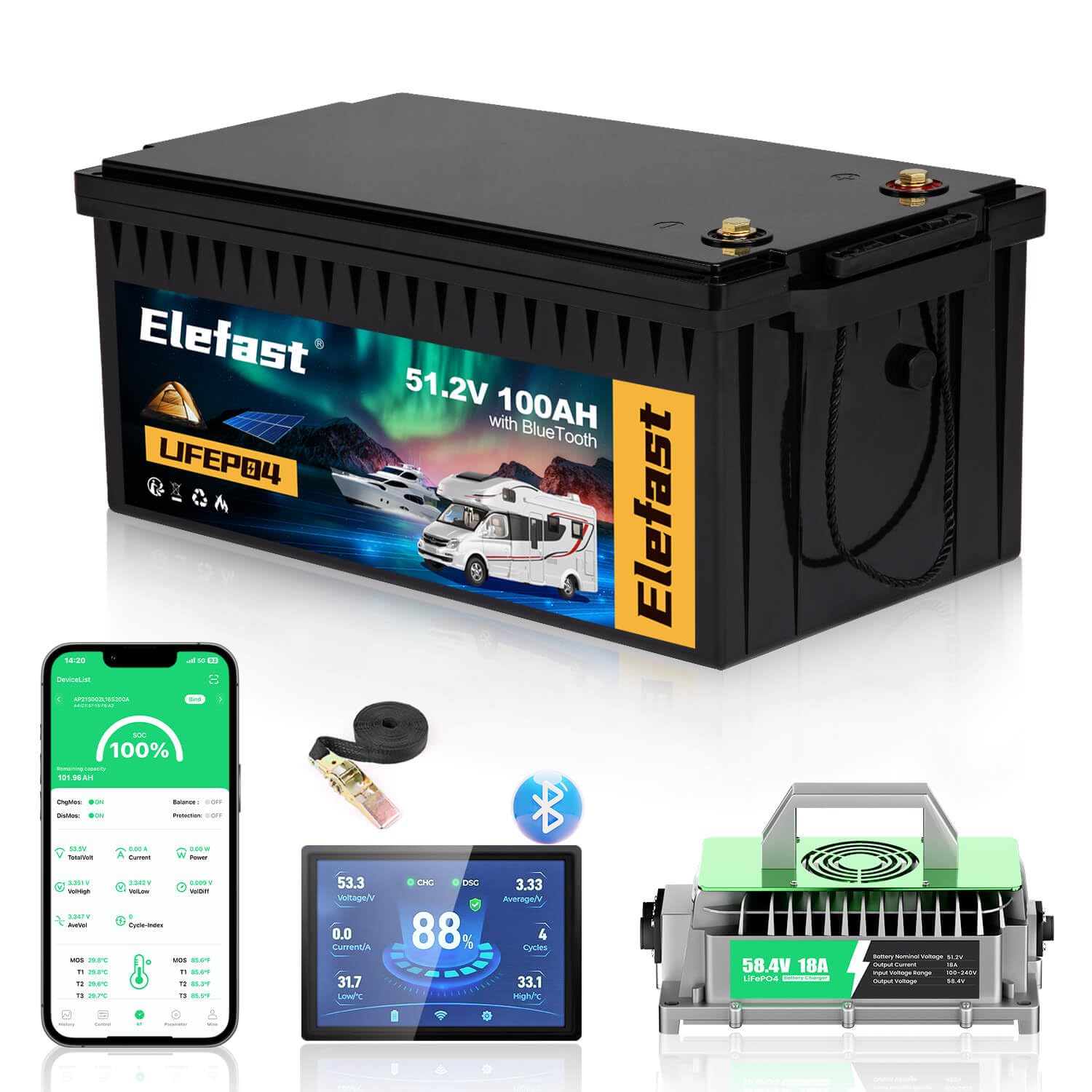
Elefast’s kit stands out for the most complete accessory bundle: a 58.4V 18A charger, a 2.8-inch LCD touch screen, two mounting straps, and Bluetooth 5.0 app monitoring. The 200A smart BMS protects against overcharge, over-discharge, and temperature extremes, with a low-temperature cutoff at -4°F for charging and 158°F for discharging.
The pack uses 16 EVE A+ grade 2C power cells that support a 600A peak for 35 seconds and a 300A continuous discharge. One user on a 2006 Club Car reported a 46% state of charge after three weeks of light use (versus two weeks on lead-acid), and the dash LED showed more consistent voltage under load.
The magnetic reed safety on the old charger plug needs to be cut for the kit to run, which is a simple but permanent modification. The display is bright and responsive, but the touch controls require a firm press, and the auto-off feature turns the screen off after a few minutes of inactivity, which some users found disorienting.
Why it’s great
- 2C discharge cells provide 600A peak for 35 seconds—double the typical burst duration
- Complete accessory kit includes everything for the conversion
- 5-year warranty with dedicated US-based support team
Good to know
- Requires cutting the reed safety wire on the old charger plug
- LCD touch screen times out after a few minutes of inactivity
8. WEIZE 48V 30AH GC8 Bluetooth Golf Cart LiFePO4 Battery
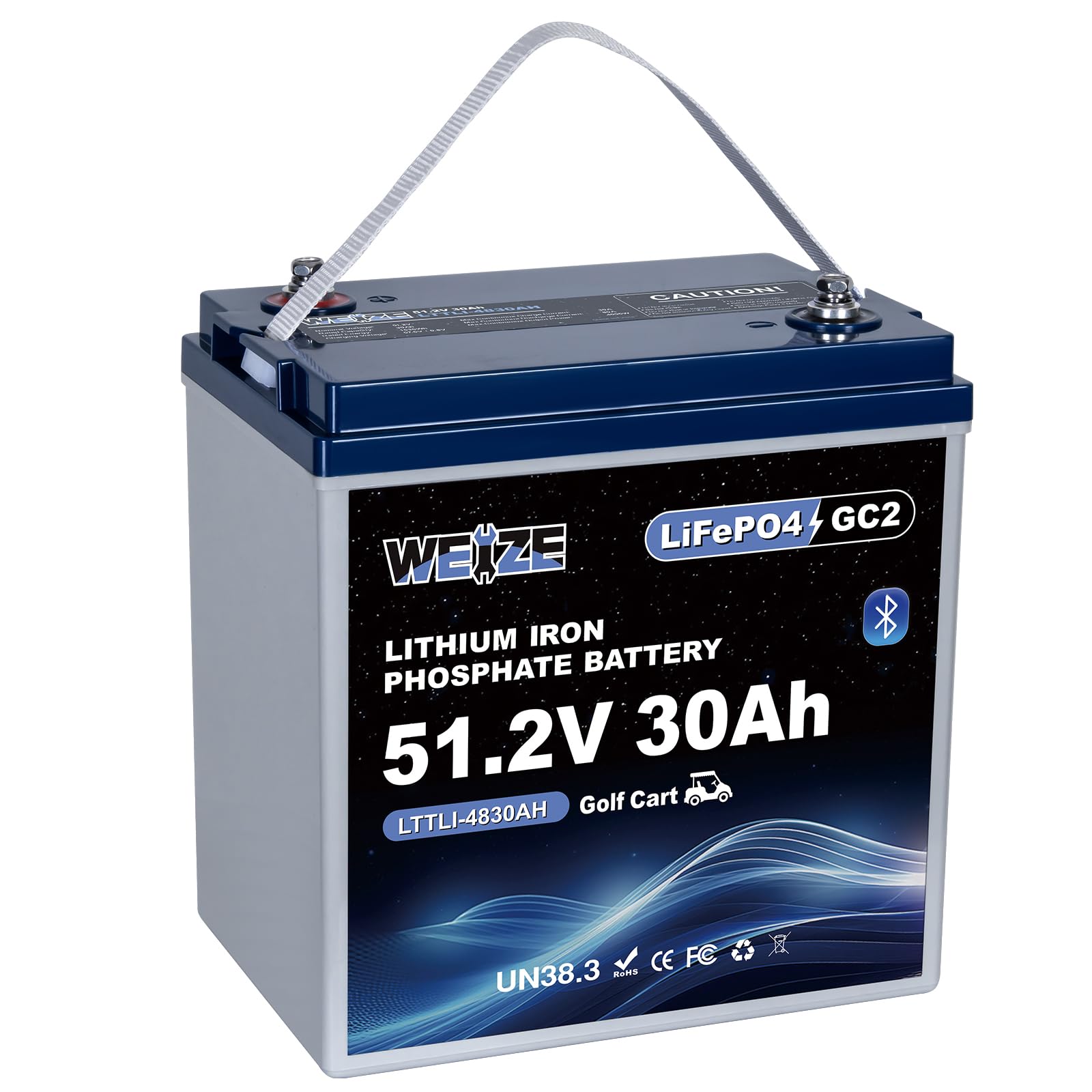
WEIZE’s 30Ah pack is the lightweight specialist in this lineup. At just 30 pounds, it’s one-sixth the weight of six lead-acid batteries and replaces them with a single 48V unit that fits the same GC8 footprint. The 1.536kWh energy capacity is 2.5 times the usable energy of an 8V lead-acid equivalent, but the 30Ah total is best suited for short-run utility carts or as a drop-in replacement for a single 8V battery in a series string.
The built-in 100A BMS with Bluetooth 5.0 monitors state of charge, voltage, and temperature from a smartphone app. Low-temperature cutoff suspends charging below 0°C and discharging below -20°C. The 4000-cycle lifespan at 100% depth of discharge is impressive for the price tier, and the pack supports parallel connections—up to 8 units for a 12.288kWh total capacity.
Users report improved acceleration and a 15-mile range per charge in a Club Car DS utility vehicle. The pack works well as a starting battery for a 150hp Mercury outboard too, showing versatility beyond golf. The 10-year warranty is a standout, but the 30Ah capacity limits range—plan for about 15 miles per charge on a standard 48V cart.
Why it’s great
- 30-pound weight makes installation a one-person job
- 10-year warranty is the longest in this comparison
- Parallel capability expands capacity over time
Good to know
- 30Ah capacity limits range to about 15 miles per full charge
- Requires a lithium-compatible charger—not included with the battery alone
9. Banshee T875 8 Volt 170 AH Deep Cycle Battery 6-Pack

The Banshee T875 is a direct replacement for the Trojan T-875 8-volt flooded lead-acid battery. Each of the six batteries delivers 170Ah at 8 volts, wired in series to produce the 48V system your cart needs. The BCI Group GC8 dimensions (10.27 x 7.10 x 11.14 inches per battery) match the standard six-battery tray layout found in most Club Car, EZGO, and Yamaha carts.
At 63 pounds per battery, the total package weighs 378 pounds—more than five times the weight of a single 48V lithium pack. Expect to replace the set every 300 to 500 cycles depending on charging habits and discharge depth. The flooded design requires periodic watering and terminal cleaning, adding maintenance overhead that lithium eliminates.
The benefit of sticking with lead-acid is straightforward: no cable rewiring, no BMS bypass, no battery tray modification. Users report the set arrived well-packaged, with batteries in pristine condition, and the carts ran “like new” after the swap. The 170Ah per battery provides a combined 170Ah at 48V, giving a longer range than many 100Ah lithium packs—but at the cost of weight, maintenance, and cycle life.
Why it’s great
- Exact drop-in replacement for six 8V batteries—no modifications needed
- Combined 170Ah at 48V offers higher total capacity than 100Ah lithium packs
- Well-known Trojan-equivalent construction with reliable customer service
Good to know
- 378-pound total weight requires a two-person lift or mechanical assistance
- 300–500 cycle life means replacement every 2–3 years with regular use
FAQ
Can I replace just one 8V battery in my 48V cart with a lithium pack?
How does the 8V to 48V conversion work with a single lithium battery?
Will my stock golf cart charger work with a 48V lithium battery?
What is the OBC bypass and when do I need it?
How does low-temperature cutoff protect my lithium golf cart battery?
Final Thoughts: The Verdict
For most users, the best golf cart batteries 8v winner is the LiTime 48V 100Ah Kit because its 15,000-cycle lifespan at 50% DoD translates to roughly a decade of maintenance-free operation, and the included charger, monitor, and hold-down kit simplify the conversion. If you want the highest sustained current headroom for a lifted cart, grab the Cloudenergy 48V 105Ah. And for a durable metal-cased unit with a physical on-off switch, nothing beats the DC HOUSE Metal Case 48V 100Ah Pro.