
A planted tank that looks more like a brown soup than a lush green haven is a common frustration. The difference between thriving green life and a slow melt often comes down to choosing species that match your light, water chemistry, and maintenance style rather than fighting against them.
I’m Mohammad Maruf — the founder and writer behind Drink4Good. I’ve spent years tracking water column feeders, root-dependent species, and low-tech versus high-tech growth patterns to help aquarists avoid costly die-offs.
Whether you are starting a small nano scape or filling a 55-gallon community tank, selecting the right freshwater aquarium plants is the single most important step toward a self-sustaining, algae-resistant underwater ecosystem.
How To Choose The Best Freshwater Aquarium Plants
Aquarium plants fall into three broad categories: epiphytes that attach to hardscape, root feeders that need nutrient-rich substrate, and floating species that pull nutrients directly from the water. Understanding these groups keeps you from burying a rhizome or starving a root feeder.
Match Light Levels to Plant Demands
Low-light plants like Anubias and Java Fern require only 0.5 to 1 watt per gallon of lighting, while carpeting species like Dwarf Sagittaria prefer medium light at 1.5 to 2 watts per gallon. Overlighting slow growers invites algae; underlighting high-demand plants causes etiolation.
Substrate and Fertilization Needs
Epiphytes and floating plants absorb nutrients from the water column — liquid fertilizers work fine. Root feeders such as Dwarf Sag require a nutrient-rich substrate or root tabs to access iron and potassium, or growth will stall and leaves will yellow.
Growth Rate and Maintenance Commitment
Fast-growing floaters like Water Spangles (Salvinia Minima) consume excess nitrates quickly but need weekly thinning to avoid blocking light. Slow-growing epiphytes demand far less pruning, making them forgiving for beginners or low-tech setups without pressurized CO₂.
Quick Comparison
On smaller screens, swipe sideways to see the full table.
| Model | Category | Best For | Key Spec | Amazon |
|---|---|---|---|---|
| Java Fern & Anubias Bundle | Bundle | Low-tech scapes | 2 species, 5 inch height | Amazon |
| Dwarf Sagittaria Subulata 15-Pack | Carpet | Foreground coverage | 3 inch height, 15 pieces | Amazon |
| Marcus Fish Tanks 3X Java Fern | Epiphyte | Driftwood attachment | 7-12 inch fronds, 3 plants | Amazon |
| Marcus Fish Tanks Anubias Nana Petite | Epiphyte | Nano tanks / bonsai | 20-30 leaves per pot | Amazon |
| 60+ Leaves Water Spangles | Floating | Nitrate control / shade | Dense mat of Salvinia Minima | Amazon |
In‑Depth Reviews
1. Java Fern and Anubias Aquarium Plant Bundle

This two-species bundle pairs broad-leaf Anubias with the textured fronds of Java Fern, giving you contrasting leaf shapes that add immediate depth without requiring root tabs or pressurized CO₂. Both species are true epiphytes — they should never be buried in substrate, only tied or glued to wood or rock. The Java Fern in this bundle has shown consistent green coloration across multiple buyer reports, and the Anubias rhizome arrives with healthy root nubs ready to grip hardscape.
At a typical height of 5 inches, both species work well in mid-ground zones of tanks from 10 to 40 gallons. The Anubias tolerates full shade, making it one of the few plants that remains green under low-output LED hoods designed for community fish. Buyers note that the roots are already present and begin attaching to driftwood within two weeks using simple fishing line or gel glue.
While a minority of shipments have arrived with minor leaf damage, the majority report vibrant green specimens that adapt to varying pH and general hardness without melting. The bundle eliminates the guesswork of buying two separate pots and ensures compatible growth rates between the two plants.
Why it’s great
- No CO₂ or high light required — thrives under standard aquarium LEDs
- Matching slow growth means minimal pruning and stable water chemistry
Good to know
- Anubias may arrive with slight leaf bruising from shipping in colder weather
- Not suitable for direct substrate planting — must attach to hardscape
2. Marcus Fish Tanks Dwarf Sagittaria Subulata 15-Pack

Dwarf Sagittaria Subulata is one of the most forgiving foreground runners for beginners who want a grassy carpet without injecting CO₂. This 15-piece pack provides enough starter plugs to cover the front third of a 20-gallon long tank. Each plant arrives trimmed to 2-3 inches with the root system intact, ready to be planted into a nutrient-rich substrate or under root tabs.
Under medium light (1.5 to 2 watts per gallon), this species sends out horizontal runners aggressively, filling bare areas within four to six weeks. Buyers consistently report that the plants survived shipping in vacuum-sealed bags with visible moisture and bounced back to bright green within days. A few packages have included hitchhiker bladder snails — a common occurrence with tissue-cultured or pond-grown stock that should be rinsed thoroughly.
The 15-count unit count is generous for the category, and the live arrival guarantee from Marcus Fish Tanks provides peace of mind during winter shipments. For tanks with high bioload, this plant acts as a natural nitrate sponge while softening hardscape lines.
Why it’s great
- Aggressive runner growth creates a lush carpet without tissue culture plugs
- Hardy enough to survive in tanks without CO₂ injection or high-end lighting
Good to know
- Requires root tabs or nutrient-rich substrate to sustain long-term growth
- Potential for hitchhiker snails if not quarantined before planting
3. Marcus Fish Tanks 3X Java Fern Microsorum Pteropus

Java Fern is the default epiphyte for aquarists who want tall background structure without stem plant maintenance. This three-pack delivers fronds ranging from 7 to 12 inches, which immediately fills the rear corners of a 29-gallon or 40-gallon breeder tank. The plants arrive with the rhizome intact and multiple leaves per specimen, allowing you to divide each into two or three separate attachment points.
The brown and yellow transition that some beginners worry about is typically just the plant adjusting to new water parameters — buyers note that initial yellowing reversed within a week under moderate light. This species is famously resistant to being uprooted by bottom-dwellers like Corydoras or loaches because the rhizome secures firmly to hardscape. No substrate is needed; simply wedge the rhizome between rocks or tie it to driftwood with thread.
Consistent with other Marcus Fish Tanks offerings, the packaging includes moist paper towel lining and thermal considerations for cold-weather shipping. Over time, small plantlets emerge from the leaf edges — a natural propagation method that lets you expand your colony without repeat purchases.
Why it’s great
- Tall fronds provide privacy for shy fish and block light for algae-sensitive zones
- Propagates easily from leaf-edge plantlets — one pack can fill a tank in months
Good to know
- Rhizome rot occurs if buried — must remain above the substrate line
- Initial yellow hues on arrival usually resolve after acclimation
4. Marcus Fish Tanks Anubias Nana Petite Potted

Anubias Nana Petite is the slowest-growing and most compact of the Anubias variants, making it ideal for nano tanks, shrimp bowls, or accent pieces on bonsai-style driftwood. This single pot contains 20 to 30 leaves, each leaf staying under half an inch wide — small enough to not overpower a 5-gallon tank yet substantial enough to create a distinct foreground texture.
Because of its tiny leaf surface area, this plant produces very little organic waste and requires almost no trimming. It thrives in every lighting condition from full shade to moderate LED strips, and its rhizome structure makes it virtually indestructible as long as it is not buried. Buyers consistently comment on the vibrant green arrival color and the strong root mass that was present even before unpotting.
The organic material tag suggests the potting medium is free of synthetic fertilizers, which matters for shrimp tanks where copper or ammonia spikes could be lethal. While the potted format is convenient, many hobbyists remove the rock wool and attach the rhizome directly to hardscape for a more natural scape.
Why it’s great
- Micro leaves stay proportionate in small tanks and don’t overshadow shrimp
- Extremely resilient to variable water parameters and low lighting
Good to know
- Growth rate is very slow — expect months for visible expansion
- Potted rock wool should be removed to prevent anaerobic pockets
5. 60+ Leaves Water Spangles Salvinia Minima
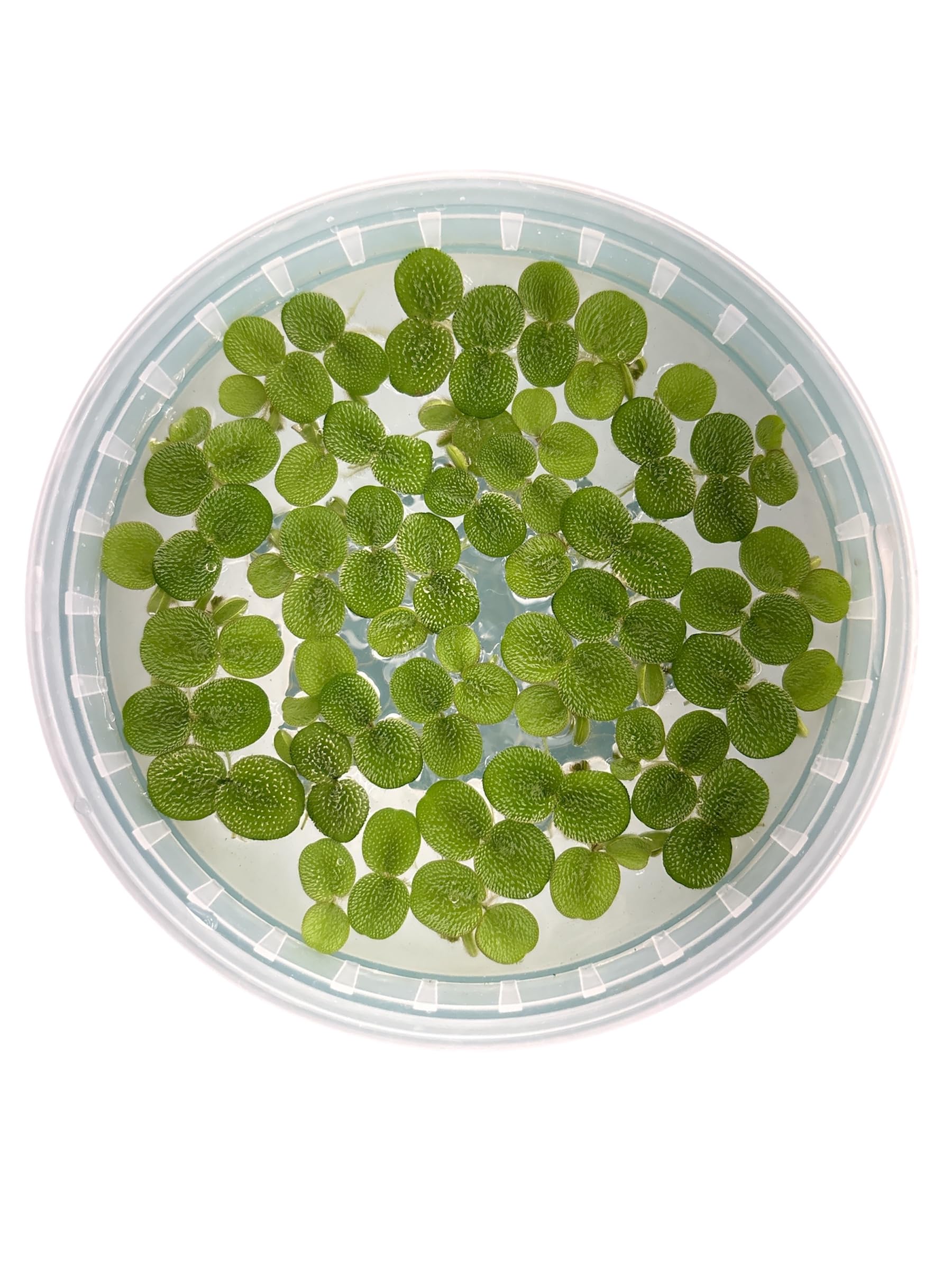
Salvinia Minima — commonly sold as Water Spangles — is a floating plant that forms a dense, interlocking mat on the water surface. This listing promises 60+ leaves, and multiple buyer photos confirm a generous portion that covers the top of a 10-gallon tank immediately. Each leaf is about the size of a dime, with tiny hairs that repel water and keep the top surface dry.
Floating plants are the most effective natural nitrate export for tanks without CO₂ injection. This species grows fast enough under medium light that weekly removal is necessary to prevent it from blocking light to submerged plants. It also provides cover for fry and surface-shy species such as bettas and gouramis. The packaging uses paper towels and cups to keep the leaves moist during transit, and buyers note the lack of rot or smell upon opening.
One limitation: Salvinia Minima does not tolerate strong surface agitation or high-flow canister returns — the leaves will get waterlogged and sink. It is best suited for sponge-filtered or HOB-filtered tanks with calm surface movement. The full-shade tolerance means it grows even under low-light hoods where other floaters fail.
Why it’s great
- Floating mat architecture blocks light to prevent algae growth below
- Rapid nitrate uptake reduces water change frequency in stocked tanks
Good to know
- Will melt under strong surface current or high-flow powerheads
- Needs weekly thinning to avoid shading out rooted plants underneath
FAQ
Can I grow freshwater aquarium plants without CO₂ injection?
Why do my Anubias leaves keep turning yellow and melting?
How do I clean and quarantine live plants before adding to my tank?
Final Thoughts: The Verdict
For most users, the freshwater aquarium plants winner is the Java Fern and Anubias Bundle because it delivers two complementary low-light epiphytes that cover mid and background needs without requiring a CO₂ rig or high-end lighting. If you want a grassy foreground carpet, grab the Dwarf Sagittaria 15-Pack. And for a natural nitrate scrubber that provides shade for shy fish, nothing beats the 60+ Leaves Water Spangles.