
Gluing fabric to wood is one of those tasks that sounds simple until the fabric bubbles, the glue bleeds through, or the bond fails after a week. You need an adhesive that penetrates the fabric weave without saturating it, grabs the wood grain fast, and stays flexible enough to handle everyday movement. Get the wrong formula and you are stuck with a stiff, ugly mess that peels at the edges.
I’m Mohammad Maruf — the founder and writer behind Drink4Good. I have spent years analyzing hardware specifications and market data on home improvement and crafting adhesives, focusing specifically on formulations that bridge porous and semi-porous materials like fabric and wood.
If you are tired of guessing which bottle will actually hold your upholstery project, repair, or craft piece together, this guide to the best glue for fabric to wood breaks down five real-world options by bond strength, cure time, and application method so you can pick the right one.
How To Choose The Best Glue For Fabric To Wood
Not every adhesive labeled “multi‑purpose” can handle the unique demands of bonding a flexible textile to a rigid wooden substrate. The bond needs to be strong enough to resist peeling but flexible enough to move with the fabric. Three factors separate the winners from the failures.
Spray vs. Liquid Application
For large surface areas like upholstery panels or headliners, a spray contact adhesive delivers an even coat without saturating the fabric. Liquid glues work for small repairs or edges but often require brushing and can soak through thin textiles, leaving visible stains. Spray formulas allow you to control coverage with adjustable nozzles and avoid pooling.
Open Time and Tack Strength
Open time is the window you have to position the fabric before the glue sets. A longer open time gives you room to adjust, which is critical for tricky curves or patterned fabrics. Some adhesives grab instantly (aggressive tack), which is great for vertical surfaces but punishes mistakes. Others allow repositioning for 30 to 60 minutes. Choose based on your confidence level and the complexity of the project.
Flexibility and Moisture Resistance
A rigid glue that dries hard will crack or delaminate when the fabric stretches or when humidity changes. Look for formulations that remain somewhat flexible after curing. Water and heat resistance matter if the glued item will sit in a vehicle, near a window, or in a damp environment. Low VOC and GREENGUARD certifications are bonuses for indoor air quality during application.
Quick Comparison
On smaller screens, swipe sideways to see the full table.
| Model | Category | Best For | Key Spec | Amazon |
|---|---|---|---|---|
| 3M Hi‑Strength 94 ET Spray | Spray Contact | Large surface lamination | 60‑minute open time | Amazon |
| Gorilla Ultimate Spray Adhesive | Spray Contact | Versatile indoor/outdoor bonding | 2‑minute cure time | Amazon |
| Odif USA OdiCoat Waterproof Glue Gel | Liquid Gel | Waterproofing & small crafts | 12‑hour full cure | Amazon |
| Duall‑88 Leather Adhesive | Liquid Neoprene | Leather & flexible repairs | 24‑hour full cure | Amazon |
| 3M Headliner & Fabric Adhesive (2‑Pack) | Spray Contact | Automotive headliner repair | 30‑60 minute dry time | Amazon |
In‑Depth Reviews
1. 3M Hi‑Strength 94 ET Spray Adhesive
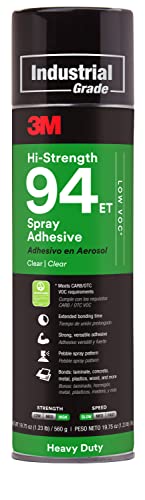
This is the spray adhesive that professionals reach for when they cannot afford a failure. The 60‑minute bonding range gives you an hour to position fabric exactly where you want it, which is a luxury compared to instant‑grab formulas. It bonds wood, metal, rubber, carpet, foam, and fabric with an aggressive tack that only gets stronger over the 24‑hour cure cycle.
Beyond the extended open time, the 94 ET is low VOC and GREENGUARD Certified, meaning it contributes to better indoor air quality during application. That matters when you are working inside a vehicle or a room without industrial ventilation. Users report it sticks foam to van metal in freezing temperatures and holds soundproofing panels without peeling.
One can covers large surfaces efficiently, but be prepared for the solvent‑based odor — wear gloves and a mask, and touch a knuckle to the adhesive to check readiness before pressing materials together. The 19.75 oz net weight is generous for laminate, woodworking, and upholstery projects.
Why it’s great
- 60‑minute open time for precise positioning
- Low VOC and GREENGUARD Certified
- Aggressive tack on wood, fabric, and metal
Good to know
- Strong solvent fumes require ventilation
- Over‑application can cause bleed‑through on thin fabrics
2. Gorilla Ultimate Spray Adhesive
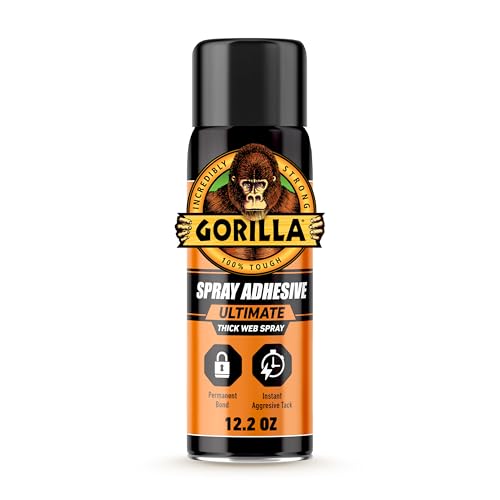
Gorilla’s spray adhesive delivers the kind of instant aggressive tack that makes you trust it immediately. The web‑spray formula grabs wood, fabric, leather, and metal almost on contact, which is perfect when you want a bond that resists heat and moisture both indoors and out. It cured in just two minutes on the test projects, leaving no time for repositioning but a rock‑solid hold from the start.
The adjustable anti‑clog nozzle is a practical upgrade — you can set it to Low, Medium, or High to control how wide the spray pattern fans out. That keeps overspray off areas you do not want glued. Users report it successfully bonded throw rugs together and held felt, cork, canvas, and foam without peeling, even in a vehicle interior that sees temperature swings.
A few reviewers noted that the spray covers a large area quickly, so masking tape is helpful for fine detail work. The formula is low VOC and paintable, which broadens its DIY appeal. If you need a permanent bond fast and can commit to positioning before you spray, this is a reliable workhorse.
Why it’s great
- Instant aggressive tack sets in 2 minutes
- Adjustable nozzle for precise spray control
- Resists heat and moisture for indoor/outdoor use
Good to know
- No repositioning once fabric touches
- Spray pattern can be too wide for small areas
3. Odif USA OdiCoat Waterproof Glue Gel

OdiCoat is not your typical adhesive — it is a glue gel that also creates a waterproof insulating film over fabric, making it unique in this lineup. It bonds fabric to wood, metal, glass, ceramic, and stone while adding a satin sheen and stain resistance. The 12‑hour full cure is slow, but the results are worth the wait for projects that face moisture, like outdoor cushions or rain‑resistant bags.
Brush application gives you fine control, but the gel does darken fabric slightly and stiffens it a bit. That works well for structured items like collaged patches on a motorcycle jacket or canvas tote repairs. Reviewers love the lack of strong odor compared to solvent‑based adhesives, and a damp brush cleans up easily. Three coats produce a beautiful finish that feels more durable than untreated fabric.
Because the gel is water‑based and non‑toxic, it conforms to ASTM D 4236 safety standards. The downside is that it does not feed well through a sewing machine after curing — apply it to the finished product, not before cutting. This is a specialist’s glue for those who prioritize waterproofing and clarity over speed.
Why it’s great
- Creates a waterproof, stain‑resistant film
- Low odor and easy brush cleanup
- Dries clear with a satin finish
Good to know
- 12‑hour cure time is slow
- Darkens fabric slightly and adds stiffness
4. Duall‑88 Leather Adhesive
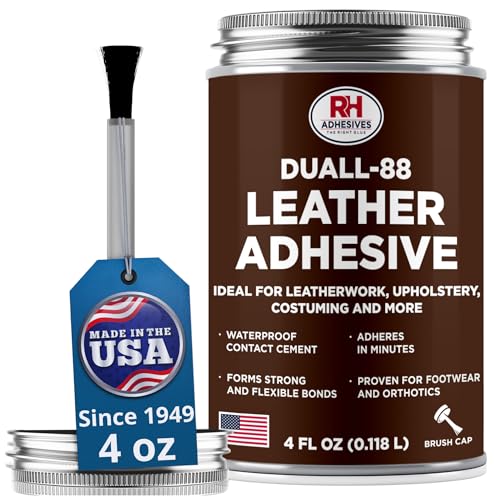
Duall‑88 is a neoprene‑based contact cement formulated specifically for leather, but it works exceptionally well for fabric‑to‑wood bonds where you need to reposition the material before the final cure. It sets within ten to thirty minutes but allows you to slide fabric into place before pressing, which is a huge advantage on curved wood surfaces like chair arms or headboards.
The amber‑clear formula dries transparent, so no ugly glue lines show through the fabric. It is heat resistant, waterproof, and flexible, making it a top pick for upholstery that will see regular use. Reviewers used it for convertible canvas tops, shoe repairs, and automotive interior panels, noting that the bond held where other adhesives failed.
The 4 oz can is small, so budget for multiple cans if you are tackling a full seat reupholstery. Strong fumes are a trade‑off for the high bond strength — ventilate well and use painters tape to mask edges. Full cure takes 24 hours, but the bond is usable after the initial set.
Why it’s great
- Repositionable during the initial set window
- Dries clear and stays flexible
- Waterproof and heat resistant
Good to know
- Strong solvent fumes require ventilation
- 4 oz can is small for larger projects
5. 3M Headliner & Fabric Adhesive (2‑Pack)

This two‑can pack from 3M is engineered for the punishing environment inside a vehicle — extreme heat, cold, moisture, and vibration all day long. It bonds heavyweight headliners to metal and plastic, but it works equally well on wood substrates for boat interiors, van conversions, or camper upholstery. The adjustable nozzle helps you direct the spray precisely, minimizing overspray on delicate fabric edges.
The formula dries clear in 30 to 60 minutes and sets fast enough to move a project along, but it is not so aggressive that you cannot correct a small mistake in the first minute. Users report professional‑looking results on sagging car headliners and convertible tops, with consistent spray patterns and no bubbling. Two cans cover a full headliner with some left over for touch‑ups.
Be warned that this adhesive is extremely sticky — one reviewer admitted that inexperience led to wrinkles. Masking tape and patience are essential. The bond resists environmental degradation better than most general‑purpose adhesives, making it a smart pick for any fabric‑to‑wood application that will face the elements.
Why it’s great
- Automotive grade handles extreme temps and vibration
- Two‑pack provides excellent coverage for large jobs
- Adjustable nozzle for controlled application
Good to know
- Very aggressive tack can cause wrinkles if misaligned
- Strong odor requires good ventilation
FAQ
Can I use spray adhesive on thin silk or chiffon without bleed‑through?
How do I remove excess glue if it seeps through the fabric?
Which formula works best for gluing thick upholstery foam to a wood frame?
Will a spray adhesive hold fabric to outdoor wood furniture?
How long should I clamp or weight down fabric after gluing to wood?
Final Thoughts: The Verdict
For most users, the best glue for fabric to wood winner is the 3M Hi‑Strength 94 ET Spray Adhesive because it combines the longest open time of any spray in this test with professional‑grade grip and low VOC certification. If you want instant tack and a two‑minute cure for a quick project, grab the Gorilla Ultimate Spray Adhesive. And for leather‑specific repairs or waterproofing fabric on wood, nothing beats the Duall‑88 Leather Adhesive for flexibility and clarity.