
Nothing kills the pre-game buzz faster than a generator that sounds like a jackhammer. You’re there to fire up the grill, charge the speakers, run a TV, and keep the drinks cold — not to drown out the fight song with engine roar. A tailgate generator needs to deliver real wattage for your gear while staying quiet enough that you can still hear the play-by-play and talk over the hump. That balance of power, noise, and portability defines the entire buying decision here.
I’m Mohammad Maruf — the founder and writer behind Drink4Good. I’ve spent countless hours cross-referencing engine displacement, decibel ratings, THD percentages, and fuel consumption data to find the models that actually deliver on their promises for a full day of parking-lot football and food.
After an exhaustive deep-dive into dozens of models, these picks represent the strongest combination of runtime, clean power output, and on-site portability you’ll find for any generator for tailgating this season.
How To Choose The Best Generator For Tailgating
Choosing the right tailgate generator comes down to balancing three core requirements: starting wattage to kick on your appliances, quiet operation so you don’t get kicked out of the lot, and a package light enough to haul from the truck bed. A unit that misses on any one leg will kill your experience.
Power Needs: Know Your Load Before You Go
Don’t buy on peak wattage alone. Every appliance has a starting surge that lasts a second or two and a running wattage that sustains operation. A 15,000 BTU RV air conditioner can pull 2000W starting, while a modern LED TV draws under 150W. Add up the starting surge of your biggest device plus the running wattage of everything else — that’s your minimum peak wattage target. For most tailgates with a TV, sound system, small fridge, and charging station, 2200 to 3200 starting watts covers the load. If you are running an RV AC or multiple large coolers, you need a unit with 3600W or more surge capacity.
Noise: The Real Tailgate Killer
Open-frame conventional generators operate between 75 and 90 decibels, which is loud enough to force everyone near your truck to shout. Inverter generators, by contrast, typically sit between 50 and 65 dBA at 23 feet — roughly the level of a normal conversation or light outdoor chatter. Most tailgate lots and campgrounds enforce strict noise limits, and a unit above 65 dBA will draw complaints from neighbors and possibly security. The decibel rating on the spec sheet is usually measured at quarter or half load; expect it to rise under full load, so buying a model rated 10% quieter than your target gives you a meaningful buffer.
Fuel Type, Runtime, and Portability
Gasoline is the standard — it’s widely available and offers the highest energy density per gallon, but it can gum up carburetors if not drained between uses. Propane (dual-fuel or tri-fuel) burns cleaner and never goes stale, which is a huge plus if your generator sits for months between football seasons. A single 20-pound propane tank can run a mid-size inverter for 8 to 12 hours. Runtime at 25% load (typical for a tailgate with varied power draws) is the number that matters: anything under 5 hours means you’ll be refueling during the third quarter. Weight is the final constraint; a generator over 100 pounds becomes a two-person lift to and from the truck bed, while a 50- to 60-pound unit can be moved by one person using the integrated handle.
Quick Comparison
On smaller screens, swipe sideways to see the full table.
| Model | Category | Best For | Key Spec | Amazon |
|---|---|---|---|---|
| PowerSmart 3800W Quiet | Inverter | Ultra-quiet tailgating | 59 dBA at 23 ft | Amazon |
| Honda EU2200i | Inverter | Sensitive electronics | 48-57 dBA noise level | Amazon |
| WEN DF680iX Dual Fuel | Inverter | RV and dual fuel use | 6800W gas / 6000W propane | Amazon |
| Generac GP3300i | Inverter | Home backup and tailgate | 3300W / 59.5 lbs | Amazon |
| Westinghouse iGen8200TFc | Inverter | Heavy loads, tri-fuel | 8200W peak / 50A outlet | Amazon |
| Champion 2500-Watt Ultralight | Inverter | One-person portability | 39.7 lbs / 53 dBA | Amazon |
| AMERISUN 4500W | Inverter | Large RV tailgate setups | 4500W peak / 61 lbs | Amazon |
| Aceup Energy 4000W | Inverter | Budget-friendly lightweight | 50 lbs / digital gauge | Amazon |
| EcoFlow DELTA Pro | Power Station | Zero-emission tailgating | 3600Wh / 3600W output | Amazon |
| 3800W Lightweight Inverter | Inverter | Value with clean power | 3800W / 57 lbs / 66 dBA | Amazon |
| PowerSmart 3600W | Inverter | Budget RV and home | 3600W / 50.7 lbs | Amazon |
In‑Depth Reviews
1. PowerSmart 3800W Portable Inverter Generator
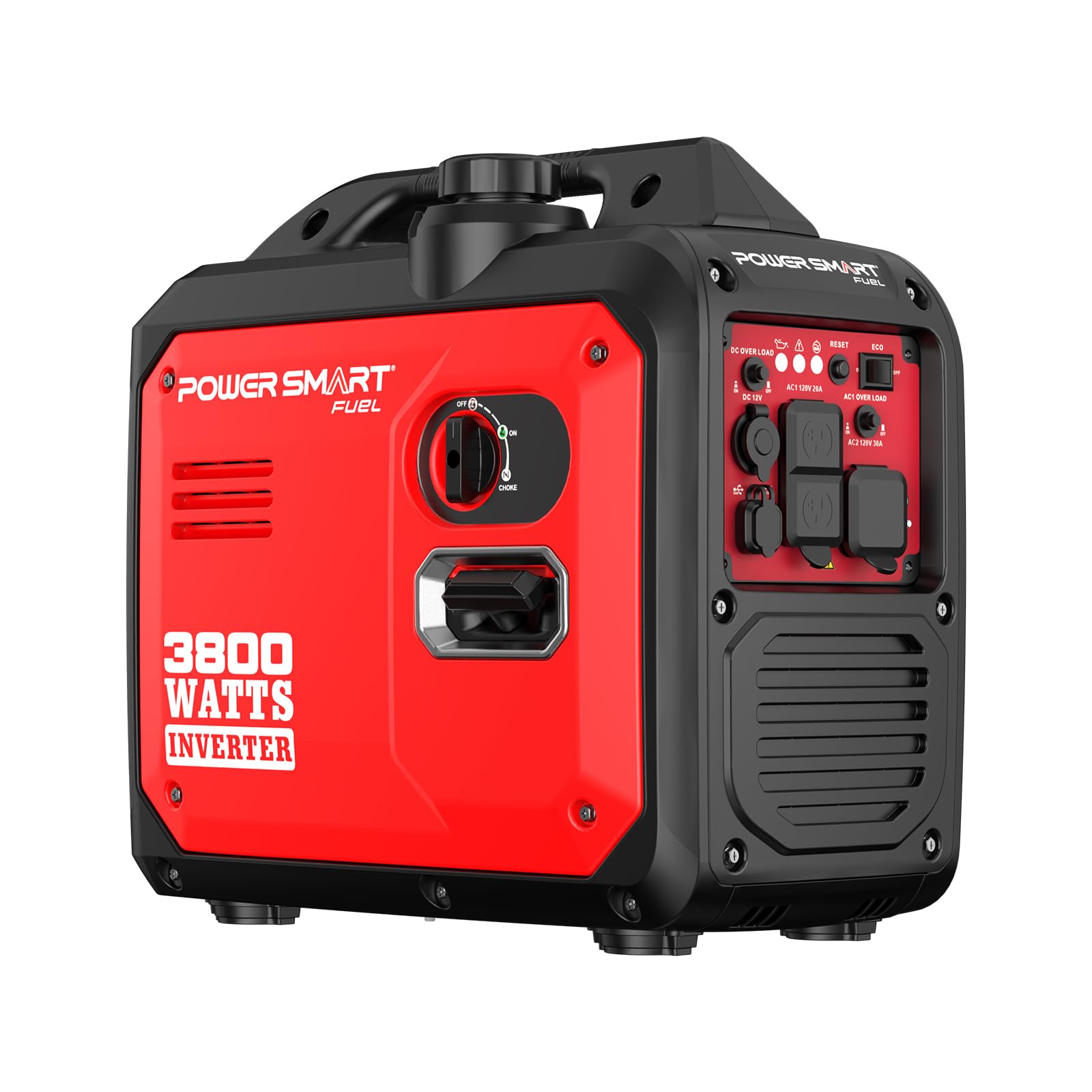
This is the quietest inverter in its wattage class, clocking 59 dBA at 23 feet — nearly silent enough to let you hear pre-game interviews over the hump. The 143cc four-stroke OHV engine pushes 3800 starting watts and 3200 running watts, enough to handle a medium-size RV AC unit or a full tailgate spread of TV, soundbar, mini fridge, and charging station simultaneously. At 52 pounds with an ergonomic handle, it’s a one-person carry into the truck bed.
The clean sine wave output (less than 3% THD) means you can plug in a laptop, tablet, or phone directly without a separate surge protector. In economy mode, the 1.19-gallon tank delivers up to 4.5 hours at 50% load, which aligns well with a standard tailgate window before the post-game wrap-up. Parallel ready capability lets you link a second unit if you ever upgrade to a full RV setup.
Real-world owners report near-instant first-pull starts, no choke handling, and fuel efficiency that often exceeds the 4.5-hour estimate when running moderate loads like fans and phones. The only consistent soft spot is the tank size — a larger capacity would avoid refueling during heavy-use days.
Why it’s great
- Whisper-quiet 59 dBA operation
- Lightweight at 52 pounds for 3800W output
- Clean sine wave under 3% THD
- Easy one-pull starting without choke
Good to know
- Run time at half load is roughly 4.5 hours
- Parallel kit not included
2. Honda EU2200i Inverter Generator
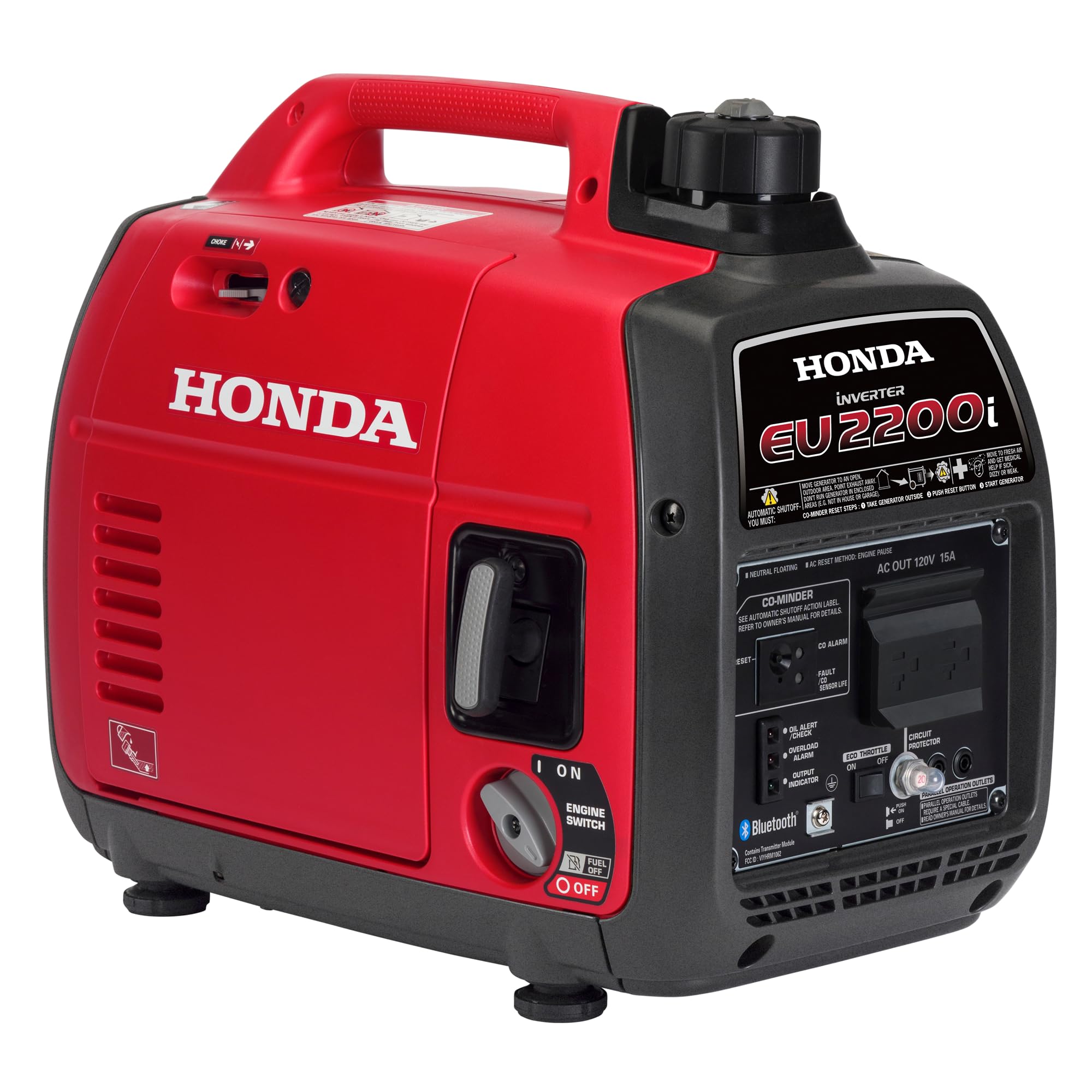
Honda’s EU2200i remains the benchmark for portable inverter generators, and for good reason. The 121cc four-stroke engine delivers 2200 starting watts and 1800 running watts — ideal for a tailgate centered on a TV, sound system, and a small 12V cooler rather than full RV air conditioning. The noise rating of 48 to 57 dBA is genuinely conversation-friendly; at its quietest, it’s quieter than a refrigerator hum.
What sets this unit apart for electronics-heavy users is the Eco Throttle system, which automatically adjusts engine RPM to match the load, improving fuel efficiency to the point where a 0.95-gallon tank can last over 8 hours at low load. The CO-MINDER carbon monoxide detection system adds a layer of safety when you set it up near the tailgate awning. Bluetooth connectivity via the My Generator app lets you remotely monitor fuel level, output, and operational hours from the tailgate cooler.
Several long-term owners report the generator still starts on the first or second pull after years of seasonal use, provided ethanol-free fuel is used. The trade-offs are real: it produces just 2200W peak, which means large RV AC units are out of reach, and the premium price positions it firmly above most inverter rivals. For a focused tailgate setup that prioritizes silence and reliability, it’s a tier above.
Why it’s great
- Industry-leading 48-57 dBA quietness
- Exceptional fuel economy with Eco Throttle
- App-based remote monitoring via Bluetooth
- CO-MINDER safety shutoff system
Good to know
- Only 2200W peak — no large RV AC
- Premium price compared to similar wattage units
3. WEN 6800-Watt Dual Fuel Inverter Generator

If your tailgate doubles as an RV camp site with dual air conditioners, or you want to power a small wedding reception setup, the WEN DF680iX brings serious capacity. The 224cc dual-fuel engine delivers 6800 surge watts on gasoline or 6000 surge watts on propane, with 5100 and 4500 rated watts respectively. The electric start means you hit the button and walk away — no wrestling a pull cord when your hands are greasy from the grill.
The bonded-neutral 240V configuration is a rarity in tailgate generators; it enables low-power Level 2 charging for electric vehicles and supports a 14-30R receptacle for heavy-duty appliances. The unit includes a TT-30R RV outlet, two 120V three-prong outlets, a 12V DC port, and dual USB ports. WEN’s Watchdog CO sensor automatically shuts the unit down if carbon monoxide accumulates, which is critical when the generator is placed near the truck bed or awning walls.
Owners praise the quiet operation in Eco Mode, especially on propane where it can carry a fifth wheel for days. The primary drawback is weight: at 99.2 pounds, it’s a two-person lift without the telescoping handle. Customer service experiences have been mixed, with some owners reporting excellent support and others struggling with responsiveness on warranty claims.
Why it’s great
- Dual fuel flexibility (gas or propane)
- Powerful 6800W peak / 5100W rated
- Electric start and remote operation
- Bonded-neutral 240V output for EV charging
Good to know
- Heavy at 99 pounds
- Customer service responsiveness has been inconsistent
4. Generac 3300-Watt Portable Inverter Generator

Generac enters the tailgate arena with the GP3300i, a 3300-watt inverter that emphasizes consistent power quality through its TruePower Technology. The 439cc four-stroke engine delivers 3300 starting watts and 2500 running watts, which hits the sweet spot for a flat-screen TV, streaming device, small PA system, and a full-size cooler. The PowerRush Advance Technology provides over 50% more starting capacity for motor-driven loads like a portable air conditioner or small refrigerator compressor.
The unit measures 60 pounds, making it slightly heavier than the PowerSmart but still manageable for one-person loading thanks to the integrated handle. LED indicators for low oil, overload, and ready-to-use status remove guesswork. The two USB ports and parallel-ready capability add flexibility for group tailgates where multiple units can share the load. Economy Mode adjusts engine speed to reduce fuel consumption automatically.
User feedback consistently highlights the quiet operation: it runs a full tailgate load of TV, WiFi, fridge, and fans for roughly 9 hours on less than one gallon at quarter load. Some owners at high altitude (above 5000 feet) note derating to around 2000W continuous, which is worth considering for mountain tailgates. Long-term reliability reports are mixed, with a small number of units failing beyond the first year, though most perform well for seasonal use.
Why it’s great
- PowerRush offers 50% extra starting capacity
- Very quiet with 9-hour runtime on 1 gallon
- TruePower Technology for clean electronics output
- Parallel ready for power expansion
Good to know
- Over 60 pounds requires two hands to lift
- Power output de-rates above 5000 feet elevation
5. Westinghouse iGen8200TFc Tri-Fuel Generator
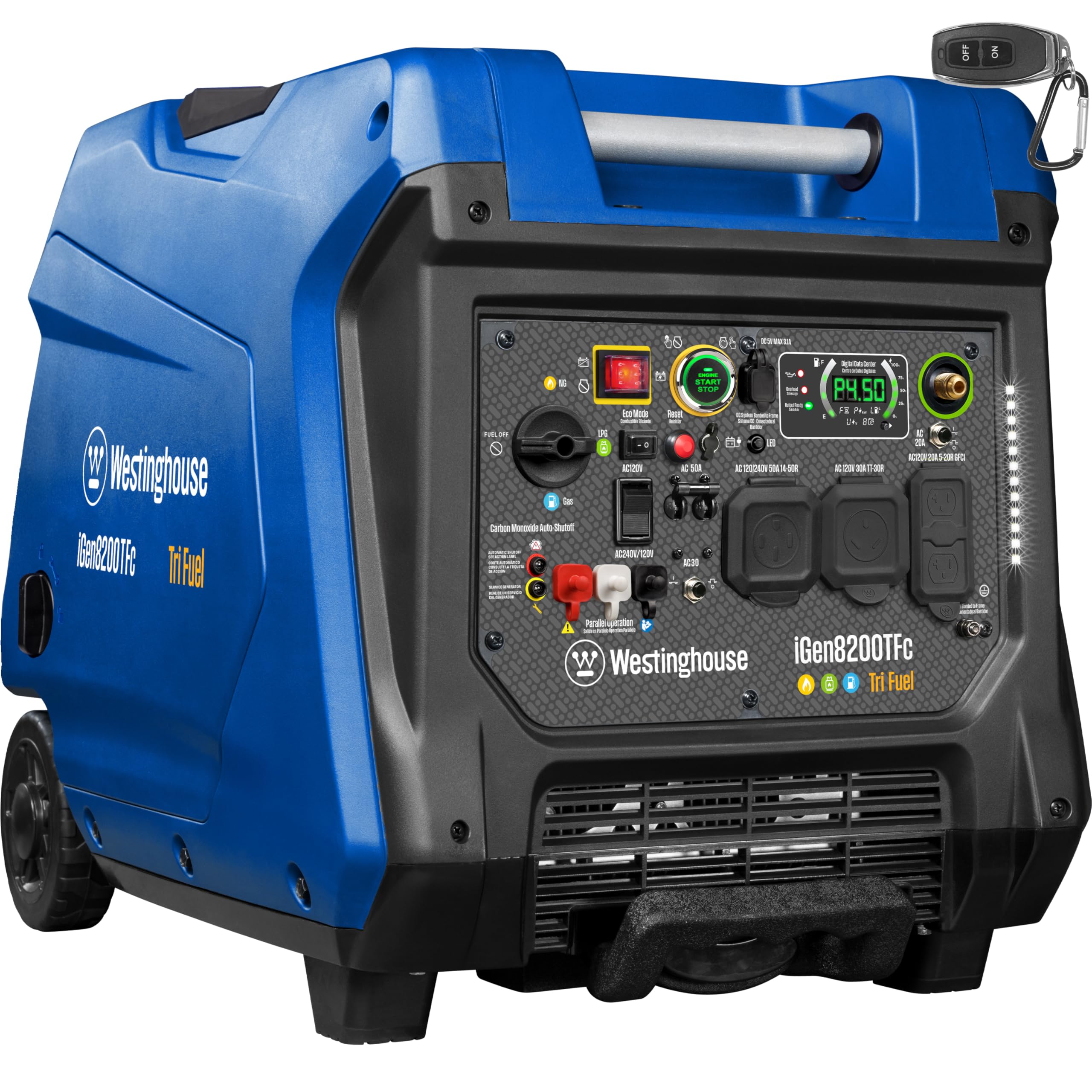
For tailgaters who never want to worry about finding a gas station near the stadium, the iGen8200TFc runs on gasoline, propane, or natural gas — making it the most fuel-flexible unit in this guide. The 298cc four-stroke OHV engine with a cast-iron sleeve delivers 8200 peak watts on gas, 7380 on propane, and 6560 on natural gas. That’s enough to power a large RV, multiple coolers, a full entertainment system, and a portable kitchen all at once.
The remote electric start via key fob is a game-changer: you can start the generator from inside the RV or from across the lot. The built-in 50A outlet (14-50R) is transfer switch ready, which also makes this a genuine home backup unit during storm season. At less than 3% THD with copper windings, the power is clean enough for laptops, medical devices, and any sensitive tailgate electronics. The fuel tank holds 3.9 gallons, delivering up to 17 hours of runtime at 25% load.
Owners consistently praise the quiet 60 dBA operation and the ease of transitioning between fuel sources mid-run. The main considerations are size and weight — the unit weighs 134.5 pounds, which requires a dolly or a second person for loading, and the initial battery needs a full charge before the first use.
Why it’s great
- Tri-fuel capability for ultimate fuel flexibility
- Remote key fob start
- 50A outlet ready for transfer switch backup
- Long 17-hour runtime at low load
Good to know
- Very heavy at 135 pounds
- Battery needs initial charging before first use
6. Champion 2500-Watt Ultralight Inverter Generator

At 39.7 pounds, the Champion 2500-watt inverter is the lightest generator capable of running a small tailgate. The 79cc four-stroke engine delivers 2500 starting watts and 1850 running watts, which comfortably handles a 32-inch TV, a small sound system, a fan, and charging station. The noise level of 53 dBA at 23 feet makes it one of the quietest options in the entire guide — barely audible over normal tailgate chatter.
The CO Shield automatic shutoff system meets strict safety standards, and the clean power output below 3% THD makes it safe for any sensitive electronics. Runtime reaches up to 11.5 hours at quarter load, so a single tank of gas can last the entire game day from pre-game tailgate through post-game cleanup. A 12V DC outlet lets you charge a backup battery or run a 12V cooler directly.
Owner feedback is largely positive for portability and reliability: many report using it as their sole generator for ice cream carts, slushie machines, and vendor markets. However, a subset of users experienced the CO sensor causing premature shutdowns in outdoor conditions, particularly in cold weather or when the unit was placed too close to walls. The unit’s wattage ceiling means it can’t power RV air conditioners or other high-starting-load appliances.
Why it’s great
- Ultra-light at under 40 pounds
- Very quiet at 53 dBA
- Exceptionally long 11.5-hour runtime
- CO Shield automatic safety shutoff
Good to know
- Not powerful enough for RV AC
- CO sensor can trip prematurely in some conditions
7. AMERISUN 4500-Watt Inverter Generator
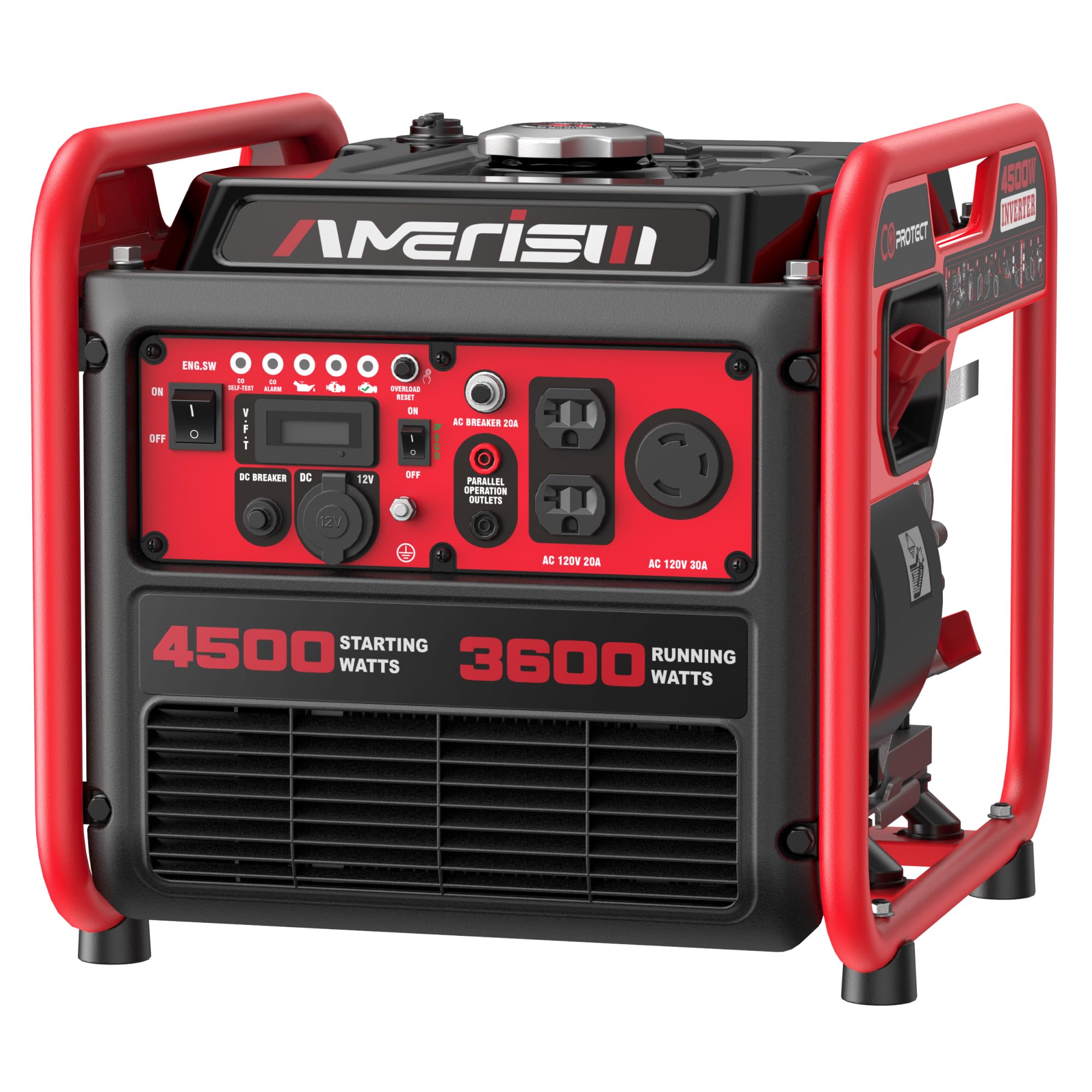
For the tailgater who shows up with a full travel trailer, the AMERISUN 4500W brings 4500 peak watts and 3200 running watts from a 223cc four-stroke engine. That’s enough to run a 15,000 BTU RV air conditioner along with a fridge, interior lights, and a TV without any load-shedding gymnastics. The 30A RV outlet (TT-30R) is included, so you can plug the camper directly without an adapter.
The unit weighs 61 pounds, which is reasonable for the 4500W class, and includes parallel capability to double output with a second unit if needed. Three outlets — two 120V 20A and one 120V 30A — plus a 12V DC car port cover most tailgate and camp power needs. EPA compliance and low-oil shutdown provide basic safety redundancies.
Customer reviews highlight strong running performance on heavy loads, good gas mileage for its output class, and first-pull starting reliability. The noise level sits around 76 dBA at 23 feet, which is louder than the inverter models above but still quieter than open-frame conventional generators. Some owners report the CO sensor shutting down the unit if exhaust blows back toward the intake, so careful positioning away from vehicle tailgates is advised. The lack of a fuel gauge is a minor annoyance mentioned by several users.
Why it’s great
- Powerful enough for RV AC and full appliances
- Includes 30A RV outlet for direct connection
- Good fuel efficiency for 4500W output
- Parallel ready for even more power
Good to know
- Noise level of 76 dBA is louder than premium inverters
- CO sensor can trigger if exhaust blows back
- No built-in fuel gauge
8. Aceup Energy 4000W Inverter Generator
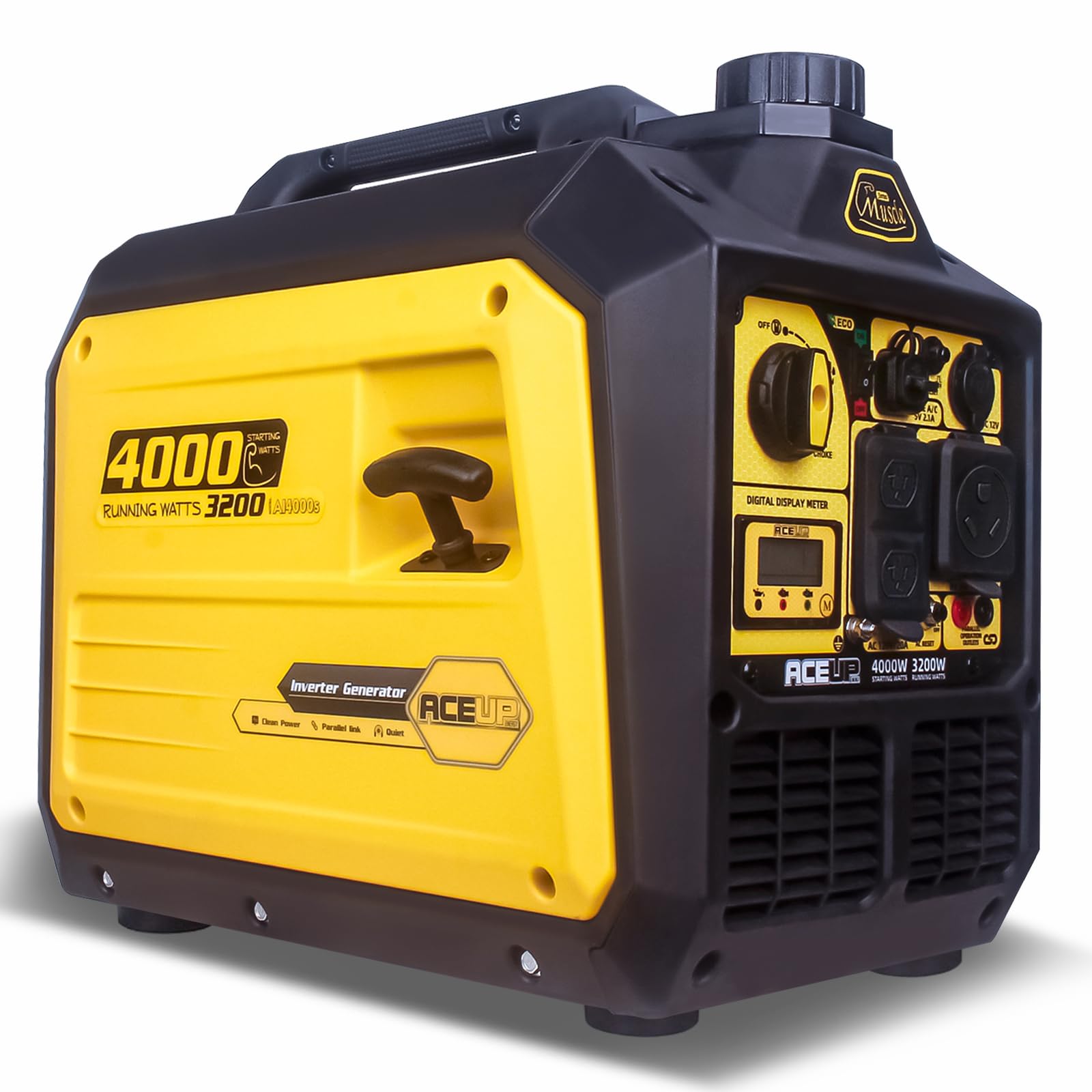
The Aceup Energy 4000W hits a compelling value proposition for tailgaters who want a lightweight, feature-packed unit without a premium price tag. Powered by a 149cc four-stroke OHV engine, it delivers 4000 peak watts and 3200 rated watts. At just 50 pounds, it’s one of the lightest 4000W generators on the market, and the compact dimensions let it slide into the side compartment of a camper or the corner of a truck bed.
The standout feature here is the 5-in-1 Intelligent Gauge, which displays voltage, runtime, fuel level, hertz, and power output simultaneously — a rarity at this price tier. The 5-in-1 knob combines fuel shut-off, engine on/off, and choke into a single switch, simplifying startup and reducing the risk of leaving fuel in the carburetor. Parallel capability is built in, and the fully enclosed design keeps noise under 65 dBA.
Users consistently describe this generator as “quiet” and “lightweight,” with many fitting it into small camper compartments. The runtime of roughly 5 hours at half-load on 1.32 gallons is adequate for a single game day but requires a fuel stop for multi-day events. Some early owners have flagged a tank collapse issue under certain atmospheric conditions, so following the break-in procedure and storing with proper fuel levels is recommended.
Why it’s great
- Only 50 pounds for a 4000W generator
- Digital gauge with voltage, runtime, and fuel level
- 5-in-1 knob simplifies startup and shut-off
- Parallel capable for expanded power
Good to know
- Runtime is about 5 hours at half load
- Some reports of tank collapse under vacuum conditions
9. EcoFlow DELTA Pro Power Station
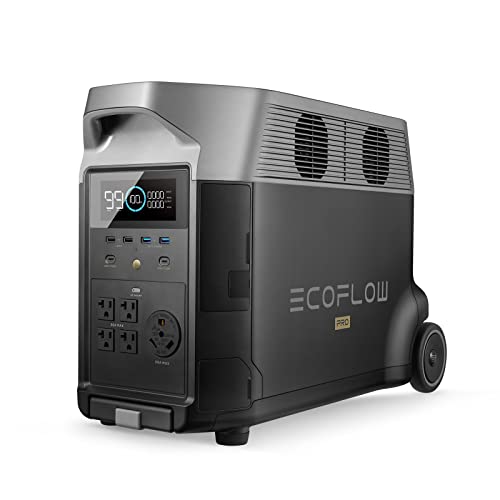
The EcoFlow DELTA Pro redefines the tailgate generator category by eliminating fuel, exhaust, and noise entirely. With a 3600Wh LiFePO4 battery and a 3600W AC output (expandable to 4500W with X-Boost), it can run a full tailgate system — TV, speakers, mini fridge, lights, and device charging — for several hours without a single combustion cycle. There’s no pull cord, no fuel jug, no oil changes, and zero carbon monoxide risk near the tailgate.
The five 120V AC outlets, six USB ports (two USB-C at 100W), and two DC outlets provide more connection options than any gasoline generator in this guide. X-Stream fast charging refills the battery from a wall outlet in 2.7 hours, and solar charging via four 400W panels makes it truly renewable. The app lets you monitor remaining capacity, charge/discharge rates, and customize output settings from your phone.
Owners universally praise the silent operation, fast recharge times, and reliability for powering sensitive gear without voltage fluctuation. The main limitation is runtime at high loads: a 3600Wh capacity can drain quickly if you’re running a large RV AC unit — though it can still run a smaller portable AC for several hours. The upfront price is significantly higher than a comparable gas generator, and at 99 pounds, it’s not meaningfully lighter than some mid-range inverter models.
Why it’s great
- Completely silent, zero emissions operation
- Fast 2.7-hour recharge from wall outlet
- Expanded capacity up to 25kWh with extra batteries
- App control with real-time monitoring
Good to know
- High upfront investment compared to gas generators
- 99 pounds and requires planning for recharging
- Limited runtime at maximum wattage draw
10. 3800W Lightweight Portable Inverter Generator
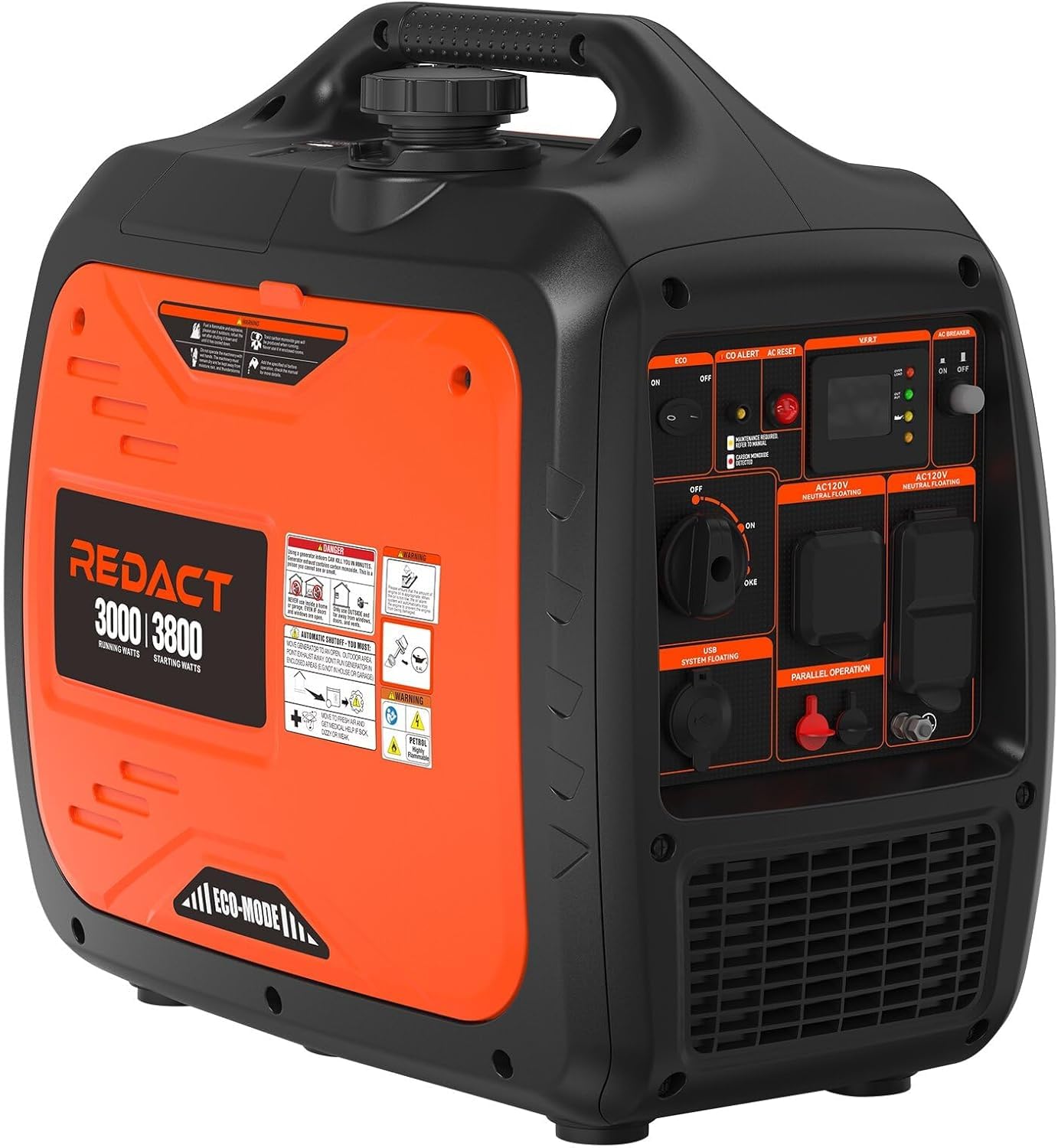
A budget-friendly entry that doesn’t scrimp on the essentials, this 3800W inverter generator delivers 3800 starting watts and 3000 running watts from a 154cc engine. It’s parallel-ready, meaning you can link two units to hit 5700W for larger loads, and the clean power output with under 3% THD makes it safe for all electronics. The 1.8-gallon tank provides up to 9 hours of runtime in Eco Mode at 66 dBA.
Outlets include two covered 120V receptacles, USB-A and USB-C for direct device charging, and a CO shut-off sensor. At 57 pounds, it’s compact enough to fit in most car trunks and truck beds. The grab-and-go design with a single carry handle is functional, though not as refined as the ergonomic handles on pricier models.
Customers consistently report reliable first-pull starting and quiet operation that stays conversation-friendly. The unit has powered a large AC unit, TV, and power tools simultaneously in Eco Mode. The noise level is slightly higher than the top-tier ultra-quiet models, but still well within acceptable tailgate range. A few users note that the unit isn’t quite as quiet as the highest-end Hondas, but the price-to-performance ratio is strong.
Why it’s great
- Good power output at 3800W peak
- USB-A and USB-C ports included
- 9-hour runtime in Eco Mode
- Parallel ready for upgrade path
Good to know
- 66 dBA is slightly louder than premium ultra-quiet units
- Carry handle is basic, not ergonomic
11. PowerSmart 3600-Watt Portable Inverter Generator

An excellent value-oriented option for tailgaters who need 3600 starting watts and 3200 rated watts without spending for premium-tier quietness. The 149cc four-stroke OHV engine powers this unit, and the advanced inverter technology keeps THD below 3%, safe for all plugged-in electronics. The 1.3-gallon fuel tank delivers up to 8 hours of runtime at 25% load, which covers most single-day tailgates without a refill.
The unit includes a 30A RV outlet ready for direct camper connection, plus parallel capability to double output with a second PowerSmart unit. At 50.7 pounds, the compact footprint (21.9 x 13.4 x 19.5 inches) and integrated carry handle make it easy to move from the truck to the parking spot. The two-year warranty provides peace of mind for a generator in this price range.
Customers frequently mention first-pull starting, smooth operation, and quiet performance “for its size.” Many report successfully running lights, TV, internet, refrigerator, freezer, and more from this unit during power outages and tailgates. The noise level is acceptable for tailgating but not as hushed as the 59 dBA PowerSmart sibling — a consideration if you’re parking in a tight lot where noise is strictly enforced. Replacement parts availability has been noted as a concern by some longer-term owners.
Why it’s great
- Lightweight at 50.7 pounds for 3600W output
- RV-ready 30A outlet included
- 8-hour runtime covers most day-long tailgates
- Two-year warranty for peace of mind
Good to know
- Noise is moderate, not ultra-quiet
- Replacement parts availability may be limited
FAQ
How many watts do I need for a typical tailgate setup?
Is an inverter generator mandatory for tailgating?
Can I run a generator inside a tailgate tent or awning?
What is the advantage of dual fuel or tri-fuel for tailgating?
How do I maintain a tailgate generator for long-term reliability?
Final Thoughts: The Verdict
For most tailgaters, the generator for tailgating winner is the PowerSmart 3800W Quiet Inverter because it delivers the best blend of whisper-quiet 59 dBA noise, 3800W surge capacity, and 52-pound portability at a mid-range price that doesn’t feel like a compromise. If you need the absolute quietest and most reliable unit for sensitive electronics, grab the Honda EU2200i — its legendary build quality and 48 dBA operation make it the stealth champion of the lot. And for zero-emission, silent tailgating where noise ordinances are strict and you want to skip fuel altogether, nothing beats the EcoFlow DELTA Pro.