
Fumbling with frozen boxes in a -20°F walk-in, your fingers numb within minutes, you’re not just fighting the cold — you’re fighting gloves that lie about their warmth rating. The difference between a productive shift and a painful one comes down to the insulation density, the grip material, and whether the cuff seals out the draft. Real freezer work demands gloves engineered for sustained sub-zero exposure, not just a thick layer of fleece.
I’m Mohammad Maruf — the founder and writer behind Drink4Good. I’ve spent hundreds of hours analyzing the thermal lining constructions, palm coating compounds, and cold-weather performance claims of the gloves that actually survive daily freezer shifts, breaking down the specs that separate a passable glove from one that keeps you warm through an entire 12-hour shift.
Whether you stock shelves in a commercial deep-freeze or handle cryogenic materials, the right pair hinges on comfort rating, material layering, and dexterity trade-offs. This guide breaks down the top models to help you find the best freezer work gloves for your specific cold-environment demands.
How To Choose The Best Freezer Work Gloves
Not all cold-weather gloves are built for sustained freezer exposure. A pair rated for a 30-minute commute won’t survive an eight-hour shift in a -10°F warehouse. The key specs you need to evaluate are the listed comfort rating, the insulation material, the palm coating compound, and the overall dexterity versus warmth trade-off. Below are the critical factors to weigh before buying.
Comfort Rating vs Real-World Performance
Manufacturers often state a comfort rating like -30°F or -40°F, but this number is measured under ideal lab conditions — no wind, no contact with freezing metal, and minimal hand movement. In practice, a glove rated for -30°F may start feeling cold after two hours of contact with frozen pallets. Look for gloves with a margin: if your freezer runs at -10°F, choose a glove rated for at least -20°F to -30°F to ensure your hands stay warm through the shift.
Palm Coating: Grip and Durability
The palm coating determines how securely you can handle wet, icy boxes and how long the glove resists abrasion. PVC coatings offer excellent grip on cold, dry surfaces but can stiffen in extreme cold. Silicone coatings stay flexible in sub-zero temperatures and provide superior grip on wet ice, though they wear faster on rough surfaces like concrete or metal shelving. Latex coatings provide good wet grip but degrade faster under UV light and cold cycling. For heavy freezer work, a silicone or heavy PVC coating on a knit shell offers the best balance.
Insulation Type: Acrylic vs Synthetic vs Multi-Layer
Acrylic knit linings are common in mid-range gloves and provide decent warmth for the price, but they compress over time, reducing the dead-air space that traps heat. Synthetic insulation like Thinsulate retains loft longer and provides more warmth per millimeter of thickness, meaning better dexterity. Multi-layer composite gloves (Nylon Taslan, PTFE, and cotton) are designed for cryogenic environments and offer extreme cold protection at the cost of significant bulk. Choose based on whether you need dexterity for fine tasks or maximum warmth for long, static exposure.
Quick Comparison
On smaller screens, swipe sideways to see the full table.
| Model | Category | Best For | Key Spec | Amazon |
|---|---|---|---|---|
| RefrigiWear Extreme Glove with Touch-Rite Nib | Premium | Freezer work + touchscreen access | Comfort rating -20°F | Amazon |
| RefrigiWear Insulated Extreme Freezer Gloves | Premium | Extreme sub-zero freezers (-30°F) | Silicone grip + Kevlar thumb | Amazon |
| RefrigiWear Thinsulate Extreme Freezer Mittens | Premium | Maximum warmth for shoveling & static exposure | Thinsulate insulation | Amazon |
| Inf-way Cryogenic Gloves | Mid-Range | Liquid nitrogen & dry ice handling | 3-layer composite, 13-inch length | Amazon |
| RefrigiWear PolarForce Gloves | Mid-Range | Daily freezer work at -30°F | Acrylic knit shell | Amazon |
| RefrigiWear Herringbone Grip Gloves | Mid-Range | Heavy-use warehouse stocking | PVC palm coating | Amazon |
| Cordova Cold Snap Thermo Gloves | Budget | Cold weather outdoor work (not deep freezers) | Brushed acrylic terry lining | Amazon |
In‑Depth Reviews
1. RefrigiWear Extreme Freezer Glove with Touch-Rite Nib

The RefrigiWear Extreme Freezer Glove is the closest you’ll get to a true all-rounder for sub-zero warehouse work. Its insulation keeps hands warm and dry through a full 10-12 hour shift in a -11°F freezer, according to long-term user reports. The real standout is the Touch-Rite conductive nib on the index finger — a small addition that eliminates the need to strip off gloves every time you need to scan a barcode or tap a screen, saving seconds that add up over hundreds of picks per shift.
The shell resists moisture penetration well, which matters when you’re moving between freezer and ambient areas and condensation builds up. Users consistently note that the gloves remain flexible enough for order-selecting tasks after a short break-in period, though they are not a slim-fit dexterity glove. The wrist closure seals effectively, preventing the draft that causes heat loss from the forearm.
Durability is the main caveat here — the conductive nib wears down with daily use, and some users report seam tears after a month of heavy 40-hour-week freezer duty. The touchscreen feature is a genuine productivity booster for freezer workers who handle digital inventory systems, but the construction could be more robust for the price point. If your work involves frequent computer or scanner access, this glove’s convenience edge is hard to beat.
Why it’s great
- Touch-Rite nib provides reliable touchscreen access without removing gloves
- Keeps hands warm and dry through 10-12 hour shifts in -10°F freezers
- Good balance of warmth and flexibility after break-in
Good to know
- Conductive nib wears out quickly with daily use
- Some users report seam tears after one month of heavy use
2. RefrigiWear Insulated Extreme Freezer Gloves -30°F

If your freezer runs at -30°F or colder, this is the glove that actually delivers on its rated comfort temperature. Multiple users report working in conditions ranging from -10°F to -40°F and maintaining warm, dry hands throughout their shifts. The silicone palm coating provides a confident grip on icy boxes and metal racking, while the Kevlar-reinforced thumb adds abrasion resistance at a high-wear point that commonly fails on lesser gloves.
The initial stiffness is the main adjustment period — several reviews note that the gloves require a dedicated break-in before they move naturally with your hand. After that, the suppleness improves significantly, making them suitable for forklift operation and general material handling. The cuff length offers good coverage, though it is not a gauntlet-style extension, so layering with a jacket sleeve that overlaps is recommended for maximum draft protection.
Durability feedback is split: some users report these gloves lasting through years of heavy daily use without fraying, while others experienced finger and palm tearing after rough handling on sharp metal edges. The bulkiness is also a recurring trade-off — they are not ideal for tasks requiring fine finger manipulation, such as picking small items or tying knots. For sustained extreme-cold exposure where grip and warmth priority over fine dexterity, these gloves are a top-tier choice.
Why it’s great
- Proven warmth down to -40°F with satisfied user reports
- Silicone palm stays flexible and grippy in extreme cold
- Kevlar thumb reinforcement extends lifespan at high-wear point
Good to know
- Requires significant break-in before achieving good flexibility
- Bulk limits dexterity for fine tasks or small-part handling
3. RefrigiWear Thinsulate Insulated Extreme Freezer Mittens
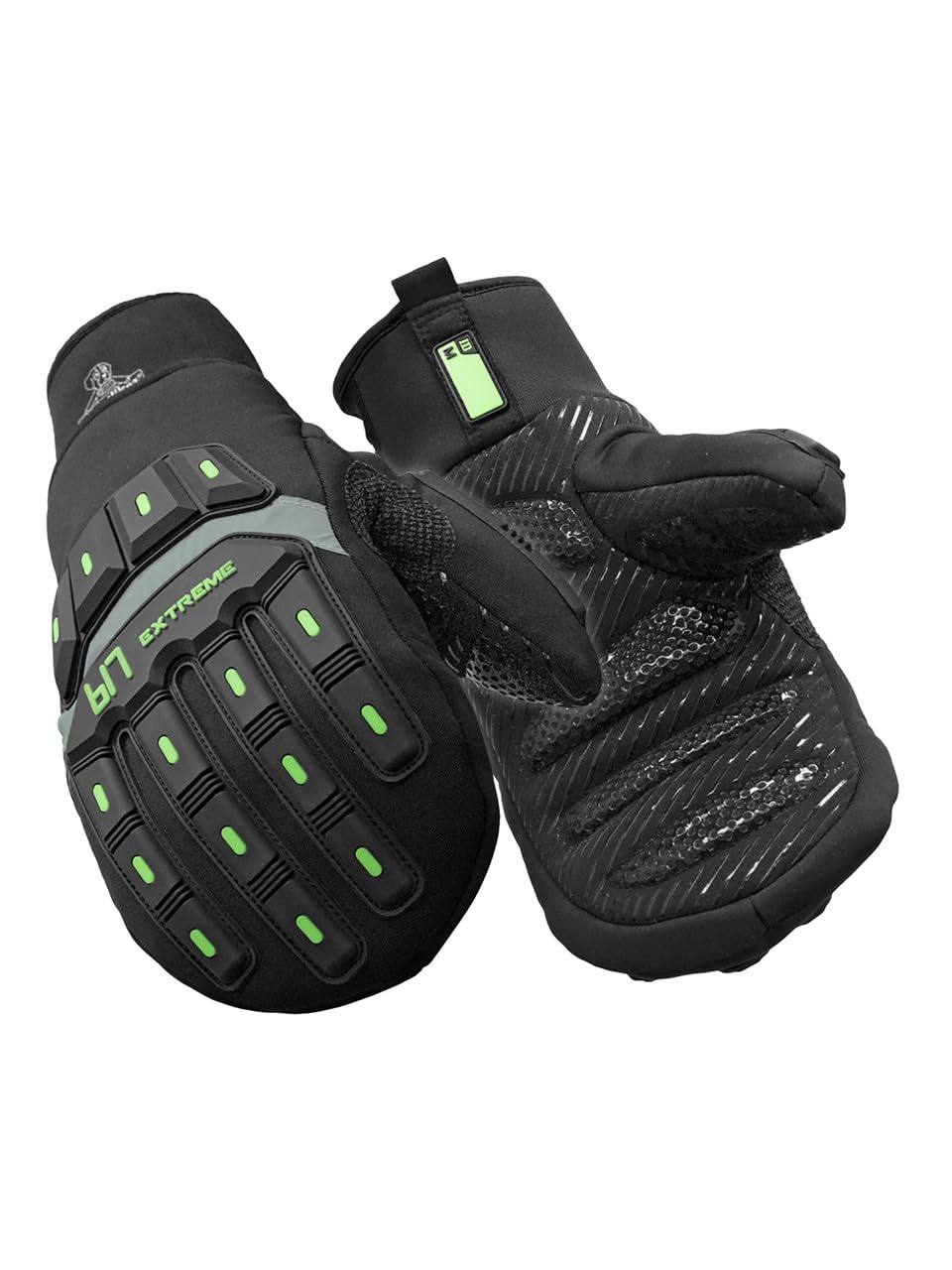
When finger dexterity is not the priority and maximum warmth is, these Thinsulate-lined mittens deliver the highest thermal protection in this guide. Users working in -10°F freezers and shoveling snow with windchills down to -10°F report that their hands stay completely comfortable for hours — one review noted hands never got cold even in 1°F with -10°F windchill. The silicone grip on the palm provides surprising traction for a mitten, allowing secure handling of shovels and snow-blower controls.
The design sacrifices individual finger movement for the thermal efficiency of a mitten — your fingers share body heat, which makes this the warmest configuration possible. The insulation is Thinsulate, which retains its loft better than acrylic fill under compression, so the warmth persists even when gripping tools. The mitten is initially stiff but becomes pliable enough for operating snow-blower triggers and shifters after a brief break-in.
The main drawbacks are the expected dexterity limits — picking up small items, tying laces, or using touchscreens is awkward. The thumbs are the weakest thermal point, with some users reporting cold thumbs after extended exposure. The mitten also retains moisture after about two hours of heavy use, requiring a few hours to dry fully. For pure warmth in static or low-dexterity tasks like standing guard in a freezer, shoveling, or snow-blowing, these mittens are unmatched in this lineup.
Why it’s great
- Thinsulate insulation provides superior warmth-to-bulk ratio versus acrylic
- Silicone grip on palm offers surprisingly good traction for a mitten
- Users confirm hands stay warm in -10°F with windchill
Good to know
- Weakest thermal point is the thumbs — can get cold over long periods
- Not suitable for tasks requiring fine finger dexterity or touchscreens
4. Inf-way Cryogenic Gloves Low Temperature LN2

For handling liquid nitrogen, dry ice, or working in extreme cryogenic environments where standard insulated gloves fail, the Inf-way Cryogenic Gloves are in a different category entirely. The 3-layer construction — Nylon Taslan outer, PTFE middle, and cotton inner — provides a comfort range from -450°F to +298°F, which is a completely different thermal protection class than any acrylic or Thinsulate glove can offer. The 13-inch wrist length (with longer mid-arm and elbow options available) provides splash protection when working with cryogenic fluids.
Users handling dry ice and liquid nitrogen hoses report that the gloves provide about 10 minutes of protection when in direct contact with frozen nitrogen lines, which is critical for safe handling in laboratory and industrial settings. The waterproof outer layer keeps hands dry when dealing with condensation or ice slurry. The fit is ambidextrous, which is convenient for quick changes but means the thumb placement is not hand-specific, slightly reducing natural grip alignment.
The main trade-off is that the insulation compresses and flattens over time, reducing the cold protection longevity with repeated heavy use. Users note that after several months, the gloves feel less warm than when new. They are also bulky and not suited for tasks requiring fine motor control — they are safety equipment first, work gloves second. For anyone dealing with liquid nitrogen, dry ice, or ultra-low-temperature laboratory environments, these are the only appropriate choice in this guide.
Why it’s great
- Rated for cryogenic temperatures down to -450°F
- 3-layer composite provides genuine protection for liquid nitrogen handling
- 13-inch length offers splash protection for cryogenic fluid work
Good to know
- Insulation flattens over time, reducing cold protection longevity
- Ambidextrous fit compromises natural thumb alignment for some users
5. RefrigiWear PolarForce Gloves, Insulated Work Glove

The RefrigiWear PolarForce glove represents the mid-range sweet spot for freezer workers who need reliable warmth without the premium price of the Extreme lineup. Rated for -30°F, users report wearing them five days a week for about two years before replacement, which is solid longevity for a sub- glove. The acrylic knit shell provides a good balance of insulation and flexibility — stiff when new but loosening up with use, allowing for reasonable hand movement during stocking and sorting tasks.
The grip is adequate on dry, cold surfaces, and the gloves perform well in dry cold environments like walk-in freezers. Several users specifically mention moving firewood in -18°F conditions and reporting that the gloves kept the cold out effectively. The sizing is slightly generous, which works in favor of layering with a thin liner if needed, but some users found the size chart unreliable — careful measurement is recommended before ordering.
The main durability concern is that not all batches are equal — a minority of users report the gloves falling apart within a month, with the shell separating from the insulation or the stitching coming undone. This inconsistency in manufacturing quality is the biggest risk with this model. If you get a well-constructed pair, they offer excellent value for daily freezer work; if not, the warranty return process may be necessary. For the price-conscious freezer worker who needs a glove that can handle -30°F for a couple of seasons, the PolarForce is a strong contender.
Why it’s great
- Proven two-year lifespan with 5-day-a-week freezer use
- Comfortable at -30°F with good flexibility after break-in
- Generous sizing allows for liner layering
Good to know
- Manufacturing quality inconsistent — some units fail within a month
- Size chart not reliable; measure hand circumference before ordering
6. RefrigiWear Herringbone Grip Unisex Gloves
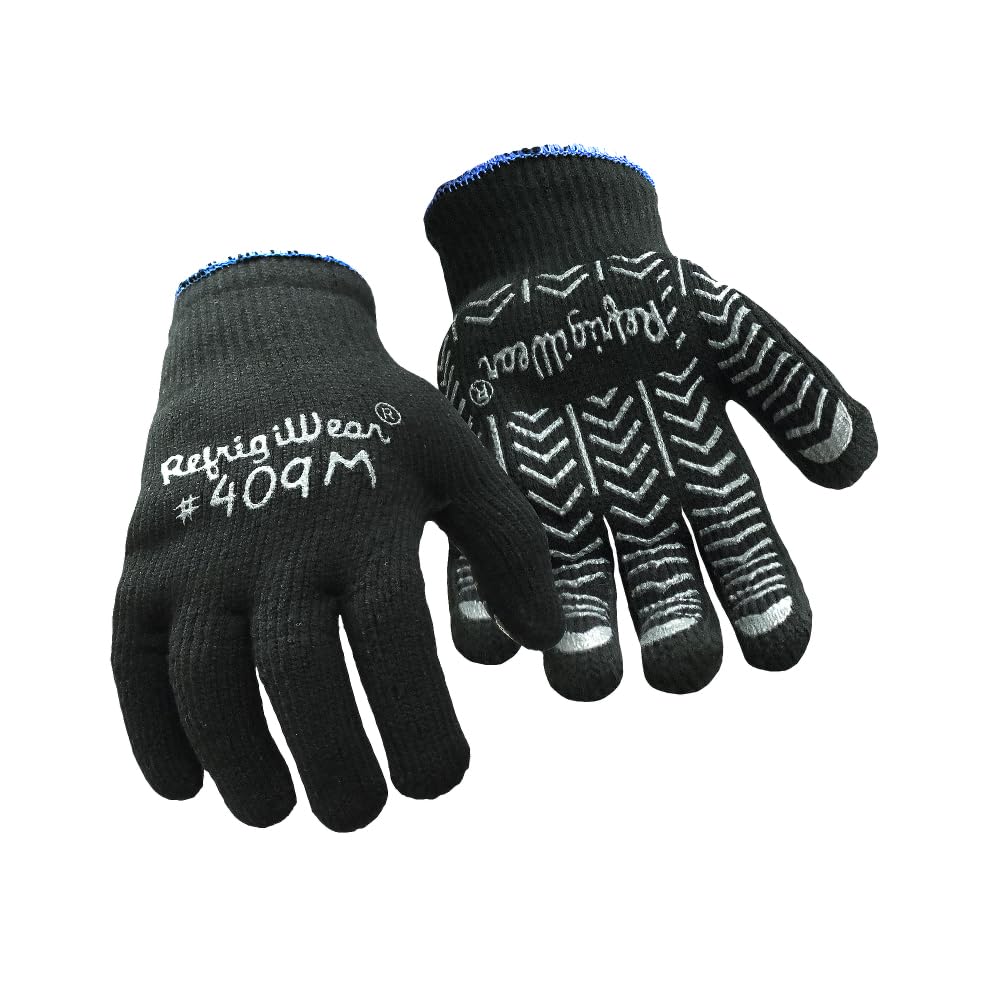
The RefrigiWear Herringbone Grip glove is a classic design that has been a workhouse in warehouses and freezers for years, known for its durable PVC palm coating that provides a strong, confident grip on boxes and equipment. The heavyweight acrylic knit body provides solid insulation for general cold work, though users note it is more suited for moderate cold rather than extreme sub-zero conditions — it performs better in the 20°F to 0°F range than in a -20°F deep freeze. The herringbone pattern on the palm is effective at channeling away surface moisture from condensation or light ice.
Durability is the strongest selling point — several users report these gloves lasting through heavy daily use, with the PVC coating resisting abrasion well on rough cardboard and metal shelving. The fit is slightly above average in size, which is beneficial for those who prefer a looser fit for air circulation or for layering with a thin liner. The fingers are proportioned for a more natural grip, which is a common complaint with cheaper knit gloves that have short finger stalls.
The main issues are sizing inconsistency and a specific design criticism: the grip coating is only on one side. Some users wish the coating were on both sides so they could flip the gloves when a hole develops on the palm side. The size chart is unreliable, and multiple users report having to exchange for a different size. For warehouse freezer workers who prioritize grip durability over extreme cold protection, this glove is a proven performer at a mid-range price.
Why it’s great
- Durable PVC palm coating resists abrasion on cardboard and metal shelving
- Herringbone pattern channels surface moisture for better grip on icy boxes
- Proven longevity through heavy daily warehouse use
Good to know
- Not suitable for extreme sub-zero freezers below 0°F
- Grip coating only on one side — cannot flip when palm wears through
7. Cordova Cold Snap Thermo Gloves, 12-Pack
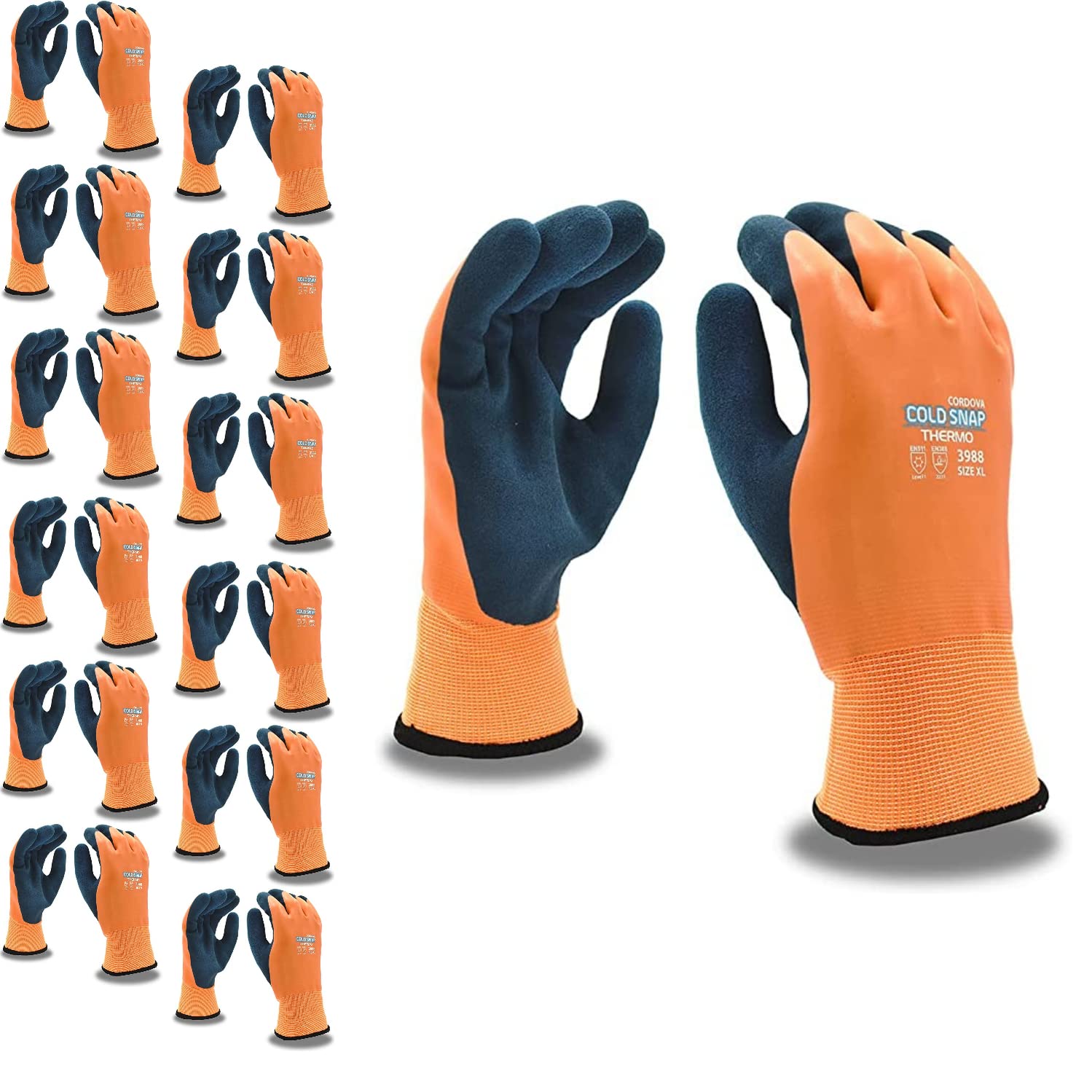
The Cordova Cold Snap Thermo Gloves are positioned as a budget-friendly entry point for cold weather work, sold in a 12-pack that makes them ideal for teams or workers who go through gloves quickly. The brushed acrylic terry lining provides a soft, warm interior, and the polyester shell with a full gray sandy palm coating offers some water resistance and grip. Users report that the gloves keep hands warm and dry in moderate cold weather and light wet conditions.
The 12-pack quantity is the key value proposition here — at a per-pair cost significantly lower than any other option in this guide, these gloves are designed for replacement rather than longevity. They work well for outdoor winter work like construction, landscaping, or general cold-weather tasks where losing or wearing out a glove is expected. The sizing runs standard, and the fit is comfortable for most hand shapes without being overly bulky.
The critical limitation is cold performance: these gloves are not rated for sustained deep-freezer work. Users report that at 9°F, the gloves failed to keep hands warm after just 5 minutes of exposure, making them unsuitable for walk-in freezer shifts. The waterproofing is also limited — they handle light moisture but are not fully waterproof. These gloves are best for outdoor cold work above freezing or for light freezer use with frequent hand warm-up breaks. For anyone needing a disposable volume glove for cold weather, this pack delivers, but it is not a true freezer glove.
Why it’s great
- Extremely low per-pair cost with 12-pack volume
- Soft brushed acrylic terry lining for comfort in moderate cold
- Good for outdoor winter work where gloves are frequently lost or damaged
Good to know
- Not suitable for sustained sub-zero freezer work — fails at 9°F
- Limited water resistance; not fully waterproof
FAQ
How do I know if a glove is actually warm enough for my freezer?
What palm coating works best for handling wet, icy boxes?
Can I use cryogenic gloves for regular freezer work?
How do I prevent my gloves from getting wet inside from sweat?
Final Thoughts: The Verdict
For most users, the best freezer work gloves winner is the RefrigiWear Extreme Glove with Touch-Rite Nib because it delivers the ideal balance of warmth, durability, and dexterity for daily freezer work, with the added convenience of touchscreen access. If you need maximum warmth for static exposure in extreme sub-zero conditions (-30°F and below), grab the RefrigiWear Insulated Extreme Freezer Gloves with silicone grip. And for handling liquid nitrogen or cryogenic materials where safety is non-negotiable, nothing beats the Inf-way Cryogenic Gloves.