
The quiet hum of your device keeps your airway open all night, but when the grid goes dark, that therapy stops unless you have a dedicated backup. Choosing the wrong power source means lost sleep, dead batteries, or worse—damaging your sensitive medical equipment with dirty power.
I’m Mohammad Maruf — the founder and writer behind Drink4Good. I’ve spent hundreds of hours analyzing generator specifications, battery chemistries, and real-world user reports to separate the units that reliably keep CPAP machines running through the night from those that fall short under load.
Whether you’re preparing for hurricane season, planning a camping trip, or simply want peace of mind during an unexpected blackout, this guide cuts through the marketing to deliver the hard data you need on the generator for cpap machine market.
How To Choose The Best Generator For CPAP Machine
Selecting a power source for your CPAP isn’t about buying the biggest battery you can find. You need to match three variables: the exact wattage your machine pulls at therapy pressure, the run time you require per night, and whether you need silent indoor operation or outdoor fuel-based power.
Match the Power Output to Your Device
CPAP machines vary wildly in power consumption. A ResMed AirSense 10 at default pressure with a heated humidifier set to 3 draws about 60–70 watts. Bump the pressure to 20 cmH₂O with a heated hose, and that number climbs past 100 watts. Always check the AC adapter rating on the power brick—usually listed between 60W and 90W—and add 30% headroom for startup surge. Gas generators must output less than 3% Total Harmonic Distortion (THD) to avoid damaging the CPAP motor control board.
Decide Between Battery and Fuel Generators
Battery power stations are silent, produce zero fumes, and work indoors—critical for bedroom use. The trade-off is limited run time and the need to recharge. Gas inverter generators offer unlimited run time with a fuel supply but must be placed outside to vent carbon monoxide, requiring a long extension cord and a weatherproof location. Dual-fuel units that run on propane or gasoline offer flexibility but add weight and noise.
Check the Cable Compatibility
Not all battery packs come with the correct DC barrel connector for your specific CPAP brand. ResMed machines typically require a 12V or 24V DC input via a proprietary cable, while Philips DreamStation units need a different tip size. The highest-rated generators for CPAP include a comprehensive cable set or offer adjustable voltage output to match your machine’s operating voltage without a separate converter.
Quick Comparison
On smaller screens, swipe sideways to see the full table.
| Model | Category | Best For | Key Spec | Amazon |
|---|---|---|---|---|
| BLUETTI AC200L | Power Station | Whole-home backup | 2048Wh LiFePO4 | Amazon |
| ERAYAK 4500W | Inverter Generator | Extended outages | 0.2%–1.2% THD | Amazon |
| WEN DF360iX | Dual-Fuel Inverter | RV camping | 2900W gas / 2600W propane | Amazon |
| Westinghouse iGen2800DFc | Dual-Fuel Inverter | Lightweight preparedness | 52 dBA noise rating | Amazon |
| Pulsar PGD40ISCO | Inverter Generator | RV AC + CPAP | 3200W rated | Amazon |
| EASYLONGER ES960 PRO | CPAP Battery | Multi-night camping | 297.6Wh LiFePO4 | Amazon |
| BLUETTI X30 | CPAP Battery | Compact travel backup | 297Wh / 3.9 lbs | Amazon |
| EASYLONGER ES720 | CPAP Battery | Budget-friendly backup | 266.4Wh with 4 DC cables | Amazon |
| Oxseryn 2800W | Inverter Generator | Budget gas power | 9 hours at 25% load | Amazon |
In‑Depth Reviews
1. BLUETTI AC200L Portable Power Station

The AC200L is the gold standard for CPAP users who demand multi-night security without touching a drop of fuel. Its 2048Wh capacity runs a ResMed AirSense 11 with no humidifier for over 30 consecutive nights—or about 20 hours with the heated hose at moderate pressure. The pure sine wave inverter delivers clean 2400W power, so even the most sensitive CPAP motor control board sees zero harmonic distortion.
What sets this unit apart is its expandability. You can daisy-chain up to two B300K expansion batteries for a total of 8192Wh, which effectively eliminates runtime anxiety for weeks-long emergencies. The 30A RV output also lets it serve double duty as a camper power source. At 61.4 pounds, it’s not a backpacking solution, but for home preparedness and RV use, the weight is justified by the capacity.
The AC200L recharges from 0 to 80% in just 45 minutes on a 2400W AC input. Solar input up to 1200W makes off-grid replenishment viable. The 10-millisecond UPS backup mode means your CPAP never blinks during a grid flicker—a critical feature for maintaining therapy continuity through brief power dips.
Why it’s great
- Expandable up to 8192Wh for extended use
- Pure sine wave output safe for all CPAP electronics
- UPS mode with sub-10ms switchover
Good to know
- Heavy unit at 61 lbs — not easily portable
- Proprietary AC charging adapter can be hard to replace
2. ERAYAK 4500W Portable Inverter Generator

For CPAP users who need to power an entire home during a multi-day outage, the ERAYAK 4500W delivers ultra-clean electricity with Total Harmonic Distortion as low as 0.2%—far below the 3% threshold that medical device manufacturers recommend. This means your CPAP motor receives power clean enough to prevent overheating or erratic blower behavior.
The 3500 running watts cover more than just sleep therapy. You can simultaneously run a CPAP, a refrigerator, a few lights, and even a 13,500 BTU RV air conditioner without overloading the unit. The 30A TT-30R outlet makes RV hookup straightforward. At 55 pounds with the optional wheel kit, it’s manageable for garage-to-yard movement.
Noise output at 60.5 dBA is conversational level—loud enough that you’ll want it outside a bedroom window but not disruptive to neighbors. The ECO mode cuts fuel consumption by roughly 60% at quarter load, letting the generator stretch a single tank of gas through a full night’s sleep while keeping your CPAP humming.
Why it’s great
- Extremely low THD protects sensitive CPAP electronics
- Parallel-ready to double output for whole-home use
- Fuel-efficient ECO mode extends runtime overnight
Good to know
- Pull-start only; no electric start option
- Initial oil measurement requires careful setup
3. WEN DF360iX Dual Fuel Inverter Generator

The WEN DF360iX is built for CPAP users who want fuel flexibility without sacrificing inverter-grade power quality. Running on gasoline, it delivers 2900 rated watts; switch to propane and you get 2600 rated watts—enough to run a CPAP, a portable fridge, and a laptop simultaneously. The built-in CO Watchdog sensor automatically shuts the unit down if carbon monoxide accumulates to unsafe levels, a critical safety feature for outdoor generator placement near windows or vents.
The inverter technology keeps THD low enough for sensitive electronics, so your CPAP machine’s DC power supply faces no risk. The TT-30R receptacle lets you plug an RV directly in, making it a strong choice for campers who need to keep their CPAP therapy running while boondocking. At 49 pounds, it’s lighter than many comparably rated inverter generators.
User reports confirm first-pull starts on both fuel types. The digital display shows voltage, frequency, runtime, and load percentage—helpful for monitoring exactly how much of the 2900W your CPAP and other gear are using. The three-year warranty adds long-term confidence for a unit that may sit idle for months before it’s needed in an emergency.
Why it’s great
- Dual fuel offers propane storage stability for emergencies
- CO Watchdog auto-shutoff enhances safety
- Lightweight at 49 lbs for an inverter generator
Good to know
- 20A outlets may fit loosely with some plugs
- Propane reduces max wattage by about 10%
4. Westinghouse iGen2800DFc Dual Fuel Inverter Generator
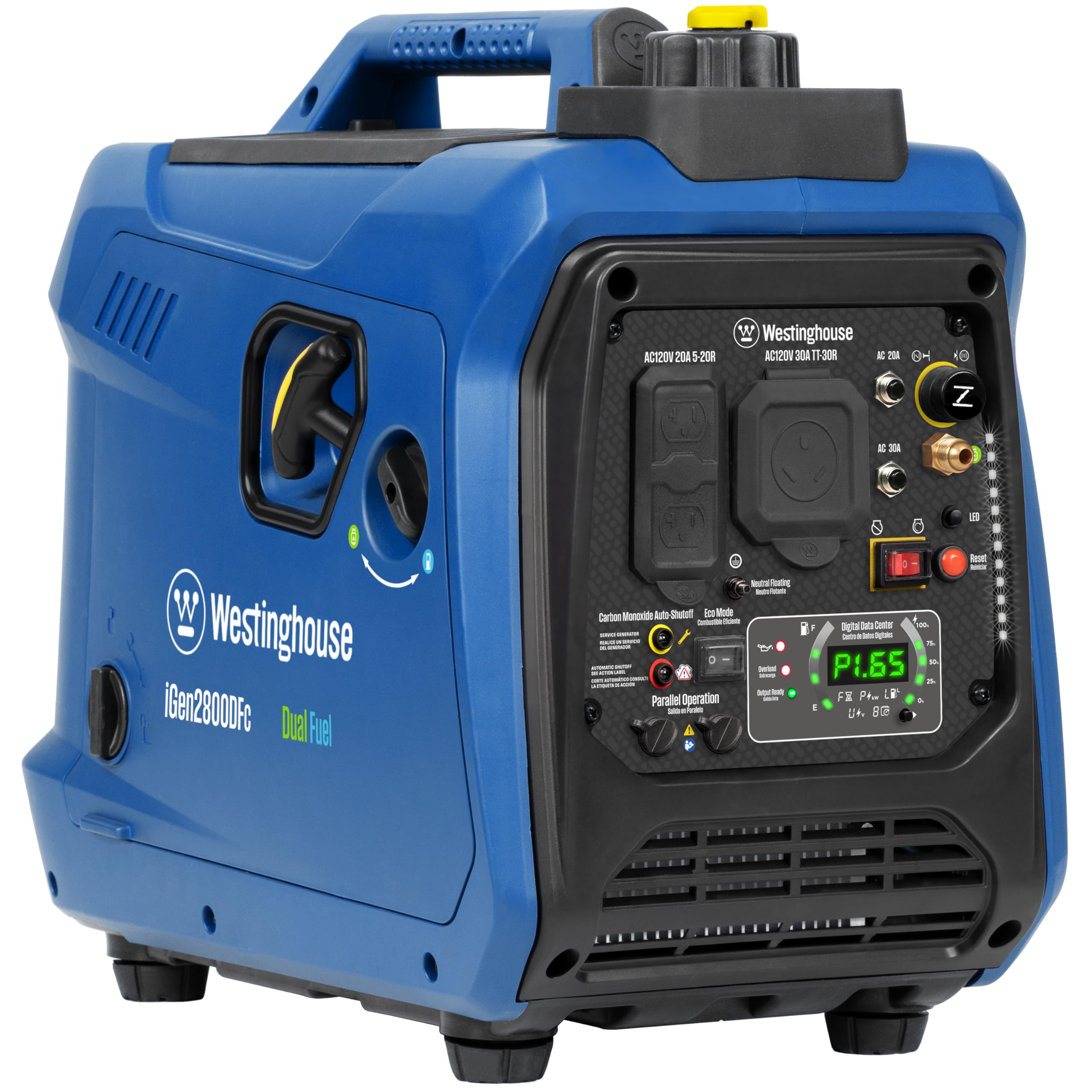
At 52 dBA from 23 feet, the iGen2800DFc is one of the quietest inverter generators in its class—quiet enough that a neighbor 50 feet away won’t know it’s running. For CPAP users in suburban settings or RV parks with strict noise curfews, this makes the difference between a good night’s sleep and a citation. The dual-fuel operation lets you run on gasoline for 2800 peak watts or propane for 2520 peak watts.
It weighs just 45 pounds and features a built-in handle that makes it easy to move from storage to an outdoor location. The TT-30R outlet provides full 30A RV capability, and parallel operation with a second unit doubles the output. The LED panel shows remaining fuel run time—a useful feature for planning refueling breaks.
Westinghouse’s reputation for reliability holds here: the copper windings run cooler and provide cleaner power than aluminum-wound competitors. With less than 3% THD, your CPAP control board sees consistent sine-wave power. The CO sensor adds a layer of protection, though Westinghouse still recommends keeping the generator at least 20 feet from doors and windows.
Why it’s great
- Ultra-quiet 52 dBA operation ideal for campgrounds
- Lightweight 45-lb frame with handle
- TT-30R outlet for direct RV connection
Good to know
- Customer support and parts availability can be inconsistent
- No electric start option on this model
5. Pulsar PGD40ISCO Portable Inverter Generator

The Pulsar PGD40ISCO serves CPAP users who also need to power an RV air conditioner. With 4000 peak watts and 3200 rated watts, it handles a 13,500 BTU roof AC unit while leaving enough headroom for a CPAP, phone charging, and a few lights. The inverter technology keeps THD low enough for sensitive medical electronics, so your CPAP runs smoothly even under partial load.
At 47.3 pounds, it’s remarkably light for a 4000W inverter generator. The four-stroke 145cc engine delivers up to 4 hours of runtime at half load on a single gallon of gas. Users report consistent first-pull starts even after months of storage, and the unit has proven durable through 300+ hours of use across varying altitudes from sea level to 8,000 feet.
The lack of wheels is a minor inconvenience on rough terrain, but the weight is low enough that one person can lift it into an SUV bed. The 4-in-1 parallel capability lets you pair a second unit for up to 8000 peak watts if your power needs grow. For the CPAP-focused user who also runs a travel trailer, this represents a strong mid-range investment.
Why it’s great
- Enough power for 13,500 BTU RV AC plus CPAP
- Lightweight design for easy transport
- Proven long-term reliability at varied altitudes
Good to know
- No wheels included for rough terrain movement
- Fuel cap can vapor-lock in high heat
6. EASYLONGER ES960 PRO CPAP Battery Backup
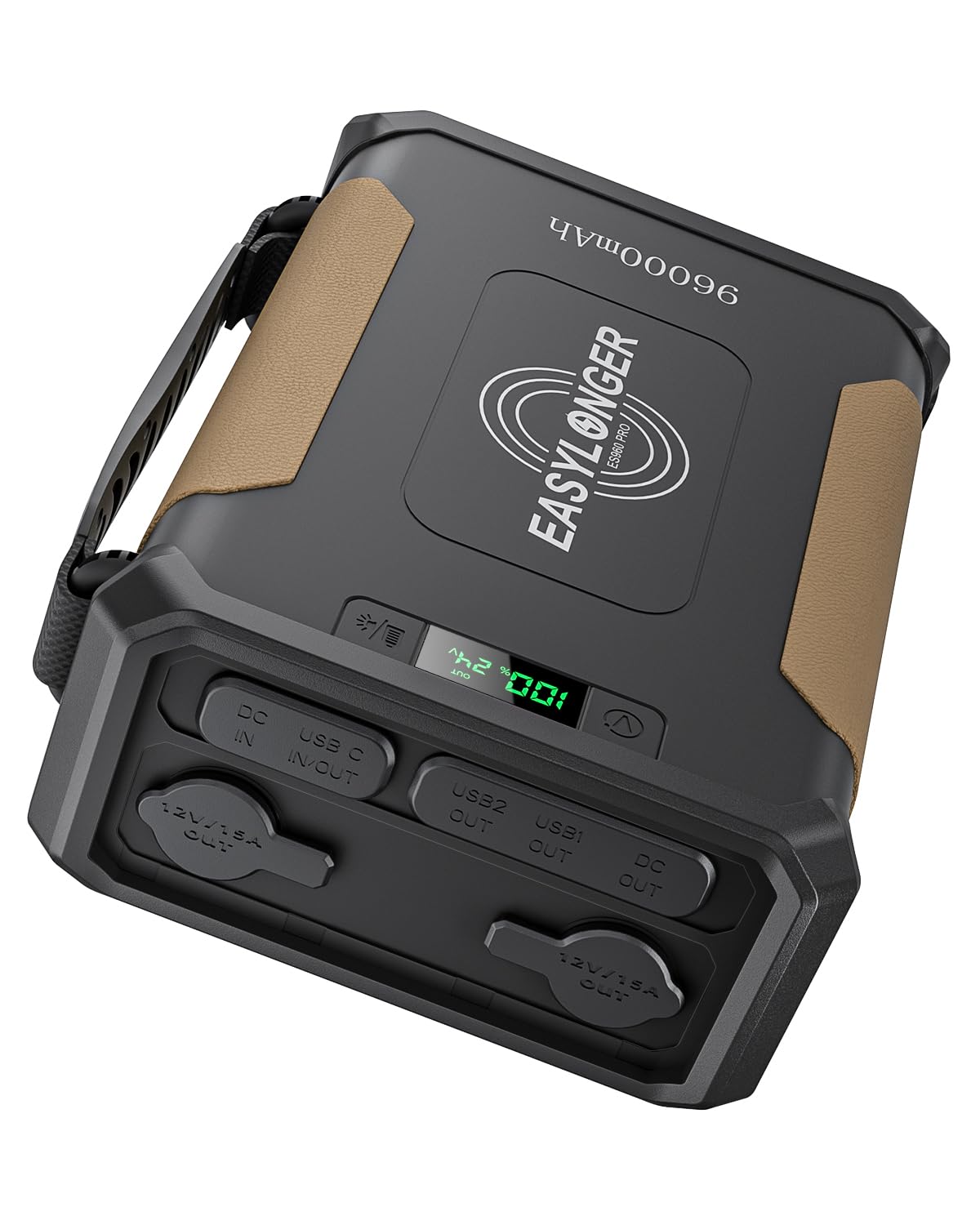
The ES960 PRO uses LiFePO4 chemistry rated for over 3000 charge cycles—roughly 10 years of nightly use before capacity degrades to 80%. That’s a dramatically longer lifespan than the lithium-ion batteries found in budget CPAP battery packs. The 297.6Wh capacity delivers two full nights of CPAP therapy with humidifier and heated hose turned off, or roughly 10 hours with those features active on moderate pressure settings.
The memory function on the adjustable DC voltage output saves you from resetting the voltage every time you power on. Four included cables cover ResMed S9, AirSense 10/11, AirCurve 10/11, AirMini, and Philips DreamStation 1 and 2. A 100W USB-C port lets you recharge a laptop or tablet alongside your CPAP.
Pass-through charging allows you to run your CPAP from wall power while the battery simultaneously recharges—ideal for overnight use during a rolling blackout. At 6.6 pounds, it’s heavier than some competitors but lighter than any inverter generator. The carrying case keeps everything organized for camping or emergency grab-and-go scenarios.
Why it’s great
- 3000+ cycle LiFePO4 battery for decade-long use
- Memory function saves DC voltage settings
- Pass-through charging for seamless operation
Good to know
- Not TSA-approved due to capacity exceeding 160Wh limit
- Heavier than standard lithium-ion CPAP batteries
7. BLUETTI X30 CPAP Battery Backup

The BLUETTI X30 packs 297Wh into a 3.9-pound frame, making it one of the most portable CPAP-specific batteries on the market. For campers and fly-fishers who hike to a remote site and need two or three nights of CPAP power without carrying a heavy power station, this is the sweet spot. Real-world testing shows a Philips System One at pressure 10 with humidifier off consumes roughly 16% per 9-hour session, yielding 5–6 nights of use.
The X30 includes five color-labeled cables covering ResMed S9, AirSense 10/11, AirMini, Transcend mini, and HDM Z1. Three DC output ports handle 12V, 15V, and 24V, covering the voltage range of nearly all CPAP machines. The LCD screen shows remaining battery in bar-graph format with a subtle backlight that won’t disturb your bed partner.
Users praise the fast recharge time: from 0 to 100% in about 4 hours via the included AC adapter. The LiFePO4 cells support up to 2000 recharge cycles, so the X30 remains a reliable backup for years. At this price point, the build quality feels premium, though the unit can only power one 12V device at a time via its DC outputs.
Why it’s great
- Ultra-portable at 3.9 lbs for backpack camping
- 2000+ cycle LiFePO4 with fast 4-hour recharge
- Color-coded cable set for easy setup
Good to know
- Reported compatibility issues with some Philips DreamStation units
- Can only power one device at a time via DC output
8. EASYLONGER ES720 CPAP Battery Backup

The ES720 is an entry-level CPAP battery that undercuts pricier competitors while still delivering enough juice for a full night’s therapy. The 266.4Wh capacity runs a ResMed AirCurve 10 for three nights without humidifier, or a full single night with the heated hose active. Four cables in the box cover ResMed S9, AirSense 10, AirCurve 10, AirMini, AirSense 11, and Philips DreamStation—no extra purchases needed.
What surprises at this tier is the built-in 180W cigarette lighter socket and a 100W USB-C port. You can power a car fridge during the day and charge your CPAP overnight from the same pack. The adjustable DC voltage output (12V, 16.5V, 20V, 24V) means you’re not locked into a single machine’s voltage requirement.
Some users report that the LED flashlight button is easily bumped during handling, and the voltage setting resets after shutdown—a minor hassle. But for the CPAP owner on a tighter budget who needs a reliable single-night backup for occasional outages or car camping, the ES720 delivers the core function without the premium price tag.
Why it’s great
- Budget-friendly with comprehensive cable kit included
- Adjustable DC voltage for multi-device compatibility
- 180W cigarette lighter socket for car accessories
Good to know
- Battery voltage setting must be reset each power-on
- Large and heavy for backpacking at 3.3 lbs
9. Oxseryn 2800W Portable Inverter Generator
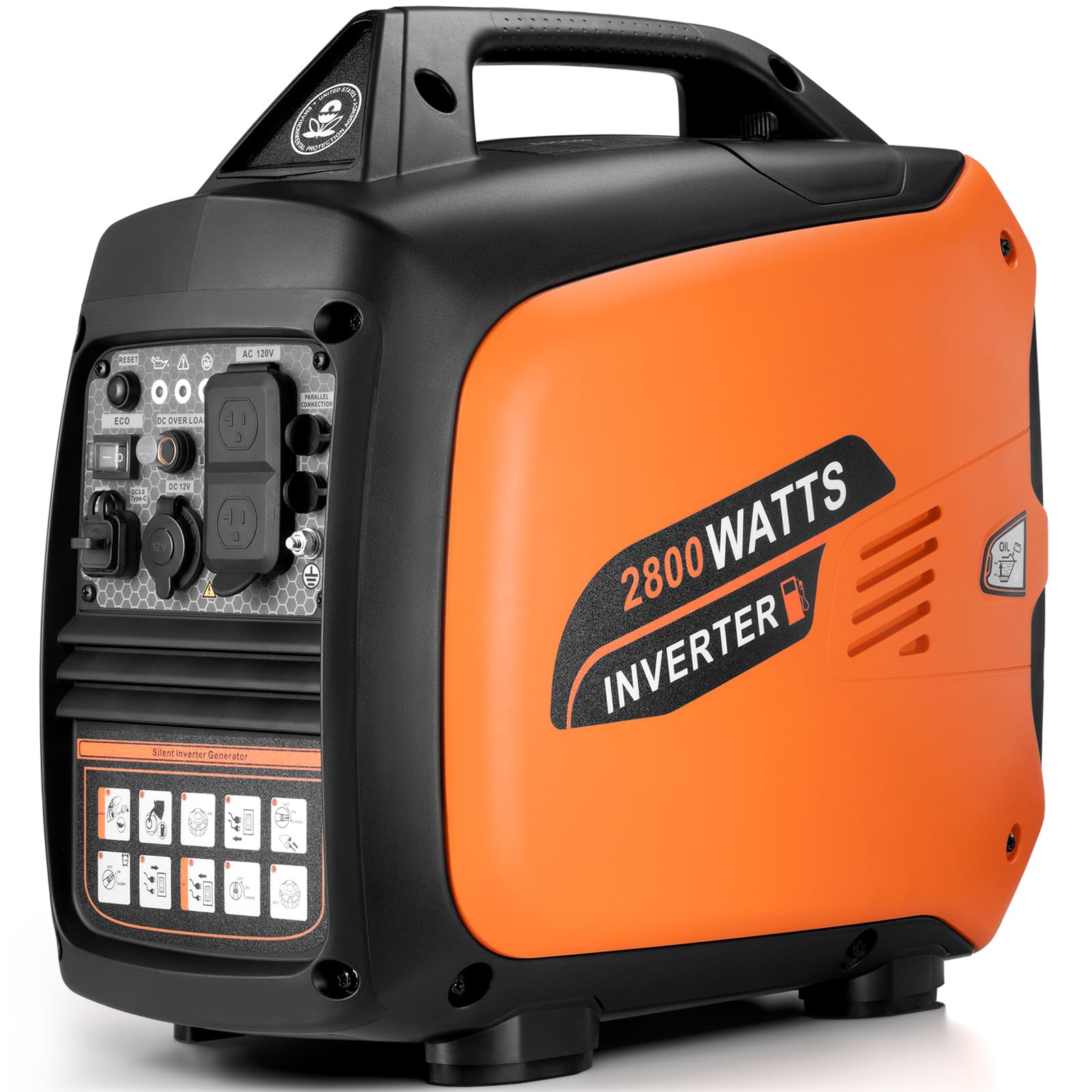
The Oxseryn 2800W is the least expensive inverter generator in this lineup, but it puts out 2000 running watts with a clean 3% THD—safe for CPAP electronics. The 79.8cc engine runs up to 9 hours at 25% load on 1.1 gallons of gas, which translates to roughly two overnight CPAP sessions if you turn off the heated accessories and run at moderate pressure.
At 40 pounds with a compact frame and built-in handle, it’s the easiest gas generator in this review to lift and store. The output panel includes two 120V AC ports, one 12V DC port, one USB-A, and one USB-C—enough to power your CPAP, a phone, and a small lamp. The ECO mode automatically adjusts engine speed to match the load, which keeps noise at 58 dBA from 23 feet.
Budget considerations are real: the side panel must be removed to access the oil fill and dipstick, and the initial oil change is messy. But users consistently praise the easy first-pull starts and reliable operation. If your CPAP backup needs are occasional and you have a safe outdoor location to run a gas generator, this unit offers the lowest entry cost into the category.
Why it’s great
- Lowest cost per watt for CPAP backup power
- 40-lb frame is easy to carry and store
- ECO mode saves fuel during low-load CPAP use
Good to know
- Side panel removal required for oil checks
- 3% THD is at the margin for sensitive electronics
FAQ
Can I run my CPAP on a regular portable generator?
How many watts does my CPAP actually draw?
How long will a 300Wh battery run my CPAP?
Is it safe to run my CPAP from a car battery?
Final Thoughts: The Verdict
For most users, the generator for cpap machine winner is the BLUETTI AC200L because it offers a decade of silent, expandable power with pure sine wave output that matches CPAP electronics perfectly. If you want a compact, ultra-portable battery for camping, grab the BLUETTI X30. And for extended outage scenarios where fuel is accessible and you need full-home backup, nothing beats the ERAYAK 4500W inverter generator.