
Clay soil is the toughest ground to turn green. It packs hard when dry, turns to muck when wet, and smothers shallow roots. Most grass seed mixes simply rot or bake on that dense surface before they ever stand a chance.
I’m Mohammad Maruf — the founder and writer behind Drink4Good. I’ve spent hundreds of hours analyzing seed composition data, reading through real user reports on compacted soil performance, and cross-referencing germination rates across dozens of cool-season and transition-zone varieties to find what actually survives in clay.
After digging through thousands of verified experiences, one clear winner emerged as the best in its class. Here you’ll find direct comparisons of the top-rated options for the best grass seed for clay soil — ranked by root strength, compaction tolerance, and real-world germination data.
How To Choose The Best Grass Seed For Clay Soil
Clay soil presents a unique challenge — it holds too much moisture, drains slowly, and compacts into a hardpan that shallow-rooted grasses can’t penetrate. The right seed mix must be selected for root architecture, disease resistance in wet conditions, and the ability to establish in poor aeration.
Look for Rhizomatous Tall Fescue or Fine Fescue Blends
Tall fescue cultivars with rhizome potential (like those in the Twin City Resilience II blend) can push through compacted layers laterally, filling bare spots without needing perfect topsoil. Fine fescues like creeping red and hard fescue have aggressive tillering habits that also thrive in the dense, shady edges of clay lawns.
Check Water Absorption Technology
Because clay drains slowly, seeds risk rot if they sit in puddles. Look for coatings that absorb moisture without becoming waterlogged — Moisture Boost Plus and OptiGrowth coatings are engineered to draw in water while keeping the seed aerated, preventing fungal issues during the germination window.
Quick Comparison
On smaller screens, swipe sideways to see the full table.
| Model | Category | Best For | Key Spec | Amazon |
|---|---|---|---|---|
| Twin City Seed Co. Resilience II | NTEP Fescue | Heavy clay & high-traffic lawns | 5 NTEP tall fescue cultivars with rhizome potential | Amazon |
| Scotts Turf Builder All-Purpose | All-Purpose Mix | Large area clay & sun-to-shade coverage | 8,000 sq ft coverage per 20 lb bag | Amazon |
| Outsidepride Legacy Fine Fescue | Fine Fescue Mix | Dense shade & drought-prone clay | OptiGrowth coating with Zinc, Phosphorus, Nitrogen | Amazon |
| X-Seed Ultra Premium Quick and Thick | Cool-Season Blend | Fast fill on clay patches & sandy-clay mixes | 3 lb covers 2,100 sq ft for overseeding | Amazon |
| Creeping Red Fescue by Eretz | Fine Fescue | Slopes & low-mow clay areas | 99.6% pure seed, 0.4% inert matter | Amazon |
| Scotts Kentucky 31 Mix | Value Tall Fescue | Budget-friendly new lawns on clay | Blend of KY-31, Premium Tall Fescue & Annual Ryegrass | Amazon |
| Scotts Turf Builder Kentucky Bluegrass Mix | Bluegrass Blend | Northern clay with good drainage | Root-Building Nutrition formula | Amazon |
In‑Depth Reviews
1. Twin City Seed Co. Resilience II, Tall Fescue Mixture
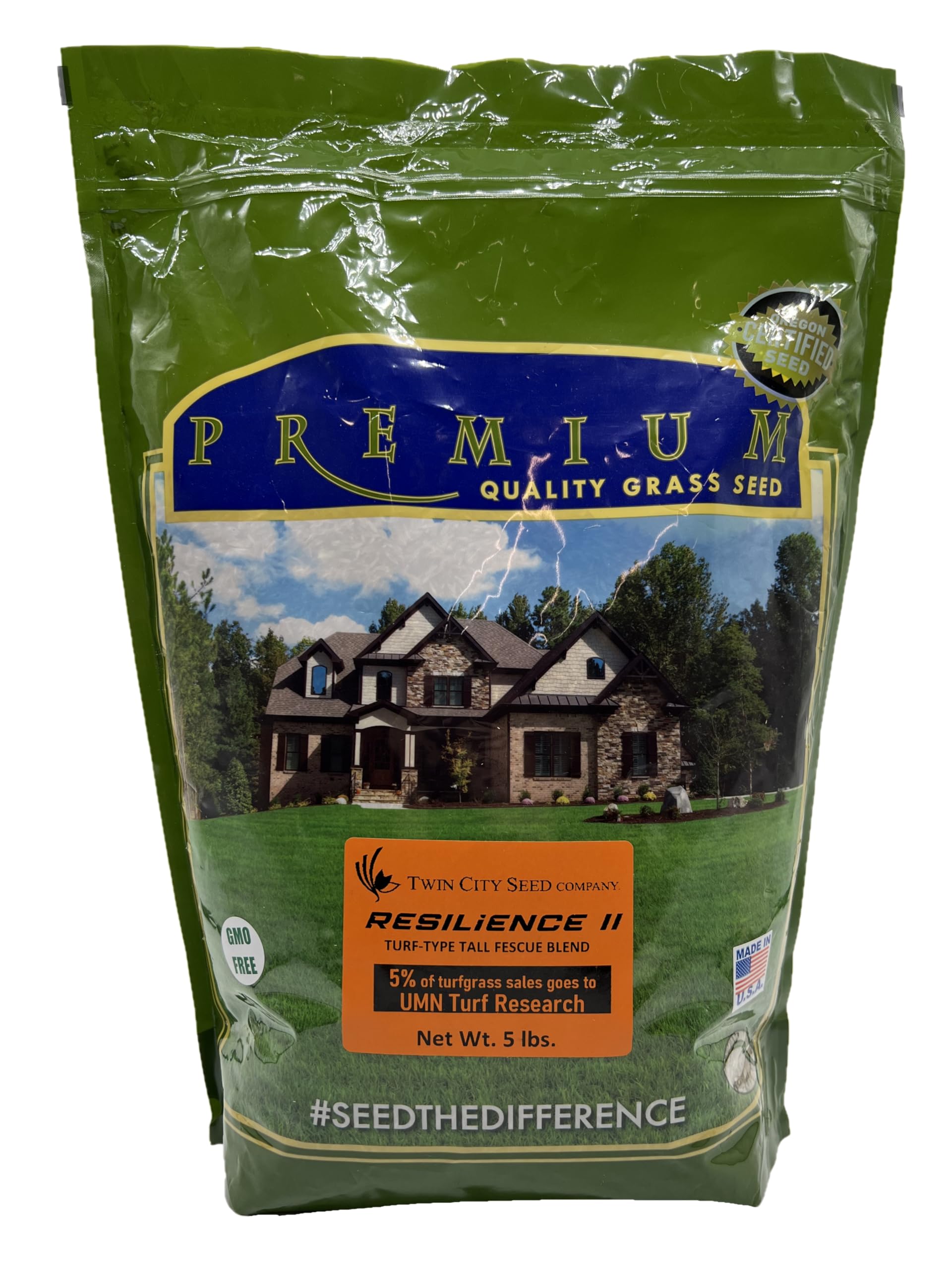
The Twin City Resilience II is built for the hardest clay conditions. Its five NTEP-rated tall fescue cultivars — Daybreak, Expanse, 4th Millennium SRP, Titan GLX, and Xanadu — each contribute rhizome potential, meaning the grass can push laterally through compacted soil instead of just surviving in the top inch. Users in DFW Zone 8B reported germination in 7 days and full deep green coverage by week three, even in semi-shaded clay under crepe myrtles.
The seed-to-soil contact advantage here is real: these cultivars are bred for variable soil conditions, and the mix handles full sun to full shade without skipping a beat. One user documented successful growth in nearly complete shade while maintaining color intensity. The recommended mow height of 2 to 4 inches gives the roots the leaf surface they need to photosynthesize through clay’s slow nutrient release.
Watering needs are surprisingly low for a clay fighter — the manufacturer advises watering roughly every three weeks or when drought symptoms appear, which aligns with clay’s natural moisture retention. The 5 lb bag covers 500 to 600 sq ft for a new lawn, making it a focused investment for problem areas rather than a broad-coverage blanket.
Why it’s great
- Five elite NTEP cultivars with proven rhizome penetration in compacted clay
- Germinates in 5-10 days even in cool clay conditions
- Low moisture needs align with clay’s slow drainage cycle
Good to know
- Higher price per sq ft compared to big-box blends
- New lawn coverage rate (7-10 lbs per 1,000 sq ft) requires careful measuring
2. Scotts Turf Builder Grass Seed Quality All-Purpose Mix

When you’re facing a full clay yard measured in thousands of square feet, this 20 lb bag from Scotts delivers the broadest coverage of any seed on this list — overseeding up to 8,000 sq ft. The all-purpose mix is designed for sun and shade, which matters on clay lawns where drainage patterns create microclimates: south-facing slopes dry fast, while low spots stay wet.
The water-absorbent coating absorbs twice as much water as uncoated seed, which is critical on clay because it keeps the seed hydrated without sitting in standing water. Users consistently report germination within 2 weeks on bare clay, with one reviewer noting the grass grew “very tall and thick” when spread over nothing but dirt. The 99.9% weed-free guarantee is meaningful here because clay often harbors dormant weed seeds that outcompete weak grass.
One caution comes from a user who observed crabgrass-like growth patterns after application, though this may relate to pre-existing weed pressure rather than the seed itself. The recommended watering schedule — daily until seedlings reach 2 inches — is aggressive but necessary to break through clay’s crusting tendency. If you need a trusted, broad-spectrum clay solution at scale, this is the workhorse.
Why it’s great
- Massive 8,000 sq ft coverage per bag for large clay lawns
- Water-absorbent coating prevents rot on slow-draining clay
- Proven germinator on bare dirt with no topsoil amendment
Good to know
- Not available in Louisiana due to state restrictions
- Some users report weedy growth requiring post-emergent treatment
3. Outsidepride Legacy Fine Fescue Grass Seed Mix
This is the go-to mix when your clay lawn sits under a tree canopy where sunlight is scarce and soil stays damp for days. The blend of 20% Hard Fescue, 40% Chewings Fescue, and 40% Creeping Red Fescue creates a fine-textured turf that thrives in full shade without sacrificing sun tolerance. The OptiGrowth coating is the key differentiator for clay: it infuses seeds with Zinc, Phosphorus, and Nitrogen plus Elko kelp, delivering nutrients directly to the root zone where clay’s natural biology is often locked up.
Users on compacted clay in the Pacific Northwest reported 21-day germination in cool temperatures as low as 36°F, outperforming traditional shade mixes. The aggressive tillering of the fescues naturally fills bare spots — one reviewer noted the grass self-heals bare patches even in Vermont winter conditions. The fine blades create a dense carpet that handles foot traffic better than typical fine fescues, which is a win for clay paths that get trampled when wet.
One critical note: the OptiGrowth coating requires consistent moisture during establishment. A reviewer who got only 10% germination cited possible under-watering or poor soil prep, though the manufacturer’s no-refund policy in that case is a disappointment. For shaded clay sites where broadleaf competitors struggle, this mix is a precision tool that rewards careful establishment.
Why it’s great
- OptiGrowth coating delivers starter nutrition directly into clay root zones
- Excellent shade tolerance for clay under tree canopies
- Self-healing tillering fills gaps without reseeding
Good to know
- Slow germination (2+ weeks) in cool clay — patience required
- Customer support on germination issues is limited
4. X-Seed Ultra Premium Quick and Thick Lawn Seed Mixture
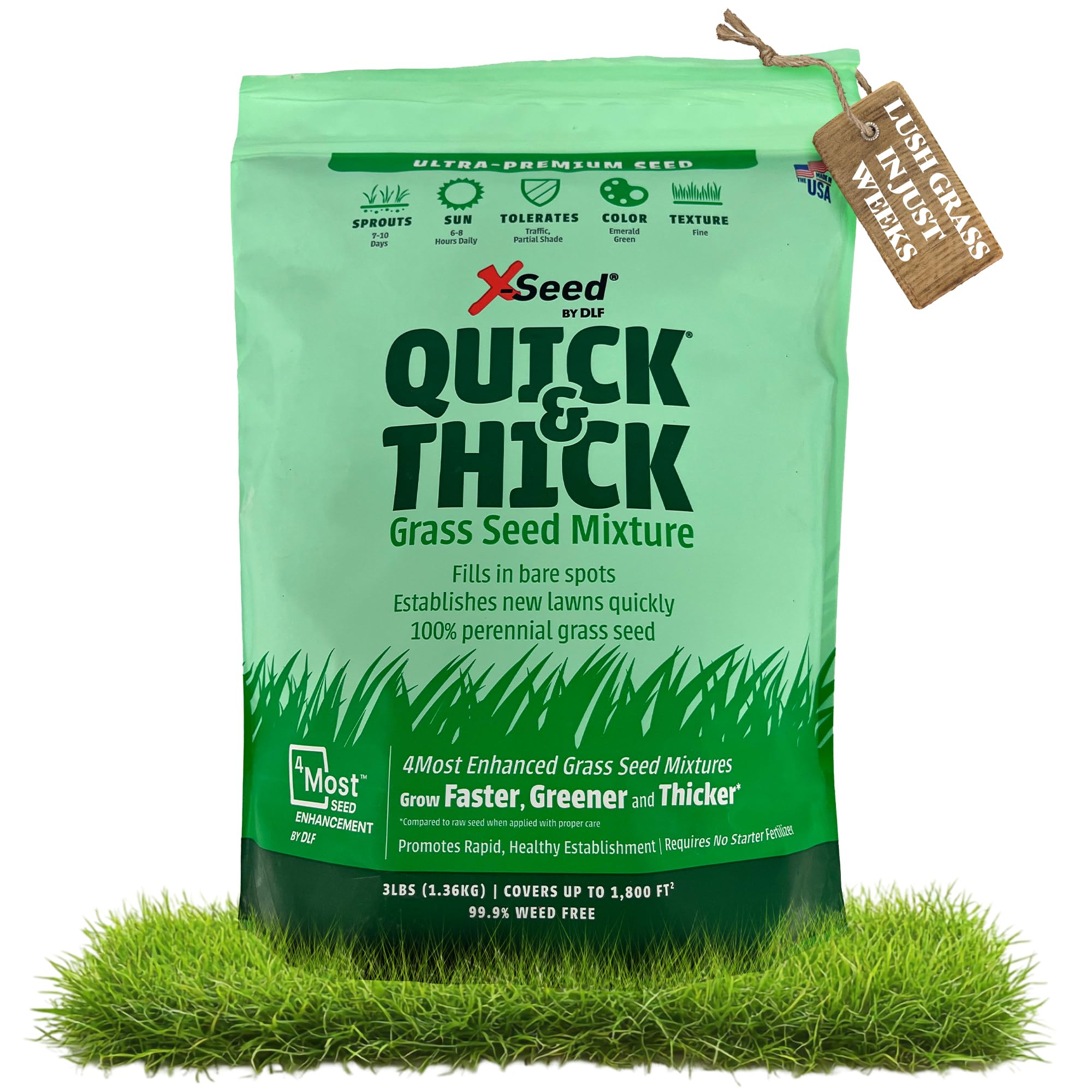
The X-Seed Ultra Premium blend targets the most frustrating clay scenario: patchy bald spots that refuse to fill in. Its Moisture Boost Plus coating absorbs 50% more water than paper — not just more than uncoated seed — which means it can drink deeply during clay’s wet cycles without drowning. The mix of perennial ryegrass, fine fescue, and Kentucky bluegrass provides three different root architectures to handle clay’s variable density.
User reports on sandy-clay hybrids are strong: one reviewer on sandy soil got fast germination and large-area coverage with minimal seed per hole. The 3 lb bag covers 2,100 sq ft for overseeding or 1,050 sq ft for new lawns — ideal for targeted repair rather than whole-yard renovation. The 99.9% weed-free claim is backed by the manufacturer’s guarantee, and the blend handles high-traffic dog zones without thinning.
The risks emerge in extreme conditions. One reviewer reported seeds washing away in heavy rain and seedlings dying in drought, highlighting that even coated seed needs proper timing on clay. The moisture coating can’t compensate for poor site preparation — tilling or aeration is still essential on heavily compacted clay. As a fast-rescue solution for small to mid-sized clay trouble spots, this seed delivers impressive speed at a reasonable per-bag cost.
Why it’s great
- Moisture Boost absorbs 50% more water — ideal for clay’s wet-dry cycle
- Triple-species blend covers sun, shade, and high-traffic zones
- Rapid germination visible in under 10 days on prepared clay
Good to know
- Seeds can wash away on sloped clay during heavy rain
- Thin coverage on unprepared hardpan clay without aeration
5. Creeping Red Fescue Seed by Eretz
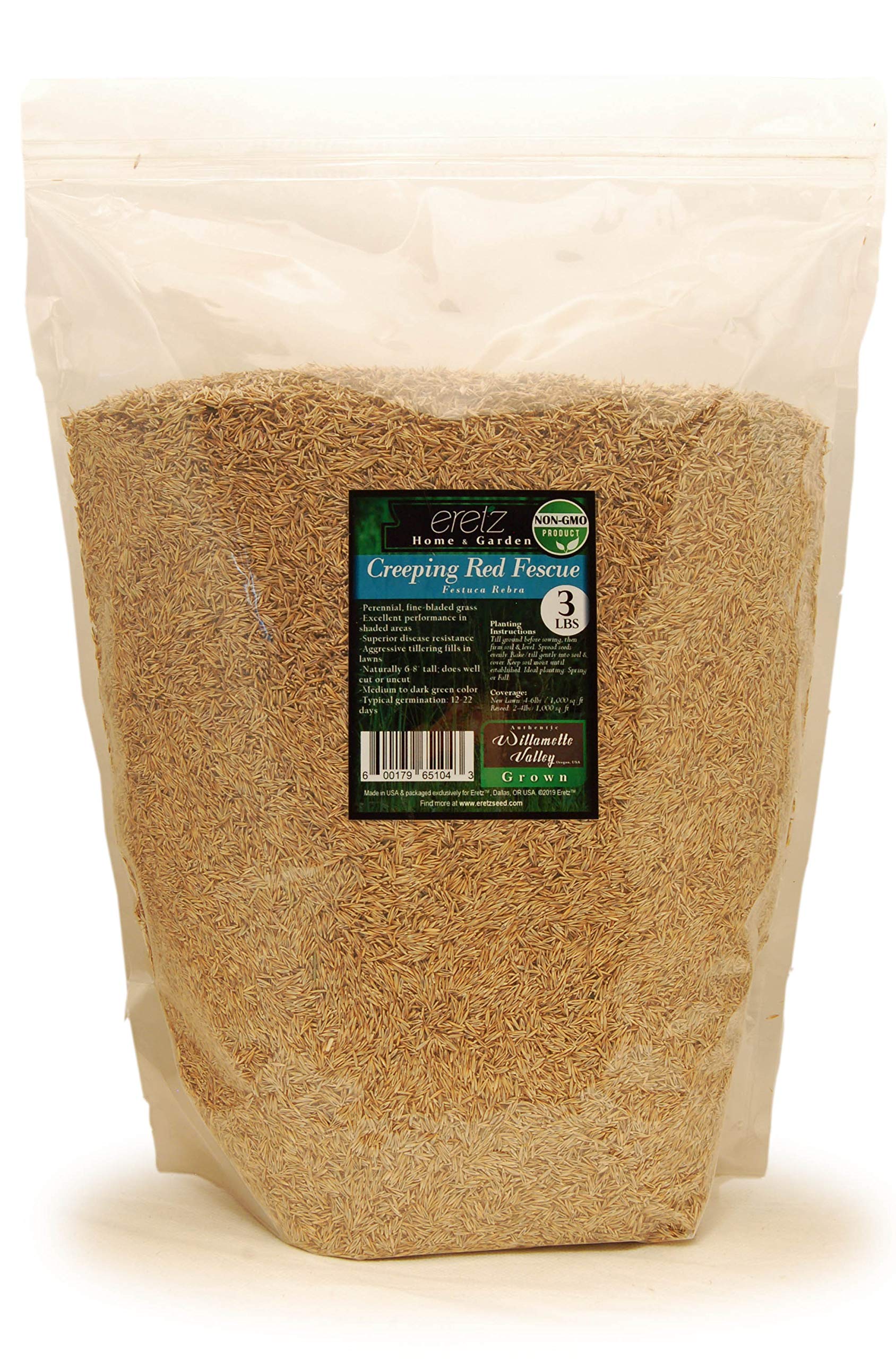
For clay banks, slopes, and areas you don’t want to mow weekly, Eretz’s Creeping Red Fescue is a stand-alone solution. This is a single species, not a blend, and that matters for clay: the uniformity means every plant handles the dense, wet soil identically. The fine blades naturally stay 6 to 8 inches tall and look good cut or uncut, making it perfect for low-maintenance clay zones.
Grown in Oregon’s Willamette Valley, the seed is 99.6% pure with just 0.4% inert matter and no weed or crop seed fillers. Users confirm it overwinters well — one Vermont reviewer reported it survives Vermont winter and stays green in spring. On shaded clay in the PNW, another reviewer saw 21-day germination in low temperatures, outperforming traditional shade mixes for groundcover density.
The aggressive tillering fills in bare spots naturally, which is a major advantage on clay where reseeding is difficult. However, germination can take longer than 2 weeks, and the fine blades may lie down after heavy rain or mowing with a dull blade. The natural height makes it less suited for manicured lawns, but for steep clay slopes or erosion control, this is a precision tool that outperforms any multi-species blend.
Why it’s great
- Single-species uniformity for consistent clay performance
- Stays green in winter, handles Vermont cold without dieback
- Aggressive tillering naturally fills bare spots on clay slopes
Good to know
- Slow germination (2+ weeks) requires patience and consistent watering
- Fine blades may flatten after heavy rain or improper mowing
6. Scotts Kentucky 31 Grass Seed Mix

The Kentucky 31 name has been a budget-friendly standard for decades, and Scotts’ updated mix keeps the core value while adding perennial ryegrass for quicker establishment. This three-species blend — KY-31 tall fescue, premium tall fescue, and annual ryegrass — covers clay’s weaknesses: the ryegrass germinates fast to hold soil while the fescues build deeper roots over time. The 20 lb bag covers 5,000 sq ft for overseeding, making it the lowest cost per square foot on this list.
Real-world clay results are impressive. A user in Northern Virginia covered a 40-foot bare pathway on clay where four previous seed attempts failed — within weeks it became a lush green carpet. Another in North Florida reported a full lawn transformation from bare earth to thick coverage in 5 weeks. The 99% weed-free rating and full sun tolerance mean it handles exposed clay patches without invasive competition.
The main downside is the coating: one reviewer found that the 20 lb bag contained roughly 10 lbs of coating material, reducing actual seed weight significantly. This coating helps water absorption, but it means you’re paying for inert material. Still, for budget-first clay renovation where coverage area is the priority, this mix offers proven results at the entry-level price point.
Why it’s great
- Proven performer on bare clay where other seeds failed
- Broad 5,000 sq ft coverage for minimal investment
- Fast-germinating ryegrass holds soil while fescues establish
Good to know
- Heavy coating (up to 50% by weight) reduces actual seed count
- Annual ryegrass component will die back after first season
7. Scotts Turf Builder Grass Seed Kentucky Bluegrass Mix

Kentucky bluegrass is traditionally not the first choice for heavy clay, but Scotts’ Turf Builder formula changes the equation. The seed is coated with Root-Building Nutrition — a combination of fertilizer and soil improver that helps the fine bluegrass roots penetrate deeper into compacted layers. One user specifically noted success in clay dirt: “Works spotty in clay dirt but works,” with thick growth developing even in caked spots despite poor watering.
The real advantage here is durability. Kentucky bluegrass spreads via rhizomes naturally, and this mix is designed for high foot traffic — it’s the toughest grass type for kids and dogs. The 5.6 lb bag covers 3,730 sq ft for overseeding, which is efficient for mid-sized clay lawns. When established, it develops deep roots that require less frequent watering, which aligns with clay’s natural water-holding behavior.
The limitations are real: full sun is required, and bluegrass struggles in shady clay areas. Some users experienced slow germination (up to 3 weeks) with the blue coating, and a reviewer in Oregon found patchy coverage on hard clay despite rain. This mix is a specialist tool for northern clay lawns that get plenty of sun and can support bluegrass’s longer establishment period — but when it works, the carpet-like density is unmatched.
Why it’s great
- Root-Building Nutrition helps bluegrass penetrate compacted clay
- Rhizomatous spread creates self-repairing dense turf
- High durability for clay lawns with kids and pets
Good to know
- Requires full sun — poorly suited for shaded clay areas
- Slow germination with coating; may need 3+ weeks for full establishment
FAQ
Should I aerate clay soil before seeding with tall fescue?
How long does it take for fescue blends to germinate on clay compared to sandy soil?
Can I use a starter fertilizer with grass seed on clay soil?
Final Thoughts: The Verdict
For most users, the best grass seed for clay soil winner is the Twin City Seed Co. Resilience II because it combines five NTEP-rated tall fescue cultivars with rhizome potential specifically bred to penetrate compacted layers while requiring minimal water. If you need broad coverage across a large clay lawn, grab the Scotts Turf Builder All-Purpose Mix for its massive 8,000 sq ft coverage and proven bare-dirt germination. And for heavy shade on wet clay where other seeds rot, nothing beats the Outsidepride Legacy Fine Fescue Mix with its shade-optimized OptiGrowth coating that delivers nutrients directly to the root zone.