
Nothing ruins a build faster than a solvent-based glue that chemically melts polystyrene foam on contact, turning a clean joint into a drooling, pitted mess. The wrong adhesive doesn’t just fail—it actively destroys your material. Finding a glue for foam that bonds aggressively without dissolving the substrate requires understanding the chemical dance between the adhesive carrier solvent and the foam’s cellular structure.
I’m Mohammad Maruf — the founder and writer behind Drink4Good. I’ve spent hundreds of hours researching adhesive formulations, analyzing material compatibility data, and cross-referencing user-reported results to separate the few glues that truly work on foam from the vast majority that will ruin your project.
This guide delivers the definitive, research-backed selections for the best glue for foam, focusing on chemical compatibility, bond flexibility, cure time, and real-world versatility across EPP, EPO, Depron, and closed-cell foams.
How To Choose The Best Glue For Foam
Selecting the right adhesive for foam isn’t about which glue is strongest on paper—it’s about which glue is chemically compatible with your specific foam type. The carrier solvent in many general-purpose adhesives will dissolve the cellular structure of polystyrene-based foams (EPS, XPS) on contact, while leaving polyolefin foams (EPP, EPO) untouched. Understanding this distinction is the first and most important step.
Solvent Compatibility
The primary risk when gluing foam is “melting” or “cratering,” caused by aggressive solvents like acetone, toluene, or methyl ethyl ketone. Look for adhesives specifically labeled as foam-safe or those that use water-borne or low-VOC solvent systems. Glues designed for RC model aircraft almost always account for this, as do contact cements labeled for polystyrene. If you see warnings about surface damage on plastics, avoid using it on foam.
Flexibility vs. Rigidity
Foam is a flexible, compressible substrate. A rigid, brittle glue line will crack or shear when the foam flexes under load. For applications like RC planes, upholstery, or costume armor, a flexible bond that moves with the foam is essential. Rubbery glues—like those that dry with a latex or neoprene character—are superior for these dynamic uses, while rigid PVA-based glues are better suited for static craft projects where the foam won’t bend.
Cure Time and Working Window
Some foam glues set in minutes (contact adhesives), while others require hours to fully cure (PVA-based tacky glues). For precision assemblies where you need to reposition parts, a longer working time is critical. For instant grab on vertical surfaces or overhead repairs, a fast-setting contact cement or spray adhesive is more appropriate. Always match the cure profile to your assembly workflow to avoid frustration.
Quick Comparison
On smaller screens, swipe sideways to see the full table.
| Model | Category | Best For | Key Spec | Amazon |
|---|---|---|---|---|
| 3M Max Strength 90 | Spray Adhesive | Large surface coverage | 10-min cure to max bond | Amazon |
| Beacon Foam-Tac | Specialty Glue | RC plane & EPP foam | 24-hour full cure time | Amazon |
| Woodland Scenics Foam Tack | Liquid Glue | Model railroading terrain | Dries clear & rubbery | Amazon |
| Aleene’s Original Tacky Glue | Craft PVA | Paper, felt & lightweight foam | Dries clear & permanent | Amazon |
| DAP Weldwood Contact Cement | Contact Cement | High-strength porous bonds | Low-VOC, 2.5-hour full cure | Amazon |
In‑Depth Reviews
1. 3M Max Strength 90 Multi-Surface Contact Adhesive
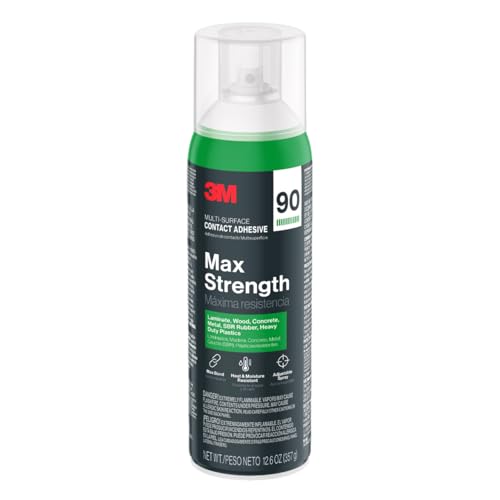
The 3M Max Strength 90 is a high-performance contact adhesive spray engineered for maximum bond strength across a wide range of materials, including foam, laminate, wood, metal, and rubber. Its low-VOC formulation meets California Air Resources Board requirements, making it a safer choice for indoor use. The aerosol delivery provides a consistent, controllable spray pattern that allows for even coverage on large surfaces without pooling or creating a mess.
What sets this adhesive apart is its speed: it achieves a max bond in just 10 minutes. This rapid cure time is ideal for time-sensitive projects like applying sound-deadening foam to a vehicle interior or bonding large sheets of laminate to foam-core panels. The adjustable nozzle gives you precision control over the spray width, reducing overspray and waste. Users consistently report that it handles heat and moisture exceptionally well, making it a reliable option for marine and automotive applications.
The main trade-off is its nature as a contact adhesive—once the two coated surfaces meet, repositioning is nearly impossible. You must be precise with your alignment on the first attempt. Additionally, while the spray application is fast, it requires proper ventilation and masking of surrounding areas to prevent overspray from landing on unintended surfaces. For large-format foam bonding where speed and even coverage are paramount, this is the undisputed top choice.
Why it’s great
- Extremely fast 10-minute cure time accelerates project workflow
- Spray application provides even, consistent coverage on large surfaces
- Low-VOC formulation is safer for indoor environments
- Heat and moisture resistant for demanding applications
Good to know
- Contact adhesive nature means zero repositioning time after joining
- Aerosol can requires careful masking to manage overspray
2. Beacon Foam-Tac Powerful Glue
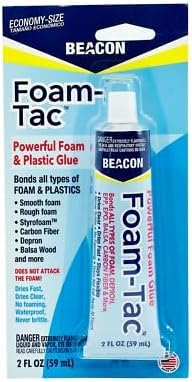
Beacon Foam-Tac is a specialized adhesive formulated specifically for closed-cell foams like EPP, EPO, and Depron, making it the go-to choice for the RC aircraft community. Unlike many general-purpose glues, Foam-Tac contains a special adhesion promoter that enhances bonding to low-surface-energy foams without causing chemical melting. It also includes UV blockers that prevent yellowing and degradation when the bond line is exposed to sunlight.
The glue has a low viscosity that allows it to penetrate into surface cracks and tight joints, creating a mechanical lock as well as a chemical bond. Users report it creates a strong, flexible bond that holds up to the flexing and vibration typical of RC planes. Its ability to bond disparate materials—foam to balsa wood, carbon fiber, or 3D-printed parts—makes it invaluable for custom builds and repairs. The waterproof nature of the cured bond also means it can handle outdoor exposure without failing.
The most common complaint is its thick, stringy, “snot-like” consistency straight from the bottle. Without a fine-tip nozzle, precision application can be messy and requires practice to control. The 24-hour full cure time also demands patience—while it grabs quickly, it doesn’t reach full structural strength overnight. For dedicated hobbyists who need a foam-specific adhesive with proven track record in the RC world, Foam-Tac justifies the learning curve with its superior chemical compatibility.
Why it’s great
- Chemically safe for EPP, EPO, and Depron foams without melting
- UV blockers prevent sun damage and yellowing
- Waterproof bond suitable for outdoor use
- Excellent adhesion to foam, balsa, carbon fiber, and 3D prints
Good to know
- Extremely thick, stringy consistency makes precision application difficult
- Requires a full 24 hours to reach maximum bond strength
3. Woodland Scenics Foam Tack Glue

Woodland Scenics Foam Tack Glue is a niche product designed primarily for model railroad hobbyists building scenery and terrain boards from rigid foam insulation (XPS/EPS). Its formulation creates a bond that remains rubbery and flexible even after fully curing, which is a distinct advantage when attaching track bedding or creating hinged control surfaces on foam RC planes. Unlike standard white glues that dry brittle, this glue absorbs movement without cracking.
The 12-ounce bottle provides enough coverage for multiple medium-scale projects. The glue is compatible with foam, wood, cork, and Homasote board, making it a versatile adhesive for multi-material scenery bases. One unique property reported by users is that once fully cured, you can hot-wire-cut through the glued foam joint without the wire gumming up or the glue line melting unevenly—a critical feature for advanced terrain sculptors.
Patience is required here: the glue needs a full cure before it reaches its optimal rubbery state, and clamping or pinning is recommended during the first 30 minutes. While it is perfect for layout-specific tasks, its relatively slow cure time and niche compatibility mean it is not the best choice for fast repairs or general-purpose foam crafting. For modelers who need a flexible, hot-wire-compatible glue for scenery construction, this is the definitive solution.
Why it’s great
- Dries to a rubbery, flexible consistency ideal for moving joints
- Allows hot-wire cutting through the cured glue line without issues
- Compatible with foam, cork, wood, and Homasote board
Good to know
- Slow cure time requires clamping and patience during assembly
- Primarily designed for scenery and terrain, not general repairs
4. DAP Weldwood Original Contact Cement (3-Pack)
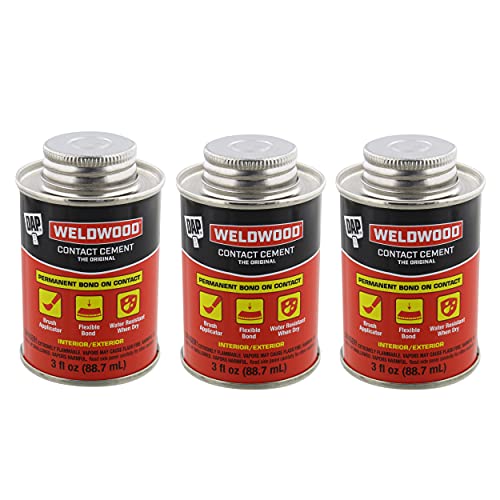
DAP Weldwood Original Contact Cement is a time-tested, polychloroprene-based contact adhesive that provides extremely high bond strength on porous and non-porous materials, including many types of foam. The 3-ounce can pack offers three small, portable units, making it economical for small-scale projects like reattaching foam soles, modeling, or household fixes. Its water-borne, low-VOC formulation is a major upgrade over traditional solvent-based contact cements, reducing toxicity and flammability risks.
The key to using this cement correctly is following the contact cement protocol: apply a thin coat to both surfaces, allow the solvent to evaporate for at least 15 minutes until the film is dry to the touch, then press the pieces together. The bond is instant and extremely strong, requiring no clamping. Users report it works phenomenally for reattaching shoe soles made of foam or rubber, bonding linoleum strips, and even holding heavy wooden door panels.
The primary caution is that this is a contact cement—misalignment means starting over. Also, while the low-VOC formula is safer, some users note the water-based version is slightly less aggressive than the original solvent-based red-label can. The small 3-ounce cans also require careful storage to prevent the cap from drying out, as the solvent can evaporate over time. For a budget-friendly entry into high-strength foam bonding, this pack is hard to beat.
Why it’s great
- Extremely high bond strength for porous and non-porous materials
- Low-VOC, water-borne formula is safer and non-flammable
- Instant bond on contact eliminates need for clamps
Good to know
- Contact cement means no repositioning after joining surfaces
- Small 3-ounce cans may dry out if not stored properly
5. Aleene’s Original Tacky Glue (16 fl oz 3-Pack)

Aleene’s Original Tacky Glue is a cult-favorite PVA-based craft adhesive that has been a staple in hobby rooms for over 75 years. Its thick, instant-grabbing formula holds lightweight materials—including craft foam sheets, felt, paper, and cardboard—on contact, making it ideal for children’s projects, costume props, and general crafting. The glue dries clear without yellowing, preserving the aesthetic of your finished piece.
The 16-ounce bottles represent excellent value for volume crafters, offering enough glue for dozens of projects. The tacky nature of the formula means it grips immediately, reducing the need for pins or clamps on lightweight foam. Cleanup is straightforward: wet glue wipes away with water, and dried glue can be peeled off or washed off with soap. Users consistently report it as reliable for paper and cardstock crafts, with a long shelf life in the bottle.
It is critical to understand that this is a PVA glue designed for lightweight applications. It is not waterproof, not suitable for structural loads, and will not bond well to slick, non-porous foams like EPP or polyethylene. The bond on dense, heavy foam will be weak and peelable. For serious RC builds, upholstery, or outdoor foam repairs, you need one of the more specialized adhesives above. For low-stress craft foam projects, however, this is a classic, reliable, and affordable option.
Why it’s great
- Thick formula grabs instantly on lightweight craft foam and felt
- Dries completely clear with no yellowing over time
- Excellent value with three large 16-ounce bottles
- Easy water cleanup makes it kid-friendly
Good to know
- Not waterproof and not suitable for structural or outdoor foam projects
- Weak bond on slick, non-porous foams like EPP or polyethylene
FAQ
Will Gorilla Glue melt foam?
Can I use hot glue on foam?
What is the best glue for EPP and EPO foam?
How long should I let foam glue cure before sanding or painting?
Final Thoughts: The Verdict
For most users, the best glue for foam winner is the 3M Max Strength 90 because it combines fast cure time, even spray coverage, and proven chemical safety for a wide range of foam types. If you are an RC builder who needs a glue that is chemically safe for EPP and Depron foam, grab the Beacon Foam-Tac. And for budget-conscious general crafters working with lightweight foam sheets, nothing beats the value and reliability of the DAP Weldwood Contact Cement 3-Pack.