
A capo is the single most effective tool for changing a song’s key without relearning the chord shapes. But a poorly designed capo introduces fret buzz, pulls strings sharp, or slips mid-song, ruining your acoustic’s natural resonance. The difference between a seamless key change and a frustrating tuning nightmare comes down to the tension mechanism and pad material.
I’m Mohammad Maruf — the founder and writer behind Drink4Good. This guide is built from analyzing adjustable tension designs, spring force, and silicone pad coverage across five capos to identify which models actually deliver buzz-free intonation on a standard acoustic guitar neck.
Whichever model you choose, a high-quality guitar capo for acoustic should apply even pressure across all six strings without distorting the note pitch or leaving marks on your fretboard finish.
How To Choose The Best Guitar Capo For Acoustic
An acoustic guitar capo must balance strong enough clamping force to avoid fret buzz with careful pad contact that doesn’t pull strings out of tune. Here are the three most important factors to consider before buying.
Adjustable Tension vs. Fixed Spring
Fixed-spring capos apply the same pressure every time regardless of where you place them on the neck. Adjustable-tension capos let you dial in the exact force needed for your specific guitar’s fret height and neck radius, which is essential for avoiding sharpened pitch on thinner strings.
Pad Material and Shape
Silicone pads grip the strings without marring the fretboard finish and distribute pressure evenly to prevent localized buzz. Curved pads match the natural radius of an acoustic guitar neck, while flat pads work best on classical or nylon-string instruments.
Operating Mechanism and Hand Access
Trigger-style capos clamp with a single squeeze and park on the headstock when not in use. Lever-lock capos require a manual pressure adjustment but often deliver more consistent tension across the fretboard. Consider how fast you need to change keys during performance before choosing a mechanism.
Quick Comparison
On smaller screens, swipe sideways to see the full table.
| Model | Category | Best For | Key Spec | Amazon |
|---|---|---|---|---|
| Shubb C1 | Lever-Lock | Intonation precision | Nickel-plated brass with micro-adjust knob | Amazon |
| Kyser KG6SNB | Trigger-Style | Quick one-handed key changes | Aluminum body with steel spring | Amazon |
| Martin Guitar Capo | Trigger-Style | Clean fretting on thinner necks | Silicone body with matte finish | Amazon |
| Aroma AC-30 | Trigger-Style | Budget-friendly adjustable tension | Zinc alloy with tension knob | Amazon |
| Jim Dunlop 88B | Trigger-Style | Classical and nylon-string acoustic | Aluminum body with flat fretboard pad | Amazon |
In‑Depth Reviews
1. Shubb C1 Standard Acoustic Guitar Capo
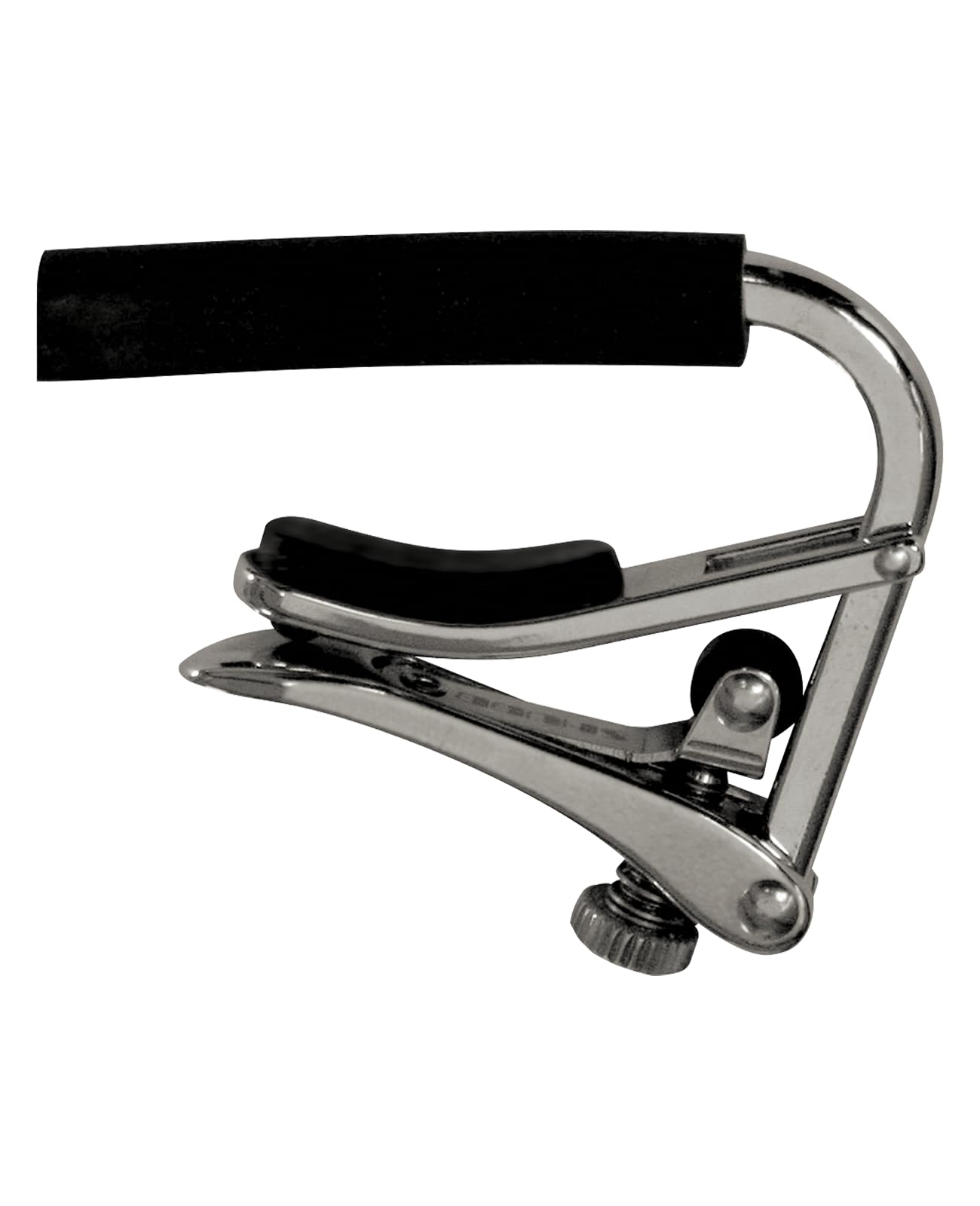
The Shubb C1 uses a lever-lock mechanism with a threaded micro-adjust knob that lets you set tension once and never reset it, a design that has been trusted by session players for over 35 years. The nickel-plated brass body provides substantial weight without feeling bulky, and the custom rubber pad applies pressure that mimics a fingertip for natural sustain.
On a standard dreadnought acoustic, the C1 holds pitch accuracy up to the seventh fret without squeezing the strings sharp. The pad covers the full width of a six-string neck and does not interfere with your fretting hand. Players who prioritize intonation precision over headstock parking will appreciate this model’s consistent grip.
The micro-adjust knob requires a small screwdriver or coin to change tension, making it less suited for quick adjustments mid-song. But once dialed in for your instrument, the Shubb C1 delivers the most buzz-free, in-tune performance of any capo in this price tier.
Why it’s great
- Micro-adjust tension eliminates string buzz and sharp pitch
- Nickel-plated brass build is durable and feels substantial
- One-time setup holds consistently across the fretboard
Good to know
- Not designed to park on the headstock when not in use
- Tension adjustment requires a tool
2. Kyser Quick-Change Capo KG6SNB

The Kyser Quick-Change is the original trigger-style capo that defined the one-handed clamping category. Its aluminum body and heavy steel spring deliver consistent tension across the fretboard, and the sunburst finish matches vintage-style acoustic guitars beautifully. The spring is strong enough to hold without slipping even during aggressive strumming.
When not in use, the capo clamps onto the headstock so it never gets lost during a set. Players who switch keys multiple times per song will appreciate the speed of the squeeze-and-release action. The rubber pad is firm but gentle on the fretboard, and reviews confirm no tuning issues after repeated use on Martin and Taylor guitars.
The fixed spring tension cannot be adjusted, which means on some guitars with very low action or tall frets, the capo may pull the G or B strings slightly sharp. For most standard acoustic setups, however, the Kyser delivers reliable, buzz-free performance that justifies its reputation.
Why it’s great
- One-handed clamp and release for fast key changes
- Parks on the headstock when not in use
- Lifetime guarantee and made in the USA
Good to know
- Fixed spring tension cannot be adjusted
- Strong spring may pull strings sharp on some neck profiles
3. Martin Guitar Capo

The Martin Guitar Capo is designed to match the brand’s own acoustic neck profiles, but it works well on a wide range of standard six-string guitars. The body is made entirely of silicone with a matte black finish that blends into the fretboard without drawing attention. The one-handed squeeze mechanism is smooth and requires minimal force.
Because the entire body is silicone, this capo is lighter than aluminum or brass models and will never scratch or dent a guitar finish. The even pressure distribution across all six strings results in clear, ringing notes without fret buzz, even when placed at the fifth fret. Martin owners in particular report no tuning degradation after repeated use.
The silicone body feels flexible but still delivers enough clamping force for standard steel-string acoustics. It is not designed to park on the headstock, so you will need a place to set it down between songs. For players who prioritize a lightweight, non-marring capo with a reputable brand name, this is a solid mid-range choice.
Why it’s great
- Full silicone body will not scratch the guitar finish
- Lightweight and comfortable for one-handed use
- Provides clear, buzz-free intonation across the fretboard
Good to know
- Does not park on the headstock
- May feel less secure on very thin electric guitar necks
4. Aroma Guitar Capo AC-30

The Aroma AC-30 brings adjustable tension to a trigger-style capo at an entry-level price point. A small knob on the side lets you fine-tune the clamping force, which directly addresses the most common complaint with fixed-spring capos: string buzz caused by too little pressure or sharp notes caused by too much. The zinc alloy body is lightweight but feels denser than plastic alternatives.
The curved clamp is engineered to match the radius of most acoustic guitar necks, and the silicone pads protect the fretboard finish while distributing pressure evenly. Testers reported that the adjustable tension knob allowed them to achieve a buzz-free fit on both their Martin six-string and their 12-string acoustic, something fixed-spring capos struggle with on wider necks.
The trigger mechanism requires a firm squeeze to clamp and release, which some players with smaller hands may find slightly stiff at first. However, the inclusion of a bridge pin puller on the back adds utility for string changes. For the price, the Aroma AC-30 offers the most versatile tension control in the budget tier.
Why it’s great
- Adjustable tension eliminates buzz on various neck profiles
- Curved clamp fits acoustic guitar radius
- Includes built-in bridge pin puller for string changes
Good to know
- Trigger mechanism may feel stiff initially
- Zinc alloy is durable but heavier than aluminum models
5. Jim Dunlop 88B Trigger Capo

The Jim Dunlop 88B is designed specifically for classical and nylon-string acoustic guitars, featuring a flat pad that matches the flat fretboard radius of these instruments. The aluminum body keeps the capo lightweight at just 1.6 ounces, and the black finish is subdued enough to blend with any guitar. The trigger mechanism is the same proven design Dunlop has been manufacturing since 1995.
On a standard classical guitar, the 88B clamps cleanly up to the fifth fret without buzzing or pulling the nylon strings out of tune. The rubber pad is wide enough to cover all six strings evenly, and the spring tension is strong enough to hold securely during strumming. This is the preferred capo among church players and classical guitarists who need reliable performance without scratching their instrument’s finish.
Because the 88B is designed for flat fretboards, it does not conform well to radiused acoustic or electric guitar necks. Using it on a standard steel-string acoustic may result in uneven pressure on the outer strings. Stick to classical or nylon-string guitars and you will get consistent, durable performance from this classic design.
Why it’s great
- Optimized for flat fretboard classical and nylon-string guitars
- Lightweight aluminum body with durable black finish
- Proven trigger design with strong spring grip
Good to know
- Not suitable for radiused acoustic or electric guitar necks
- Strong spring may accidentally snap and damage the finish if not handled carefully
FAQ
Will a capo damage my acoustic guitar finish?
How do I stop my capo from pulling my guitar out of tune?
Can I use a classical guitar capo on a steel-string acoustic?
What is the difference between trigger and lever-lock capos?
Final Thoughts: The Verdict
For most players, the best guitar capo for acoustic is the Shubb C1 because its micro-adjust tension knob delivers buzz-free, in-tune performance on any standard six-string acoustic. If you need lightning-fast one-handed key changes on stage, grab the Kyser Quick-Change. And for a budget-friendly adjustable option that works on both six-string and 12-string acoustics, nothing beats the Aroma AC-30.