
Finding grass that survives Vermont’s short growing season, cold winters, and acidic soil is a challenge that defeats standard lawn mixes. Most national brands blend for generic conditions, leaving northern homeowners with thin, patchy turf that fails to green up in spring.
I’m Mohammad Maruf — the founder and writer behind Drink4Good. I’ve spent hundreds of hours analyzing germination rates, cold hardiness, shade tolerance, and filler content in cool-season grass seed to identify which mixes actually perform in Zone 3–5 climates like Vermont.
This guide breaks down the top-performing blends for Vermont’s unique environment, with a focus on fast establishment, deep root systems, and winter survival. Whether you are patching bare spots or starting a new lawn, choosing the right grass seed for vermont makes the difference between a lush yard and a muddy mess.
How To Choose The Best Grass Seed For Vermont
Vermont’s climate — cold winters, cool springs, and variable summer rainfall — demands grass varieties bred for northern conditions. The wrong mix will die back after a hard freeze or fail to germinate in acidic soil. Focus on these three factors to find a blend that thrives year after year.
Species Selection: Cool-Season vs. Warm-Season
Only cool-season grasses — tall fescue, Kentucky bluegrass, perennial ryegrass, and fine fescues — handle Vermont’s winter temperatures. Warm-season varieties like Bermuda or Zoysia go dormant and die at the first frost. Look for blends that combine at least two cool-season species for disease resistance and year-round color.
Weed-Free Certification and Filler Content
Cheap seed often contains coated filler — inert material that adds weight but reduces live seed per pound. A 7-pound bag of filler-free seed can outperform a 20-pound bag of coated seed. Always check the label for “99.9% weed-free” and avoid bags that list coating as a primary ingredient.
Shade and Sun Adaptability
Vermont’s forests and hills create mixed light conditions. Fine fescues thrive in dense shade, while Kentucky bluegrass prefers full sun. Blends labeled “sun and shade” work for most yards, but heavy shade under maple or pine trees requires a dedicated shade mix with higher fescue content.
Quick Comparison
On smaller screens, swipe sideways to see the full table.
| Model | Category | Best For | Key Spec | Amazon |
|---|---|---|---|---|
| Scotts Turf Builder All-Purpose Mix | Premium | Large northern lawns | 20 lb bag, 99.9% weed-free coated seed | Amazon |
| GreenView Perennial Ryegrass Blend | Premium | Quick fill and bare spot repair | 7 lb bag, 99.9% weed-free, covers 3,500 sq ft | Amazon |
| Jonathan Green Dense Shade | Mid-Range | Heavily shaded yards | 3 lb bag, 1,800 sq ft coverage, shade-resistant | Amazon |
| Jonathan Green Black Beauty Fall Magic | Mid-Range | Fall seeding and winter prep | 3 lb bag, germinates in 10–14 days, no filler | Amazon |
| Pennington Annual Ryegrass | Entry-Level | Temporary winter cover or erosion control | 10 lb bag, germinates in 3–7 days | Amazon |
In‑Depth Reviews
1. Scotts Turf Builder Grass Seed Quality All-Purpose Mix

The 20-pound bag covers up to 8,000 square feet, making it the most economic choice for large Vermont properties. The WaterSmart coating absorbs twice as much water as uncoated seed — a real advantage during dry late-spring stretches.
Blended for both sun and partial shade, this mix uses a northern-specific combination of Kentucky bluegrass, perennial ryegrass, and fescue varieties. Customer reports consistently cite thick, dark green turf that holds up well under high summer heat and bounces back after winter snowmelt.
The 99.9% weed-free certification is backed by Scotts’ No Quibble Guarantee. One user in a similar northern zone noted it greened up weeks earlier than their previous fescue lawn, with strong competition against existing weeds.
Why it’s great
- Excellent value per square foot with the 20-lb bag
- Coated seed improves moisture retention in clay soils
- Versatile sun and shade performance
Good to know
- Not available in Louisiana due to state restrictions
- Coating adds filler weight compared to pure seed blends
2. GreenView Pure Grass Seed Perennial Ryegrass Blend

This 7-pound bag contains pure perennial ryegrass seed with no filler — every kernel is live seed. The blend germinates in as little as 7 days, which is ideal for Vermont’s tight spring window before the heat of June arrives.
Once established, the deep root system provides drought and heat resistance rare among ryegrasses. Customers in cold climates report it survives snow cover and greens up earlier than fescue varieties, making it a top pick for overseeding thin lawns after winter damage.
The medium-to-fine texture and dark green color blend well with existing Kentucky bluegrass lawns. One long-term user in a Zone 5 climate noted it “outperformed Scott’s brand completely” and produced soft, thin blades that warded off crabgrass without chemical treatment.
Why it’s great
- Filler-free pure seed for maximum germination per pound
- Drought and disease resistant root system
- Greens up early in northern spring conditions
Good to know
- Coverage is 3,500 sq ft max — multiple bags needed for large lawns
- Ryegrass can be coarser than fine fescue blends
3. Jonathan Green Dense Shade Grass Seed
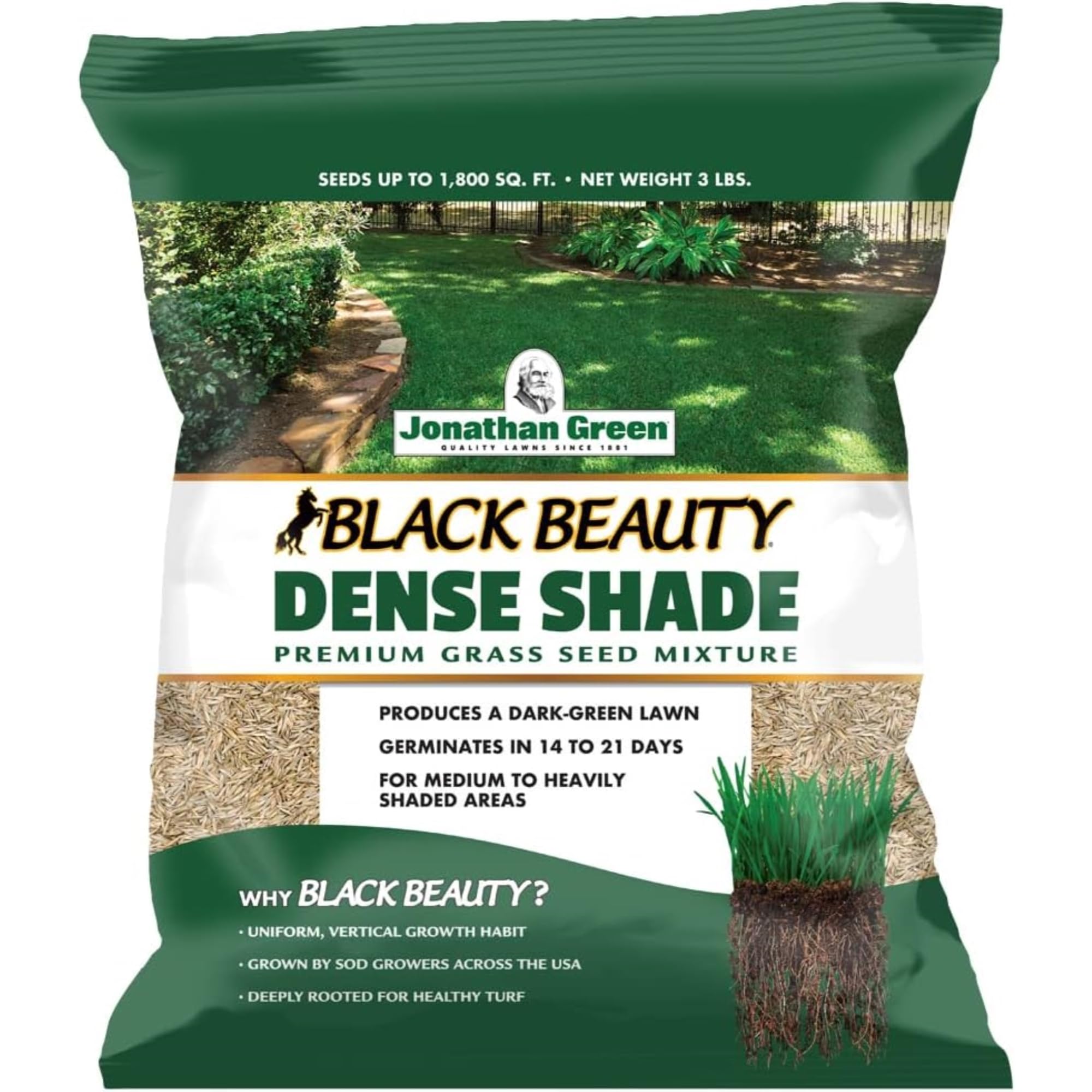
For Vermont yards dominated by mature maples or heavy spruce cover, this 3-pound bag delivers where most mixes fail. The blend is built around fine fescues that tolerate low light without becoming leggy or thin.
Multiple verified buyers in densely shaded areas report “nothing grows here but this product actually works.” The grass emerges with a beautiful dark green color and stands up to acidic leaf litter that accumulates under deciduous trees. One Zone 5 reviewer noted germination in just 3 days in heavy shade conditions.
Be aware that results depend heavily on soil preparation. A few negative reports mention poor germination, with grass dying after one week — likely due to incompatible soil pH or inadequate watering. The bag cover of 1,800 square feet makes it suitable for targeted shade patches rather than full-lawn seeding.
Why it’s great
- Specifically formulated for dense shade conditions
- Germinates quickly even under low light
- Dark green color and good cold hardiness
Good to know
- Performance drops in full sun — not a universal blend
- Some bag variability; prep soil well for consistent results
4. Jonathan Green Black Beauty Fall Magic Grass Seed
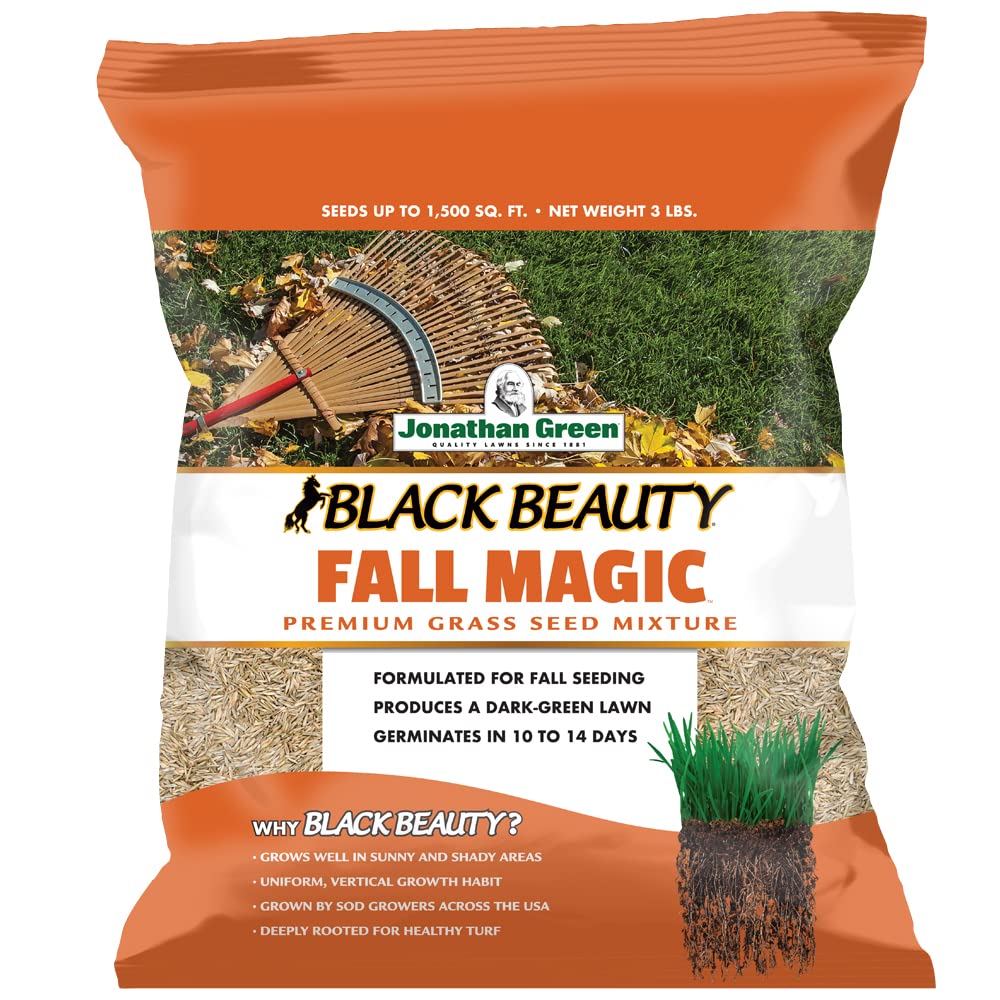
Fall Magic is built for Vermont’s best planting window — mid-August through mid-October. The 3-pound bag covers up to 1,500 square feet for overseeding, and the tall fescue, fine fescue, Kentucky bluegrass, and perennial ryegrass mix provides a dense winter-ready lawn.
Unlike many budget options, this seed contains no coating or filler. Every pound is live seed, which explains the rapid 10-14 day germination and the extremely high customer satisfaction scores. One upstate New York reviewer said it was “hands down the best seed I’ve ever used” and noted fast germination even when birds and rabbits disturbed the surface.
The mix is specifically designed to repair summer damage and protect against winter weeds. A verified buyer who planted in September reported a “beautiful spring” lawn with near-100% germination. Light straw covering is recommended to deter birds during the first week.
Why it’s great
- Zero filler — pure seed maximizes germination
- Formulated for fall planting, Vermont’s ideal season
- Multi-species blend for disease resistance and winter hardiness
Good to know
- Birds may eat seed if not covered with straw or soil
- 3-lb bag covers only 1,500 sq ft for overseeding
5. Pennington Annual Ryegrass Seed

Annual ryegrass is not a permanent solution for Vermont lawns — it dies after one growing season — but it excels as a temporary cover or erosion control measure. This 10-pound bag covers up to 2,000 square feet and germinates in as little as 3 days with consistent watering.
The seed is ideal for overseeding warm-season lawns that go dormant in winter, or for covering bare soil over the winter months to prevent erosion on slopes. It holds up well under foot traffic and is disease-resistant, making it a solid choice for high-use areas during construction or renovation.
Customers note that while it greens up fast and thick, the appearance is “not as pretty as other grasses” — the blades are coarser and lighter green than blends with Kentucky bluegrass or fescue. It works best as a winter temporary, not a year-round lawn foundation.
Why it’s great
- Ultra-fast germination for quick color in bare spots
- Excellent foot traffic and disease tolerance
- Affordable temporary solution for large areas
Good to know
- Annual lifecycle — must be replanted every year
- Coarser texture and lighter green than perennial blends
FAQ
When should I plant grass seed in Vermont?
Will annual ryegrass survive a Vermont winter?
Final Thoughts: The Verdict
For most users, the best grass seed for vermont winner is the Scotts Turf Builder All-Purpose Mix because its 20-pound bag provides the best coverage per dollar while the WaterSmart coating compensates for Vermont’s variable spring rainfall. If you want quick, filler-free fill for bare spots and a fast spring green-up, grab the GreenView Perennial Ryegrass Blend. And for heavily shaded yards under Vermont’s dense tree canopy, nothing beats the Jonathan Green Dense Shade Grass Seed.