
The challenge with gluten-free noodles isn’t finding them—it’s finding ones that don’t turn into a gluey, crumbling mess the second they hit boiling water. Most brands sacrifice texture for dietary compliance, leaving you with a forkful of disappointment. The right noodle should hold its shape, carry a sauce, and deliver a bite that feels satisfying, not apologetic.
I’m Mohammad Maruf — the founder and writer behind Drink4Good. I’ve spent hundreds of hours cross-referencing customer reviews, cooking instructions, and ingredient decks to find the noodles that actually perform when you plate them.
This guide cuts through the trial and error to deliver the best gluten free noodles for every type of meal, from a quick weeknight spaghetti to an authentic bowl of pho.
How To Choose The Best Gluten Free Noodles
The wrong gluten free noodle crumbles, turns slimy, or tastes like cardboard. The right one disappears into the dish. Here is what separates a great box from a regret purchase.
Ingredient Base: Rice, Corn, or a Blend
Single-grain rice noodles can be brittle when reheated, while pure corn pasta often has a grainy mouthfeel. The best brands use a rice-and-corn flour blend, which mimics the elasticity of wheat gluten and holds an al dente bite. Check the ingredient list for the combination—it is the single most reliable predictor of texture.
Cooking Behavior and Starch Release
Gluten free noodles release more starch than wheat pasta, which means they can turn a pot of water into glue if overcooked by even one minute. Look for a cooking window of eight to ten minutes, and always rinse under cold water after draining for salad or stir-fry applications. Noodles that hold their shape after rinsing are keepers.
Shape and Sauce Compatibility
Twisted shapes like rotini and fusilli cling to chunky sauces better than long strands. Spaghetti and fettuccine work best with smooth, creamy sauces that coat the noodle. Rice vermicelli excels in broths and spring rolls where a light, separate strand is important. Match the shape to the cooking method for best results.
Quick Comparison
On smaller screens, swipe sideways to see the full table.
| Model | Category | Best For | Key Spec | Amazon |
|---|---|---|---|---|
| Barilla Gluten Free Rotini | Mid-Range | Family pasta dinners | 2-ingredient blend (rice & corn) | Amazon |
| Rummo Gluten Free Spaghetti | Premium | Authentic Italian dishes | Toothy bite, no crumbling | Amazon |
| Le Veneziane Fettucce | Premium | Creamy sauces & stroganoff | 100% Italian corn flour | Amazon |
| Le Veneziane Variety Pack | Premium | Trying different shapes | 3 shapes (spaghetti, fettuccine, fusilli) | Amazon |
| Asian Best Rice Vermicelli | Budget-Friendly | Pho, spring rolls, stir-fry | 14 oz multi-pack, quick soak | Amazon |
In‑Depth Reviews
1. BARILLA Gluten Free Rotini Pasta

Barilla reformulated this rotini down to just rice flour, corn flour, and water—two base ingredients with no gums or starches to muddy the texture. The twisted rotini shape is engineered to trap substantial amounts of sauce, making every forkful taste fully dressed rather than coated. Cooked to the recommended eight to nine minutes, the noodles deliver a clean, separate al dente bite that closely mimics traditional semolina pasta.
This case pack contains eight 12-ounce boxes, which is enough for multiple family meals or weekly meal prep without restocking. Reviewers consistently note the texture holds up overnight for pasta salad, and the noodles don’t shatter when reheated. The dedicated gluten-free production line gives celiac-sensitive households confidence without cross-contact worry.
For anyone seeking a pantry-staple gluten free pasta that scales for the whole family at a reasonable per-serving cost, this case delivers the best balance of performance and value. The only drawback is the 12-ounce box size—some reviewers wished for full-pound boxes—but the quality of the cook more than compensates.
Why it’s great
- Two-ingredient recipe means no artificial texture modifiers
- Rotini shape holds heavy sauces like marinara and Bolognese
- Case pack reduces per-meal cost significantly
Good to know
- Boxes are 12 ounces, not the standard 16 ounces
- Overcooking by even a minute can soften the structure
2. Rummo Gluten Free Spaghetti Pasta N.3
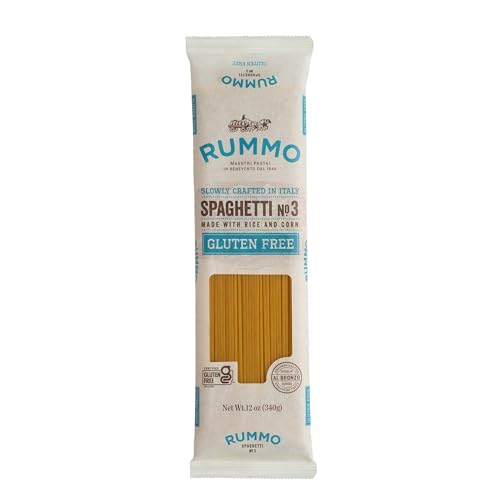
Rummo’s gluten free spaghetti uses a proprietary blend of rice and corn flour that produces a surface texture close to bronze-die-extruded wheat pasta. The strands have enough friction to hold a marinara or Bolognese without sliding off, and they cook to a genuine al dente resistance that doesn’t degrade into mush if you go a minute over time. The 10-minute cook window is forgiving for a gluten free noodle.
This five-pack provides 60 ounces total, and each 12-ounce box serves three to four people. In head-to-head testing by reviewers comparing this against a dozen other brands over many years of gluten-free eating, Rummo consistently ranks as the closest match to traditional pasta. It reheats without turning brittle, which is a common failure point for rice-only noodles.
The premium price is the main hesitation. For a regular weeknight dinner, the per-serving cost is higher than mid-range options. But for an Italian Sunday dinner or a meal where the spaghetti is the centerpiece rather than a vehicle, Rummo justifies the investment with texture that can fool non-GF guests.
Why it’s great
- Closest al dente bite to traditional wheat spaghetti
- Holds up to aggressive reheating without crumbling
- Surface texture grabs sauce effectively
Good to know
- Higher price per serving than Barilla or store brands
- Only available in long-strand shapes currently
3. Le Veneziane Italian Fettucce Gluten Free
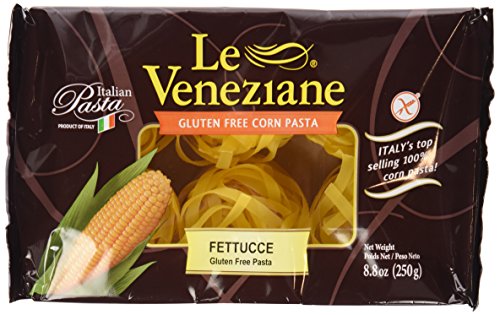
Le Veneziane’s fettucce ribbons are made from 100 percent Italian corn flour, with no rice or quinoa blends. The result is a noodle that stays separate and silky in the pot rather than releasing a cloud of starch that turns the water into glue. Cooked properly, these ribbons have a clean, non-slimy surface that lets a creamy Alfredo or mushroom stroganoff cling naturally without feeling gummy.
This four-pack contains 8.8-ounce boxes, which is slightly undersized compared to standard pasta boxes. However, the corn base makes them highly digestible and low in fat, appealing to anyone with a sensitive stomach. Multiple verified reviewers with celiac disease call this the only gluten free pasta they eat, specifically praising the absence of the mealy texture common in other brands.
The main consideration is shape availability—fettucce is a wide ribbon that excels with thick, creamy sauces but is less ideal for oil-based or chunky vegetable preparations. The corn-only formula also demands careful monitoring of the boil; it cooks quickly and can turn brittle if left in hot water too long after draining.
Why it’s great
- No slimy or mushy texture—a common GF pasta failure
- Wide ribbons hold creamy sauces exceptionally well
- Made from single-ingredient Italian corn flour
Good to know
- Smaller 8.8-ounce boxes require more frequent restocking
- Not as structurally forgiving as rice-corn blends
4. Le Veneziane Gluten Free Pasta Variety Pack

This variety pack bundles three shapes—fettuccine, spaghetti, and fusilli—from the same Le Veneziane corn-flour formula that earns top marks from celiac reviewers. The fusilli spirals are a standout for chunky vegetable sauces or baked pasta dishes, where the twists trap ingredients rather than letting them slide to the bottom of the bowl. The spaghetti performs identically to the single-shape box, giving you flex without committing to 20 boxes of one shape.
Reviewers with years of gluten free eating report this brand produces no detectable aftertaste, a common complaint with bean-based or quinoa-blend pastas. The corn base also means zero digestive complaints for people who react to legume flours. Several families report serving this to non-GF guests who couldn’t tell the difference, which is the highest compliment for any gluten free noodle.
The same size limitation applies—each box is 8.8 ounces, so a full family meal may require opening two boxes of the same shape. The variety pack is best for households still exploring which shape works for their regular recipes, or for anyone who wants a reliable, mild-tasting noodle across multiple cooking methods.
Why it’s great
- Three shapes in one purchase for recipe flexibility
- No aftertaste—one of the cleanest flavor profiles among GF pastas
- Digestive-friendly for corn-tolerant eaters
Good to know
- Each box is only 8.8 ounces
- Not ideal for oil-based or broth-heavy dishes
5. Asian Best Rice Vermicelli Bun Gao, 14 oz (3 Packs)

Asian Best rice vermicelli is a pantry shortcut for anyone craving pho, spring rolls, or cold noodle salads. These thin strands hydrate in hot water in about four minutes with no boiling required—just soak until tender, drain, and serve. The neutral rice flavor absorbs the character of whatever broth or dressing you use, making it an invisible base that lets the rest of the dish shine.
The three-pack provides 42 ounces total, which is generous for the price point. Unlike Italian-style gluten free pasta, these noodles have no eggs or corn flour, so they remain separate and non-clumping after draining. Reviewers highlight the convenience for quick weeknight stir-fries and meal-prep bowls, where the noodles hold up overnight without absorbing excess moisture and turning into paste.
The trade-off is structural fragility. These are delicate strands that can break apart if stirred too aggressively in a soup, and they don’t have the al dente spring of Italian pasta. For Asian cooking applications they are perfect; for a hearty spaghetti Bolognese they will collapse. Match the noodle to the cuisine.
Why it’s great
- Soaks in hot water—no boiling required
- Neutral flavor works with any broth or sauce
- Excellent value for the total quantity
Good to know
- Strands are fragile and can break in soup
- Not a substitute for Italian-style pasta
FAQ
Why does gluten free pasta turn mushy more often than regular pasta?
Can I use rice vermicelli as a direct substitute for Italian pasta?
Final Thoughts: The Verdict
For most users, the best gluten free noodles winner is the BARILLA Gluten Free Rotini because it combines a clean two-ingredient recipe, reliable al dente texture, and a case size that makes family meals practical. If you want the closest thing to artisanal Italian spaghetti, grab the Rummo Gluten Free Spaghetti. And for authentic Asian dishes that demand a delicate, quick-cooking strand, nothing beats the Asian Best Rice Vermicelli.