
A gait belt is the single most important tool for safely assisting someone with limited mobility, yet most caregivers start with a cheap, handleless strap that offers no grip and puts both people at risk of injury. Moving a loved one from a chair to a wheelchair, helping them up from a fall, or guiding them down a hallway demands secure leverage — not just a piece of nylon wrapped around their waist.
I’m Mohammad Maruf — the founder and writer behind Drink4Good. I’ve spent hours analyzing transfer belt construction, handle placement, buckle durability, and weight ratings to cut through the confusion and find which models actually protect both the caregiver and the person being assisted.
From padded handles to quick-release metal buckles, the right gait belt makes transfers safer and less stressful for everyone involved.
How To Choose The Best Gait Belt
Selecting the right transfer belt means matching its physical design to the specific needs of the user and the caregiver. The wrong choice leads to unsafe lifting, damaged skin, or a belt that slips and buckles under pressure.
Handle Count and Positioning
More handles give the caregiver more options for lifting from different angles. A belt with seven handles allows multiple people to assist simultaneously, which is critical for heavy or uncooperative users. Fewer handles work for straightforward transfers but limit grip positions during falls or repositioning in tight spaces.
Buckle Type and Weight Capacity
Metal quick-release buckles provide a stronger closure than plastic ones, especially under repeated heavy loads. The buckle must stay locked during lifting but release instantly when needed. The webbing and stitching should match the rated weight capacity — cheap belts fail at the seams under sudden tension.
Back Width and Padding
A wider back section distributes pressure across a larger surface area, reducing the risk of bruising and skin tears on elderly users with fragile skin. Padding on the handles protects the caregiver’s hands and provides a more secure grip when lifting from awkward angles.
Quick Comparison
On smaller screens, swipe sideways to see the full table.
| Model | Category | Best For | Key Spec | Amazon |
|---|---|---|---|---|
| Simply Seniors 7-Handle | Mid-Range | Versatile transfers with multiple caregivers | 7 padded handles, 4″ back width | Amazon |
| LAMBOX 7 Handle | Mid-Range | Heavy-duty daily use with foam handles | Foam-padded handles, 5″ back pad | Amazon |
| Leetye Mei Transfer Sling | Premium | Full body support for bedridden users | 330 lb capacity, 63″ x 11″ sling | Amazon |
| Patient Aid Padded Handle | Premium | Lightweight portability for on-the-go care | Reinforced handles, compact roll-up | Amazon |
| Cow&Cow 4-Inch Gait Belt | Budget | Basic transfers with a simple design | 4″ width, quick release plastic buckle | Amazon |
In‑Depth Reviews
1. Simply Seniors 7-Handle Gait Belt
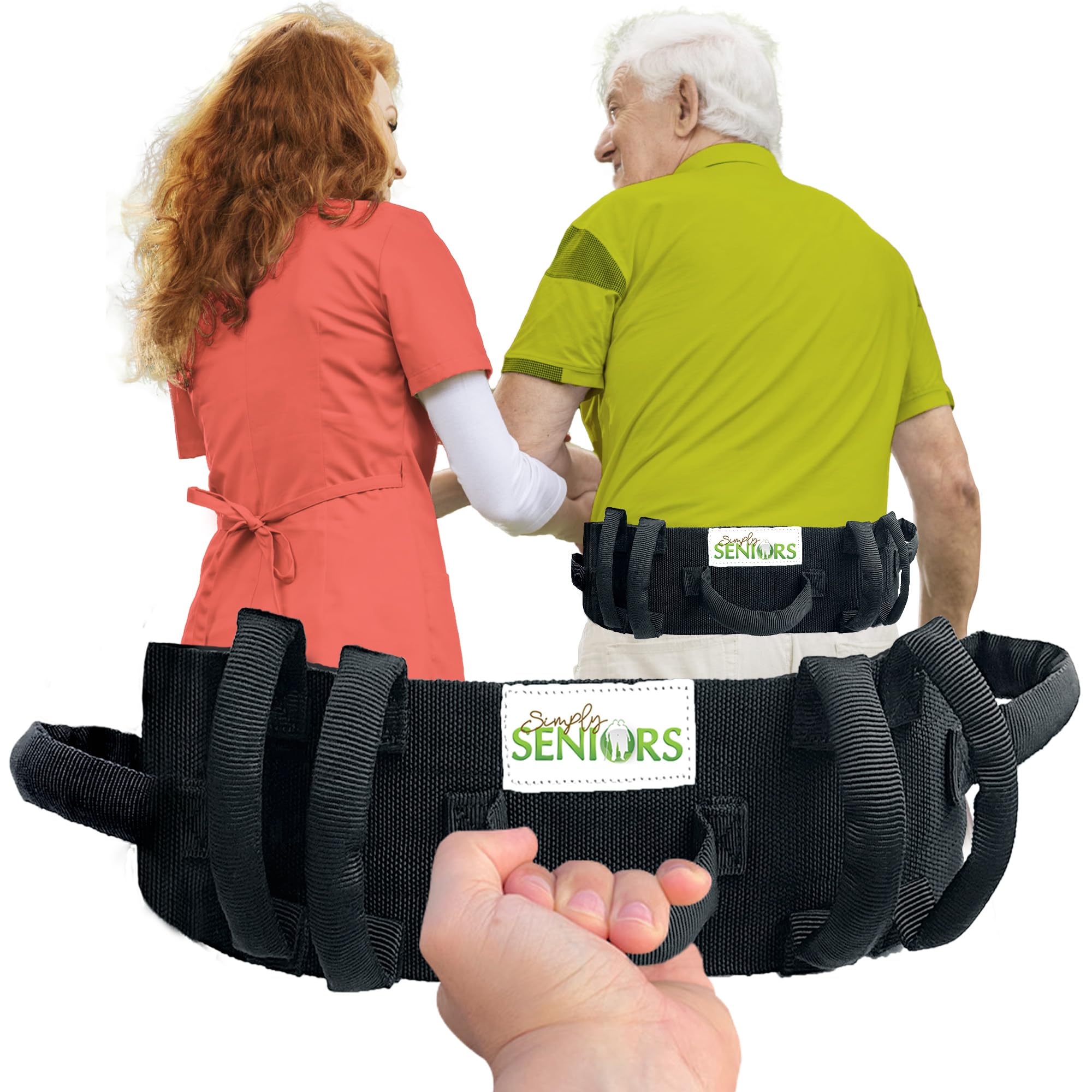
The Simply Seniors belt stands out with a 4-inch-wide back section that prevents digging into fragile skin — a common complaint with narrower belts. The seven handles spaced around the belt allow up to two caregivers to assist simultaneously, which is essential for users who cannot bear weight on their own. The metal quick-release buckle provides a confident, audible click that stays locked during lifting but releases instantly when pressed.
Reviewers consistently praise the comfortable handle design, noting that the belt makes transfers feel far less risky for both the caregiver and the user. One caregiver described helping their mother with dementia feel secure walking down stairs, something that was impossible with the standard hospital belt. The extra width in the back is specifically mentioned as reducing bruising compared to thinner transfer straps.
The belt fits waist sizes from roughly 30 to 50 inches, and the nylon webbing is tightly stitched with reinforced seams. The 13.76-ounce weight is light enough to carry in a bag but substantial enough to handle repeated daily lifts. For most home caregivers, this belt balances handle count, safety features, and comfort at a very reasonable price point.
Why it’s great
- 7 handles enable multiple caregivers to assist at once
- 4-inch back width reduces skin bruising and pressure
- Metal quick-release buckle provides reliable security
Good to know
- May feel bulky for users with very narrow waistlines
- Handles are not padded with foam, just reinforced webbing
2. LAMBOX 7-Handle Gait Belt

The LAMBOX belt is the only model in this lineup where every handle is covered with soft foam padding — a significant advantage for caregivers who must grip the belt for extended periods. The back features a 5-inch-wide padded section that provides better pressure distribution than standard 4-inch belts, making it a strong choice for users with very thin or sensitive skin. The nylon webbing is thick and the stitching on the handle loops is reinforced to withstand repeated heavy lifts.
Occupational therapists have approved this belt for dementia patients with muscle weakness, noting that it works well for both guiding movement and fall prevention in wheelchairs. Reviewers mention that the belt stays in place without sliding, even during repositioning, thanks to the wide back pad. The plastic quick-release buckle is durable, though several users noted that the belt can loosen slightly during extended use and requires periodic readjustment.
The total length of 60 inches adjusts to fit waist sizes from 30 to 50 inches, but some caregivers of very petite users found the minimum size still slightly too large. The belt is machine-washable and designed for daily professional use in home care or physical therapy settings. If foam-padded handles and a wide back pad are your priority, this belt delivers exceptional comfort for both parties.
Why it’s great
- All seven handles have soft foam padding for caregiver comfort
- 5-inch back pad offers maximum pressure distribution
- Durable nylon webbing with reinforced stitching
Good to know
- Plastic buckle may feel less secure than metal alternatives
- Belt can loosen slightly during use, requiring readjustment
3. Leetye Mei Transfer Sling
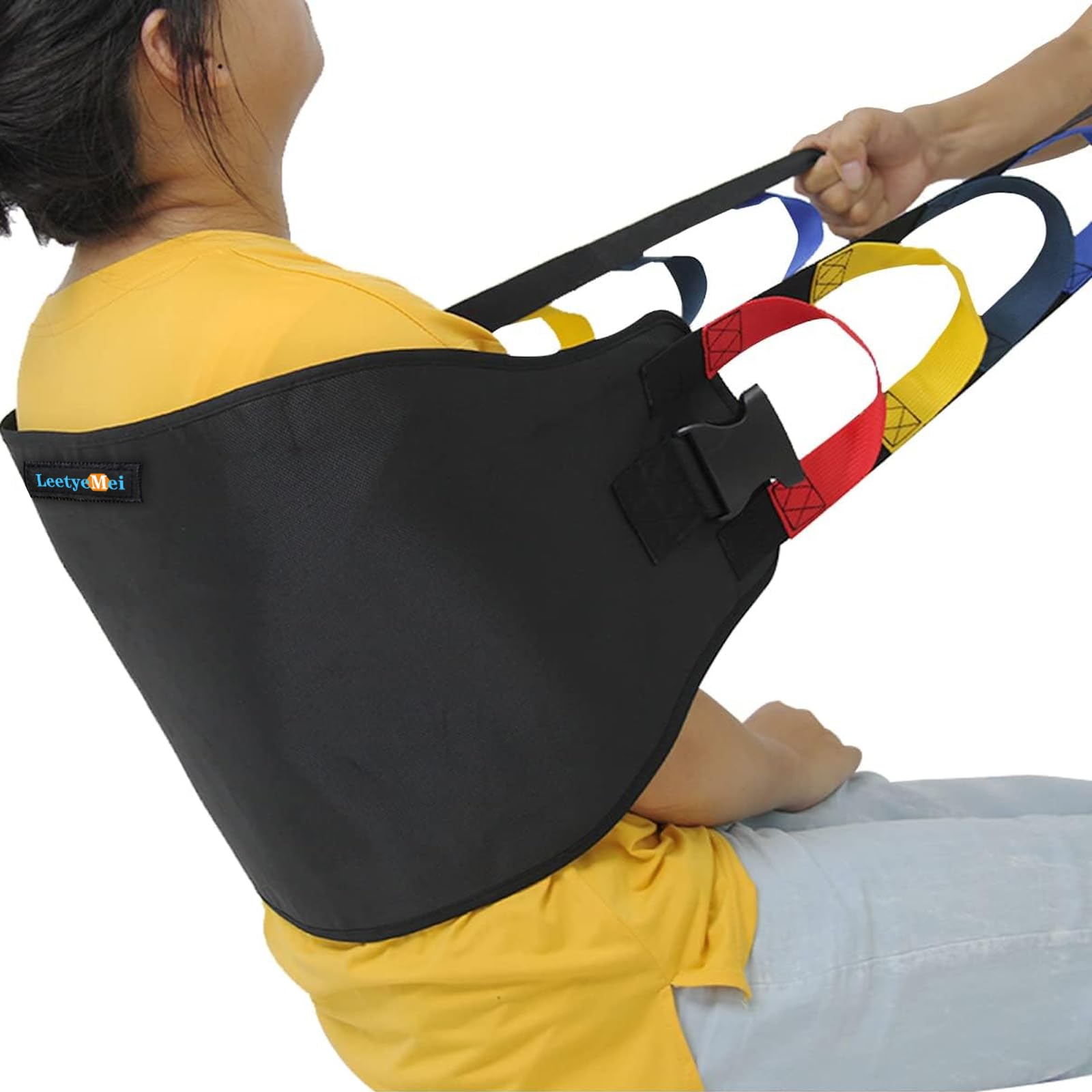
The Leetye Mei is fundamentally different from a traditional gait belt — it is a full-body transfer sling that wraps from the armpits down to the waist, providing far more surface area for lifting and repositioning bedridden users. The sling measures 63 inches long by 11 inches wide, with five handles on each side for a total of ten grip points. The woven mesh and nylon fabric is soft against the skin and breathable, reducing sweat buildup during extended use.
With a rated capacity of 330 pounds and encrypted stitching at all stress points, this sling is built for heavier users who need full body support during transfers from bed to wheelchair, commode, or car. Caregivers report that the wide design allows the sling to hold the user upright for bed changes and repositioning without causing discomfort. The quick-release buckle allows fast removal, and the adjustable waist strap ensures a snug fit even for users with different body types.
This sling is not intended for walking assistance — it is purely a transfer tool for users who cannot stand independently. The 8.43-ounce fabric is remarkably light and slides easily under a lying patient. If your care situation involves a bedridden individual who needs to be lifted or repositioned multiple times daily, the Leetye Mei sling provides the structural support that no standard belt can match.
Why it’s great
- Full body design provides support from armpits to waist
- 330-pound weight capacity with reinforced stitching
- Ten handles offer maximum grip for repositioning
Good to know
- Not suitable for walking assistance or gait training
- Requires two caregivers for safe operation with heavy users
4. Patient Aid Padded Handle Belt

The Patient Aid belt is designed for caregivers who need a transfer tool that lives in a bag or glove compartment, ready for use at a moment’s notice. At just 4.16 ounces, it is the lightest belt on this list and rolls into a compact bundle that fits in any purse or backpack. Despite its light weight, the belt features reinforced handles that reviewers describe as sturdy and capable of handling heavier users during daily lifts.
Multiple handles provide leverage for standing, wheelchair, bathroom, and car transfers — one reviewer noted that the handles made it much easier to lift their father from a seated position without straining their own back. The quick-release buckle is easy to operate one-handed, and the adjustable strap fits most waist sizes. The belt can be positioned higher on the chest to avoid abdominal incisions, a useful flexibility for post-surgery patients.
Caregivers with sciatica found this belt made lifting their mother significantly easier, as the handles reduced the need to bend awkwardly. The material is strong yet flexible, and users reported no issues with the buckle or stitching after months of daily use. If portability and ease of storage are your primary concerns, this belt offers excellent utility in a very small package.
Why it’s great
- Ultra-lightweight and rolls into a compact travel bundle
- Reinforced handles reduce caregiver back strain
- Can be worn high on chest to avoid abdominal wounds
Good to know
- Fewer handles than some full-size alternatives
- Narrower back section offers less skin protection
5. Cow&Cow 4-Inch Gait Belt

The Cow&Cow gait belt is the simplest entry-level option on this list, offering a traditional 4-inch-wide strap with a plastic quick-release buckle at a very accessible price point. It includes multiple handles for lifting, but they are not padded, and the back section lacks the extra width found on premium models. This belt works best for users who are generally mobile but need occasional support for steps, car transfers, or walking stability.
Approved by an occupational therapist for guiding dementia patients with muscle weakness, the belt provides enough leverage for a single caregiver to manage safe transfers in a home setting. Reviewers appreciated how easy it is to put on and take off, and the 13.26-ounce weight makes it comfortable for the user to wear for extended periods. The belt fits waist sizes from 28 to 52 inches, accommodating a wide range of body types.
Several reviewers mentioned that this belt was a significant upgrade over the standard hospital-issued gait belt, which typically has no handles at all. For caregivers who need a simple, no-frills transfer strap for basic mobility assistance, the Cow&Cow delivers reliable performance without unnecessary extras. It is not the best choice for users with very fragile skin or for heavy lifting, but it covers the essential function well.
Why it’s great
- Simple, intuitive design is easy to use immediately
- Wide waist adjustment range from 28 to 52 inches
- Approved by occupational therapists for dementia care
Good to know
- Plastic buckle less durable than metal for heavy use
- No padded handles or extra back width for skin protection
FAQ
How tight should a gait belt be around the user’s waist?
Can a gait belt be used for bariatric patients?
How do I clean a gait belt that gets soiled during daily use?
Final Thoughts: The Verdict
For most users, the gait belt winner is the Simply Seniors 7-Handle because its seven handles, metal buckle, and 4-inch back width cover every essential safety feature at a very accessible price. If you need foam-padded handles and a wider back pad for maximum caregiver and patient comfort, grab the LAMBOX 7-Handle Belt. And for a bedridden user who needs full body support during repositioning, nothing beats the Leetye Mei Transfer Sling.