
Eight hours on concrete is a relentless test of footwear. The unyielding surface transmits shock straight through your heels, knees, and lower back, turning a standard sneaker into a liability within weeks. Choosing the wrong pair means early fatigue, chronic joint pain, and soles that disintegrate long before the upper wears out.
I’m Mohammad Maruf — the founder and writer behind Drink4Good. My analysis for this guide involved cross-referencing foam density claims, outsole rubber durometer ratings, and slip-resistance certifications across dozens of models to separate genuine all-day protection from marketing fluff.
After evaluating customer durability reports on warehouse floors, machine shops, and construction sites, these seven models represent the highest-value options available. This is the definitive guide to the best footwear for concrete floors for standing workers and industrial professionals.
How To Choose The Best Footwear For Concrete Floors
Concrete is approximately 65 times harder than asphalt, meaning every step generates massive ground-reaction force. Your footwear choice directly determines how much of that force gets absorbed before it reaches your spine. Focus on these four factors.
Midsole Material and Shock Absorption
EVA foam is lightweight but compresses permanently after a few months of daily concrete use. Polyurethane (PU) or rubber-blend midsoles maintain their rebound properties much longer. Look for terms like “anti-fatigue,” “energy return,” or “PU insert” in the spec sheet — these indicate genuine concrete-grade cushioning rather than a basic foam slab.
Outsole Traction and Durability
Slip-resistance is non-negotiable on concrete, especially where oils, water, or dust accumulate. Check for ASTM F1677 or ASTM F2913 ratings on the outsole. A high-traction rubber compound with a tread depth of at least 3-4mm will grip better and resist flat-spotting over months of ground contact.
Toe Protection and Weight
Steel toes are heavy and conduct cold in winter. Alloy toes offer comparable impact protection at roughly 30-40% less weight, which reduces leg fatigue over a full shift. In zones without falling-object risks, soft-toe or composite-toe footwear can still include electrical hazard (EH) protection without the weight penalty.
Fit Volume and Arch Support
Concrete work causes feet to swell through the day. A narrow or standard-D toe box will pinch and blister by hour six. Extra-wide options (2E, 4E, or XW) let toes splay naturally, improving balance and circulation. Removable insoles are critical for users who need custom orthotics or aftermarket arch support inserts.
Quick Comparison
On smaller screens, swipe sideways to see the full table.
| Model | Category | Best For | Key Spec | Amazon |
|---|---|---|---|---|
| Timberland PRO Powertrain Alloy Toe | Alloy Toe Hiker | Warehouse & construction | Anti-Fatigue Technology midsole | Amazon |
| KEEN Utility Sparta 2 Low | Alloy Toe Industrial | Assembly & light industrial | KEEN.ReGEN midsole, 451g per shoe | Amazon |
| New Balance 608 V5 Cross Trainer | Casual Cross Trainer | All-day standing & walking | ABZORB heel crash pad | Amazon |
| Orthofeet Granite Waterproof Work Boot | Orthopedic Work Boot | Foot pain & plantar fasciitis relief | Ortho-Cushion system with arch booster | Amazon |
| Skechers Slip-resistant Glide-Step Pro | Hands-Free Slip-In | Hospitality & quick on/off work | Air-Cooled Memory Foam insole | Amazon |
| FitVille Extra Wide Slip-on Sneaker | Extra Wide Walking | Wide feet & high-volume fit | LugMax Trail outsole, 2E/4E widths | Amazon |
| Moc Toe Work Boot (Safety Loong) | Full Grain Leather Boot | Budget-friendly heavy use | Full grain leather, wedge outsole | Amazon |
In‑Depth Reviews
1. Timberland PRO Men’s Powertrain Alloy Toe Hiker

The Timberland PRO Powertrain strikes an exceptional balance between protection and mobility. Its Anti-Fatigue Technology midsole uses geometric cone geometry to absorb shock and return energy at the heel strike, a design proven to reduce lower-leg muscle fatigue during 10-hour concrete shifts. The alloy toe passes ASTM F2413 impact standards without the weight penalty of steel, keeping each shoe light enough for active warehouse navigation.
The ripstop nylon upper with TPU overlays resists abrasion from kneeling and crouching on rough concrete, while the moisture-wicking ReBOTL lining (50% recycled plastic) keeps feet dry in non-winter conditions. Multiple customer reports confirm the outsole holds up on oil-slicked factory floors, though the soft rubber compound is best suited to indoor or mixed terrain rather than sharp gravel.
Where the Powertrain truly earns its rank is in its 4.5-star average across thousands of reviews, with consistent praise from install technicians logging 9-10 hour days. The trade-off is breathability — the nylon upper runs slightly warm in summer months. For most concrete workers, this is the one boot that does everything well without breaking the bank.
Why it’s great
- Anti-Fatigue midsole dramatically reduces heel-strike impact on hard surfaces
- Lightweight alloy toe meets safety standards without adding leg fatigue
- Excellent outsole grip on oily and wet concrete surfaces
Good to know
- Upper lacks breathability for hot environments
- Some users report outsole splitting after 6-9 months of heavy daily use
2. KEEN Utility Mens Sparta 2 Low Alloy Toe

At just 451 grams per shoe, the KEEN Utility Sparta 2 redefines what an industrial safety shoe can feel like. The non-metallic aluminum toe passes ASTM F2413 without the cold-conducting properties of steel, making it a favorite among workers in refrigerated warehouses and cold concrete environments. The KEEN.ReGEN midsole delivers a bouncy, responsive ride that resists compression set better than standard EVA.
The traditional KEEN wide fit form accommodates toes naturally, though the vertical toe box is slightly narrower than the brand’s classic shape — a nuance that matters for users with high-volume feet. The removable insole allows for custom orthotics, and the natural probiotic odor-control technology is a genuine bonus for full-shift wear. Real-world feedback from diesel technicians and assembly-line workers reports a lifespan of 7-13 months before sole wear becomes noticeable.
The slip-resistance rating is adequate for manufacturing floors with occasional moisture, but the tread is not aggressive enough for loose gravel or muddy construction sites. The laces also tend to loosen when exposed to oil, a minor but recurring complaint. Still, for pure all-day comfort on indoor concrete, the Sparta 2 is hard to beat.
Why it’s great
- Extremely lightweight for an alloy-toe safety shoe
- KEEN.ReGEN midsole maintains rebound after months of use
- Roomy toe box and removable insole allow custom orthotic fitting
Good to know
- Tread pattern is mild — not ideal for loose or uneven terrain
- Laces can slip when exposed to oil; some durability concerns at toe bend
3. New Balance Men’s 608 V5 Casual Comfort Cross Trainer
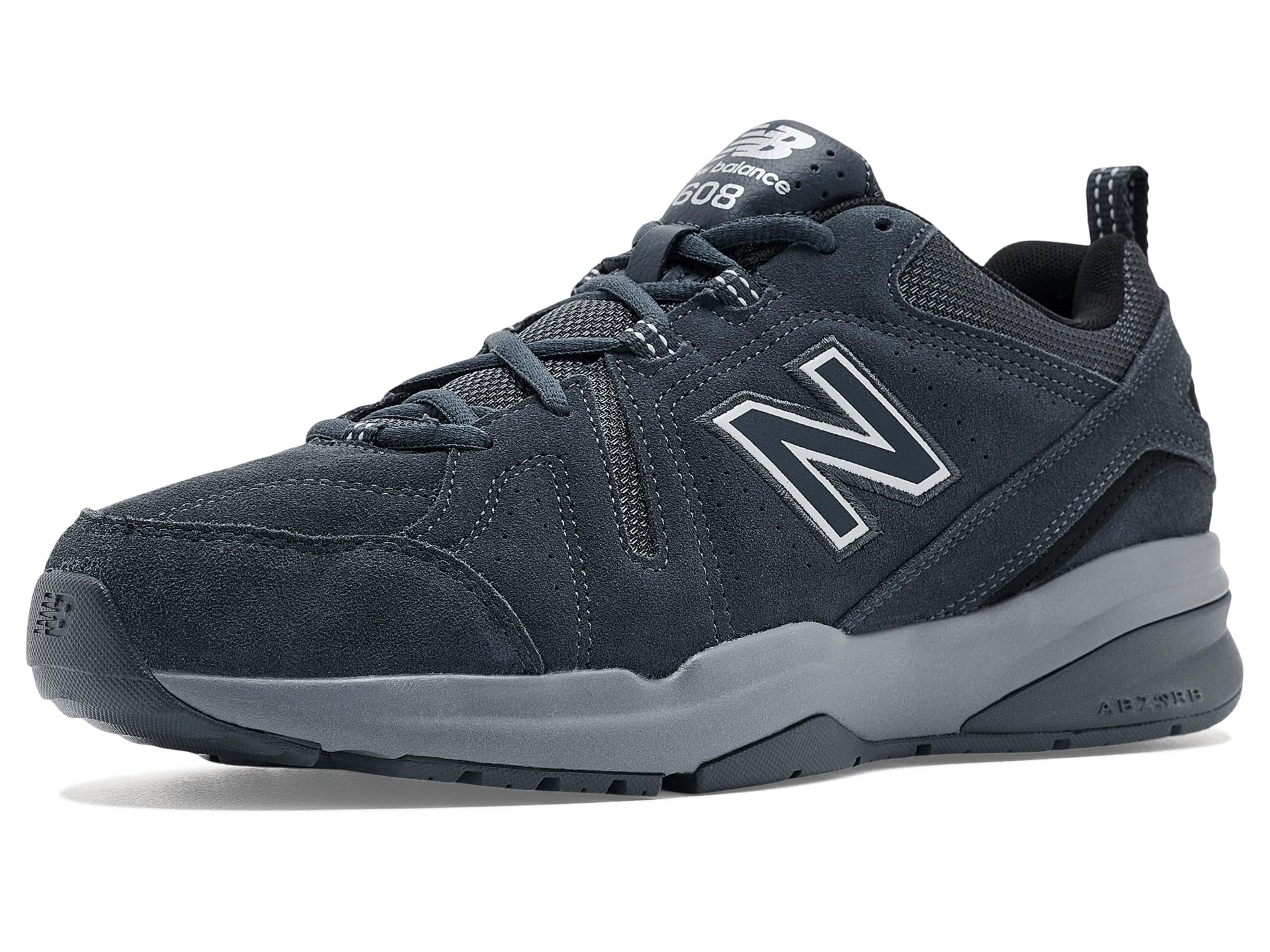
The New Balance 608 V5 has achieved cult status among service workers and healthcare professionals for a simple reason: the ABZORB heel crash pad genuinely absorbs concrete shock better than most sneakers at twice the price. The molded PU insert provides a dense, supportive platform that resists bottoming out, unlike the soft EVA slabs found in budget cross-trainers. The suede and mesh upper is sturdy enough for light industrial environments while remaining breathable.
The relaxed fit last offers a generous D-width that works for slightly wide feet without swimming in volume. Dual-density collar foam stabilizes the ankle, reducing the wobble that often exacerbates knee fatigue on uneven concrete. Real-world reports from users logging 20,000 steps daily on warehouse floors confirm the 608 holds its shape and cushioning for roughly 10-12 months before the midsole begins to pack out.
The sole separation failure reported by some heavy users after a year is a genuine concern — the glue bond between the ABZORB unit and outsole appears to be the weakest link. The 608 also lacks a defined heel counter, so users with pronation issues may need an aftermarket insole. For standing workers who want gym-grade comfort in a work-appropriate silhouette, this is the smartest mid-range investment available.
Why it’s great
- ABZORB heel pad delivers genuine shock absorption on hard concrete
- Molded PU insert stays supportive for 10-12 months of daily use
- Dual-density collar foam improves ankle stability during long stationary periods
Good to know
- Some units experience sole separation after heavy use past the one-year mark
- Lacks aggressive arch support for users with flat feet or overpronation
4. Orthofeet Orthopedic Granite Waterproof Work Boot

For workers who already suffer from plantar fasciitis, metatarsalgia, or chronic heel pain, the Orthofeet Granite is less a boot and more a medical intervention. The Ortho-Cushion system integrates a built-in orthotic insole with a deep heel cup and a mild arch booster that realigns the foot’s natural posture. The wide toe box eliminates the lateral compression that aggravates neuromas and bunions, making this the only boot on this list that users report being comfortable on day one without any break-in period.
The waterproof membrane performs as advertised — multiple reviews confirm dry feet after six months of exposure to rain and mud on highway construction sites. The slip-resistant outsole uses a wider base and firm heel counter to improve stability on slick concrete, though the tread depth is moderate and could be more aggressive for loose terrain. The soft leather upper, while comfortable, scuffs more easily than the full-grain leather found on budget work boots.
The trade-off is midsole longevity. Several long-term users report the cushioning feeling thinner after several weeks, suggesting the foam density is lower than premium work-specific brands. Adding a firm aftermarket insole may restore the needed shock absorption for full-shift concrete wear. For orthopedic relief, however, the Granite outperforms everything in its class.
Why it’s great
- Ortho-Cushion system provides immediate relief for plantar fasciitis
- Extra-wide toe box eliminates toe pinching throughout long shifts
- Waterproof membrane holds up well in wet concrete environments
Good to know
- Midsole cushioning may compress noticeably after several weeks of daily use
- Soft leather upper scuffs more easily than traditional full-grain work leather
5. Skechers Men’s Slip-Resistant Glide-Step Pro Slip-ins
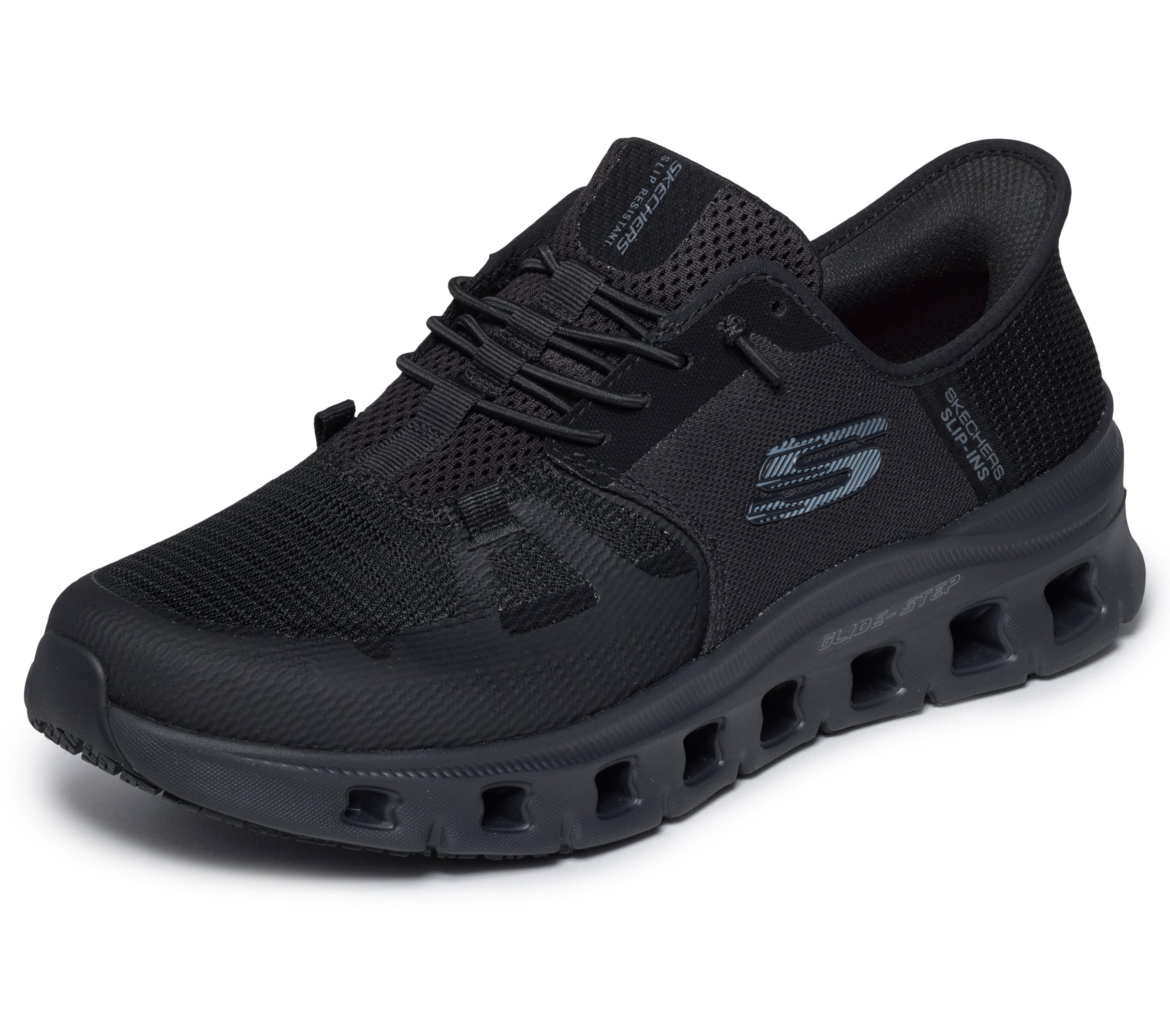
The Skechers Glide-Step Pro solves a specific concrete-floor pain point that most boots ignore: the physical effort of bending over to lace and unlace shoes ten times a day. The Hands-Free Slip-in technology uses a molded heel panel with a “Heel Pillow” that grabs the back of the foot securely, eliminating the loose heel feel that plagues most slip-on designs. The Air-Cooled Memory Foam insole provides immediate plushness, though memory foam tends to lose its resilience faster than PU on concrete.
The water-repellent mesh upper keeps feet dry during light spills and damp floors, and the slip-resistant outsole carries the proper ASTM rating for hospitality and light industrial environments. Warehouse workers specifically report dramatic reductions in back and knee soreness after switching to these from traditional lace-up work shoes. The Glide-Step Pro also works well for seniors or anyone with mobility issues that make bending difficult — the heel panel allows entry without using hands at all.
The foam midsole does have a smooth center section where the non-slip tread pattern interrupts, making the shoe slightly slick on extremely wet restaurant kitchen floors. Users learn to adapt their gait, but it is a design flaw worth noting. The memory foam insole also compresses permanently after roughly six months, after which the shoe’s cushioning drops noticeably. For workers who prioritize convenience and short-shift comfort over maximum longevity, the Glide-Step Pro is a category standout.
Why it’s great
- Hands-free slip-in design eliminates bending and lacing for quick changes
- Heel Pillow provides secure fit without the loose heel common in slip-ons
- Customer reports confirm reduced back and knee pain on concrete warehouse floors
Good to know
- Smooth center of outsole lacks tread, reducing grip on very wet surfaces
- Memory foam insole compresses permanently after approximately six months
6. Moc Toe Work Boots (Safety Loong) Waterproof Soft Toe
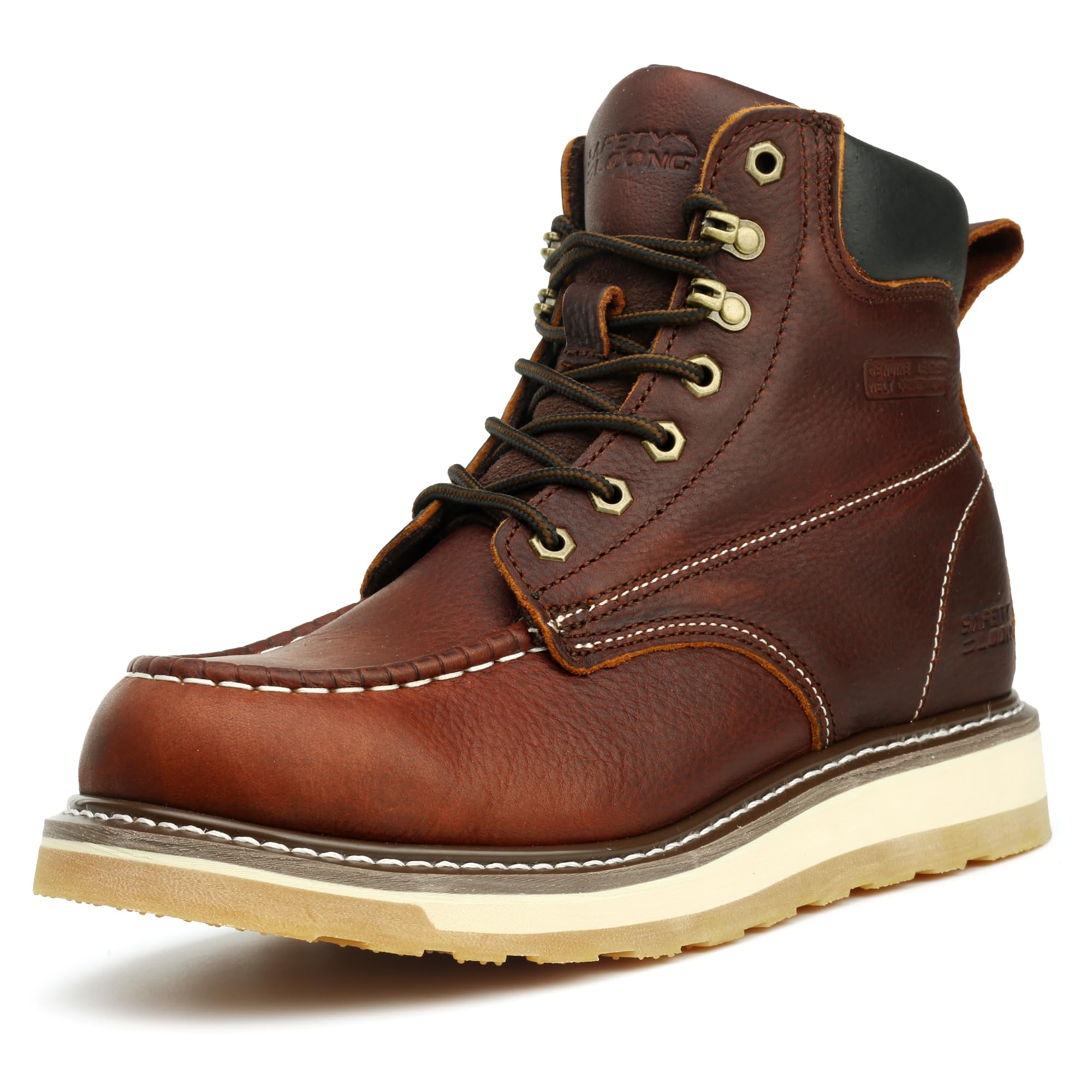
The Safety Loong Moc Toe boot proves that entry-level pricing does not automatically mean entry-level construction. The full-grain leather upper matches the grade found on boots priced at triple this amount, and the welted construction suggests a rebuildable lifespan that cheap cemented boots lack. The wedge outsole provides a flat, stable platform that distributes ground pressure evenly — a design historically favored by carpenters and concrete finishers who stand on hard surfaces all day.
Reviewers consistently note that the boot requires zero break-in time, a rarity for leather work boots, and that the removable insole provides adequate arch support for an 8-hour shift. The water-resistant treatment on the leather keeps feet dry through light rain and wet grass, though the welt seam is not guaranteed 100% waterproof. The deep reddish-brown leather also looks good enough to wear casually, a bonus for workers who commute in their boots.
The weight is the primary drawback. At roughly 1990s Doc Martens territory, these boots will tire out legs faster than any of the synthetic options on this list. The gum rubber sole also runs slightly slick on polished concrete or tile — users on wet restaurant floors should look elsewhere. For dry construction sites, factory floors, and yard work, the Safety Loong delivers absurd value for the materials used.
Why it’s great
- Full-grain leather at a fraction of the cost of premium heritage brands
- Zero break-in period — comfortable from the first wear
- Wedge outsole provides excellent stability for stationary standing on concrete
Good to know
- Heavier than synthetic and alloy-toe competitors, causing faster leg fatigue
- Gum rubber sole is not aggressively slip-rated for wet or greasy floors
7. FitVille Extra Wide Slip-on Sneakers for Men

For men with wide feet, high-volume insteps, or simply tired of squeezing into standard D-width shoes, the FitVille AllScene WideFit series offers something few concrete-floor footwear options provide: genuine 2E and 4E sizing with a slip-on design. The LugMax Trail outsole uses deep, aggressive lugs that bite into loose gravel and uneven concrete far better than the flat soles found on most casual sneakers. The breathable mesh and microfiber upper combines flexibility with durability, though it trades wet-weather protection for airflow.
The arch support is mild but present, and the 6mm drop keeps the foot in a neutral walking position. Real-world feedback from a 380-pound user walking 6 miles daily on concrete confirms the platform holds up, though the outsole rubber wears faster under extreme loads. The slip-on convenience is genuine — the heel counter collapses easily for entry but stays put once the shoe is on, eliminating the awkward struggle common with budget slip-ons.
The ankle opening is the primary fit variable. Some users with particularly thick ankles find the collar tight, while those with standard ankle circumference appreciate the secure feel. The outsole durability is also a concern for lighter users who want more than 6-9 months from a walking shoe. For the specific demographic of wide-footed workers who need breathable, slip-on daily wear for concrete surfaces, the FitVille is a uniquely targeted solution.
Why it’s great
- True 2E/4E wide sizing with a slip-on design — rare in the concrete-footwear niche
- Deep LugMax outsole tread provides genuine traction on loose surfaces
- Breathable upper keeps feet cool during active warehouse work
Good to know
- Outsole rubber wears faster under heavy loads (380+ lbs) on daily concrete miles
- Ankle collar may feel tight for users with thicker ankles
FAQ
Why does memory foam fail quickly on concrete floors?
Is an alloy or steel toe better for concrete work?
How often should I replace footwear for concrete floors?
Final Thoughts: The Verdict
For most users, the footwear for concrete floors winner is the Timberland PRO Powertrain Alloy Toe Hiker because it combines certified safety, genuine anti-fatigue midsole technology, and proven durability across multiple work environments at a fair mid-range price. If you want the lightest possible safety shoe with the longest midsole life, grab the KEEN Utility Sparta 2 Low. And for orthopedic relief from chronic foot pain without sacrificing work-grade protection, nothing beats the Orthofeet Granite Waterproof Work Boot.