
Finding a spray that kills the loopers munching your tomatoes without nuking the bees visiting your squash is the defining headache of edible gardening. The wrong bottle either burns your leaves, smells like a chemical spill, or simply does nothing to the specific pest crawling up your stems. You need a targeted solution that matches the insect, the plant, and your tolerance for strong odors.
I’m Mohammad Maruf — the founder and writer behind Drink4Good. I track formulation trends, active ingredient efficacy, and organic certification standards to separate genuinely effective garden sprays from bottles that are just water with a strong scent.
After combing through real user experiences across dozens of products, these are the concrete details that matter for anyone looking for the most effective garden pesticide to protect their vegetables, ornamentals, and fruit trees without causing collateral damage to their yard’s ecosystem.
How To Choose The Best Garden Pesticide
Selecting the right pesticide starts with identifying the pest and the plant. Caterpillars and loopers require a biological approach. Aphids and scale often need a systemic. Fungal problems demand a fungicide. One bottle seldom solves every problem, so match the active ingredient to the specific invasion you are fighting.
Active Ingredient Type
Bacillus thuringiensis (Bt) is a naturally occurring bacterium that paralyzes the gut of caterpillar larvae. It does nothing to aphids, mites, or beetles. For sap-sucking insects, neem oil extract or acephate are more appropriate. Acephate is a systemic organophosphate that travels through the plant’s vascular system, making every leaf toxic to chewing insects. Neem oil works as a contact insecticide, miticide, and fungicide all in one.
Organic Certification and Safety
OMRI Listed products like the Monterey B.t. have been reviewed and approved for use in certified organic production. If you are growing food for your family, an OMRI Listed product gives you confidence that the formulation meets USDA organic standards. Products like the Hi-Yield Malathion contain strong synthetic chemicals and require protective gear during application.
Application Method and Odor
Concentrates require mixing with water in a sprayer. Ready-to-use bottles with integrated sprayers offer convenience but often cost more per ounce. Some systemic formulas, particularly those with acephate, produce a smell comparable to rotten eggs or garbage that lingers for days. Natural peppermint oil sprays smell pleasant for the first half hour but dissipate quickly and require frequent reapplication.
Quick Comparison
On smaller screens, swipe sideways to see the full table.
| Model | Category | Best For | Key Spec | Amazon |
|---|---|---|---|---|
| Monterey B.t. | Biological | Caterpillars on edibles | Bacillus thuringiensis, 8 oz | Amazon |
| Garden Safe Fungicide3 | Triple Action | Fungus & aphids on ornamentals | Neem oil extract, 128 oz | Amazon |
| Bonide Systemic Insect Control | Systemic | Scale & thrips on ornamentals | Acephate, 16 oz concentrate | Amazon |
| Hi-Yield Malathion | Synthetic | Broad insect control | 55% Malathion, 32 oz | Amazon |
| Mighty Mint | Natural Repellent | Deterring ants & spiders | Peppermint oil, 128 oz | Amazon |
In‑Depth Reviews
1. Monterey B.t.
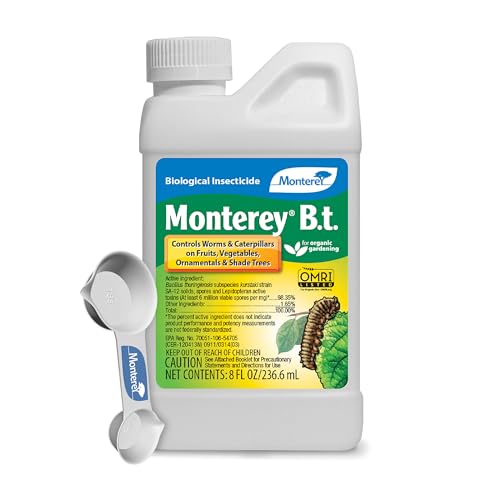
The active ingredient here is Bacillus thuringiensis, a soil bacterium that produces a protein crystal toxic specifically to the digestive systems of caterpillars and worm-type larvae. When cabbage loopers or bagworms ingest sprayed foliage, they stop feeding within hours and die within a few days. The biological mode of action means this product has no effect on honeybees, earthworms, or ladybugs when applied according to directions.
The 8-ounce container mixes with water for use in a trigger sprayer or pressure tank. Users across multiple reviews confirm it eliminates loopers on flower seedlings, cilantro, and Texas Mountain Laurel reliably without burning tender new growth. The formulation is OMRI Listed, meaning it complies with USDA organic standards for use on edibles like broccoli, tomatoes, and lettuce.
One downside is the small container size — 8 fluid ounces of concentrate goes farther than it looks, but heavy users with large gardens may need multiple bottles for a full season. The product is specific to caterpillars and will not help with aphids, mites, or fungal issues, so it is a specialist tool rather than a general cure-all.
Why it’s great
- Zero harm to bees and beneficial insects when used correctly
- OMRI Listed for certified organic vegetable gardening
- Instantly mixes with water and applies easily with any sprayer
Good to know
- Only works on caterpillars, loopers, and worm-type larvae
- Small bottle may require multiple purchases for large gardens
2. Garden Safe Fungicide3
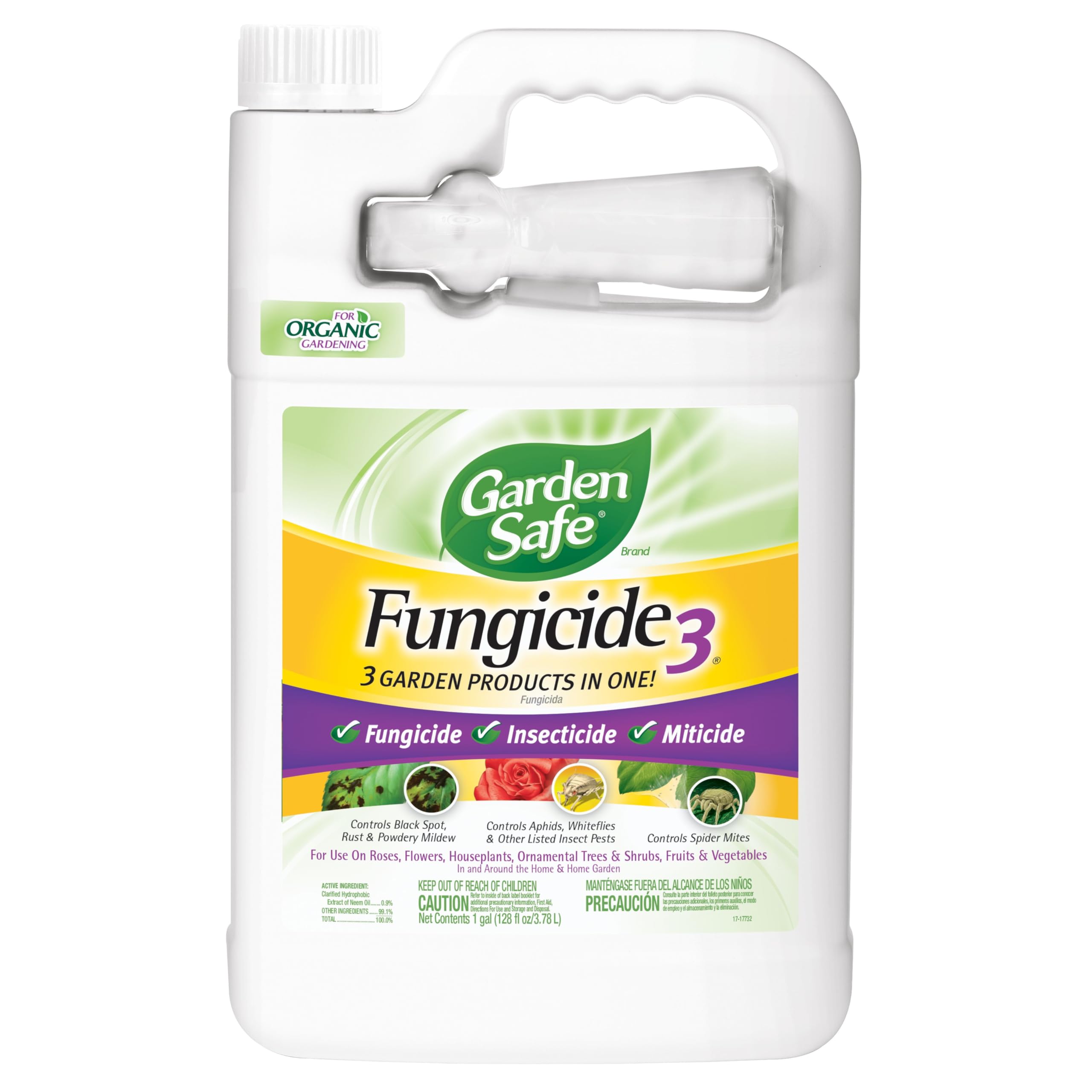
This product combines three functions — fungicide, insecticide, and miticide — into one ready-to-use gallon jug. The active ingredient is clarified hydrophobic extract of neem oil, a plant-based compound that disrupts the life cycle of fungi like black spot and powdery mildew while also controlling aphids, whiteflies, and spider mites through suffocation and hormonal disruption.
The integrated sprayer is convenient but users report it is poorly designed with a short coiled hose that makes reaching the underside of leaves awkward. Several users note that applying during full sun can burn tender leaves, so early morning or evening application is recommended. The product shines on ornamental plants, roses, orchids, and houseplants where fungal leaf spotting is the primary concern.
For vegetable gardeners, the organic certification adds peace of mind, but the neem oil can leave a visible residue on produce. Users with large collections of hibiscus, tomatoes, and blueberries report that weekly application stops mildew recurrence but does not heal already-damaged leaves. The gallon size provides ample coverage for a moderate home garden.
Why it’s great
- Three functions in one bottle saves shelf space and money
- Ready-to-use with no mixing required
- Highly effective on powdery mildew and aphids on ornamentals
Good to know
- Integrated sprayer has very short reach
- Can burn leaves if applied in direct sunlight
3. Bonide Systemic Insect Control

This concentrate delivers acephate, a systemic organophosphate that is absorbed by the plant and translocated throughout its tissues. When insects like thrips, mealybugs, scale, and whiteflies feed on treated foliage, they ingest the active ingredient and die. The systemic action protects new growth that emerges after spraying — something contact sprays cannot do.
The 16-ounce concentrate makes 16 gallons of finished spray, offering significant value for users with large ornamental plantings. The product is labeled for use on over 100 plant species including roses, shrubs, and flower beds, but is explicitly not intended for vegetable or fruit plants. Users report near-immediate results on fungus gnats, bagworms, and spider mites, though the product label restricts use to ornamentals only.
The biggest practical concern is the odor. Multiple reviews describe the smell as comparable to rotten eggs, a dumpster, or actual animal waste. This odor can be noticeable indoors for days after application. Spraying during shaded hours minimizes the risk of leaf burn, but the smell is the dominant trade-off for the systemic efficacy.
Why it’s great
- Systemic protection reaches new growth that contact sprays miss
- Concentrate makes 16 gallons for large ornamental gardens
- Fast-acting on tough pests like scale and bagworms
Good to know
- Extremely strong odor that lingers for days
- Not for use on vegetables, fruits, or edible plants
4. Hi-Yield Malathion
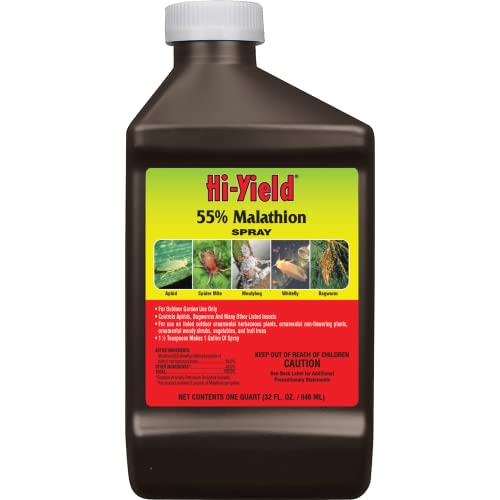
This 55-percent malathion concentrate is a synthetic organophosphate insecticide with broad-spectrum activity against aphids, thrips, spider mites, lace bugs, and mosquitoes. Unlike biopesticides, malathion works on contact and through ingestion, making it effective against adult insects that have already established on a plant. The 32-ounce bottle provides enough concentrated chemical for multiple seasons of spot treatment.
Users report this product handles stubborn scale and red spider mites that resisted other approaches. The product is labeled for use on herbaceous plants, ornamental shrubs, vegetables, and fruit trees, giving it one of the widest application ranges in this list. Several reviewers emphasize that it works better than common retail brands for keeping foundation plantings pest-free all summer.
The serious drawback is safety. Malathion is a suspected carcinogen, and reviewers strongly recommend wearing full protective gear including gloves, goggles, and a respirator during application. Some users suggest hiring a licensed professional for large-scale use. It also requires careful timing — spraying before rain reduces effectiveness, and the impact on wildlife and pets around the application area is not fully clear from the user data.
Why it’s great
- Broad-spectrum control works on mites, aphids, and mosquitoes
- Labeled for both vegetables and fruit trees
- Effective against pests that resist gentler treatments
Good to know
- Requires full protective gear during application
- Strong suspected carcinogen — use as a last resort
5. Mighty Mint

This is not a pesticide in the traditional sense — it is a peppermint oil repellent that deters spiders, ants, roaches, and other crawling insects through strong olfactory aversion rather than toxicity. The gallon bottle contains extra-concentrated peppermint oil that is safe to use around dogs, cats, and children when applied as directed. Users report it works well for maintaining a barrier around entryways, patios, and baseboards.
The natural formula makes it an attractive choice for families and pet owners who are unwilling to spray synthetic chemicals indoors or near edible plants. The peppermint scent is strong upon application but fades to a pleasant aroma that most people find tolerable. Several users note it effectively eliminates small ants and deters wasps and stink bugs from nesting near doors and windows.
The trade-off is that this is a deterrent, not a killer. Users with established infestations report that spiders return quickly and that the product is ineffective against severe ant or rodent problems. It performs best as a maintenance spray for flies, gnats, and moths, but requires weekly reapplication. For active infestations with visible damage, a true insecticide like the Monterey B.t. or Bonide Systemic is more appropriate.
Why it’s great
- Safe around pets, children, and food preparation areas
- Pleasant peppermint scent rather than chemical odor
- Gallon size provides long-lasting coverage for indoor and outdoor use
Good to know
- Only a deterrent — does not kill existing pests
- Requires frequent reapplication for reliable results
FAQ
Will Bt spray harm honeybees visiting my vegetable blossoms?
Why does systemic insect control smell like rotten eggs?
Can I use neem oil spray on my tomato plants right before harvest?
Does Mighty Mint actually kill spiders or just scare them away?
Final Thoughts: The Verdict
For most users, the garden pesticide winner is the Monterey B.t. because it targets the most common pest — caterpillars and loopers — without any chemical impact on bees, earthworms, or your vegetable garden’s organic certification. If you need a triple-threat against powdery mildew, aphids, and spider mites on ornamentals, grab the Garden Safe Fungicide3. And for a pet-safe barrier spray that keeps ants and spiders out of the house with a pleasant minty scent, nothing beats the Mighty Mint.