
Recreational golfers often assume that a forged iron’s buttery-soft feedback at impact comes at the cost of ball speed and forgiveness—a trade-off that keeps many players stuck in bulky game-improvement heads. The reality is that modern forging techniques, hollow-body construction, and variable face thicknesses have closed that gap dramatically, letting mid-handicappers enjoy a players-cavity profile without giving up the high-launching, error-tolerant performance they need to score.
I’m Mohammad Maruf — the founder and writer behind Drink4Good. I’ve spent years analyzing the metallurgy, swing-weight dynamics, and gear-effect behavior that separate a mushy cast iron from a responsive one-piece forged head in this specific segment of the market.
The goal of this guide is to cut through the marketing noise and help you choose from the best forged golf irons currently available—focusing on the real-world feel, gapping consistency, and turf interaction that actually lower your scores.
How To Choose The Best Forged Golf Irons
Choosing a forged iron set involves more than just liking the look at address. The forging process itself—how many compression stages the head undergoes—determines grain flow and feel. A true one-piece forged head offers uniform density that reduces harsh vibrations, while a forged face bonded to a cast body can still feel soft but may sacrifice the consistent energy transfer that low-handicap players rely on. Beyond construction, pay close attention to the CG location, shaft flex, and bounce profile, because these specs dictate whether the club launches high enough to hold greens or spins too much and robs you of yardage.
Forging Process and Material
The term “forged” is thrown around loosely in golf marketing. A true forged iron starts as a single billet of carbon steel (typically 1020 or 1025) that is compressed under extreme pressure to align the metal’s grain structure. That grain flow creates the dense, buttery impact feel that distinguishes forged heads from cast alternatives. Look for sets that explicitly state “one-piece forged” or “multi-step forged” and avoid heads that only have a forged face welded onto a cast cavity—they feel different at the contact point.
Forgiveness vs. Workability Balance
Not all forged irons are blades. Many premium forged cavity backs incorporate tungsten weights, undercut channels, or hollow-body designs to boost MOI and preserve ball speed on off-center hits. A players-distance forged iron—like the TaylorMade P·790—uses a thin, high-strength forged face and a foam-filled hollow body to deliver explosive ball speed while retaining the soft feedback that better players demand. If you regularly miss the sweet spot, prioritize a forged cavity back with perimeter weighting over a muscle-back blade.
Shaft Flex and Length Consistency
The head is only half the equation. Forged irons often come stock with premium steel shafts—KBS Tour Lite, True Temper Dynamic Gold, or Nippon Modus—and the flex must match your swing speed. A stiff shaft in a high-launching forged head can lower spin too much, while a regular shaft in a low-spin head may balloon your trajectory. Always verify the shaft type and flex listed in the product specifications, and consider whether you want standard-length progression or a single-length setup for simplified swing mechanics.
Quick Comparison
On smaller screens, swipe sideways to see the full table.
| Model | Category | Best For | Key Spec | Amazon |
|---|---|---|---|---|
| TaylorMade 2025 P·790 (Steel) | Players Distance | Forged feel with max ball speed | 4340M forged face, 24% larger sweet spot | Amazon |
| TaylorMade 2025 P·790 (Graphite) | Players Distance | Lightweight feel with forged sound | SpeedFoam Air, FLTD CG positioning | Amazon |
| Cobra King Forged Tec One Length | Single Length | Consistent swing mechanics | 5-step forged body, hollow with foam | Amazon |
| Callaway Apex 21 | Forged Cavity | AI-designed face for spin consistency | Tungsten Energy Core, forged 1025 steel | Amazon |
| TaylorMade Stealth | Game Improvement | High launch with forged-like feel | ECHO Damping System, Cap Back Design | Amazon |
| Cleveland Launcher XL Halo | Hybrid-Iron | Maximum MOI for high launch | 2,908 g-cm² MOI in 7-iron | Amazon |
| Cobra DarkSpeed | Players Distance | Forgiveness with tuned acoustics | PWR-Bridge weighting, 5-GW set | Amazon |
| Callaway Rogue ST Max | Game Improvement | Distance boost from older sets | Flash Face SS21 (cast construction) | Amazon |
| Japan Kamitaki K910 | Value Forged | Entry-level forged feel on a budget | Carbon steel 5-step forging | Amazon |
In‑Depth Reviews
1. TaylorMade 2025 P·790 Irons (Steel Shaft)

The 2025 P·790 represents the pinnacle of the players-distance category, using a new 4340M high-strength forged steel that is 20 percent stronger than the previous generation. That increased tensile strength allows TaylorMade to mill the face thinner than ever, unlocking a 24 percent larger sweet spot while maintaining the dense, explosive sensation that forged iron loyalists crave. The individual head optimization—FLTD CG positioning—places the center of gravity lower in the 4-iron to boost launch and progressively higher through the scoring clubs to tighten spin windows, so gapping stays consistent from the long irons down to the pitching wedge.
SpeedFoam Air fills the hollow body without adding dead weight, absorbing the high-frequency vibrations that make cast irons feel harsh. On the course, this translates to a soft, almost muted thud at impact that still produces a hot ball speed across the face. Mid-handicappers will appreciate that the 2025 model launches the long irons noticeably higher without ballooning, while better players can still work the ball both directions thanks to the forged one-piece construction under the foam.
The stock KBS Tour Lite steel shaft in stiff flex pairs well with moderate-to-fast swing speeds, keeping the overall weight manageable. The satin chrome finish resists glare and wears evenly over time. For a golfer who wants tour-level forging details with the modern distance and launch of a game-improvement iron, this set is the complete package.
Why it’s great
- Thinnest forged face in the category delivers elite ball speed
- FLTD CG ensures progressive launch and spin through the bag
- SpeedFoam Air preserves buttery forged feel without muting feedback
Good to know
- Set does not include a gap wedge or sand wedge
- Premium price point requires a serious commitment
2. TaylorMade 2025 P·790 Irons (Graphite Shaft)
This version of the 2025 P·790 ships with a graphite shaft, making it the better fit for players who prioritize swing speed retention and joint-friendly feel without sacrificing the forged-face technology that defines the model. The same 4340M high-strength steel face and SpeedFoam Air construction apply here—the graphite shaft simply changes the balance point and overall weight, often allowing a smoother transition through impact for moderate swing tempos.
The set configuration is 5-iron through AW, giving you an approach wedge out of the box that bridges the gap between the pitching wedge and sand wedge. Regular flex graphite in this model launches the ball higher with reduced spin compared to the steel stiff version, which can benefit seniors or players with slower clubhead speeds seeking added carry distance. The FLTD CG profile remains identical to the steel set—low in the long irons, higher in the scoring clubs—so gapping remains predictable regardless of shaft type.
One detail worth noting: the graphite shafts produce a slightly quieter impact sound than the steel version, though the forged sensation at the face is indistinguishable. If you struggle with joint fatigue during practice sessions or want to add a few miles per hour of clubhead speed without changing your swing, this graphite configuration delivers the same premium forged feel in a lighter overall package.
Why it’s great
- Graphite shafts reduce vibration for a smoother feel
- Includes approach wedge for complete gapping
- Same forged face and SpeedFoam Air as the steel version
Good to know
- Regular flex may be too light for fast swing speeds
- Higher launch profile may increase spin for aggressive swingers
3. Cobra King Forged Tec One Length Iron Set

The Cobra King Forged Tec One Length set takes the variable-elimination philosophy to its logical conclusion: every iron from 5 through gap wedge shares the same shaft length, lie angle, and swing weight, so you no longer adjust your setup from club to club. The 5-step forged body is crafted from a single carbon steel billet, and the hollow cavity is injected with a flexible foam that promotes an elastic rebound effect—meaning the face returns to its original shape faster after impact to generate powerful ball speed.
A heavy tungsten toe weight shifts the CG behind the hitting zone, creating a high MOI that keeps the head stable on toe-side misses. In practice, the single-length design simplifies contact for golfers who struggle with inconsistent ball position: you place the ball in the same spot for every iron shot, and the loft does the rest. The trade-off is that the distance gaps between clubs are narrower than a standard variable-length set, so you may need to fine-tune your yardage chart.
Real-world feedback from players transitioning to this system shows a rapid improvement in ball-striking consistency, especially from 150 yards and in. The satin chrome finish and compact blade-like shape at address appeal to better players, while the foam insert ensures that the forged feel remains soft even on thin strikes. If you value consistency over maximum distance spread, this is the most innovative forged iron set on the market.
Why it’s great
- Simplified swing mechanics with identical length across all irons
- Foam insert enhances rebound and feels soft at impact
- Tungsten toe weight boosts forgiveness on mis-hits
Good to know
- Gapping between clubs is tighter and requires practice to dial
- Not ideal for players who prefer traditional variable-length sets
4. Callaway Apex 21 Iron Set

The Callaway Apex 21 changed the conversation around forged irons by becoming the first model to use Artificial Intelligence to design the face architecture. The result is a variable-thickness pattern that promotes faster ball speeds and tighter spin dispersion across the hitting area, all while retaining the soft, one-piece forged feel of 1025 carbon steel. The Tungsten Energy Core—a massive 30-gram weight in the long irons and 7-gram weight in the short irons—lowers the CG dramatically to increase launch without adding head size.
At address, the Apex 21 presents a compact profile with a slightly thicker topline that instills confidence without looking bulky. The pre-worn leading edge and optimized sole camber glide through the turf cleanly, which matters when hitting off tight lies or firm fairways. On the greens, the spin consistency stands out: the AI face design keeps the ball from jumping off hot on mishits, giving you predictable stopping power.
The stock steel shaft is a true performer, though the set does not include a gap or sand wedge, so you will need to source those separately to complete the bag. Some buyers reported cosmetic issues with the black finish wearing quickly, so consider the satin chrome variant if durability tops your list. For the golfer who wants AI-precision spin control inside a true forged head, the Apex 21 remains a benchmark.
Why it’s great
- AI-designed face delivers exceptional spin consistency
- Tungsten core lowers CG for high launch without bulk
- Compact shape with improved turf interaction
Good to know
- Black finish may show wear quickly
- No gap or sand wedge included
5. TaylorMade Stealth Iron Set

The TaylorMade Stealth iron set bridges the gap between a pure game-improvement cavity back and the softer feel of a forged iron. The headline technology is the Cap Back Design with toe wrap construction, which positions a larger sweet spot across the most common impact zones while a fully enclosed ECHO Damping System stretches from heel to toe to absorb the vibrations that make cast irons sound clicky. The result is an impact sensation that rivals many forged models without the premium forging cost.
The Thru-Slot Speed Pocket maximizes face flexibility on low-face strikes—a common miss pattern for mid-handicappers—so you retain ball speed even when you catch the ball slightly thin. Combined with a low CG achieved through the fluted hosel and 360-degree undercut, the Stealth launches the ball high with a penetrating trajectory that is easy to hold greens. The 5-iron through approach wedge set covers scoring distances well, though you will need to add a sand or lob wedge separately.
Senior and high-handicap players especially benefit from the stock graphite shaft option, which reduces overall weight without sacrificing stability. The red accents on the sole and cavity add a modern aesthetic that stands out in the bag. For a player stepping up from a decade-old game-improvement set, the Stealth delivers the feel upgrade you are looking for without requiring a full forging budget.
Why it’s great
- ECHO Damping System mimics forged feel without forging cost
- Speed Pocket retains ball speed on low-face mishits
- High-launch CG suits mid-to-high handicappers
Good to know
- Not a true one-piece forged head
- Red color scheme may not appeal to traditionalists
6. Cleveland Launcher XL Halo Iron Set

The Cleveland Launcher XL Halo is not a forged iron in the traditional sense, but it belongs on this list because it offers the soft, responsive feel and high-launch performance that many golfers expect from a forged set—without the price tag. The XL head design pushes the MOI to 2,908 g-cm² in the 7-iron, making it the most forgiving hybrid-iron Cleveland has ever produced. That stability translates to straighter shots on off-center hits and a noticeable boost in ball speed from the MainFrame AI variable face thickness.
The Gliderail sole transitions from a wide, rail-like design in the long irons to a V-shaped sole in the short irons and a three-tiered sole on the wedges. This progressive sole design helps the club glide through turf without digging, which is a common issue with thicker-soled game-improvement irons. The HiBore Crown Step drops the CG further, launching the ball high even from tight lies or light rough.
Graphite shafts come standard in this mid-range set, and the Action Mass CB—an 8-gram weight inside the grip end—counterbalances the head for better control and less effort. The trade-off is reduced feel compared to a true forged head: the hollow-face construction dampens the feedback you get on pure vs. mishit strikes. If your priority is getting the ball in the air quickly and straight, the Halo is a top-tier high-launch choice that forgives almost everything.
Why it’s great
- Highest MOI in Cleveland’s iron lineup for straight shots
- Gliderail sole prevents digging in soft turf
- Action Mass CB counterbalance improves control
Good to know
- Limited workability compared to forged cavity backs
- Paint quality may degrade after several rounds
7. Cobra DarkSpeed Men’s Iron Set

The Cobra DarkSpeed iron set is built around a PWR-Bridge weighting system that positions mass low and deep in the head to boost launch while maintaining a compact shape. The hollow-body construction uses a forged face that is laser-welded to the cast steel body, producing a solid impact sound that Cobra specifically tuned using modal analysis. The result is a noticeably explosive feel on center strikes—similar to a forged players-distance iron—with a softer, dampened feedback on mishits that keeps your hands comfortable.
The 5-iron through gap-wedge configuration covers the scoring distances most golfers need, and the black PVD finish reduces glare at address while resisting rust. Senior players and moderate swing-speed golfers report gaining nearly one full club of distance compared to older game-improvement sets, thanks to the thin, hot face that flexes more efficiently at impact. The 10-degree bounce angle across the set helps the club glide through a variety of lies without digging.
Where the DarkSpeed really shines is forgiveness on heel and toe strikes: the large head size and perimeter weighting keep the face stable even when you miss the center by half an inch. If you are a mid-handicapper looking to close the gap between your current set and the next level of feel, the DarkSpeed offers a significant performance upgrade without the sticker shock of a premium forged set.
Why it’s great
- PWR-Bridge weighting boosts launch and stability
- Forged face produces explosive ball speed
- Black PVD finish reduces glare and looks premium
Good to know
- Head size is larger than typical players irons
- Not a one-piece forging; face is welded to cast body
8. Callaway Rogue ST Max Iron Set

The Callaway Rogue ST Max is a cast game-improvement iron, but it earns a spot in this guide because it delivers the high launch AND distance boost that many golfers expect from a premium forged set—and it does so at an accessible price point. The Flash Face SS21 uses an AI-designed face cup that wraps around the leading edge to increase ball speed on low-face strikes, while a 20-gram tungsten weight in the long irons pushes the CG low and deep for a towering ball flight.
The wide sole and generous offset make the Rogue ST Max extremely forgiving on mishits, especially toe and heel strikes. Players upgrading from early-2000s cavity backs report gaining 10-15 yards of carry distance, largely due to the thin, flexible face that maintains COR across a broader area. The set includes a gap wedge (AW) alongside the 6-iron through pitching wedge, which is a useful addition for filling the scoring gap.
The main trade-off is feel: the cast, one-piece construction produces a firmer, slightly more metallic sound at impact compared to a forged head. For the golfer who prioritizes forgiveness and distance over buttery feedback, the Rogue ST Max is the best budget-friendly option in the lineup. Just be aware that some buyers reported quality control issues with missing clubs, so verify the full set upon arrival.
Why it’s great
- AI-designed face cup delivers high ball speed across the face
- Wide sole and offset provide maximum forgiveness
- Includes gap wedge for better scoring gapping
Good to know
- Cast construction produces firmer feel
- Quality control reports of missing clubs in some orders
9. Japan Kamitaki Forged Iron K910 Set
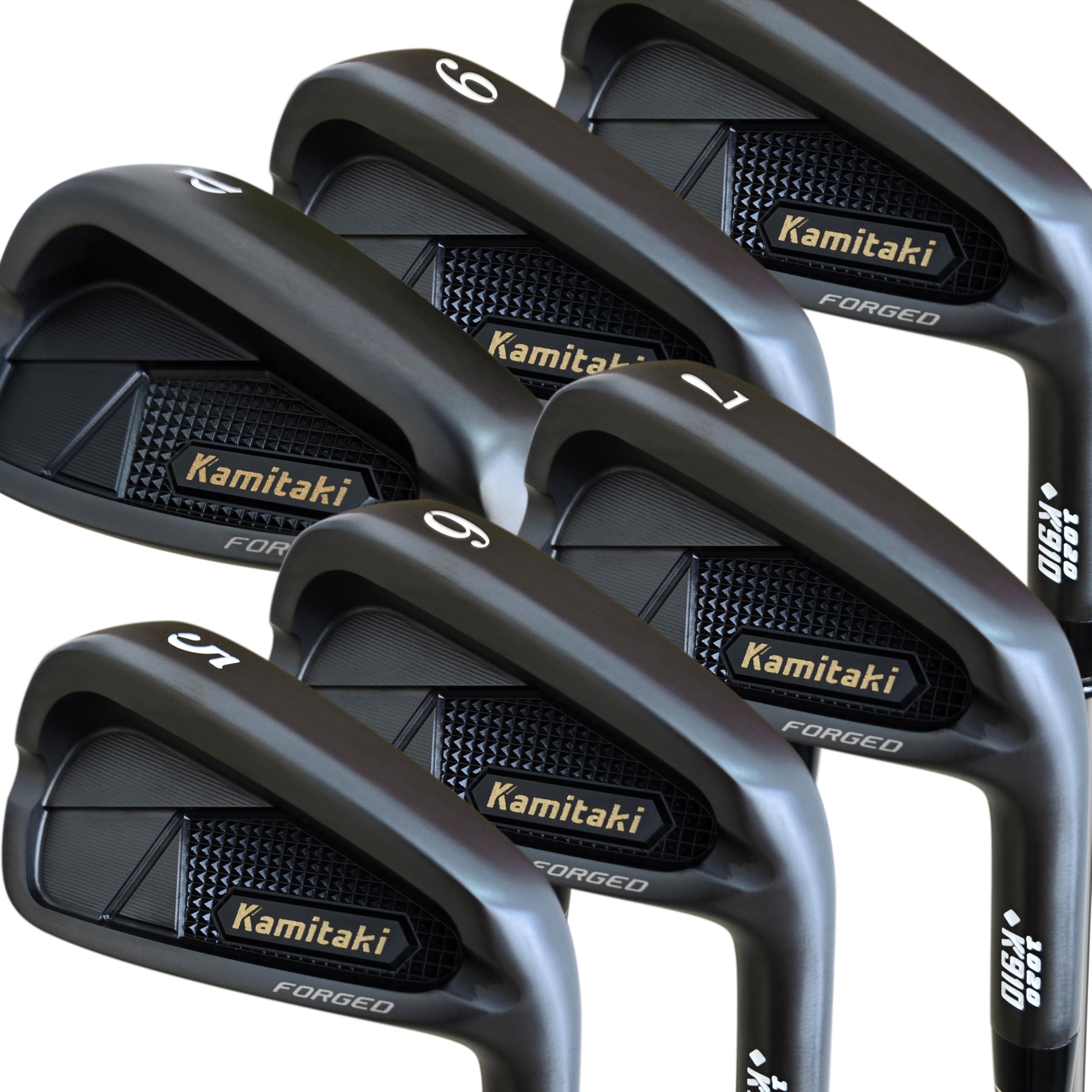
The Japan Kamitaki K910 is the only true budget-friendly entry in this guide that still uses a carbon steel forged head. For a fraction of the cost of a big-brand forged set, you get a one-piece forged cavity back that delivers the soft impact feel that forged enthusiasts chase, though some buyers note that the finishing edges can feel sharp and may benefit from a quick smoothing by a club builder. The set covers 5-iron through pitching wedge, skipping the 3- and 4-irons, which actually suits the typical mid-handicapper who launches long irons inconsistently.
The Krisa Pro steel shaft in stiff flex pairs well with moderate swing speeds, and the standard grips are serviceable—though several reviewers chose to regrip to midsize for better palm contact. The chrome and black finish options give you two visual styles, and the packaging is notably robust, often exceeding what name-brand sets provide. On the course, the cavity-back shape offers enough perimeter weighting to keep mishits manageable, though you will not get the same distance retention as a hollow-body player’s distance iron.
The sharpness on the topline and sole edges mentioned by reviewers is the most common criticism—it does not affect performance, but it can be a tactile distraction. If you are willing to spend a few dollars at a local club fitter to smooth the edges and swap in quality grips, the K910 becomes an absurdly good value for experiencing true forged feel. It is the ideal starter set for a golfer who wants to transition from cast clubs into the forged category without a major financial leap.
Why it’s great
- True carbon steel forging at a budget-friendly price
- Solid feel and easy-to-hit cavity-back shape
- Exceptional packaging and includes stiff steel shafts
Good to know
- Edges feel sharp and may require finishing work
- Stock grips are undersized for some players
FAQ
What flex shaft should I pair with a forged cavity back iron?
How many steps in the forging process affect durability and feel?
What is the loft gap difference between traditional and modern forged irons?
Final Thoughts: The Verdict
For most users, the best forged golf irons winner is the TaylorMade 2025 P·790 (Steel) because it marries a genuine high-strength forged face with a foam-dampened hollow body that delivers both ball speed and tour-level feel—all within a progressive CG profile that suits mid-to-low handicappers. If you want the distance potential of a players-distance iron with the simplicity of a single-length setup, grab the Cobra King Forged Tec One Length. And for the budget-conscious golfer unwilling to compromise on true forging, nothing beats the raw value of the Japan Kamitaki K910 with a quick set of quality grips.