
Concrete is porous, alkaline, and constantly expanding and contracting with temperature shifts — three reasons why most adhesives fail within months on masonry. You need a glue formulated to grab onto rough mineral surfaces and stay flexible enough to handle that movement without cracking.
I’m Mohammad Maruf — the founder and writer behind Drink4Good. I’ve spent years analyzing construction-grade adhesives, comparing tensile strength ratings, cure times, and real-world customer feedback to separate the products that actually work from those that just look good on a shelf.
This guide covers five proven options, from a heavy-duty spray for large surface bonding to a polyester resin anchor for fasteners. Whether you are attaching a metal railing, patching a step, or anchoring a bolt, you will find the right glue for concrete for your project here.
How To Choose The Best Glue For Concrete
Selecting a concrete adhesive means matching the chemistry to the job. A bonding agent for fresh overlay is completely different from an anchoring resin for threaded rods. Here are the three factors that matter most.
Resin Type and Bond Strength
Polyester resin adhesives cure fast and grip into the pores of concrete, making them ideal for anchoring bolts and railings. Polyurethane glues expand as they cure, filling gaps but requiring moisture to activate. Acrylic fortifiers mixed into cement create a chemical bond rated up to 500 psi — best for patching and overlays. Spray adhesives work for laminating insulation or paneling to concrete but lack the shear strength for structural loads.
Cure Time and Working Window
Fast-curing polyester resins can set in under 30 minutes, which is critical when you are holding a fastener in place. Polyurethane and acrylic options often require 24 hours or more to reach full strength. Longer open times let you reposition parts, but they also mean the joint stays vulnerable to disturbance. Always check the full cure time on the label — some fortifiers take up to 30 days to reach maximum tensile strength.
Environmental Resistance
Outdoor concrete is exposed to freeze-thaw cycles, moisture, and UV. Polyurethane foams are waterproof and handle temperature swings well. Acrylic fortifiers resist freeze-thaw damage, making them suitable for exterior patching. Spray adhesives and low-VOC options are better suited for indoor applications where ventilation is limited. If you are bonding in a high-humidity or wet area, prioritize a waterproof-rated formula.
Quick Comparison
On smaller screens, swipe sideways to see the full table.
| Model | Category | Best For | Key Spec | Amazon |
|---|---|---|---|---|
| 3M Hi-Strength 90 CA Spray Adhesive | Spray | Large surface bonding of insulation and paneling | Low VOC, adjustable nozzle | Amazon |
| SikaLatex R Concrete Adhesive | Fortifier | Patching and bonding fresh mortar to old concrete | 500 psi bond strength | Amazon |
| Gorilla Original Gorilla Glue | Polyurethane | Outdoor repairs where waterproofing is critical | 3X foam expansion | Amazon |
| Professional Soma Fix Chemical Anchor | Polyester Resin | Anchoring bolts and railings into concrete | Fast-curing, extra nozzle included | Amazon |
| 3M Hi-Strength 94 ET Spray Adhesive | Spray | Bonding foam and fabric to concrete surfaces | Up to 60 min open time | Amazon |
In‑Depth Reviews
1. 3M Hi-Strength 90 CA Spray Adhesive

The 3M Hi-Strength 90 is a contact-type spray adhesive that bonds concrete to laminate, wood, metal, plastic, and even polyethylene — a rare range for a single can. Its adjustable nozzle lets you control the spray pattern from a narrow stream to a wide fan, which matters when you are covering a large panel without overspray. The permanent bond is fast-tacking, meaning you can press the materials together within minutes of application, and it resists both moisture and high temperatures.
This is a premium spray adhesive designed for interior construction, HVAC insulation, office partitions, and general industrial maintenance. The Low VOC formulation is CARB and SCAQMD compliant and GREENGUARD certified, so it contributes to LEED credits on commercial projects. Be aware that the solvent is strong — user reviews consistently recommend working with ventilation and eye protection, and the product is labeled for industrial/occupational use rather than casual DIY.
If you need to laminate plywood to a concrete wall or attach rigid foam insulation to a foundation, this spray delivers the most consistent bond per square foot of any adhesive in this roundup. The 19-ounce can covers a large area, and the fast setup reduces the time you spend holding materials in place.
Why it’s great
- Adjustable nozzle for precision application
- Permanent bond that resists moisture and heat
- Low VOC and GREENGUARD certified
Good to know
- Strong fumes require good ventilation
- Labeled for industrial/occupational use
2. SikaLatex R Concrete Adhesive

SikaLatex R is not a standalone glue — it is an acrylic-polymer latex admixture that you mix into Portland-cement mortar or concrete to create a chemical bond rated at 500 psi. When used as a bonding grout, it bridges the gap between old cured concrete and new overlay, resisting the freeze-thaw cycles that cause delamination in exterior steps and patios. The liquid comes ready to use with no dilution needed, so you simply add it in place of water to your mix.
This fortifier also works as an acrylic coating primer for grout and as a general concrete bonding adhesive brushed onto clean substrate before patching. Reviews confirm that it holds for years in outdoor masonry repairs — one user replaced bricks on front steps and the bond lasted until a full renovation years later. The 1-gallon container stores easily and has a shelf life of about one year, so check the expiration date before starting a project.
Choose SikaLatex R when you are bonding fresh concrete to old concrete, not for attaching dissimilar materials like wood or metal to a slab. It is the go-to product for professional-grade patching, resurfacing, and topping applications where tensile strength is the priority.
Why it’s great
- Delivers a 500 psi bond when mixed into mortar
- Resists freeze-thaw damage for outdoor repairs
- No dilution needed; use straight from the pail
Good to know
- Requires 30 days for full cure
- Not a standalone adhesive; must be mixed with cement
3. Gorilla Original Gorilla Glue

Gorilla Glue uses a water-activated polyurethane formula that expands three times into the pores of concrete, wood, stone, and metal. Once cured, it is 100 percent waterproof and temperature resistant, making it a reliable choice for outdoor repairs like cracked steps, loose stone caps, or railings attached to concrete. The expansion fills small gaps that other adhesives would leave open, creating a mechanical lock inside the material.
Application requires a light mist of water on one surface before applying the glue — moisture triggers the curing reaction. The 18-ounce bottle delivers plenty of volume for multiple jobs, and a pea-sized dab is often sufficient for small repairs because the foam expands so much. Be prepared for the expansion to seep out of the joint; reviews emphasize wiping spills immediately because cured foam is difficult to remove from skin, fabric, and porous surfaces.
This is the best option when you need a single, all-purpose glue that handles concrete along with wood, ceramic, and metal. It is not ideal for precision anchoring or vertical applications where you cannot clamp the parts together for 24 hours, but for general outdoor bonding, the strength and waterproof rating are hard to beat.
Why it’s great
- Waterproof and temperature resistant once cured
- Fills gaps by expanding into porous materials
- Versatile — bonds concrete, wood, stone, metal
Good to know
- Expansion can be messy; clean spills immediately
- Requires moisture to activate the cure
4. Professional Soma Fix Chemical Anchor
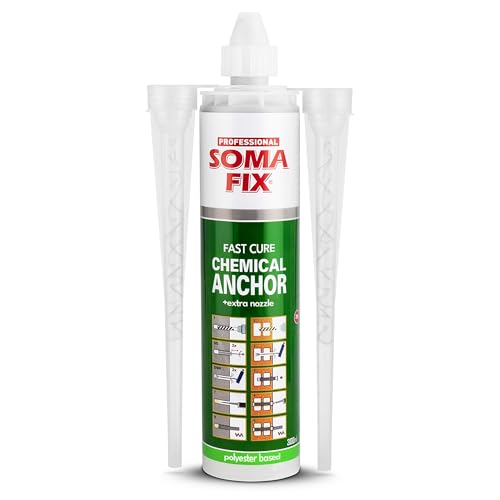
Professional Soma Fix is a polyester resin chemical anchor designed to bond fasteners into solid concrete, brick, stone, and granite. The 300ml cartridge comes with an extra mixing nozzle, so you can complete multiple anchor points without downtime between injections. The resin cures fast — users report that it hardens within minutes — and develops enough strength to hold heavy-duty fasteners like threaded rods and railing brackets.
Application follows a simple sequence: drill the hole, clean out the dust, inject the resin, and insert the fastener before the paste cures. No expansion pressure is generated, so it works in both solid and hollow materials when used with a mesh sleeve. The grey paste is easy to gun, and the consistent output from the nozzle ensures each hole gets a uniform fill. Customer reviews confirm that it works for loose outdoor railings, anchoring bolts, and fixing metal brackets to concrete walls.
For the price, this anchor delivers performance comparable to premium brands like Sika at roughly half the cost. If you need to secure handrails, fence posts, or machinery bases to a concrete slab, this is the most budget-friendly option that still provides structural-grade holding power.
Why it’s great
- Fast curing for time-sensitive installations
- Extra mixing nozzle included for job continuity
- Works in solid and hollow substrates with sleeve
Good to know
- Must work quickly once the resin is mixed
- Requires clean hole preparation for best hold
5. 3M Hi-Strength 94 ET Spray Adhesive
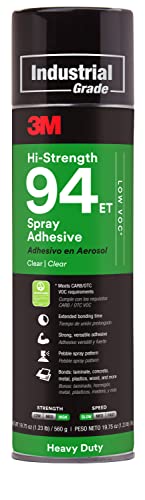
The 3M Hi-Strength 94 ET spray adhesive offers an unusually long open time of up to 60 minutes, giving you a full hour to position and reposition materials before the bond sets. This makes it the right choice for large laminations — think gluing foam soundproofing panels to a concrete basement wall or attaching carpet to a concrete floor where alignment is critical. The aggressive tack means the adhesive grabs immediately on contact, but the long working window keeps the joint adjustable.
The formula is low VOC, GREENGUARD Certified, and CARB compliant, so it contributes to LEED credits and is safer for indoor use than older contact cements. It bonds wood, metal, rubber, carpet, foam, fabric, glass, and plastic — a broad range for a spray adhesive. Users have used it successfully for van insulation, foam cushion repairs, and even soundproofing in cold environments where many other adhesives lose their grip.
Be prepared for a strong solvent smell that requires ventilation during application. The 19.75-ounce can covers a significant area, but the adhesive is not designed for structural loads — it excels at surface bonding where you need flexibility during setup. If you are laminating insulation, paneling, or fabric to concrete, this is the most forgiving spray adhesive available.
Why it’s great
- Up to 60 minutes to reposition large panels
- Low VOC and GREENGUARD Certified for indoor use
- Aggressive tack with a broad material range
Good to know
- Solvent smell requires ventilation
- Not for structural or load-bearing applications
FAQ
What is the strongest glue for concrete?
Can I use Gorilla Glue on concrete?
What is the difference between concrete glue and mortar?
Final Thoughts: The Verdict
For most users, the glue for concrete winner is the 3M Hi-Strength 90 CA Spray Adhesive because it delivers a permanent, fast-tacking bond for large surface laminations with a low-VOC formula that is safe for interior use. If you need the highest tensile strength for patching and bonding fresh mortar to old concrete, grab the SikaLatex R Concrete Adhesive. And for outdoor anchoring of railings or bolts where waterproofing is critical, nothing beats the Professional Soma Fix Chemical Anchor.