
Few sounds are more distressing than the hollow cry of a baby struggling with painful gas bubbles. You’ve already checked the latch, burped after every ounce, and tried bicycle kicks, but the wailing still starts an hour after the last bottle. For so many families, the true root of the problem isn’t feeding technique but the specific protein structure and carbohydrate source in the formula itself. Choosing the right option here can mean the difference between a peaceful night’s sleep and hours of inconsolable squirming.
I’m Mohammad Maruf — the founder and writer behind Drink4Good. I’ve spent countless hours dissecting the protein hydrolysis levels, lactose percentages, and HMO blends of infant formulas so you don’t have to read the fine print on your third hour of sleep deprivation.
This guide breaks down the safest, most effective formula for sensitive tummy and gas based on real-world protein breakdown, prebiotic content, and parent feedback to bring clarity to your shopping cart.
How To Choose The Best Formula For Sensitive Tummy And Gas
Not all “sensitive” formulas are created equal. Some reduce lactose, others break down proteins into smaller fragments, and a few add prebiotics to support gut bacteria. Understanding the label is your best defense against wasted money and a still-unhappy baby.
Protein Hydrolysis: The Smaller, The Gentler
Standard formula proteins are long chains that some immature digestive systems struggle to chop up. Partially or extensively hydrolyzed formulas pre-digest those chains into tiny fragments. The more broken down the protein, the less work for your baby’s gut and the less fermentation (read: gas) in the intestines. Look for terms like “partially hydrolyzed whey” or “extensively hydrolyzed casein” on the front of the can.
Lactose vs. Reduced Lactose
Lactose is the primary carbohydrate in breast milk, but some infants lack enough lactase enzyme to digest it fully, leading to gas and watery stools. “Sensitive” formulas often replace a portion of lactose with corn syrup solids or maltodextrin to ease the load. If your baby has a confirmed lactose intolerance, a reduced-lactose formula will likely stop the gas quickly. For babies with a mild sensitivity, a 100% lactose formula with a gentle protein base might still work.
HMOs and Probiotics: Gut Health Allies
Human Milk Oligosaccharides (HMOs) are prebiotics that feed healthy gut bacteria. Formulas with 2′-FL HMO or a blend of 5 HMOs structurally match those in breast milk and can reduce gas production by promoting a balanced microbiome. Probiotics like B. lactis add live beneficial bacteria. Together, they can shorten the time gas lingers and soften stools, making pooping less of a struggle.
Quick Comparison
On smaller screens, swipe sideways to see the full table.
| Model | Category | Best For | Key Spec | Amazon |
|---|---|---|---|---|
| Similac 360 Total Care Sensitive | Premium | Lactose sensitivity with gas | 5 HMO prebiotics blend | Amazon |
| Dr. Brown’s Gentle Pro | Premium | Overall gas & softer poops | 100% partially hydrolyzed whey | Amazon |
| Similac 360 Total Care Gentle Comfort | Mid-Range | Fussiness due to protein clumping | Partially hydrolyzed + reduced lactose | Amazon |
| Bobbie Organic Gentle | Mid-Range | Mild gas with organic preference | Smaller milk proteins + 100% lactose | Amazon |
| Baby’s Only A2 Organic | Mid-Range | A2 protein sensitive tummies | Organic A2 beta-casein protein | Amazon |
| Similac Alimentum Hypoallergenic | Premium | Colic & cow’s milk protein allergy | Extensively hydrolyzed + 2′-FL HMO | Amazon |
| Go & Grow 360 Total Care Sensitive (Toddler) | Budget | Toddler sensitive tummies | 5 HMOs with reduced lactose | Amazon |
In‑Depth Reviews
1. Similac 360 Total Care Sensitive

This formula stands out because it directly targets the two biggest culprits of gassy distress: lactose malabsorption and an underdeveloped gut microbiome. By reducing the lactose load while adding a 5-HMO blend identical to those found in breast milk, Similac 360 Total Care Sensitive addresses both the immediate fermentation gas and the long-term colonization of healthy bacteria. The non-GMO recipe and absence of artificial growth hormones give parents an extra layer of confidence.
Multiple reviewers report that within days of switching, their babies transitioned from tight, grunting evenings to calm, regular digestion. The powder mixes smoothly with minimal foam, which means less air swallowed during bottle preparation. The tub packaging is practical for daily scooping, and the QR code for MySimilac Rewards is a helpful bonus for ongoing purchases.
For infants whose fussiness spikes after a standard milk-based bottle, this is typically the first and most effective swap to try. It sits firmly in the sensitive category without crossing into hypoallergenic territory, making it the ideal starting point for gas that isn’t accompanied by bloody stools or severe eczema.
Why it’s great
- 5-HMO blend structurally matches breast milk prebiotics
- Designed specifically for lactose-related fussiness and gas
- Low-foam mixing reduces swallowed air
Good to know
- Not suitable for confirmed cow’s milk protein allergy
- Premium tier pricing compared to standard Similac
2. Dr. Brown’s Gentle Pro

Dr. Brown’s Gentle Pro uses a two-step hydrolysis process that breaks whey proteins down to fragments ten times smaller than intact cow’s milk proteins. This mechanical pre-digestion is the key reason why gassy babies who fail on standard formulas often thrive here. The inclusion of probiotic B. lactis adds a live culture that helps crowd out gas-producing bacteria in the lower gut.
Reviewers consistently mention that this formula produces softer, more breast-milk-like stools and significantly less spitting up. The 100% whey base avoids the curdling effect of casein, which means the milk stays liquid in the stomach rather than forming hard-to-digest curds. Parents who switched from store-brand sensitive formulas noted a drop in doctor visits for gas pain within the first two weeks.
It’s worth noting that the container size — a standard 32-ounce tub — runs through faster than some bulk options, especially with a hungry infant. However, the balance of partially hydrolyzed protein, probiotics, and DHA makes this a top-tier choice for any baby whose gas is accompanied by hard, infrequent stools.
Why it’s great
- Whey proteins broken down 10x smaller than standard
- Incorporates probiotic B. lactis for digestive health
- Produces softer poops and less spitting up
Good to know
- Smaller can size may require more frequent reordering
- Packaging sometimes arrives dented from shipping
3. Similac 360 Total Care Gentle Comfort
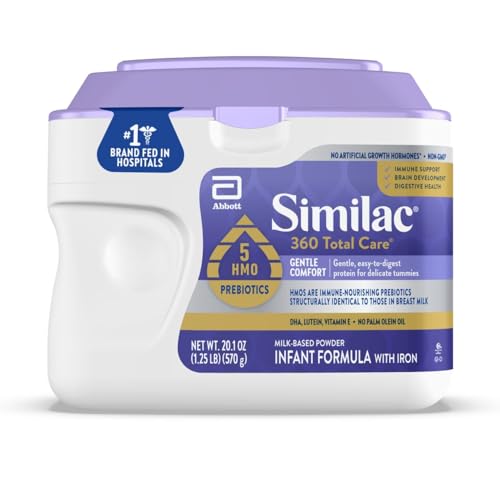
Where the standard Similac Sensitive focuses on lactose, the Gentle Comfort variant adds partially hydrolyzed whey protein to the mix, giving it a dual-action approach. This makes it a stronger option for babies whose gas comes from both lactose fermentation and intact protein clumping in the stomach. The formulation also includes the 5-HMO prebiotic blend, so your baby gets the microbiome support of the 360 Total Care line.
Real-world feedback shows that fussy infants who didn’t respond to a simple lactose-reduced formula often settled within a week on this version. The tub packaging is straightforward and the powder mixes with a slight stickiness compared to standard formulas, but the trade-off is a noticeable reduction in evening crying jags. Parents using this as a breast milk supplement reported less spit-up and more consistent weight gain.
This sits in the sweet spot between a basic sensitive formula and a hypoallergenic one, making it a logical next step if your baby still shows gas symptoms after trying a standard sensitive option. It’s a mid-range investment that delivers noticeable digestive calm without the steep price of extensively hydrolyzed options.
Why it’s great
- Targets both protein clumping and lactose sensitivity
- 5-HMO blend supports gut microbiome balance
- Proven to reduce spit-up and fussiness
Good to know
- Powder can feel slightly stickier during mixing
- May not be strong enough for severe protein allergies
4. Bobbie Organic Gentle

Bobbie’s Gentle formula uses smaller milk proteins — achieved through a proprietary processing step — rather than reducing lactose or adding corn syrup. This makes it unique among gentle formulas because it maintains 100% lactose as the carbohydrate source, mirroring the sugar profile of breast milk. For parents who want an organic, Clean Label Project Certified product but still need relief from their baby’s gas, this hits a rare balance.
Reviewers note that their babies produced more productive burps and farts — the kind that relieve pressure rather than build it — after switching to Bobbie Gentle. One lactation consultant actually recommended it for families doing triple feeding, because the baby accepted it as the closest alternative to breast milk. The smaller 14.1-ounce can is a good trial size before committing to a larger tub.
Keep in mind that because it retains full lactose, this may not work for a baby with a confirmed lactose intolerance. But for the infant with mild digestive immaturity who simply needs a gentler protein structure, Bobbie delivers without sacrificing organic integrity. The packaging has caused some confusion, as the ingredients are identical to the standard Bobbie formula — the difference is purely in the protein processing.
Why it’s great
- USDA Organic and Clean Label Project Certified
- 100% lactose like breast milk, no corn syrup
- Smaller milk proteins ease gas without reducing lactose
Good to know
- Not suitable for babies with actual lactose intolerance
- Can size is smaller than standard tubs
5. Baby’s Only A2 Organic

Baby’s Only takes a different angle by sourcing milk exclusively from cows that predominantly produce A2 beta-casein protein, a structure that’s naturally closer to the proteins found in human breast milk than standard A1 milk. For some infants, it’s not the lactose or the protein size that causes gas — it’s the A1 beta-casein fragment called BCM-7, which can trigger digestive inflammation. This formula sidesteps that issue entirely.
Parents report zero gas or digestive issues after switching, even with babies who previously reacted to other organic formulas. The proprietary fat blend uses organic oils without palm olein, which helps maintain softer stools. Manufactured in small batches in Ohio with rigorous testing, this is one of the cleaner options on the market from a purity standpoint.
This is not a hydrolyzed formula, so it won’t help babies who need pre-digested proteins due to a cow’s milk allergy. But for the majority of sensitive tummies that simply react poorly to A1 milk, this is a straightforward, effective swap. The 21-ounce can offers good value for an organic product, and the lack of palm oil means better calcium absorption.
Why it’s great
- A2 protein structure avoids inflammatory BCM-7 fragments
- Organic with no corn syrup, palm oil, or GMOs
- Small-batch manufacturing with rigorous quality testing
Good to know
- Not extensively hydrolyzed — won’t work for CMPA
- Can be harder to find in stock consistently
6. Similac Alimentum Hypoallergenic
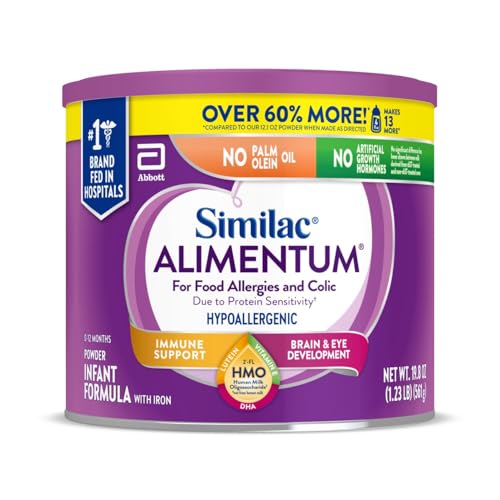
When gas is accompanied by colic, bloody stools, or severe eczema, you’ve moved past standard sensitive formulas into the realm of cow’s milk protein allergy. Similac Alimentum uses extensively hydrolyzed protein — broken down into such tiny fragments that the immune system no longer recognizes them as allergens. The addition of 2′-FL HMO makes it the first hypoallergenic formula to include this immune-nourishing prebiotic.
Parents who have tried everything else describe Alimentum as a lifesaver. Symptoms of colic and gas typically resolve within 24 to 48 hours of the first bottle. The formula is also available in ready-to-feed format for late-night convenience, though the powder version offers better economy. The 19.8-ounce can is competitively priced for a hypoallergenic product, especially compared to other extensively hydrolyzed options.
This is a significant step up in both potency and price. It should not be your first try for simple gas — reserve it for babies who show clear allergic symptoms. The taste is notably different from standard formulas (more bitter, due to the broken-down proteins), so some babies need a gradual transition period. But for the right candidate, the relief is immediate and dramatic.
Why it’s great
- Extensively hydrolyzed for true cow’s milk protein allergy
- Includes 2′-FL HMO for immune system support
- Reduces colic symptoms within 24 hours in most infants
Good to know
- Higher price point than standard sensitive formulas
- Bitter taste may require gradual introduction
7. Go & Grow 360 Total Care Sensitive by Similac (Toddler)

Designed specifically for toddlers rather than infants, this Go & Grow formula brings the same 5-HMO sensitive technology from the Similac 360 line to the 12+ month crowd. It’s milk-based but formulated with reduced lactose for sensitive tummies, and includes DHA, lutein, and vitamin E for brain and eye development. Parents report that their toddlers, who had aged out of infant formula but still had gas with regular milk, settled nicely on this powder.
The 23.3-ounce can provides solid value for a toddler who drinks one or two bottles a day. Many families use it as a bridge between infant formula and whole milk when the transition triggers digestive upset. The non-GMO ingredients and absence of palm olein oil keep the stool consistency regular. It’s also SNAP-eligible in select stores, which adds a layer of accessibility.
This is not intended as a sole source of nutrition — it’s a supplement for a toddler’s varied diet. But for the specific problem of persistent gas after the first birthday, it fills a genuine gap in the market. Just be sure you’re buying the sensitive version and not the standard Go & Grow, which has full lactose and could worsen symptoms.
Why it’s great
- 5-HMO blend for sensitive toddler digestive systems
- Reduced lactose helps with gas from milk transition
- Includes DHA, lutein, and vitamin E for development
Good to know
- Not for sole-source nutrition (toddler supplement only)
- Must confirm purchase of “Sensitive” variant, not standard
FAQ
Should I choose a reduced-lactose formula or a fully hydrolyzed protein formula for gas?
Can I switch between sensitive formulas without a transition period?
Does organic formula automatically mean less gas for my baby?
Final Thoughts: The Verdict
For most users, the formula for sensitive tummy and gas winner is the Similac 360 Total Care Sensitive because it combines a reduced-lactose base with the full 5-HMO prebiotic blend, addressing both fermentation gas and microbiome development in one affordable tub. If you want extensively hydrolyzed protein for a baby with colic or suspected allergy, grab the Similac Alimentum Hypoallergenic. And for an organic A2 option that avoids the inflammatory A1 protein fragment entirely, nothing beats the Baby’s Only A2 Organic.