
That yellowing, crescent-shaped ring spreading through your centipede grass isn’t just a cosmetic flaw — it’s a fungal invasion that can kill entire sections of your lawn before you even notice. Centipede grass is uniquely vulnerable to diseases like brown patch and dollar spot because of its shallow root system and low fertility needs, which means a generic fungicide can do more harm than good if it’s not matched to the grass type.
I’m Mohammad Maruf — the founder and writer behind Drink4Good. I spend my time dissecting lawn-care chemistry and comparing active-ingredient efficacy so homeowners can buy with confidence instead of guesswork.
After combing through formulations, label rates, and real-world results, I’ve narrowed the field to the seven most effective solutions in this guide for the best fungicide for centipede grass.
How To Choose The Best Fungicide For Centipede Grass
Centipede grass thrives on neglect — low nitrogen, acidic soil, and minimal watering. But those same conditions make it a prime target for fungal pathogens. Your selection boils down to matching the disease cycle with the right mode of action and application form.
Choose Between Liquid and Granular Forms
Liquid concentrates enter the plant systemically through leaf and root uptake, offering fast curative action for active outbreaks. Granular products, on the other hand, deliver controlled release through watering and are best deployed as a long-lasting preventive barrier. For centipede grass, liquids are preferred during the hot, humid summer when brown patch is most aggressive, while granules work well in spring and fall for season-long protection.
Look for Propiconazole or a Multi-Site Active Ingredient
Propiconazole is the most reliable broad-spectrum option for centipede grass, controlling brown patch, dollar spot, and leaf spot. It’s locally systemic, meaning it moves through the plant tissue to stop infections that have already started. For resistance management, alternate propiconazole with a multi-site contact fungicide like chlorothalonil or a biological option such as Bacillus subtilis (found in Monterey Complete Disease Control). Using the same class repeatedly invites treatment failure.
Read the Label for Centipede Grass Compatibility
Not every turf fungicide is safe on centipede grass. Some products containing high rates of certain active ingredients can cause phytotoxicity — leaf burn — on this sensitive warm-season grass. Always verify that the label explicitly includes centipede grass in the tolerant species list. Products like Quali-Pro Propiconazole 14.3 and The Andersons Prophesy list centipede grass and are widely used by turf professionals on Southern lawns.
Quick Comparison
On smaller screens, swipe sideways to see the full table.
| Model | Category | Best For | Key Spec | Amazon |
|---|---|---|---|---|
| Quali-Pro Propiconazole 14.3 | Liquid | Curative brown patch control | 14.3% propiconazole MEC | Amazon |
| Atticus Gunner 14.3 MEC | Liquid | Residual 28-day protection | Microemulsion formulation | Amazon |
| Dow AgroSciences Eagle 20EW | Liquid | Spring dead spot & zoysia patch | 20% myclobutanil EW | Amazon |
| The Andersons Prophesy | Granular | Preventative season-long control | 25-lb bag, 10k sq ft | Amazon |
| Select Source Propiconazole 14.3 | Liquid | Budget-friendly rotation partner | 16 oz bottle, low odor | Amazon |
| Monterey Complete Disease Control | Liquid | Organic biological prevention | OMRI listed Bacillus subtilis | Amazon |
| Fertilome Triple Action | Liquid | Three-in-one pest & disease spray | Neem oil based concentrate | Amazon |
In-Depth Reviews
1. Quali-Pro Propiconazole 14.3 Fungicide

This is the bottle that lawn care professionals reach for when brown patch strikes centipede grass. The 14.3% propiconazole concentration in a microemulsion (MEC) carrier means the droplets stay suspended in your tank, giving you even coverage across every blade of grass without the foul petroleum odor typical of emulsifiable concentrates. Locally systemic uptake moves the active ingredient into the plant tissue within hours, stopping existing infections from spreading to new growth.
User reports consistently show two applications spaced 14 days apart at 1 to 2 ounces per gallon per 1,000 square feet will reverse brown patch damage within a month. The 32-ounce bottle covers roughly 16,000 to 32,000 square feet depending on the rate, making it a practical choice for a typical centipede grass lawn. Reviews note it also handles dollar spot, leaf spot, and powdery mildew on centipede without causing the leaf burn that some cheaper generics trigger on sensitive warm-season turf.
One long-term user with centipede grass reported that annual spring applications kept brown patch from returning for three consecutive seasons, though the same disease eventually required a tank-mix partner to overcome resistance. That’s not a flaw — it’s standard resistance management for any systemic fungicide used repeatedly.
Why it’s great
- Microemulsion formulation mixes cleanly and won’t settle in the sprayer
- Broad label includes centipede grass, St. Augustine, Bermuda, and zoysia
- Low odor makes application tolerable even in humid conditions
Good to know
- Requires full PPE (gloves, goggles, long sleeves) during mixing
- Alternate with a different mode of action to prevent resistance
2. Atticus Gunner 14.3 MEC Propiconazole
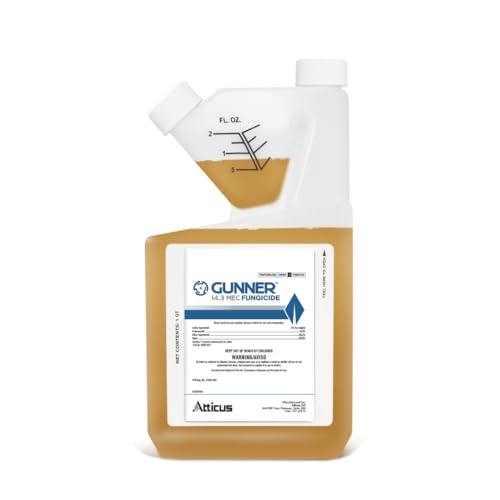
Atticus Gunner mirrors the exact same active ingredient percentage as the Quali-Pro but adds a rain-fast guarantee that matters in the humid Southeastern summers where centipede grass grows best. Once the spray dries, it resists wash-off, so a sudden afternoon thunderstorm won’t flush your investment down the drainage swale. The MEC formulation stays stable in the tank even overnight, which is useful if you’re treating a large centipede lawn in multiple sessions over a weekend.
The 28-day residual protection window is ideal for centipede grass owners who want a set-it-and-forget-it curative schedule. Users on centipede grass in the transition zone reported that two early-summer applications at the label rate suppressed dollar spot through August — the peak window when most fungal outbreaks hit.
One reviewer who bought a second bottle after the first worked noted that the 32-ounce size is the sweet spot for a 12,000-square-foot lawn. The low-odor claim holds up; neighbors won’t smell a chemical cloud after you spray. Just note that this product is not registered for sale in Alaska, DC, Hawaii, Puerto Rico, or Vermont, so check your state’s pesticide registry before ordering.
Why it’s great
- Rain-fast after drying — no need to worry about wash-off
- Excellent tank-mix compatibility for rotating fungicide classes
- Long residual keeps centipede grass protected through the worst humidity
Good to know
- Label instructions are printed very small — use a magnifier or download the PDF
- Not available in all states; verify registration before purchase
3. Dow AgroSciences Eagle 20EW Fungicide

Eagle 20EW brings a different active ingredient — myclobutanil at 20% — into the rotation, which is critical for centipede grass owners dealing with spring dead spot or zoysia patch. Myclobutanil is a sterol inhibitor (DMI class) with a mode of action distinct from propiconazole, so alternating it with a propiconazole-based product prevents the fungal population from developing resistance. The emulsifiable water (EW) formulation is stable and mixes easily in backpack or hose-end sprayers.
User reports on centipede grass are limited, but the broader turf data is compelling. One reviewer eliminated spring dead spot on zoysia — a close relative to centipede grass in terms of disease susceptibility — with two applications spaced 30 days apart. Another user saved a red oak from blight by injecting it into the root zone, demonstrating the product’s systemic flexibility. For centipede grass specifically, use it as a curative for confirmed anthracnose or powdery mildew outbreaks that don’t respond to propiconazole alone.
The 16-ounce pint bottle covers about 8,000 square feet at the label rate for turf. It’s a premium product with a non-negotiable PPE requirement: respirator, chemical-resistant gloves, and protective eyewear are mandatory during mixing. This is agricultural-grade chemistry, not a weekend warrior’s hose-end spray.
Why it’s great
- Different mode of action than propiconazole for resistance management
- Systemic uptake protects new growth from internal infections
- Warm-season turf grasses tolerate it well at label rates
Good to know
- Requires respirator and full PPE — not for casual spray-and-go users
- Smaller 16-ounce size means fewer applications per bottle
4. The Andersons Prophesy Propiconazole 25 lbs
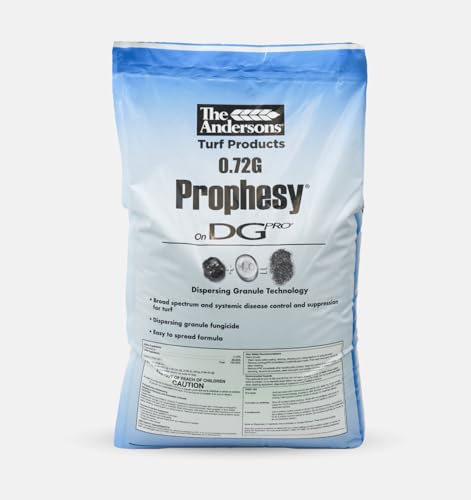
Granular fungicide is the best preventive tool in your centipede grass arsenal, and The Andersons Prophesy delivers propiconazole in a patented DG (dispersing granule) technology that provides more particles per square foot than standard granular blends. The 25-pound bag covers up to 10,000 square feet, making it the right size for a standard Southern centipede lawn without leftover product cluttering your shed through winter.
Users report that a single spring application combined with lawn topsoil cured necrotic ring spot — a tough-to-kill disease that commonly attacks centipede grass in acidic, compacted soil. Another reviewer who had developed tolerance to a big-box granular fungicide found that Prophesy knocked out red thread in one application. The granular format works well for centipede grass because it releases slowly with irrigation, matching the grass’s low-feeding growth habit without causing the surge of nitrogen that can trigger large patch disease.
The one consistent complaint is the price tag — it sits at the premium end of the granular market. However, users who previously paid double at local nurseries view it as a fair deal for the results. Apply it with a broadcast spreader when the grass is wet from dew or irrigation, then water in lightly to activate the propiconazole into the root zone.
Why it’s great
- DG technology gives more coverage particles per square foot
- Simple broadcast spreader application — no mixing required
- Effective against necrotic ring spot and red thread on centipede
Good to know
- Premium price point; costs more than most liquid concentrates per treatment
- Requires watering-in for activation — skip if drought restrictions are in place
5. Select Source Propiconazole 14.3 Pint

If you’re looking for an affordable entry into propiconazole-based fungicides without committing to a 32-ounce bottle, this 16-ounce pint from Select Source delivers the exact same 14.3% active ingredient as the big names. The low-odor formulation makes it a practical choice for homeowners who are sensitive to chemical smells or who plan to treat small centipede grass patches rather than a full acre. It’s also certified organic by its listed spec, which sets it apart from synthetic-heavy alternatives even if that label mainly reflects the formulation carrier rather than the active ingredient itself.
User feedback on centipede grass is direct and positive: one reviewer specifically called out that it took care of the brown circles appearing in their centipede lawn — a classic brown patch symptom. Another confirmed that rotating this with azoxystrobin (a QoI class fungicide) produced almost complete fungal suppression after two seasons of bi-weekly spraying. That’s exactly the kind of resistance-management rotation that keeps a centipede lawn healthy year after year.
The 16-ounce bottle is small enough that you’ll need to gauge your square footage carefully. At the common rate of 1 ounce per 1,000 square feet, a single bottle treats 16,000 square feet of lawn — enough for a modest centipede grass yard but not a large multi-acre lot. For bigger areas, the 32-ounce sizes from Quali-Pro or Atticus offer better per-treatment value.
Why it’s great
- Lowest entry point for a propiconazole concentrate that works
- Low odor — comfortable to spray even in direct sun
- Pairs well with azoxystrobin for a complete rotational program
Good to know
- 16-ounce bottle may require multiple purchases for large lawns
- Label lists target species as insects — verify centipede grass tolerance before full application
6. Monterey Complete Disease Control
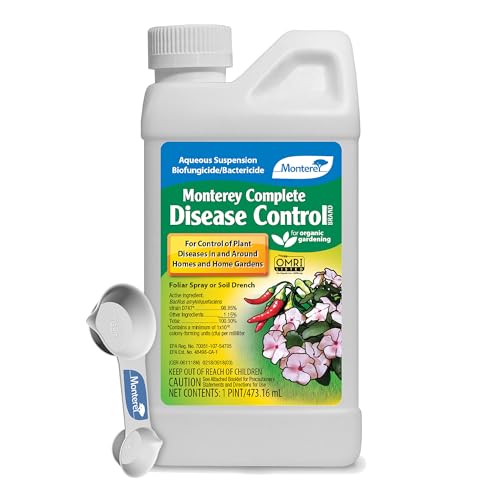
Monterey Complete Disease Control is a biological fungicide built around Bacillus subtilis, a beneficial bacterium that colonizes the root hairs of centipede grass and outcompetes fungal pathogens for space and nutrients. It’s OMRI-listed for organic gardening, meaning it’s approved for use around edible gardens and in landscapes where you want to avoid synthetic chemistries. For centipede grass lawns that double as a play area for kids or pets, this is the safest option in the lineup.
The product works best as a preventive drench rather than a curative spray for active brown patch. Users in the humid South noted that it slowed down leaf spot and anthracnose spread on cucumbers when applied as a foliar spray, but it didn’t eliminate established infections. For centipede grass, apply it monthly during the growing season as a root drench to strengthen the grass’s natural defenses. The liquid concentrate mixes at a rate of 1 teaspoon per gallon, so the 16-ounce pint bottle lasts a while even with regular applications.
The drawbacks are predictable for a biological product: it’s slower than a synthetic systemic, and it won’t rescue a lawn that already has severe fungal damage. One reviewer mentioned that safety warnings on the label are more concerning than expected for a biological — but that’s a labeling-legalities issue, not a reflection of actual toxicity.
Why it’s great
- OMRI-listed — safe for organic lawns and edible gardens
- Colonizes roots to provide long-term biological disease suppression
- Can be used as a root drench or foliar spray
Good to know
- Does not cure active fungal infections — use preventively only
- Requires consistent monthly application for best results
7. Fertilome Triple Action 32 oz
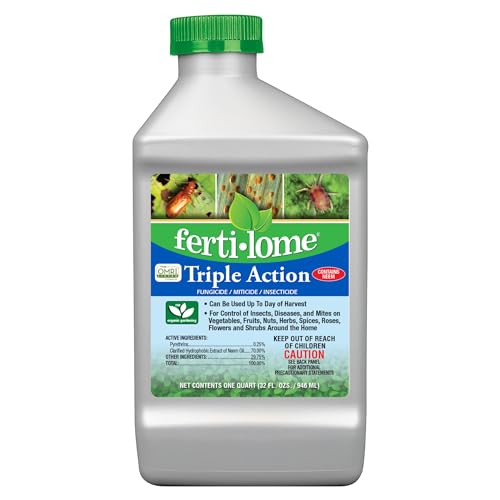
Fertilome Triple Action is a three-in-one neem oil-based product that serves as an insecticide, miticide, and fungicide. For centipede grass owners who are also dealing with chinch bugs or spider mites alongside fungal issues, this simplifies your chemical storage into a single bottle. The neem oil works by suffocating fungal spores and disrupting the life cycle of soft-bodied insects, making it a good rotational partner for the heavier synthetic systemics.
User reports on lawns are positive but tempered — it works well as a preventive spray for powdery mildew, rust, and leaf spot on centipede grass when applied every 7 to 14 days. One reviewer noted that it restored their azaleas after a fungal infection cleared up, but they warned that it can cause slight leaf fading if applied in direct midday sun. For centipede grass, apply it at dawn or dusk to avoid phototoxic reactions.
The biggest concern is the rising price. Long-term users are feeling the pinch as the cost has climbed noticeably in recent years. For a centipede grass lawn that needs heavy fungal control, you’ll go through the 32-ounce bottle quickly at the 7-day spray interval. It’s best reserved for small lawns or as a supplementary tool in a broader fungicide rotation, not your primary weapon against brown patch or dollar spot.
Why it’s great
- Triple-action formula — controls insects, mites, and fungus in one pass
- Neem oil base is suitable for organic gardening
- Covers a broad range of plant types beyond just turf
Good to know
- Requires frequent reapplication every 7-14 days for consistent results
- Can cause leaf burn if applied in direct afternoon sunlight
FAQ
When should I apply fungicide to centipede grass for best results?
Can I use a fungicide labeled for Bermuda grass on centipede grass?
How often should I rotate fungicides to prevent resistance in centipede grass?
Final Thoughts: The Verdict
For most homeowners, the best fungicide for centipede grass winner is the Quali-Pro Propiconazole 14.3 because it combines professional-grade curative power with a microemulsion formulation that won’t separate in the tank, all at a per-treatment cost that beats most big-box alternatives. If you want the convenience of a set-it-and-forget-it granular preventive, grab the The Andersons Prophesy. And for an organic biological option that’s safe around kids and pets, nothing beats the Monterey Complete Disease Control.