
Few things are more frustrating than laying new carpet on your boat deck only to watch it bubble, peel, or separate at the seams after a few outings. The combination of constant moisture, UV exposure, and the flexing of the hull under power creates a uniquely hostile environment that most standard adhesives simply cannot survive. A dedicated formula engineered for marine conditions is the only way to ensure your flooring investment stays put season after season.
I’m Mohammad Maruf — the founder and writer behind Drink4Good. My approach to selecting the right adhesive focuses on real-world performance data, cure chemistry, and the specific substrate challenges that boat owners face when installing or repairing marine carpet.
This guide breaks down the formulations, application methods, and durability factors that separate a weekend re-do from a permanent installation, so you can confidently choose the right glue for boat carpet that matches your specific project and usage demands.
How To Choose The Best Glue For Boat Carpet
Boat carpet adhesive must resist more than just water. It needs to handle constant vibration, temperature swings from freezing to scorching deck heat, and the physical abrasion of foot traffic and gear. Choosing the wrong type leads to delamination, mold growth beneath the carpet, and a full re-do within a single season. Focus on these three factors before you buy.
Formulation Chemistry: Polyurethane vs. Solvent-Based Contact Cement
Polyurethane sealants like the 3M 5200 create a permanent, elastomeric bond that flexes with the boat’s movement and fills gaps in uneven deck surfaces. Solvent-based contact cements, such as the DAP Weldwood All-Weather, rely on a tacky, pressure-sensitive bond that grabs immediately and remains somewhat flexible but can become brittle in extreme cold. For full-coverage carpet adhesion on plywood or fiberglass decks, a solvent-based contact cement designed for outdoor use typically provides the best balance of hold and workability. For sealing edges, seams, and potential leak points, a polyurethane adhesive sealant is the superior choice.
Open Time and Cure Schedule
Open time refers to how long the adhesive remains tacky and workable after application. A fast-drying contact cement like the HOOK UP vinyl cement allows you to position the carpet within minutes, but leaves no room for adjustment. A slower-curing polyurethane like the 3M 5200 stays workable for up to an hour but requires 48 hours to reach handling strength and a full 7 days to fully cure. For large deck installations where precise alignment matters, a longer open time is worth the extended cure period. For small patches or edge repairs, a fast-setting spray adhesive or contact cement is more practical.
Substrate Compatibility and Preparation
The adhesive you choose must bond to the specific deck material on your boat — whether that is fiberglass, marine-grade plywood, aluminum, or a previously sealed surface. Most solvent-based adhesives require a clean, dry, and slightly porous surface for maximum grip. Polyurethane sealants adhere aggressively to non-porous surfaces like gelcoat and aluminum but require moisture to cure, making them ideal for below-the-waterline applications but less forgiving on dry interior decks. Always test a small area first, and thoroughly clean and scuff-sand the surface before applying any adhesive for a reliable long-term bond.
Quick Comparison
On smaller screens, swipe sideways to see the full table.
| Model | Category | Best For | Key Spec | Amazon |
|---|---|---|---|---|
| DAP Weldwood All-Weather | Contact Cement | Full deck carpet installations | Solvent-based, 1-quart can | Amazon |
| 3M Marine Adhesive 5200 | Polyurethane Sealant | Seams, edges, and below-waterline | 10 oz cartridge, 48-hr handling | Amazon |
| 3M Hi-Strength 90 Spray | Spray Adhesive | Quick patches and small sections | 19 oz can, low VOC formula | Amazon |
| Seal Bond 105 Adhesive | Polyether Sealant | Above-the-waterline sealing | 10.1 oz cartridge, UV resistant | Amazon |
| HOOK UP Vinyl Cement | Contact Cement | Vinyl and inflatable repairs | 32 oz can, fast-drying formula | Amazon |
In‑Depth Reviews
1. DAP Weldwood All-Weather Outdoor Carpet Adhesive

This is the adhesive that professional marina shops reach for when laying full sheets of marine carpet over plywood decks. The solvent-based formula creates a tenacious, pressure-sensitive bond that stays tacky just long enough to position the carpet without rush, then locks down permanently once the carpet is pressed into place. Users consistently report that it bonds aggressively to wet pressure-treated plywood without seeping through the carpet backing, even in hot weather.
The tan color blends well with most boat carpet backings, and the consistency is thick enough to apply with a notched trowel for even coverage. Experienced installers note that it develops a stringy, chewing-gum texture when it reaches optimal tack — that is the signal to lay the carpet immediately. Ventilation is mandatory during application because the solvent fumes are potent, but the odor dissipates within a day or two in open-air boat decks.
For large-scale installations, the quart size covers a moderate area, but most reviewers recommend buying the gallon version for any project larger than a single helm station or small runabout. The working time is generous at moderate temperatures, allowing you to coat a full 4×8 sheet of plywood before the adhesive begins to skin over. This glue is purpose-built for the specific demands of boat carpet and outperforms general-purpose construction adhesives across every metric that matters.
Why it’s great
- Industry-standard choice for marine carpet on plywood and fiberglass
- Thick consistency prevents bleed-through and seepage
- Generous open time allows careful positioning of large carpet sections
Good to know
- Strong solvent fumes require outdoor or well-ventilated application
- Quart size may not be enough for full deck installations
- Stringy texture when tacky can be messy without a notched trowel
2. 3M Marine Adhesive Sealant 5200
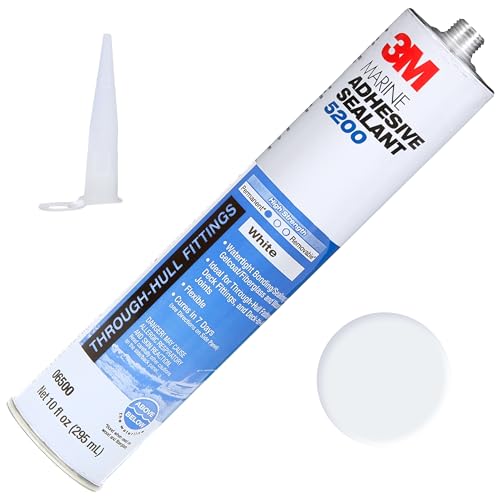
If you need to bond carpet directly to fiberglass, seal the edges around hatches, or prevent water from creeping under the flooring, the 3M 5200 is the undisputed heavyweight champion of marine adhesives. This polyurethane formula cures into a tough, elastomeric solid that flexes with the hull and absorbs shock from vibration and impact. It is designed for both above and below the waterline, which means it laughs at bilge water, rain runoff, and pressure washing.
The paste-like consistency makes it easy to dispense with a standard caulking gun, and it self-levels into gaps and voids before curing. Users with decades of experience report using it for over 25 years on everything from transom repairs to carpet seam sealing. The downside is that it takes 48 hours to reach handling strength and a full 7 days to fully cure, so this is not a quick-turnaround solution. It also bonds so aggressively that removing it later requires mechanical scraping or grinding.
One important purchasing note: some cartridges arrive without the applicator tip, so ordering a separate set of tips is recommended. The cured bond is truly permanent — it will outlast the carpet itself. For sealing the perimeter of a newly glued carpet or attaching carpet to non-porous surfaces like aluminum or gelcoat, this is the most reliable option in the lineup.
Why it’s great
- Permanent bond that withstands full water submersion
- Elastomeric flexibility absorbs hull vibration without cracking
- Self-leveling formula fills gaps and irregular surfaces
Good to know
- Full cure takes 7 days, requiring extended setup time
- Extremely difficult to remove once cured
- Applicator tip often not included in the package
3. 3M Hi-Strength 90 CA Spray Adhesive

For smaller carpet patches, edge touch-ups, or bonding foam-backed carpet to vertical surfaces in boat interiors, the 3M Hi-Strength 90 offers the convenience of a spray-on application with industrial-grade holding power. The adjustable nozzle lets you dial in a precise spray pattern, from a narrow stream for detail work to a wide fan for covering larger areas quickly. This is a contact-type adhesive, so you spray both the carpet backing and the deck surface, allow them to become tacky, then press together for an instant bond.
The low-VOC formula is CARB and SCAQMD compliant and GREENGUARD certified, which makes it a safer choice for enclosed cabin spaces compared to solvent-based alternatives. The bond is permanent and resistant to moisture and high temperatures, making it suitable for above-deck applications where the carpet sees direct sun exposure. Users report strong adhesion to wood, fiberglass, and even some plastics when the surfaces are properly cleaned.
The spray application does have a learning curve — the formula can come out in a lumpy, string-like pattern if the can is not shaken thoroughly or if the nozzle is partially clogged. It also creates overspray that settles on surrounding surfaces, so masking off adjacent areas is essential. For quick repairs or small carpet sections, this is the fastest and cleanest option, but a single 19-ounce can will not cover a full boat deck.
Why it’s great
- Fast tack and instant bond for quick applications
- Adjustable nozzle for precise spray pattern control
- Low-VOC formula safer for enclosed cabin areas
Good to know
- Lumpy spray pattern requires thorough shaking before use
- Overspray can settle on nearby surfaces and be difficult to remove
- Limited coverage area per can; not practical for full deck installations
4. Seal Bond 105 Adhesive Sealant
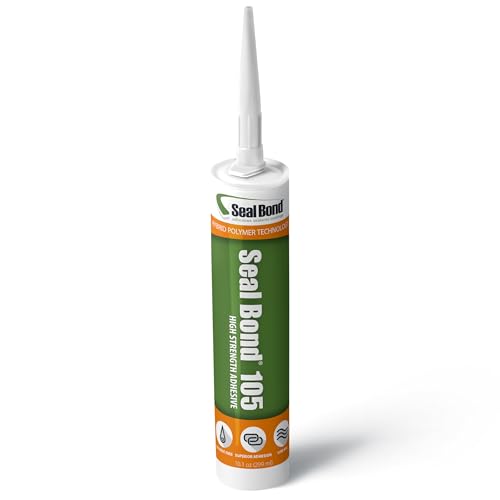
The Seal Bond 105 fills a specific niche for boat owners who need a strong, flexible above-the-waterline sealant without the extreme permanent bond of the 3M 5200. This polyether formula is non-flammable, solvent-free, and isocyanate-free, which makes it safer to use in enclosed spaces compared to traditional polyurethane sealants. It is UV resistant and remains flexible after curing, so it handles the thermal expansion of deck surfaces without cracking or pulling away from the carpet edge.
Users have successfully used it to seal acrylic windows to fiberglass cabin sides, and to fill gaps between uneven deck surfaces and solar panel mounting brackets. The cure time is faster than polyurethane — handling strength within 24 hours — and it can be applied with a standard caulking gun. The main trade-off is aesthetic: the bead finish is not as smooth as silicone, and it is difficult to tool a clean edge even with paint thinner or mineral spirits.
For carpet installation, the Seal Bond 105 works best as a seam sealer and edge adhesive rather than a full-coverage carpet glue. Apply it along the perimeter of the carpet where it meets hatches, storage compartments, and hull sides to prevent water intrusion. The black color option matches dark carpet backings well, and the cartridge size is economical for small to medium projects. It sets relatively quickly once applied, so have your carpet positioned and ready before dispensing.
Why it’s great
- Non-flammable and solvent-free for safer indoor application
- UV resistant with excellent flexibility for deck expansion
- Faster cure time than polyurethane alternatives
Good to know
- Difficult to achieve a clean, smooth bead finish
- Not suitable for permanent below-the-waterline bonding
- Sets quickly, requiring fast positioning of materials
5. HOOK UP Vinyl Contact Cement
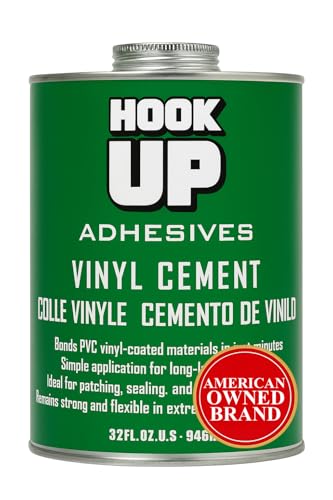
For boat carpet repairs that involve vinyl-backed carpet or inflatable deck surfaces, the HOOK UP Vinyl Contact Cement delivers strong adhesion at a very accessible price point. This is a fast-drying, solvent-based contact cement formulated specifically for vinyl, PVC, rubber, and canvas materials. It dries clear, so repairs on visible sections of carpet do not leave an unsightly white residue, and the cure is fully waterproof once set.
The built-in brush applicator in the cap is convenient for small patches and detail work, though it can become messy with heavy use. Users have successfully used it to glue down underwater pool patches, repair inflatable boat seams, and reattach kneeling cushions that separated from their bases due to heat exposure. The 32-ounce can is generous for the price, making it a budget-friendly choice for multiple small projects around the boat.
This cement is best suited for spot repairs and vinyl-to-vinyl bonding rather than full carpet deck installations. The solvent fumes are strong, so ventilation is critical during application. The formula sets quickly — within minutes — which means you must align the carpet or patch accurately on the first attempt. For larger carpet jobs, the DAP Weldwood or 3M 5200 are more appropriate tools, but for quick fixes and vinyl-specific repairs, this is a capable and affordable option.
Why it’s great
- Low price point with large 32-ounce can for multiple repairs
- Dries clear, ideal for visible patch repairs on vinyl carpet
- Fast-drying formula sets in minutes for quick turnaround
Good to know
- Strong solvent fumes require heavy ventilation
- Built-in brush applicator can be messy for large areas
- Not designed for full-coverage deck carpet installations
FAQ
Can I use regular construction adhesive for boat carpet?
How long does boat carpet glue take to dry before use?
Do I need to seal the carpet edges after gluing?
Final Thoughts: The Verdict
For most boat owners installing new carpet on a plywood or fiberglass deck, the glue for boat carpet winner is the DAP Weldwood All-Weather Outdoor Carpet Adhesive because it offers the ideal balance of tack, open time, and permanent moisture resistance for full-coverage installations. If you need to seal seams and edges against water intrusion, grab the 3M Marine Adhesive Sealant 5200. And for quick repairs on vinyl-backed carpet or inflatable deck surfaces, nothing beats the value and simplicity of the HOOK UP Vinyl Contact Cement.