
Finding a board game that holds the attention of a twelve-year-old without feeling childish or boring can feel like a genuine challenge. The games on this list are designed to engage that specific age range, offering enough strategic depth to satisfy a developing mind while keeping the social fun at the forefront.
I’m Mohammad Maruf — the founder and writer behind Drink4Good. My analysis draws on deep market research into game mechanics, component quality, and the specific cognitive demands that make a game rewarding for pre-teens.
These handpicked selections represent the very best best games for 12 year olds available right now, focusing on titles that teach negotiation, resource management, and cooperative problem-solving without feeling like homework.
How To Choose The Best Games For 12 Year Olds
Selecting a game for a twelve-year-old means balancing the desire for more complex rules against the need for accessible, engaging gameplay. At this age, kids are ready for deeper strategic thinking — resource management, negotiation, and long-term planning all become genuinely exciting. The sweet spot is a game that takes about an hour to play, supports 4-5 players for social interaction, and offers variable setups so no two games feel the same.
Strategic Depth Over Pure Luck
Games that rely mostly on dice rolls or simple chance quickly lose a twelve-year-old’s interest. The most successful games in this age bracket — think Ticket to Ride or CATAN — give players meaningful decisions every turn. Look for games where planning, adaptation, and reading other players matter more than whatever comes up on a roll.
Cooperative vs. Competitive Dynamics
Some kids thrive on direct competition, while others prefer working together towards a common goal. Cooperative games like Space Escape teach teamwork and communication without the sting of losing to a sibling. Meanwhile, competitive games like Tetris: The Board Game let players test their skills head-to-head in a familiar setting. Choosing the right dynamic depends on the group playing.
Quick Comparison
On smaller screens, swipe sideways to see the full table.
| Model | Category | Best For | Key Spec | Amazon |
|---|---|---|---|---|
| CATAN Board Game | Strategy | Deep strategy & negotiation | Modular hexagonal board | Amazon |
| Ticket to Ride | Strategy | Easy-to-learn route building | 60-minute playtime | Amazon |
| Exploding Kittens Board Game | Party | High-energy group fun | Flippable game board | Amazon |
| Space Escape | Cooperative | Teamwork & communication | Cooperative gameplay | Amazon |
| Tetris: The Board Game | Strategy | Competitive puzzle solving | Physical Tetrimino pieces | Amazon |
In‑Depth Reviews
1. CATAN Board Game (6th Edition)

CATAN earns its place as a modern classic because it teaches resource management, negotiation, and strategic planning in a package that feels like an adventure, not a lesson. The 6th Edition updates the components with chunkier player pieces, card trays, and a beginner-friendly rulebook that gets new players into the action faster than previous editions. The modular hexagonal board ensures each game presents a unique map, giving it genuine replayability.
For a twelve-year-old, CATAN is rewarding because every turn involves a real choice — do you trade with the leader or hoard your brick and wood? The social dynamics of bargaining and bluffing keep the game lively and teach valuable interpersonal skills in a low-stakes environment. The 60-90 minute playtime feels substantial without dragging, and the race to 10 victory points keeps everyone engaged until the final move.
Parents should note that CATAN is best with the full 4-player count; 3-player games lack some of the trading tension. The game also benefits from players who enjoy sitting and thinking through options, making it ideal for quieter groups or siblings who enjoy strategy over pure chaos.
Why it’s great
- Teaches negotiation and resource trade-offs in a natural, fun way
- Modular board means no two games play the same
- Updated components in 6th Edition improve the tactile experience
Good to know
- Best with 4 players; 3-player games feel less dynamic
- Some kids may find the trading element frustrating if they fall behind early
2. Asmodee Ticket to Ride Board Game (2025 Refresh)
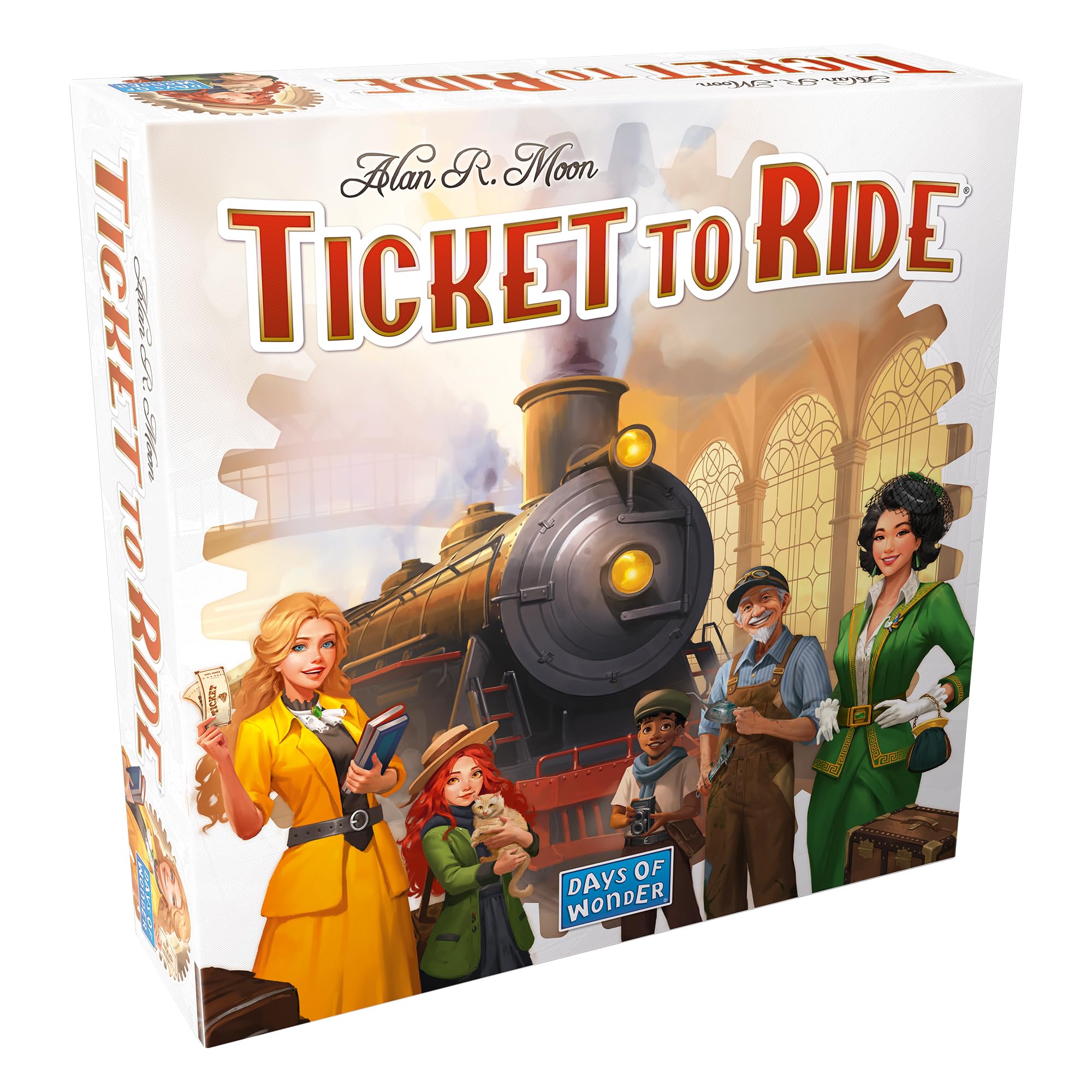
Ticket to Ride is the gateway game for a reason: its rules fit on a single page, yet the strategic depth unfolds over dozens of plays. The 2025 Refresh features a giant map of North America with 225 miniature plastic trains in five colors, making the visual experience immediately rewarding. Players collect colored train cards and claim railway routes between cities, competing to complete destination tickets and build the longest continuous path.
What makes this game especially good for twelve-year-olds is the perfect balance of luck and strategy. Card draws introduce enough variance to keep things exciting, but careful route planning and timing — when to claim a route versus when to hoard cards — separates the winners from the rest. The 30-60 minute playtime fits comfortably into a weeknight, and the game scales well from 2 to 5 players without losing tension.
The educational bonus is real: kids absorb North American geography naturally as they plan their routes from Seattle to Miami or New York to Los Angeles. The lack of direct player conflict — you can block someone’s path but cannot attack them — keeps the social atmosphere friendly, making it a top choice for family game nights with mixed-age groups.
Why it’s great
- Extremely easy to teach and learn within one round
- Geography learning happens naturally through gameplay
- High replayability with different destination ticket combinations
Good to know
- Player elimination is not a factor; even behind players stay engaged
- The 2025 Refresh has slightly redesigned card backs that may not match older expansions
3. Exploding Kittens: The Board Game
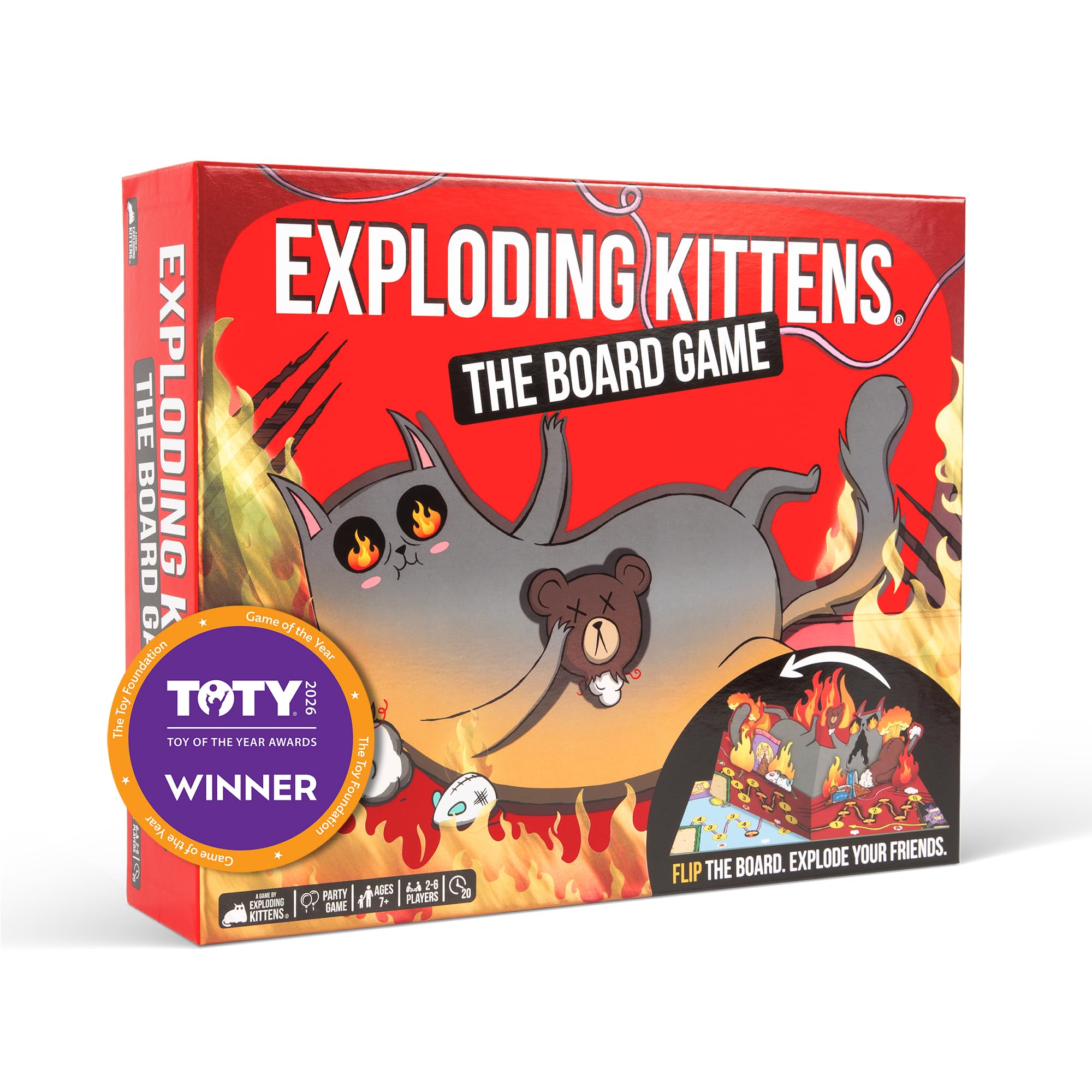
Exploding Kittens brings the irreverent humor of the original card game to a full board game experience, and the result is pure, chaotic fun. The signature mechanic — a pop-up game board that flips over mid-game to reveal a completely new path — keeps players on their toes and prevents any single strategy from dominating. With 65 action cards, 26 move cards, and six character standees, the production value matches the creative energy of the gameplay.
This is the best choice for groups that thrive on high-energy social interaction. The rules are simple enough that a twelve-year-old can teach them to friends in under two minutes, but the decision space — when to play a Meatpants card versus when to deploy Butterfly Punch — offers real tactical depth. Games run 30-45 minutes, and the variable setup ensures that no two sessions feel identical.
Parents should be aware that the humor leans into silly, absurdist territory — players can become a TacoCat or use a Litterbox Sandworm — which is exactly the tone that resonates with this age group. The board can be a bit stiff when first unfolded, but it loosens up after a few plays. This game works best with 4-6 players; smaller groups lose some of the social tension.
Why it’s great
- Flippable board mechanic adds genuine surprise if you play again immediately
- Simple rules make it accessible for mixed-age groups and parties
- Bold, humorous artwork that appeals specifically to pre-teens and teens
Good to know
- Less strategic depth than Ticket to Ride or CATAN
- Board can feel stiff and hard to fold for the first several uses
4. Peaceable Kingdom Space Escape

Space Escape takes the cooperative mechanics of Pandemic and distills them into a family-friendly format where players work together to guide Mole Rats through a snake-infested space station. Designed by the same creator, this game strips away complex rules while keeping the essential tension of shared decision-making. Every turn involves drawing a card with two actions — one for the players and one for the snakes — forcing the group to negotiate and prioritize together.
For twelve-year-olds who struggle with competitive games, Space Escape is a revelation. There is no losing individual player; the whole team either escapes or the snakes win. This structure encourages communication and creative problem-solving without the sting of being eliminated early. The game supports 2-4 players and offers challenge cards that increase difficulty as kids master the base rules, extending its lifespan significantly.
The component quality is durable enough for classroom or library use, and the lack of reading material means younger players can join without assistance. Some experienced gamers may find the luck factor — card draws can be punishing — frustrating, but for casual family play, the randomness keeps outcomes exciting and encourages repeated attempts.
Why it’s great
- Zero player elimination — everyone plays until the final result
- Encourages verbal communication and group decision-making
- Challenge cards allow difficulty scaling as players improve
Good to know
- Card draw luck can sometimes make victory feel unreachable
- Limited strategic depth compared to competitive strategy games
5. Spin Master Games Tetris: The Board Game
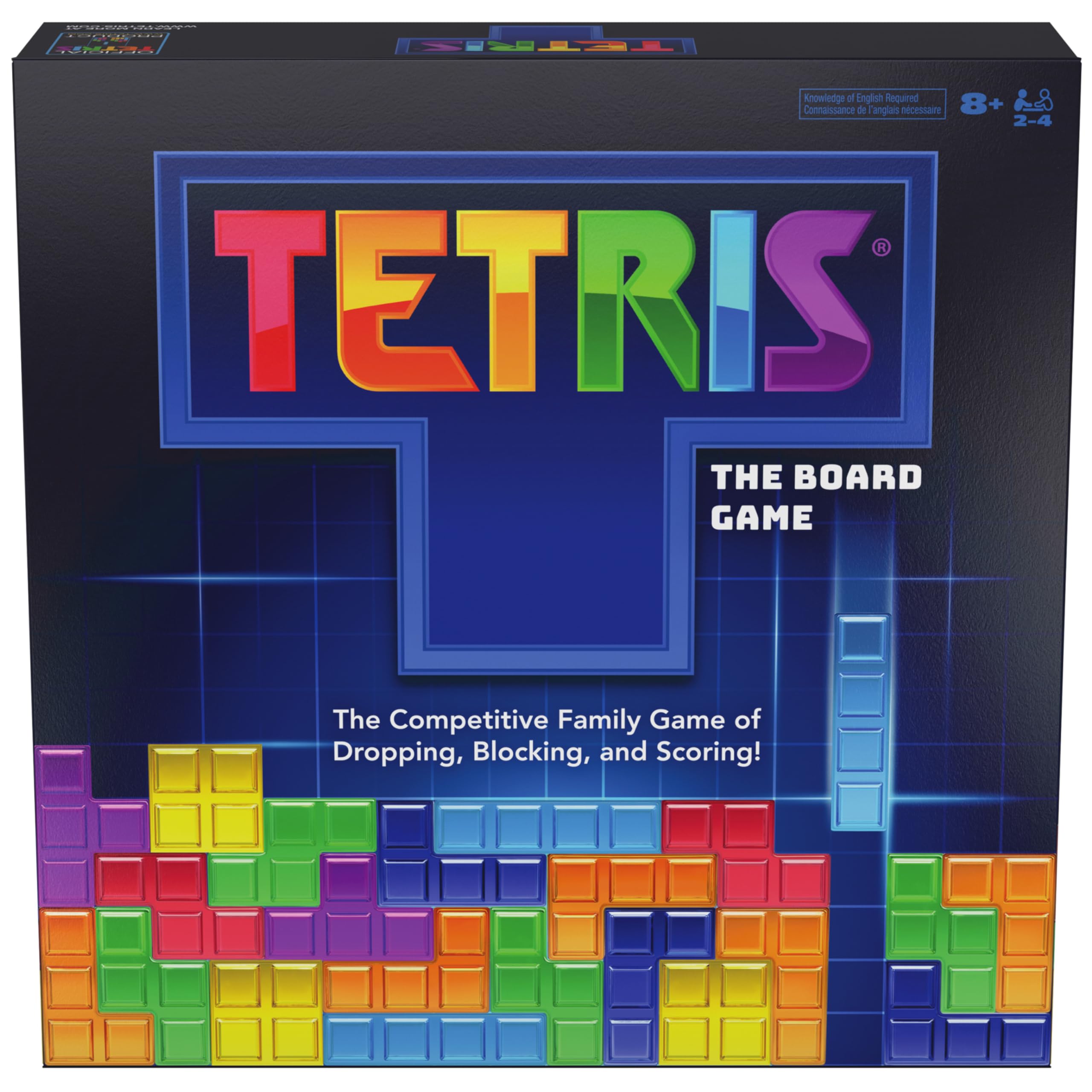
Translating a digital puzzle into a physical board game is tricky, but Tetris: The Board Game pulls it off with a clever competitive twist. Players take turns dropping semi-translucent Tetriminos onto their own grid, trying to complete lines while sabotaging opponents. The garbage mechanic — land a Tetrimino on a black space in your own grid and you can force a piece onto another player’s board — keeps everyone engaged even when it is not your turn.
At under 20 minutes per round, this is the fastest game in the list, making it perfect for quick sessions between homework or as a warm-up before longer strategy games. The physical pieces are colorful and satisfying to handle, and the parallel play means no one waits long between actions. Fans of the original video game will appreciate the familiar shapes and the spatial reasoning challenge.
Quality control is a minor concern — some reviewers report slightly bent puzzle pieces out of the box, though these flatten with use. The game supports 2-4 players and scales well, though 2-player games feel the most strategic since each move directly impacts the opponent. For twelve-year-olds who prefer fast, competitive puzzle-solving, this is an excellent entry point into board gaming.
Why it’s great
- Extremely fast setup and gameplay at around 20 minutes
- Physical Tetrimino pieces translate the digital experience faithfully
- Garbage mechanic creates engaging player interaction every turn
Good to know
- Component quality can vary; some pieces arrive slightly bent
- Less strategic depth than longer-form strategy games
FAQ
Are board games still popular with 12 year olds who use screens daily?
How many players should a game support for a 12 year olds group?
Final Thoughts: The Verdict
For most users, the best games for 12 year olds winner is the CATAN Board Game (6th Edition) because it teaches negotiation, resource management, and strategic planning in a package that feels like an adventure. If you want a game that is easier to learn and plays faster, grab the Asmodee Ticket to Ride Board Game (2025 Refresh). And for high-energy party chaos, nothing beats the Exploding Kittens: The Board Game.