
Picking the right brain for your rig is the single most consequential hardware decision you will make. The wrong choice leaves frames on the table, introduces stutter, and caps your GPU’s potential. Between AMD’s 3D V-Cache revolution and Intel’s hybrid architecture race, the top end of the desktop processor market has never been more competitive or more confusing for builders targeting high refresh rate gaming.
I’m Mohammad Maruf — the founder and writer behind Drink4Good. I have spent years analyzing silicon roadmaps, comparing synthetic benchmarks to real-world frame time graphs, and studying how each microarchitecture handles the specific instruction patterns modern game engines throw at it.
Whether you are building from scratch or upgrading an existing platform, this guide breaks down the nine strongest contenders for the title of best gaming cpu by focusing on the specs that actually determine in-game performance.
How To Choose The Best Gaming CPU
A gaming CPU is not about the highest core count. Games rely on single-threaded speed and low-latency access to memory. This section covers the three specifications that separate a great gaming processor from an expensive mistake.
Cache Architecture and 3D V-Cache
AMD’s 3D V-Cache stacks additional L3 cache directly onto the processor die, drastically reducing the distance data must travel when the game engine requests assets. This translates directly into higher minimum framerates and fewer stutters in CPU-bound titles like simulation, strategy, and open-world games. A standard CPU with 32 MB of L3 cache will lose to a 3D V-Cache chip in gaming every time, regardless of clock speed.
Single-Core Clock Speed vs. Core Count
Most game engines utilize four to eight threads effectively. Beyond eight cores, you are paying for rendering, streaming, or productivity workloads that rarely benefit in-game framerates. The boost clock speed — the frequency a single core can reach under load — is the metric that matters. A 6.0 GHz chip like the Intel Core i9-14900K can outperform a 24-core workstation chip in pure gaming because games do not parallelize across dozens of threads.
Platform Longevity and Upgrade Path
AMD’s AM5 socket is committed to multi-generational support, meaning a motherboard purchased today may accept future processor generations without a swap. Intel’s LGA 1700 and the newer LGA 1851 sockets are typically supported for two generations before a chipset refresh is required. If you plan to upgrade your CPU in three years without replacing the motherboard, AM5 is the safer bet.
Quick Comparison
On smaller screens, swipe sideways to see the full table.
| Model | Category | Best For | Key Spec | Amazon |
|---|---|---|---|---|
| AMD Ryzen 7 9800X3D | Premium | Highest gaming FPS | 104 MB total cache | Amazon |
| AMD Ryzen 7 7800X3D | Mid-Range | Best gaming value | 96 MB L3 + 8 MB L2 | Amazon |
| Intel Core i9-14900K | Premium | Productivity + gaming | 6.0 GHz boost clock | Amazon |
| Intel Core i9-14900KF | Premium | High-FPS without iGPU | 24 cores / 32 threads | Amazon |
| Intel Core Ultra 9 285K | Premium | Creator + gaming hybrid | 5.7 GHz boost, 40 MB cache | Amazon |
| Intel Core Ultra 7 265KF | Mid-Range | Light gaming + encoding | 20 cores, 5.5 GHz turbo | Amazon |
| Intel Core i5-14600KF | Mid-Range | Balanced budget build | 14 cores, 5.3 GHz turbo | Amazon |
| iBUYPOWER Y40 PRO (7900X) | Premium | Pre-built solid system | Ryzen 9 7900X + RTX 5070Ti | Amazon |
| STGAubron Prebuilt (i5) | Budget | Entry-level casual gaming | Intel Core i5 up to 3.6 GHz | Amazon |
In‑Depth Reviews
1. AMD Ryzen 7 9800X3D
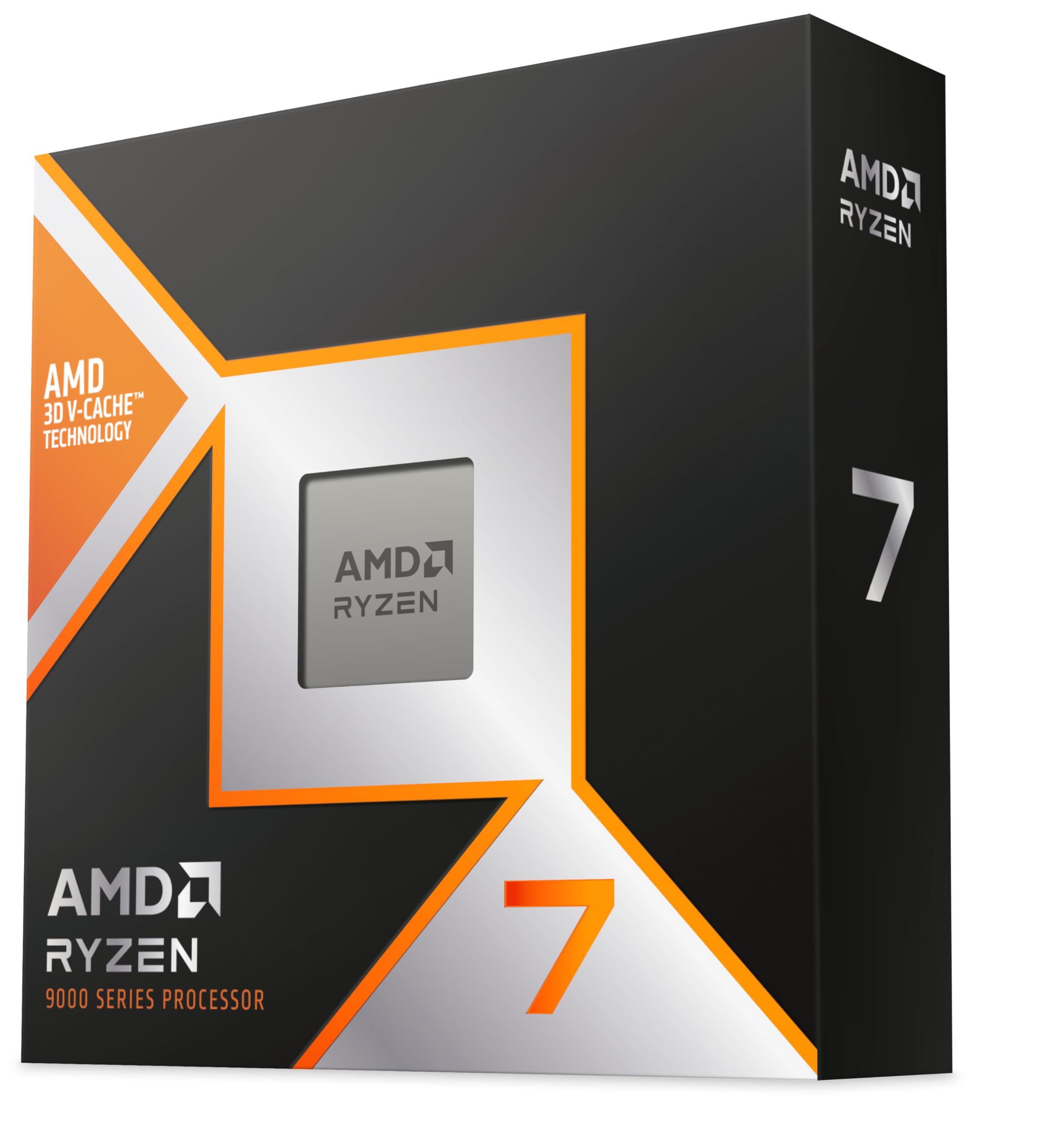
The 9800X3D sits at the very top of the gaming processor hierarchy. Built on AMD’s Zen 5 architecture and second-generation 3D V-Cache, it delivers a ~16% IPC uplift over the 7000 series while stacking 96 MB of L3 cache. The extra cache reduces latency when the GPU requests texture data, producing higher 1% lows and eliminating the micro-stutter that plagues lesser chips in dense open-world games.
Drop-in ready for any existing AM5 motherboard, it supports PCIe 5.0 and DDR5 memory without a platform swap. Thermal performance is improved over the previous generation, allowing the chip to sustain 5.2 GHz boost clocks under a standard dual-tower air cooler. Real-world benchmarks show it outperforming the Intel Core i9-14900K by 8-12% in CPU-bound titles while drawing significantly less power.
For a pure gaming machine where every frame matters, this is the processor to buy. The eight cores and sixteen threads are perfectly balanced for gaming plus Discord, OBS, and browser tabs without pushing into productivity territory where more cores would help.
Why it’s great
- Best gaming performance on any consumer platform
- Improved thermal headroom versus previous 3D V-Cache chips
- AM5 socket offers a future upgrade path
Good to know
- Not the best choice for heavy multi-core rendering workloads
- Cooler not included — budget for a quality air or liquid cooler
2. AMD Ryzen 7 7800X3D

The 7800X3D uses first-generation 3D V-Cache on the Zen 4 architecture, stacking 96 MB of L3 cache on top of the standard 8 MB L2. In gaming, this cache configuration is so effective that it often matches or beats the more expensive Intel i9-14900K in pure frame rate, despite a lower 5.0 GHz boost clock and fewer cores. It consumes roughly 75 watts during gaming sessions.
Temperatures stay manageable even with a modest air cooler — most builds see 65-70°C under sustained gaming load. The chip includes an integrated Radeon Graphics controller for basic display output without a discrete GPU, useful for troubleshooting or low-intensity desktop use. It runs on the proven AM5 platform with DDR5 support, giving you a clear path to a future Zen 5 upgrade.
If you are building a mid-range to high-end gaming PC and want to maximize frame rate per dollar spent, the 7800X3D remains the smartest choice on the market. Pair it with a Radeon RX 7800 XT or GeForce RTX 4070 for a balanced 1440p to 4K system.
Why it’s great
- Competitive with flagship Intel chips in gaming
- Low power draw and excellent thermals
- AM5 platform is future-proof
Good to know
- Lower boost clock than non-X3D Ryzen chips
- Not ideal for heavy productivity workflows
3. Intel Core i9-14900K
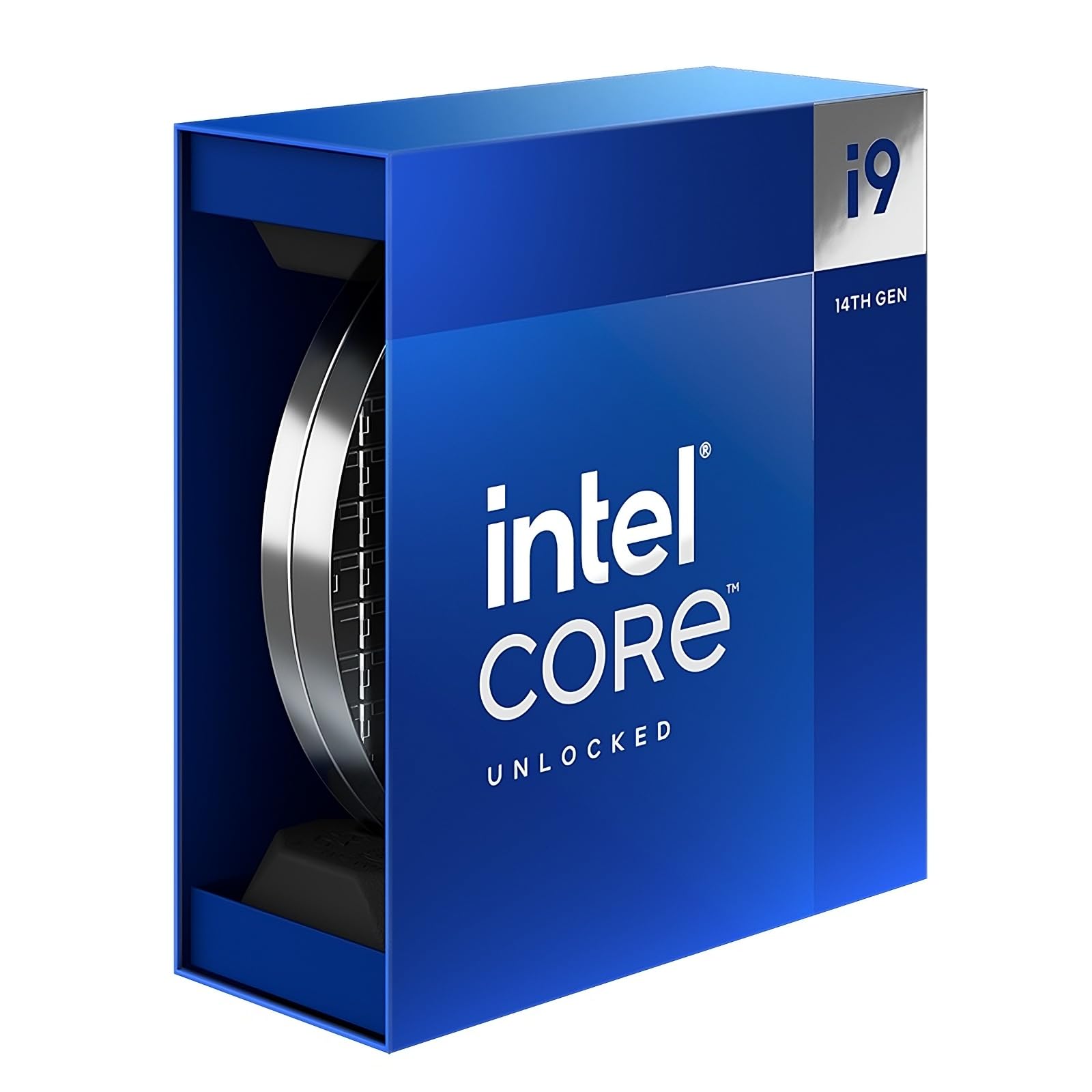
The Core i9-14900K is Intel’s 14th Gen flagship with 8 Performance-cores and 16 Efficient-cores, clocking a single P-core up to 6.0 GHz via Thermal Velocity Boost. This makes it the highest-clocked consumer CPU available. In games that rely on raw clock speed — esports titles like CS2 and Valorant — the 14900K delivers extreme frame rates that few rivals can touch.
The 24-core, 32-thread configuration also makes the 14900K a beast for content creation. Video rendering, 3D modeling, and compilation tasks thread across the E-cores efficiently. It supports both DDR4 and DDR5 memory and works with Intel 600 and 700 series motherboards, offering flexibility for people upgrading from an older LGA 1700 platform.
You will need a serious cooling solution — a 360mm AIO liquid cooler is the practical minimum — and the 125W base power can spike well over 250W under full load. Some users report stability issues requiring BIOS updates, so factor in research time before your first boot.
Why it’s great
- Highest single-core boost clock at 6.0 GHz
- Excellent multi-core performance for creative workloads
- Compatible with existing LGA 1700 boards
Good to know
- Runs hot — requires premium cooling
- Potential stability issues with earlier BIOS versions
4. Intel Core i9-14900KF

The KF variant of the 14900K removes the integrated graphics unit to reduce the price while retaining the same 24-core, 6.0 GHz configuration. For any gaming build that uses a discrete graphics card, the iGPU is irrelevant, so the KF delivers identical gaming performance as the K model for less money. Intel’s Turbo Boost Max Technology 3.0 directs the fastest two cores to the game thread.
With 8 P-cores and 16 E-cores, the 14900KF excels in multitasking scenarios where you game on the main monitor while OBS records, Discord runs, and a browser streams music. Users report stable 240 FPS in Fortnite at competitive settings without overclocking, and the chip handles Unreal Engine development tools without bottlenecking the GPU.
You lose the ability to troubleshoot display issues without a dedicated GPU. And like its K sibling, the 14900KF demands robust cooling and a motherboard with a strong VRM stage to handle transient power spikes.
Why it’s great
- Cheaper than 14900K with same core/clock specs
- Excellent for high-FPS gaming and streaming
- Stable at stock with a 240mm AIO in most cases
Good to know
- No integrated graphics for troubleshooting
- High power consumption under full load
5. Intel Core Ultra 9 285K

The Core Ultra 9 285K represents Intel’s shift to the new LGA 1851 socket with an improved hybrid architecture that prioritizes efficiency alongside performance. Its 8 P-cores and 16 E-cores reach a 5.7 GHz boost, and the 40 MB L3 cache is larger than the 14900K’s 36 MB. The chip runs cooler and quieter than its 14th Gen predecessors.
For gaming combined with professional SolidWorks or CAD work, the 285K is outstanding. Engineers report stable Cinebench temperatures of 73-78°C with a 360mm AIO after a full 24-hour burn-in, and the memory controller handles four sticks of DDR5 at 4000 MHz without errors. Intel’s integrated graphics remain on-die, so you can test the system before installing the GPU.
The catch is platform cost. LGA 1851 requires an Intel 800 series motherboard, which adds to the overall build price. Older LGA 1700 coolers are compatible with an adapter bracket, but you cannot reuse an LGA 1700 motherboard. For a new build, this is the most future-ready Intel choice available.
Why it’s great
- Efficient thermal performance compared to 13th/14th Gen
- Excellent for mixed gaming and professional workloads
- Stable memory controller supports high-speed DDR5
Good to know
- Requires new LGA 1851 motherboard
- No hyper-threading on E-cores reduces multitasking headroom vs 14900K
6. Intel Core Ultra 7 265KF

The Core Ultra 7 265KF slots into Intel’s mid-range lineup with 8 P-cores and 12 E-cores, hitting a 5.5 GHz turbo frequency. It lacks integrated graphics, so a discrete GPU is mandatory. For light to moderate gaming — titles like Call of Duty Black Ops 6, Battlefield 4, or indie games — the 265KF delivers smooth frame rates without the thermal load of the bigger chips.
Where this processor stands out is in mixed-use scenarios. The 36 MB cache and 20 threads handle video encoding and graphics work competently, and the chip pairs well with a budget-friendly air cooler like the Peerless Assassin. Users moving from an older Ryzen 3700X report a noticeable improvement in system responsiveness and boot times.
It is not the top choice for extreme 4K gaming or heavy content creation. The 265KF performs respectably but falls behind the 7800X3D in pure gaming benchmarks and behind the 14900K in productivity. It is a solid all-rounder for someone who games casually and edits video or streams as a side activity.
Why it’s great
- Good value for light gaming and encoding
- Runs cool with a standard air cooler
- Stable memory controller with DDR5 support
Good to know
- Lags behind AMD 7800X3D in pure gaming
- No integrated graphics for troubleshooting
7. Intel Core i5-14600KF

The i5-14600KF brings 6 Performance-cores and 8 Efficient-cores to a price point that competes with AMD’s Ryzen 5 and Ryzen 7 non-X3D chips. The 5.3 GHz max turbo ensures snappy single-threaded performance in games like Fortnite and Valorant, and the 20 threads handle Discord, OBS, and a dozen browser tabs without stutter.
Benchmarks show the 14600KF pairs beautifully with an RTX 3080 or RTX 4060 Ti at 1440p resolution, avoiding CPU bottlenecks in the vast majority of titles. It supports both DDR4 and DDR5 memory and works with Intel 600 and 700 series motherboards, making it an easy drop-in upgrade for anyone on an older LGA 1700 platform. Power draw sits around 125W base, easily managed by a 240mm AIO.
The chip arrives without integrated graphics, so you will need a discrete GPU from the start. Some motherboards require a BIOS update to stabilize the 14th Gen platform, but once updated, the 14600KF runs reliably and cool. For a mid-range gaming build, it is the Intel chip that gives you the most performance for the price.
Why it’s great
- Strong single-core performance for gaming
- Compatible with affordable DDR4 or faster DDR5
- Easy drop-in for LGA 1700 boards
Good to know
- Must have a discrete graphics card
- May need BIOS update on 600-series boards
8. iBUYPOWER Y40 PRO (AMD Ryzen 9 7900X)

The Y40 PRO is a pre-built system that pairs an AMD Ryzen 9 7900X with an NVIDIA GeForce RTX 5070 Ti with 16 GB of GDDR6 VRAM. The 7900X provides 12 cores and 24 threads with a 5.6 GHz boost clock, making it a strong gaming and productivity processor. The pre-built nature removes the guesswork for people who do not want to assemble their own rig.
With 32 GB of DDR5 RGB memory running at 5200 MHz and a 2 TB NVMe SSD, the system loads games in seconds and handles multitasking without breaking a sweat. The tempered glass case includes 16-color RGB lighting, and iBUYPOWER includes a keyboard and mouse in the box. Users report >100 fps on very high settings at 1440p in major titles with ray tracing enabled.
The trade-off for convenience is limited upgradability of proprietary components and a premium compared to building the same spec yourself. Some customers report random reboots that required BIOS updates or returns. For someone who wants a ready-to-go high-end machine, however, the Y40 PRO delivers plug-and-play performance.
Why it’s great
- High-end GPU/CPU combo out of the box
- RGB case and peripherals included
- Fast NVMe storage and ample RAM
Good to know
- Pre-built markup vs self-build
- Some units require BIOS troubleshooting
9. STGAubron Prebuilt Gaming PC (Intel Core i5)
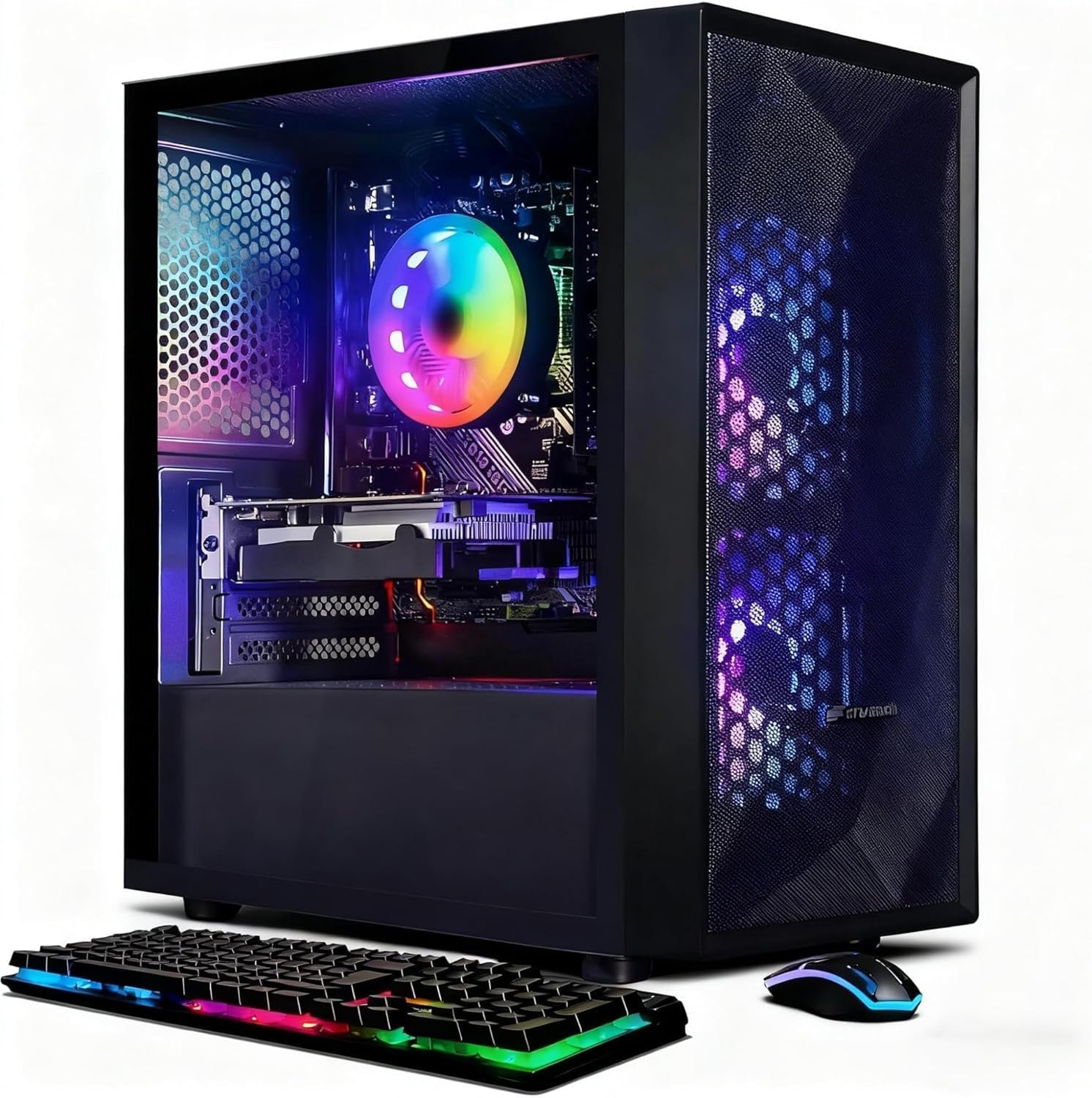
This STGAubron pre-built is an entry-level Windows 11 gaming desktop with an Intel Core i5 processor clocked up to 3.6 GHz, 16 GB of RAM, a 512 GB SSD, and an AMD Radeon RX 550 with 4 GB of dedicated video memory. The build is designed to run lighter titles like Roblox, Minecraft, Fortnite, and Valorant at 60+ FPS on low to medium settings at 1080p.
Connectivity includes Wi-Fi 6, Bluetooth 5.0, an RJ-45 Ethernet port, and a serial port. The case features two RGB fans, and the bundle includes an RGB gaming keyboard and mouse. Setup is quick — plug in the power and peripherals, and the system is ready to game within 15 minutes.
Long-term durability is a concern. Reviews note that after two years, cheap generic parts can cause fan noise and SSD slowdown. The RX 550 GPU is outdated and has no meaningful upgrade path within the power supply limits. This machine is best suited as a starter PC for a child or as a secondary system for very light gaming where budget is the only priority.
Why it’s great
- Affordable entry point with Windows 11 pre-installed
- Includes Wi-Fi 6, Bluetooth, keyboard, and mouse
- Can run popular free-to-play games at decent FPS
Good to know
- Generic parts may degrade over time
- RX 550 is too weak for modern AAA games
FAQ
Is more cores always better for gaming performance?
Should I choose Intel or AMD for a gaming CPU in 2025?
What cooling do I need for a high-end gaming CPU?
Final Thoughts: The Verdict
For most users, the best gaming cpu winner is the AMD Ryzen 7 9800X3D because its 3D V-Cache delivers unmatched frame rate consistency and eliminates stutter in modern games. If you want the best performance-to-dollar ratio, grab the AMD Ryzen 7 7800X3D. And for a balanced gaming and productivity machine, nothing beats the raw single-core speed of the Intel Core i9-14900K.