
The fix is straightforward: a quality replacement bottom seal that creates a reliable barrier against the elements and reclaims your space.
I’m Mohammad Maruf — the founder and writer behind Drink4Good. My deep market research and analysis of seal profiles, rubber compounds, and extreme-temperature performance ensure this guide focuses on the concrete specs that matter for a long-lasting, effective garage door bottom seal.
This guide breaks down the top-rated options by profile type, material, and real-world performance to help you find the best garage door seal for a clean, dry, and well-insulated garage all year round.
How To Choose The Best Garage Door Seal
Choosing the right seal starts with understanding your garage door’s bottom track profile (most common is a 1/4-inch or 5/16-inch T-end channel), the material’s ability to withstand temperature swings without cracking, and whether you need a simple drop-in replacement or a threshold ramp for uneven floors.
Profile Compatibility
Nearly all standard residential garage doors use a T-end profile that slides into a channel along the door bottom. Measure the width of your existing T-end — 1/4-inch and 5/16-inch are the two most common sizes. A mismatch here means the seal won’t stay locked in place.
Material Matters
EPDM rubber is the gold standard for flexibility across extreme temperatures (typically -40°F to 240°F), resisting cracking and tearing where vinyl becomes brittle. For seasonal climates, prioritize EPDM over vinyl for longevity.
Threshold vs. Bottom Seal
Bottom seals mount into the door’s track and seal at the bottom edge. Threshold seals attach to the floor and work best when the concrete is uneven or you need extra water diversion. Some setups benefit from using both together for maximum protection.
Quick Comparison
On smaller screens, swipe sideways to see the full table.
| Model | Category | Best For | Key Spec | Amazon |
|---|---|---|---|---|
| Holikme Garage Door Bottom Seal | Bottom Seal | All-Weather Durability | EPDM Rubber / 5/16″ T-End | Amazon |
| HOOIMA Garage Door Bottom Seal | Bottom Seal | Universal Fit | Rubber / 5/16″ T-End | Amazon |
| Universal- Grey 5/16″ T-end 20′ | Bottom Seal | Amarr/Clopay Doors | Rubber / 5/16″ T-End | Amazon |
| Earthtec 3″ Weatherstrip | Bottom Seal | Budget Replacement | Vinyl / 1/4″ T-End | Amazon |
| Jin&Bao Threshold Seal Strip | Threshold Seal | Water Diversion | Rubber / Floor-Mount | Amazon |
In‑Depth Reviews
1. Holikme Garage Door Bottom Seal
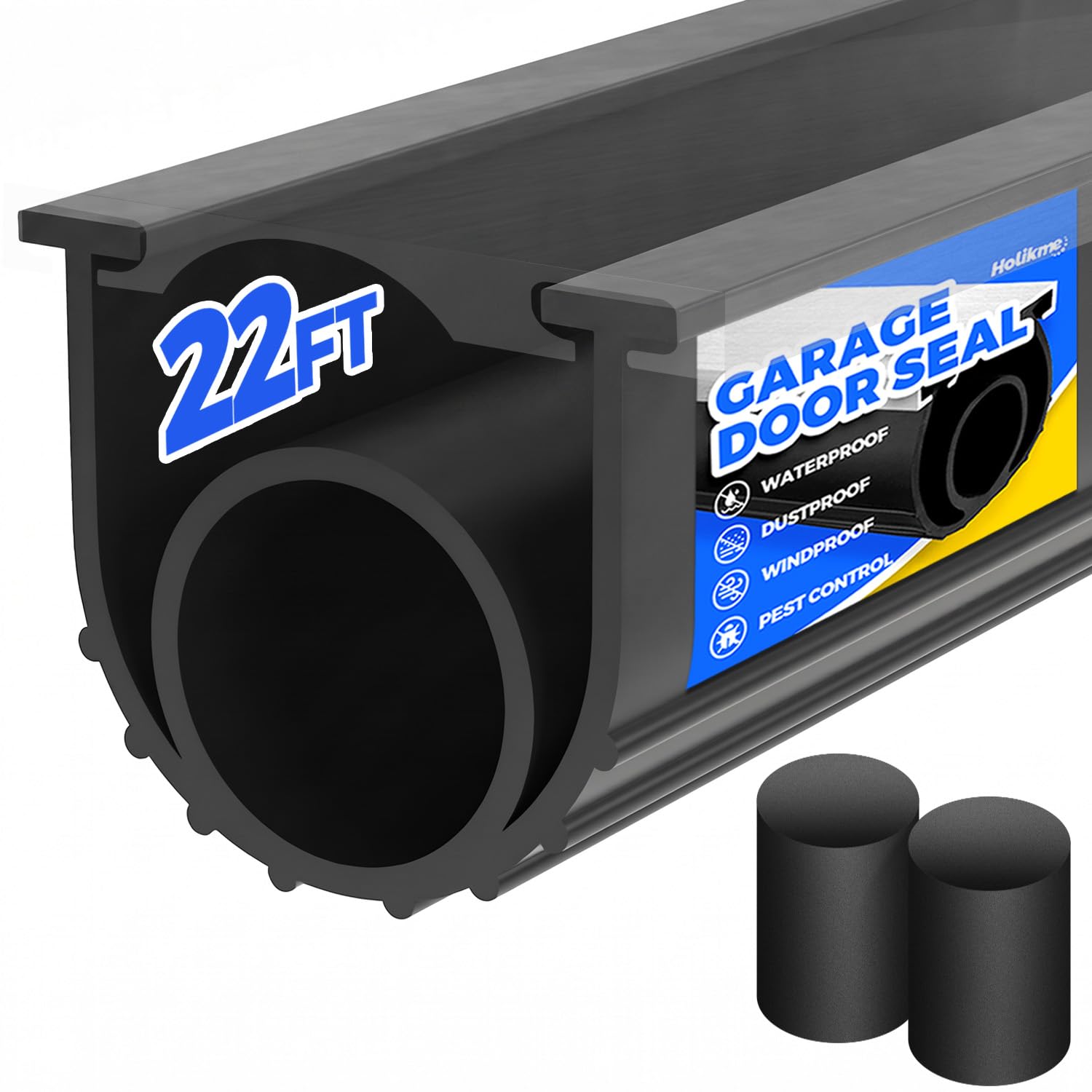
The Holikme seal uses a high-density EPDM rubber compound that stays pliable from -40°F up to 240°F, which means it won’t crack in a deep freeze or soften and deform under summer heat. The 22-foot length provides generous overage for most standard doors, and the included rubber end plugs seal the hollow channel completely to prevent drafts and bugs from sneaking through the sides. Real-world reviews confirm it installs cleanly with a helper and a little silicone lubricant.
What sets this seal apart is its balance of softness and structural integrity — it conforms to slight floor irregularities without collapsing under the door’s weight. The universal 5/16-inch T-end profile fits the vast majority of residential T-track retainers, making it a safe pick if you’re unsure of your exact retainer size. Multiple owners note it blocks wind-driven rain and winter drafts noticeably better than their previous seals.
Installation is straightforward for a DIYer: clean the track thoroughly with a brush and air compressor, apply soapy water or silicone spray to the channel, and feed the seal through with a second person pulling from the other end. The rubber’s natural friction against metal means you’ll want that lubricant — but once seated, it stays put without screws or adhesives.
Why it’s great
- EPDM rubber rated for -40°F to 240°F
- Includes rubber end plugs for full channel seal
- 22-foot length fits most doors with room to trim
Good to know
- Works best with lubricant for smooth installation
- Two people recommended for feeding through track
2. HOOIMA Garage Door Bottom Seal

HOOIMA’s offering is a straightforward rubber T-end seal that prioritizes compatibility and ease of installation over frills. The 3.75-inch width and 5/16-inch T profile make it a strong match for many standard garage doors from Clopay, Amarr, and Wayne Dalton. Customer reports consistently mention a 15- to 20-minute solo install — clean the track, lubricate with silicone spray, and slide the new seal through without needing a second person.
The rubber formula is heavy-duty and stays flexible from -40°F to 140°F, which covers most temperate and cold climates. Several dry-climate users report it holds up well against dust and direct sunlight without cracking after months of use. The black color blends neatly with dark doors, and the lack of end plugs doesn’t bother most buyers — they simply trim the seal flush with the door edges.
One practical note from reviews: the seal can be a tight squeeze in narrower channels. A small amount of silicone spray in the track makes the difference between a frustrating fight and a smooth glide. For homeowners looking for a no-fuss replacement that covers the basics well, this is a reliable and affordable option.
Why it’s great
- Quick solo install with silicone lubricant
- Fits most residential T-track doors
- Stay flexible from -40°F to 140°F
Good to know
- No end plugs included
- Can be tight in narrow channels
3. Universal- Grey 5/16″ T-end 20′

This model is purpose-built for Amarr and Clopay garage doors, with a 5/16-inch T-end that slots perfectly into their retainer channels. The 3.75-inch wide grey rubber strip is slightly more pliable than OEM seals, which owners report makes installation easier while still providing a tight, weather-resistant barrier. The 20-foot length is ample for a standard two-car garage door.
Temperature resilience is a strong point here — the rubber stays flexible down to -40°F, avoiding the brittleness that vinyl alternatives suffer. Multiple reviewers with 15-year-old doors confirm it fits as snugly as the original, with one noting the T-end slid in smoothly even though their old track had mixed-width channels. The grey color blends well with most light-colored doors and doesn’t show dirt as quickly as black seals.
Installation follows the same clean-and-lubricate routine, though the slightly thinner rubber means it can crinkle at the last foot if not pulled taut before trimming. Soapy water in the track is the owner-recommended trick to avoid this. If you own an Amarr or Clopay door and want a direct-fit replacement without measuring twice, this is a smart choice.
Why it’s great
- OEM-compatible with Amarr/Clopay doors
- Pliable rubber eases installation
- Stays flexible in extreme cold
Good to know
- Grey color may not suit all doors
- Last foot can crinkle if not pulled tight
4. Earthtec 3″ Garage Door Bottom Seal

The Earthtec seal is a vinyl T-end weatherstrip designed for doors with a 1/4-inch T-channel, the most common profile on older and budget-tier garage doors. It comes in a 16-foot length and multiple width options depending on your door size, and the grey vinyl material is a direct replacement for seals that have hardened, cracked, or been chewed through by pests. Customer feedback highlights a straightforward 15- to 30-minute installation.
Vinyl is less flexible than EPDM in freezing temperatures, but for mild climates or intermittent use, this seal provides adequate dust and rain blocking at a budget-friendly price point. A few reviewers note the material is more pliable than expected, which can be a downside on uneven concrete floors — it doesn’t spring back aggressively to fill large gaps. For perfectly level floors, however, it seals adequately against light wind and debris.
The dual T-end design fits both 1/4-inch and 5/16-inch channels, adding a measure of compatibility if you’re unsure of your exact retainer. Some owners successfully used bricks and steel wool on the outside for extra critter defense, but for a simple, low-cost refresh, the Earthtec gets the job done without fuss.
Why it’s great
- Very easy to install solo
- Dual T-end fits 1/4″ or 5/16″ channels
- Budget-friendly approach
Good to know
- Vinyl less flexible in deep cold
- Not ideal for uneven floors
5. Jin&Bao Universal Threshold Seal Strip

The Jin&Bao threshold seal is a fundamentally different approach: instead of sliding into the door’s track, it mounts directly to the garage floor using adhesive, creating a low-profile ramp that bridges the gap beneath the door. This is the right solution when your concrete is sloping, cracked, or uneven enough that a bottom seal alone can’t close the gap. The blue safety strip provides high visibility to prevent tripping.
Temperature tolerance is exceptional — the EPDM-like rubber stays intact from -40°F to 284°F, and the serrated base is designed to grip construction-grade adhesive (many owners recommend using Gorilla Construction Adhesive instead of the included sealant, which gets mixed reviews for staining concrete). After nearly two years, multiple buyers report it still holds back about an inch of rainfall without lifting or crumbling.
Installation is more involved than a bottom seal: you need to clean and dry the concrete thoroughly, mark the position, apply adhesive, and weight the strip until it cures. The included sealant is a weak point, so budgeting for a separate tube of quality construction adhesive is a smart move. Once properly installed, this threshold seal transforms a drafty, wet garage into a dry, usable space.
Why it’s great
- Excellent for uneven or sloped floors
- Withstands -40°F to 284°F
- Blue safety strip prevents tripping
Good to know
- Requires strong construction adhesive
- Included sealant may stain concrete
FAQ
How do I measure my garage door’s T-end size?
Can I install a bottom seal if my garage floor is uneven?
Is EPDM rubber worth the extra cost over vinyl?
Final Thoughts: The Verdict
For most users, the best garage door seal winner is the Holikme Garage Door Bottom Seal because its EPDM rubber handles extreme temperatures, the included end plugs prevent side-channel drafts, and the 22-foot length gives you plenty of slack for a professional-looking install. If you want a quick universal replacement for an Amarr or Clopay door without measuring twice, grab the Universal- Grey 5/16″ T-end. And for uneven floors where water pools beneath the door, nothing beats the Jin&Bao Threshold Seal Strip properly bonded with construction adhesive.