
Laying down a weed barrier only to watch it shred at the edges or have plants punch through within a season is a frustrating waste of time and money. The difference between a fabric that lasts for years and one that fails fast comes down to understanding its weight, weave, and tensile strength.
I’m Mohammad Maruf — the founder and writer behind Drink4Good. I’ve spent years analyzing the tensile strength, permeability, and oz-weight ratings that separate landscape-grade fabrics from disposable rolls.
The right roll stabilizes gravel driveways, blocks sunlight in flower beds, and filters sediment in French drains. This guide breaks down the top contenders for the best geotextile fabric, comparing woven versus non-woven constructions and real-world durability.
How To Choose The Best Geotextile Fabric
Selecting the right geotextile fabric starts with understanding your ground condition. A light woven barrier works fine under mulch in a flower bed, but the same fabric will shred under the weight of gravel on a driveway. Match the fabric’s physical properties to the load it must bear.
Weight and Tensile Strength
The fabric’s weight, measured in ounces per square yard (oz), is the single most reliable indicator of durability. A 3.2oz woven fabric is adequate for basic weed control under 2 inches of mulch. An 8oz non-woven fabric, with tensile strengths around 350N, is required for heavy stone, vehicular traffic, or erosion control on slopes.
Woven vs. Non-Woven Construction
Woven geotextiles are made from polypropylene tapes interlaced like a basket. They offer high tensile strength in one direction, making them excellent for stabilization under gravel. Non-woven fabrics are needle-punched, creating a felt-like mat that excels at filtration and drainage in French drains and retaining walls, but they lack the same planar tensile strength.
Permeability and Filtration
A fabric that blocks water will cause pooling and soil erosion above the barrier. Geotextiles are designed to be permeable, allowing water and air to pass while blocking soil particles and sunlight. Non-woven fabrics generally offer higher flow rates, making them the standard choice for drainage applications where silt filtration is critical.
Quick Comparison
On smaller screens, swipe sideways to see the full table.
| Model | Category | Best For | Key Spec | Amazon |
|---|---|---|---|---|
| VEVOR 6FTx100FT | Non-Woven | French drains & heavy drainage | 8oz / 350N Tensile | Amazon |
| DWALE Driveway Fabric | Woven/PE | Commercial-grade roads & driveways | 3.5oz / 800 LBS Tensile | Amazon |
| HOOPLE 4FT x 100FT | Woven | Garden beds & gravel paths | 3.2oz Woven PP | Amazon |
| Groweco 6FT x 100FT | Woven | General landscaping & underlayment | 3.2oz with green alignment lines | Amazon |
| Land Guard 4ft x 300ft | Woven | Large-area weed control on a budget | 3.2oz / 300ft rolls | Amazon |
In‑Depth Reviews
1. VEVOR 6FTx100FT Non-Woven Geotextile Heavy Duty 8oz

This non-woven needle-punched fabric is the clear heavyweight champion for drainage and erosion control. At 8oz per square yard with a 350N tensile strength, it is significantly denser than standard weed barriers, giving it the structural integrity to act as a filter layer beneath French drains, retaining walls, and heavy gravel pads. Customers consistently note that it feels like a thick, durable mat that does not shred like thinner woven alternatives.
The high permeability is the defining feature here. Water and air pass through freely while the fabric traps silt and soil particles, preventing your drain rock from clogging with clay. This makes it the correct choice for anyone building a drainage ditch or a gravel driveway that must stay stable through wet seasons. It is also easy to cut with scissors and installs cleanly over uneven ground.
One trade-off is its weight and bulk. At 27 pounds for the 6x100ft roll, it requires two people to maneuver during installation. Some users also note that the thickness demands heavy-duty landscape staples or a thick rock layer to hold it in place. For pure weed blocking in a raised bed, it is overkill, but for any project involving water flow or soil stabilization, it is the superior option.
Why it’s great
- 8oz density provides exceptional tear and puncture resistance
- 350N tensile strength handles heavy stone and vehicle loads
- Excellent water flow prevents drainage system clogging
Good to know
- Heavy roll requires two people to handle
- Overbuilt for basic garden weed control
2. DWALE Driveway Fabric 6×300 ft Commercial Weed Barrier

Built from high-density polyethylene with a tensile strength rated at 800 pounds, this commercial-grade fabric is designed to live under heavy traffic. The 3.5oz weight is lighter than the VEVOR non-woven, but the woven PE construction gives it remarkable resistance to stretching under the weight of gravel and repeated vehicle crossings. It is a clear choice for anyone stabilizing a long driveway or a construction access road.
The 6x300ft roll covers a massive area, making it the most economical option for large-scale projects. Despite its strength, it is highly permeable, preventing water from pooling above the barrier. The fabric does require unfolding from a folded 3ft width, but once laid flat, it conforms well to the ground. It also holds up well under gravel, with users reporting no weed breakthroughs even after eight months of exposure.
The main practical downside is edge fraying. Because it is a woven material, cut edges can shed loose threads during installation. This is typical of woven geotextiles and does not affect its performance once covered, but it is messy. It is also not the best choice for applications requiring high water flow filtration, as the non-woven VEVOR outperforms it in that niche.
Why it’s great
- Exceptional 800 lb tensile strength for driveway stabilization
- Massive 300ft roll covers large projects efficiently
- High permeability prevents water pooling under gravel
Good to know
- Woven edges shed loose threads when cut
- Folded packaging requires careful unfolding
3. HOOPLE 4FT x 100FT Heavy Duty Weed Barrier Fabric
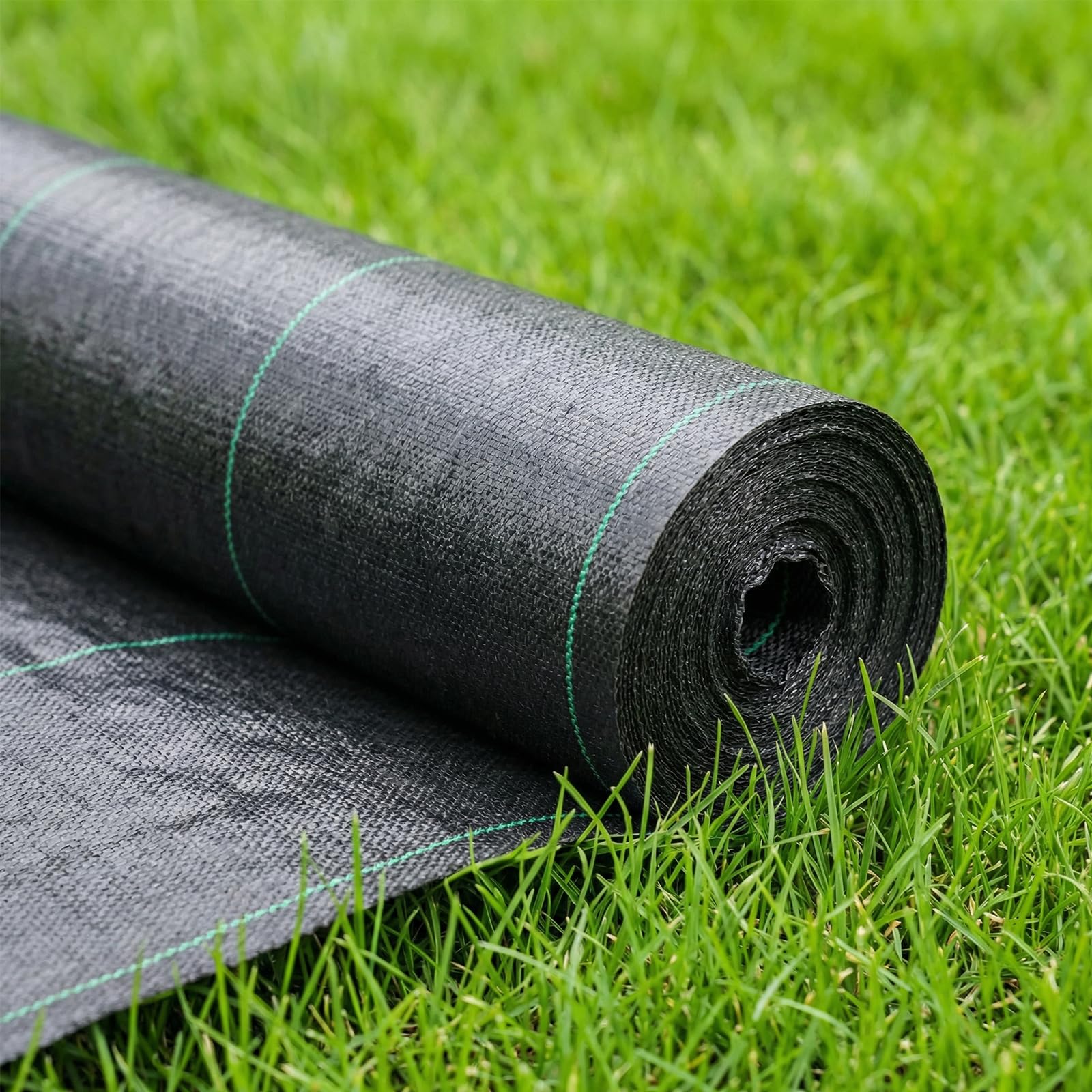
The HOOPLE fabric is a classic 3.2oz woven polypropylene geotextile that hits the sweet spot for general landscaping use. It is thick enough to block sunlight and suppress weeds effectively, yet lightweight enough for one person to roll out a 100ft length without assistance. Users report a 40×40 garden staying weed-free all season where the fabric was properly laid, which is a strong testament to its density.
Its high permeability is a genuine asset for garden beds and vegetable plots. Water and liquid nutrients pass through without runoff, keeping the soil underneath healthy. The fabric cuts cleanly with scissors and holds its shape when pinned. It also handles the weight of a thin gravel layer on pathways without tearing, making it a versatile option for mixed-use yards.
The primary concern reported is edge shredding. As with many woven fabrics, the cut edges can unravel and release small plastic fibers. This does not affect weed suppression, but it is untidy during installation. For heavy-duty driveway or drainage work, the 3.2oz weight is too light — you would want the VEVOR or DWALE for those jobs.
Why it’s great
- Effective 3.2oz density blocks weeds in large garden areas
- Excellent water and nutrient permeability for plant health
- Light enough for solo installation over 100ft runs
Good to know
- Cut edges can shred and release plastic fibers
- Not heavy enough for driveways or high-load areas
4. Groweco 6FT x 100FT Premium 3.2oz Landscape Fabric
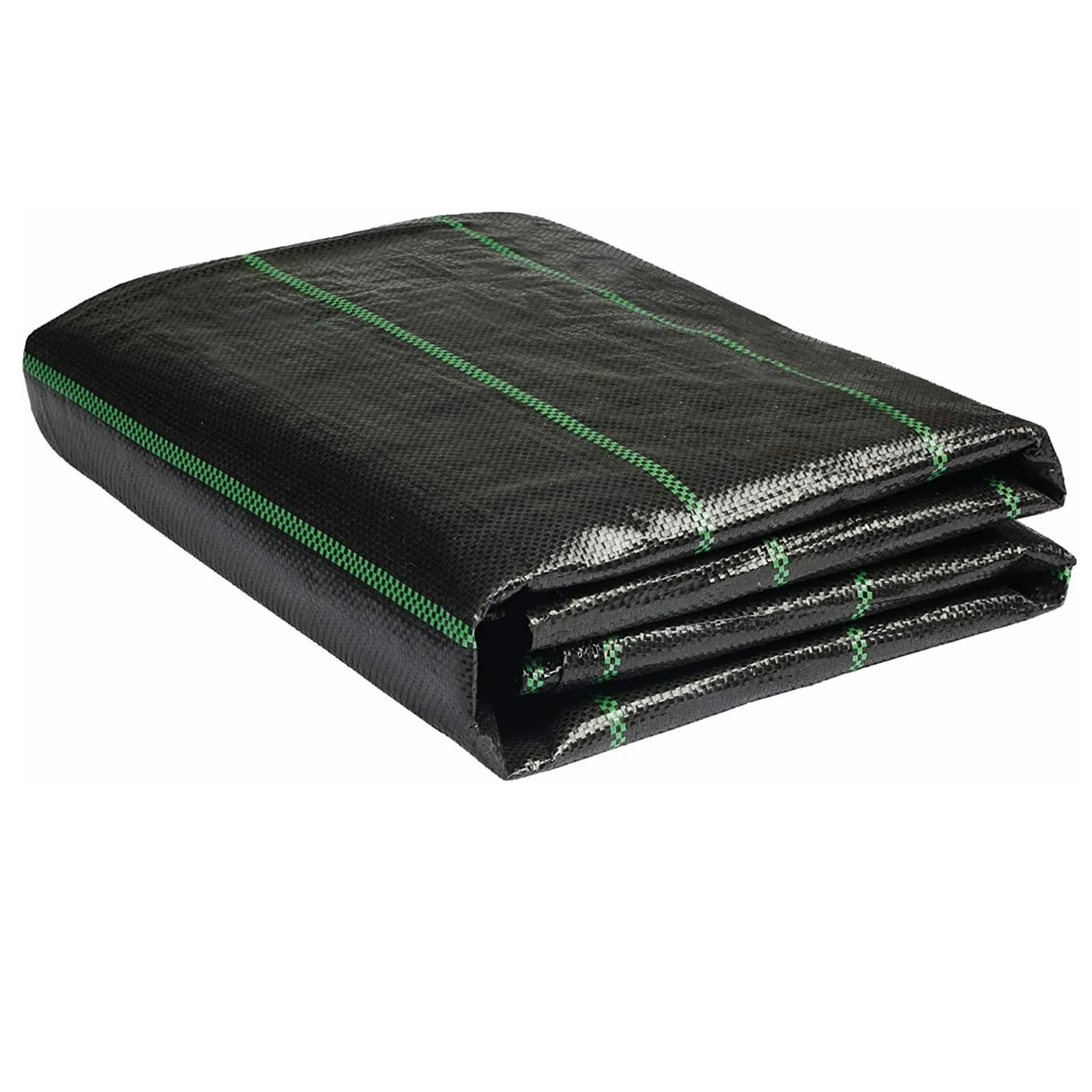
Groweco differentiates itself from other 3.2oz woven fabrics with a practical design detail: green alignment lines printed on the fabric. These lines make it dramatically easier to cut straight strips and align seams when covering large rectangular beds. For anyone who has struggled with crooked cuts on a black fabric, this single feature saves significant time and frustration.
The core performance is identical to other quality 3.2oz woven materials. It blocks sunlight effectively, allows water to drain, and holds up well under a layer of mulch or small gravel. Users specifically call out the fabric’s ability to prevent plant roots from punching through, a common failure point with thinner non-woven fabrics. The 6ft width is ideal for covering raised beds and standard garden paths with fewer seams.
On the downside, the 3.2oz weight means it is still susceptible to tearing if dragged over sharp rocks or installed under heavy traffic. It is a landscaping fabric first, not a driveway fabric. The 100ft roll is also on the shorter side for large-scale commercial projects, though it is perfect for a residential yard.
Why it’s great
- Green alignment lines enable perfectly straight cuts
- Blocks roots and weeds effectively in garden beds
- 6ft width reduces the number of seams needed
Good to know
- 3.2oz weight can tear on sharp ground debris
- Not suitable for driveway or high-traffic areas
5. Land Guard 4ft x 300ft Weed Barrier Fabric
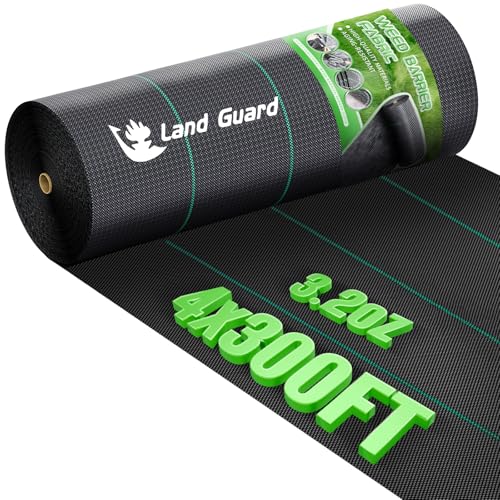
The Land Guard fabric is the budget-conscious choice for covering large areas without breaking the bank. At 3.2oz woven polypropylene, it delivers the same basic weed-blocking and permeability performance as the HOOPLE and Groweco options, but the 300ft roll length provides exceptional coverage per dollar. It is the obvious pick for a large vegetable garden, a community plot, or under a long gravel path.
Despite the lower per-foot cost, the material quality holds up well. Users report it resists tearing during installation and effectively stops weeds from germinating in raised beds and around trees. The fabric allows air and water circulation, maintaining soil health. It also comes with green stripes for easier alignment, similar to the Groweco design.
The main compromise is the 4ft width, which is narrower than the 6ft options. This means more seams and overlap if you are covering a wide area, which can create weak points for weed breakthrough. Some users also note that the edges can unravel if stressed during cutting, a trait shared by most woven fabrics in this weight class.
Why it’s great
- 300ft roll offers the best coverage for the price
- Reliable 3.2oz woven material blocks weeds effectively
- Green stripes aid in straight cutting and alignment
Good to know
- 4ft width requires more seams for wide areas
- Edges can fray when cut under tension
FAQ
What is the difference between woven and non-woven geotextile fabric?
Can I use 3.2oz landscape fabric under a gravel driveway?
Final Thoughts: The Verdict
For most users, the best geotextile fabric winner is the DWALE Driveway Fabric because it combines commercial-grade 800 lb tensile strength with broad coverage for large projects. If you need a drainage specialist for French drains and erosion control, grab the VEVOR 8oz Non-Woven. And for a budget-friendly weed control solution for garden beds, nothing beats the Land Guard 300ft roll.