
When the living room floor turns into a construction zone, the right set of oversize blocks means the difference between a tower that stands tall and a structure that crumples mid-build. These foam, cardboard, and plastic giants are designed for hands-on stacking, knocking down, and rebuilding — with no sharp edges and zero frustration for little hands.
I’m Mohammad Maruf — the founder and writer behind Drink4Good. I’ve spent years analyzing play-space hardware, focusing on the material density, size-to-weight ratios, and safety certifications that separate durable block sets from duds that dent or warp after a few sessions.
Whether your child is building a castle fort or a simple tower, the right choice comes down to foam density, piece count, and surface texture. That’s exactly what this guide to giant blocks for indoor play covers — seven sets ranked by material quality and build potential.
How To Choose The Best Giant Blocks For Indoor Play
Not every oversize block set is built to withstand the repeated abuse of toddler stacking sessions and inevitable architectural collapses. Material composition, surface texture, and block dimensions determine whether a set becomes a daily favorite or a shelf-dweller. Here’s what to look for.
Foam Density and Durability
Low-density EVA foam dents under fingernail pressure and loses shape within weeks. Mid-range sets use high-density foam that holds its form after hundreds of stacks and still feels lightweight enough for a three-year-old to lift. The best sets also feature a closed-cell surface that resists moisture and wipes clean with a damp cloth — critical for blocks that live on the playroom floor.
Piece Count and Shape Variety
A set with only cubes limits build height and architectural creativity. The strongest playsets include half-units, rectangles, columns, and triangles that allow for doors, arches, and tiered structures. For a child ages three to six, a minimum of 30 pieces in at least three distinct shapes provides enough variety for sustained engagement.
Surface Texture and Safety Finish
Blocks with a smooth, matte finish stack more consistently than glossy or textured surfaces, which cause slippage above two layers. Foam blocks should have a sealed surface that doesn’t shed particles, while cardboard blocks require reinforced edges that resist crushing. Non-toxic certifications like GREENGUARD Gold confirm that the materials won’t off-gas in the indoor play environment.
Quick Comparison
On smaller screens, swipe sideways to see the full table.
| Model | Category | Best For | Key Spec | Amazon |
|---|---|---|---|---|
| BiggoBlocks 24-Piece Beginner Set | Plastic | Large-scale forts | 24 pieces, 4 shapes, 8 lbs | Amazon |
| CRAFTY HAPPITOYS 34-Piece Foam Set | Foam | Multi-shape creativity | 34 pieces, 5 shapes, floatable | Amazon |
| National Geographic 45-Piece Castle Set | Cardboard | Themed castle play | 45 pieces, includes drawbridge | Amazon |
| National Geographic 40-Piece Brick Set | Cardboard | STEM learning play | 40 pieces, 3 sizes, activity cards | Amazon |
| LOLO TOYS 30-Piece Foam Set | Foam | Budget-friendly stacking | 30 pieces, 6 colors, EVA foam | Amazon |
| ECR4Kids SoftZone 7-Piece Earthtone | Foam | Baby-safe sensory play | 7 pieces, GREENGUARD Gold | Amazon |
| PLATPORTS 48-Piece Jumbo Plastic Set | Plastic | Outdoor durability | 48 pieces, 13.5 lbs, wipe-clean | Amazon |
In‑Depth Reviews
1. BiggoBlocks 24-Piece Beginner Set

The BiggoBlocks set uses a hollow plastic construction that keeps each block light enough for a four-year-old to carry while providing enough rigidity to support a child’s weight during play. Reviewers consistently note that kids build chairs and climb onto structures made from these blocks — a durability benchmark that foam and cardboard cannot match. The 24-piece count covers four distinct shapes including large rectangles and cubes, allowing for forts that reach three feet high.
Surface texture is a smooth matte finish that stacks without sliding, and the blocks interlock with a simple friction-fit connection that holds firm during play but disassembles easily. US-based manufacturing adds quality control consistency, and the set’s 8-pound total weight makes it portable enough to move between rooms. Parents report buying second sets to double the build area, indicating that the system scales well for larger projects.
The beginner set works best for children aged four to eight who have moved past mouthing toys and are ready for cooperative building. Inside, these blocks produce a gentle tap rather than a loud bang when knocked over, keeping noise levels reasonable in shared living spaces.
Why it’s great
- Supports child weight during play
- Smooth friction-fit connection prevents slipping
- US-manufactured with consistent quality
Good to know
- Only 24 pieces — expansion set recommended
- Plastic surface can feel cool to the touch
2. CRAFTY HAPPITOYS 34-Piece Jumbo Foam Set
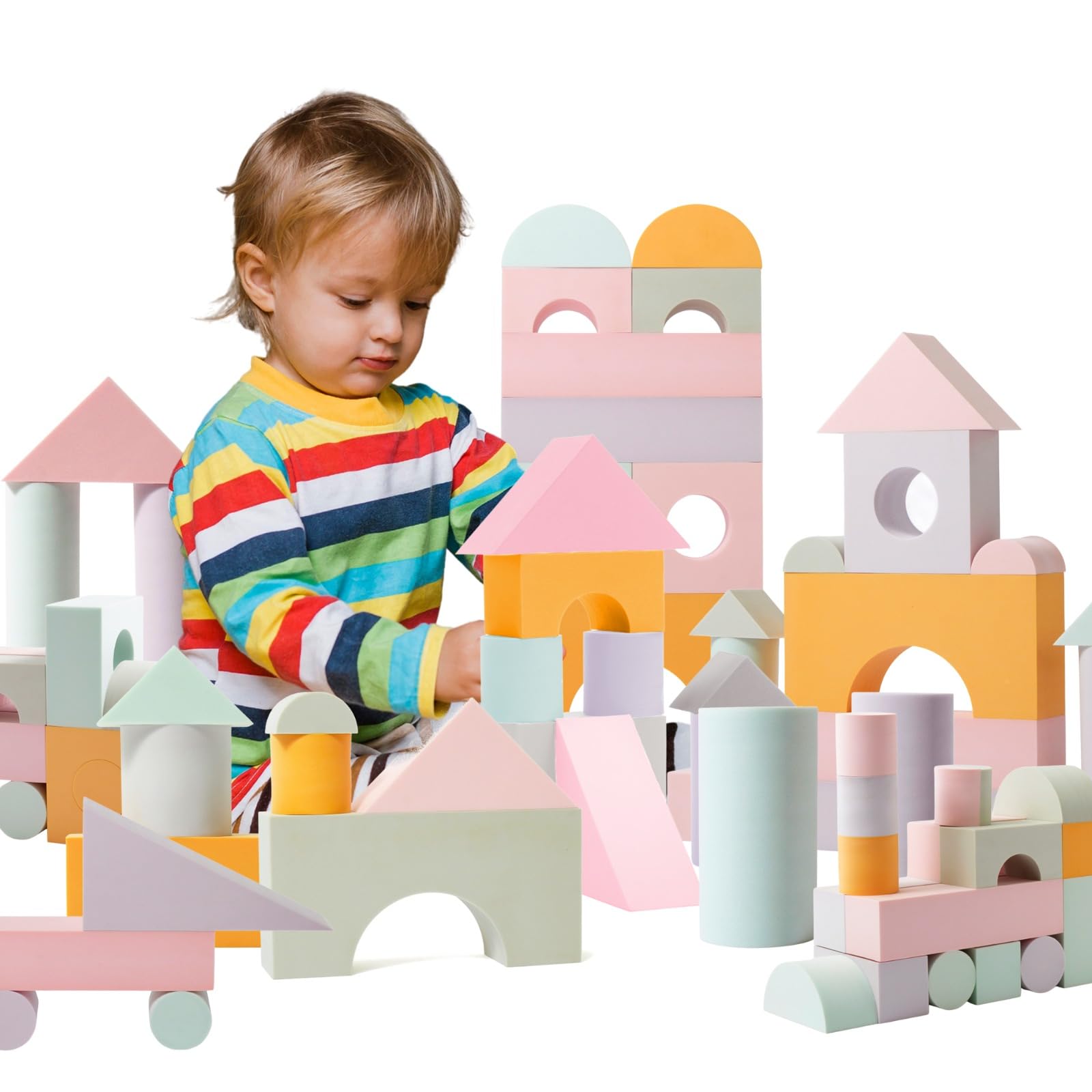
This 34-piece foam set from CRAFTY HAPPITOYS delivers the highest shape and color variety in the foam category at a mid-range price point. Blocks include cubes, half-units, rectangles, and specialty forms that allow for arches and windows — essential for anything beyond basic tower stacking. The foam uses a closed-cell structure that floats in water and survives outdoor spills without absorbing moisture.
Customer feedback highlights that the blocks are slightly larger than typical foam sets, making them easier for toddlers aged three and up to grip and lift. The precision-cut edges create stable stacks up to six blocks high before wobble becomes noticeable, and the multicolor palette supports color-recognition learning during play. A clear zippered storage bag keeps the pieces contained between sessions.
Parents should note that if a child under twelve months mouths the blocks, the foam surface can show small dents from biting. For the target age range of three to five, however, the material holds its shape well through repeated stacking and knocking games.
Why it’s great
- Largest shape variety in the foam category
- Floatable for bath or outdoor water play
- Precision-cut edges for stable stacking
Good to know
- Foam dents if chewed by younger toddlers
- Limited to indoor or dry outdoor use only
3. National Geographic 45-Piece Castle Set

This 45-piece cardboard kit transforms the playroom into a medieval kingdom with castle-themed graphics printed directly onto heavy-duty corrugated brick surfaces. The set includes a working drawbridge, two paper crowns, and a full-color learning guide that teaches castle architecture — turning stacking into an educational activity. Blocks measure up to 12 inches in length and include rectangle, square, and triangle shapes that interlock through tab-and-slot assembly.
The cardboard construction uses extra-thick walls that resist crushing under lighter loads, and the matte surface takes crayon and washable marker without smudging, allowing kids to customize their castle walls. Assembly takes roughly one hour for all pieces, with most parents finding the process straightforward for notched connections that don’t require glue or tape. The 9.7-pound total weight makes the set stable during play yet portable enough to relocate.
Because the blocks are hollow cardboard, they won’t survive exposure to moisture or rough impact. Best for children aged three to six who play in supervised, dry indoor spaces, this set rewards imagination with a built-in narrative theme that foam blocks lack.
Why it’s great
- Theme-driven play with drawbridge and crowns
- Extra-thick cardboard resists crushing
- Educational learning guide included
Good to know
- Requires assembly before first use
- Not water-resistant or outdoor-safe
4. National Geographic 40-Piece Brick Set
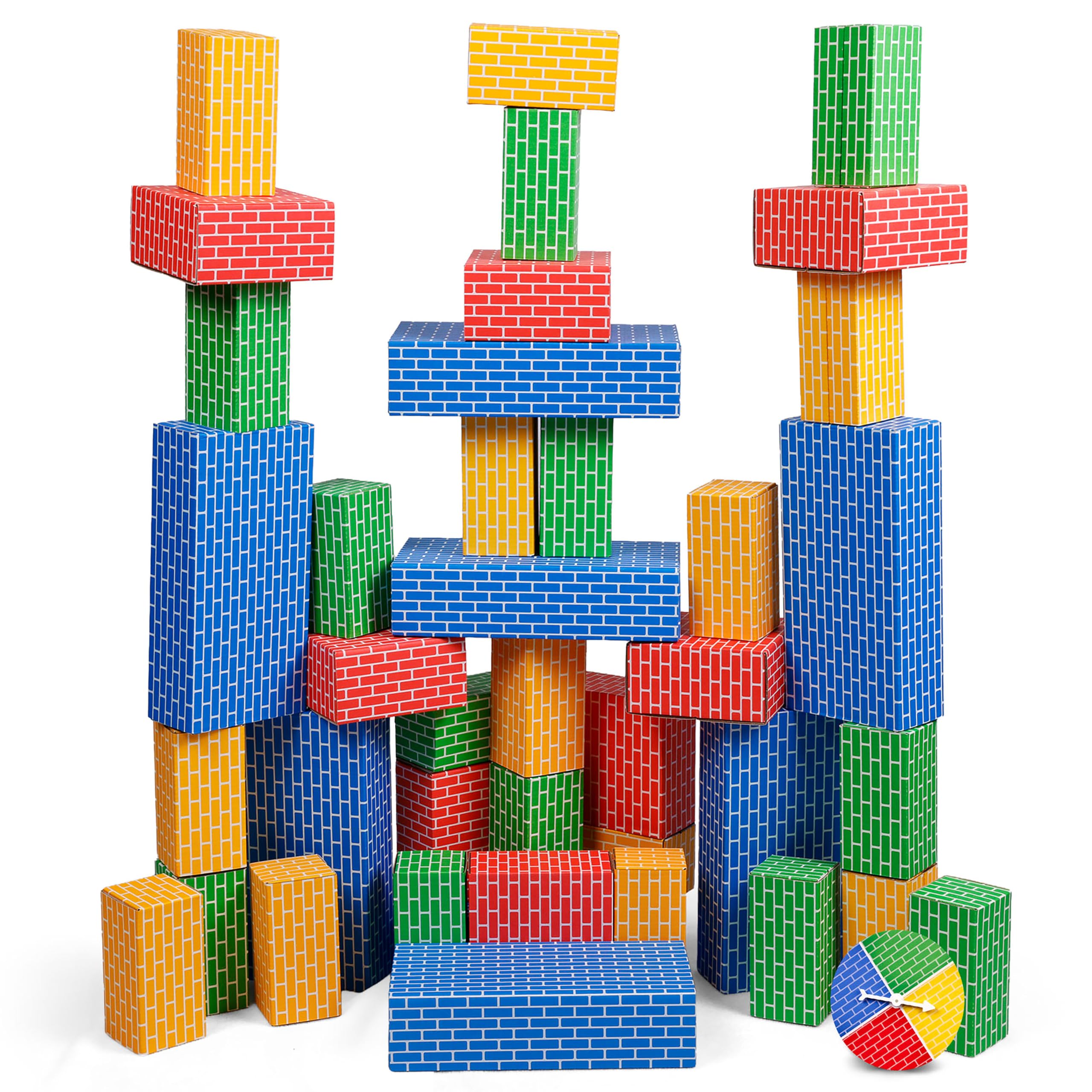
The 40-piece brick set from Blue Marble focuses on STEM learning with a game spinner and activity cards that prompt engineering challenges like “build the tallest tower you can with only red bricks.” Blocks come in three sizes with red, blue, yellow, and green colors that support pattern recognition and sorting activities. The heavy-duty cardboard construction holds together with fold-and-tuck assembly that requires no adhesives.
Each brick measures roughly 9.5 inches at the largest size, producing structures that feel significant to preschoolers without dominating the room. The activity cards introduce concepts like base-width stability and weight distribution in a way that three-year-olds can grasp visually. Parents report that the spinner adds a social-game element, turning solo building into a turn-based group activity that works well for play dates.
Assembly time runs about one hour for the full set, and the blocks store flat inside the original box. The cardboard surface will show wear after aggressive play, but the reinforced fold edges prevent the tearing that thinner cardboard sets experience.
Why it’s great
- STEM activity cards and game spinner included
- Reinforced fold edges resist tearing
- Stores flat inside original packaging
Good to know
- One-hour assembly required for setup
- Cardboard not suitable for wet play
5. LOLO TOYS 30-Piece Foam Set

LOLO TOYS delivers a straightforward 30-piece foam block set that focuses on core stacking and knocking-down play without frills. Blocks come in six bright colors across basic cube and rectangle shapes, with each piece measuring large enough for tiny hands but light enough for infants as young as eight months to lift. The EVA foam uses a high-density formulation that resists permanent dents from regular play.
Surface texture is smooth and slightly tacky, giving blocks a grip that helps towers stay upright through the third or fourth layer. Parents report that the blocks survive teething-level chewing without shedding foam particles, and the sealed surface cleans easily with mild soap and water. The clear zippered storage bag measures 23.6 inches by 18.8 inches, providing enough capacity to hold the full set without crushing the pieces.
Shape variety is limited compared to the CRAFTY HAPPITOYS set, so kids won’t build arches or complex structures. For families who want a simple, durable foam block set for basic stacking play, this is a solid entry-level choice.
Why it’s great
- High-density EVA resists permanent dents
- Smooth, tacky surface improves stacking stability
- Safe for children as young as eight months
Good to know
- Limited to basic cube and rectangle shapes
- Not ideal for complex architectural builds
6. ECR4Kids SoftZone 7-Piece Earthtone
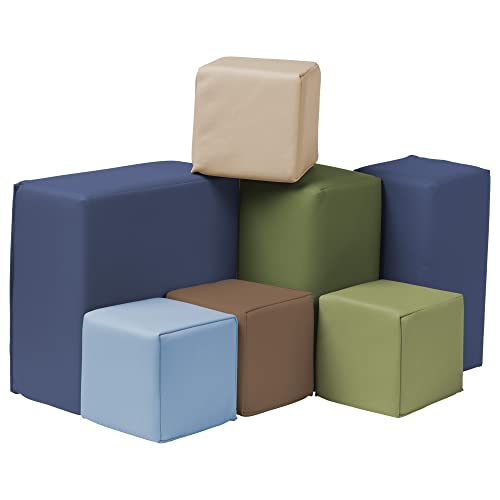
The SoftZone set from ECR4Kids prioritizes safety certifications over piece count, earning UL GREENGUARD Gold certification for low volatile organic compounds and CertiPUR-US certified foam. The seven-piece set includes one large rectangle, two medium rectangles, and four small cubes in muted earth tones that fit aesthetically into neutral playrooms. Each block features a moisture-resistant vinyl cover that wipes clean with a disinfectant cloth.
Block dimensions are smaller than typical giant blocks — the largest piece measures 12 by 12 by 6 inches — making this set appropriate for babies starting at nine months. The foam density is firm enough to support a toddler sitting or climbing but soft enough to absorb impact when a child falls. Parents report using the blocks as step stools and climbing aids in addition to stacking play, adding practical value beyond traditional block building.
With only seven pieces, this set limits build height and complexity. It’s best suited for sensory exploration and early motor skill development rather than the construction-focused play that older preschoolers enjoy. For families seeking a toy that grows with their child, the low piece count means you will likely need a second set for meaningful building.
Why it’s great
- GREENGUARD Gold certified for low VOCs
- Moisture-resistant vinyl surface wipes clean
- Firm foam supports climbing and sitting
Good to know
- Only seven pieces — limited build potential
- Smaller than typical giant block dimensions
7. PLATPORTS 48-Piece Jumbo Plastic Set

With 48 pieces in mixed colors, the PLATPORTS set offers the highest piece count in this roundup and the only plastic option that transitions seamlessly between indoors and outdoors. The hollow plastic blocks are lightweight enough for a two-year-old to carry but sturdy enough to withstand being thrown, dropped, and left in direct sunlight without fading. Rounded-edge design eliminates sharp corners while maintaining the rigid structure that foam blocks lack.
Block shapes include standard cubes, rectangles, and specialty pieces with wheel cutouts that add a construction-vehicle element to play. The 13.5-pound total weight makes the set stable outdoors on grass or pavement, and the wipe-clean surface handles mud, sand, and food stains without permanent marking. Parents describe dunking the blocks in a bathtub with mild cleaner for a quick refresh, then towel-drying in the sun.
Some specialty pieces contain wheels and tire attachments that detach easily, requiring adult reattachment during active play. For children under three this can be frustrating, but for ages four to eight these moving parts add a construction-vehicle play dimension that foam and cardboard cannot replicate.
Why it’s great
- Highest piece count at 48 pieces
- Outdoor-safe with UV-stable plastic
- Wipe-clean surface handles mud and sand
Good to know
- Wheel and tire attachments detach easily
- Requires adult supervision for specialty pieces
FAQ
How many giant blocks do I need for a child to build a fort?
Are cardboard giant blocks as durable as foam or plastic?
What age range is best for giant foam blocks?
Final Thoughts: The Verdict
For most users, the giant blocks for indoor play winner is the BiggoBlocks 24-Piece Beginner Set because it balances structural durability with enough pieces for meaningful fort building. If you want the most shape variety at a mid-range price, grab the CRAFTY HAPPITOYS 34-Piece Foam Set. And for themed castle play that adds educational value, nothing beats the National Geographic 45-Piece Castle Set.