
A loose seam where two pieces of artificial grass meet is enough to ruin the entire look of your lawn. When the glue fails, edges curl, weeds push through, and the neat carpet you paid for starts looking like a patchwork mess. The right adhesive locks that seam flat and invisible, rain or shine.
I’m Mohammad Maruf — the founder and writer behind Drink4Good. I’ve spent years analyzing the chemical makeup and real-world failure points of outdoor adhesives, from solvent-based contact cements to high-tack seaming tapes designed specifically for synthetic turf.
Whether you are joining two rolls of turf or anchoring a patch repair, finding the right glue for artificial grass means matching the adhesive format to your surface and climate conditions so the bond stays invisible for years without bubbling or peeling.
How To Choose The Best Glue For Artificial Grass
Choosing the right adhesive comes down to three things: the surface you are bonding to, the seam width you need to cover, and the weather conditions in your area. A liquid contact cement works best on wood or concrete where you can trowel a thick layer, while a self-adhesive tape is cleaner and faster for joining turf-to-turf seams on compacted bases.
Match the adhesive format to your sub-base
Solvent-based adhesives like DAP Weldwood bond aggressively to porous surfaces such as plywood, pressure-treated lumber, and concrete. They require ventilation and a notched trowel for even spread. Tape-based solutions work well on smooth, clean sub-bases and are preferred for DIY installations because they eliminate the mess and strong odor of wet glue.
Consider the seam width and length
Wide tapes (6 inches or more) provide a larger bonding surface that reduces the chance of edge curling on high-traffic areas like dog runs or play zones. Narrower or single-sided tapes are sufficient for light-traffic decorative patches. For large installations, a tape roll of 82 feet or more reduces the number of splices and potential failure points.
Prioritize weather and UV resistance
Artificial grass installed outdoors faces direct sunlight, rain, and temperature swings. Adhesives labeled waterproof, UV resistant, and weatherproof are essential. Tapes that specify a lifespan of 6 to 8 years are designed with hot-melt pressure-sensitive adhesive that holds its tack across seasonal changes without becoming brittle or melting in extreme heat.
Quick Comparison
On smaller screens, swipe sideways to see the full table.
| Model | Category | Best For | Key Spec | Amazon |
|---|---|---|---|---|
| Dap Weldwood Outdoor Carpet Adhesive | Solvent-Based Glue | Plywood and concrete sub-floors | Solvent-based; quart size | Amazon |
| Upstreet Turf Seaming Tape (82 ft) | Single-Sided Tape | Long straight turf seams | 82 ft roll; split backer paper | Amazon |
| LMHOME Double-Sided Turf Tape (33 ft) | Double-Sided Tape | Joining turf on rough surfaces | Double-sided; 33 ft roll | Amazon |
| COBARYEN Turf Seam Tape (65.6 ft) | Single-Sided Tape | Indoor and outdoor carpet jointing | 65.6 ft roll; waterproof | Amazon |
| Shabebe Rock Glue (1 Gal) | Gravel Binder | Stabilizing gravel around turf edges | 12,000 mPas viscosity; dries clear | Amazon |
In‑Depth Reviews
1. Dap Weldwood Outdoor Carpet Adhesive (Quart)

This solvent-based contact cement is the go-to for installations where the sub-base is plywood or pressure-treated lumber. The tan liquid applies thickly with a notched trowel and remains tacky long enough to position large turf sections without rushing. Multiple customer reports confirm it holds marine carpet on wet wood decks without seepage or edge lifting, a demanding test that mirrors turf-edge durability requirements.
The quart size covers about 10 to 12 square feet at a heavy spread rate, which is sufficient for a small patio or a single seam repair. For large lawns you will want the gallon version. The solvent base produces a strong odor that requires outdoor application or cross-ventilation, and the glue is messy — wear disposable gloves and old clothes. Drying time varies with temperature, so plan your work on a warm, dry day for best results.
Several users noted that the glue “grows legs” when it becomes tacky, forming thin strings that can be difficult to clean off tools. A stiff brush dipped in mineral spirits handles cleanup if you catch it wet. Once cured, the bond is permanent and flexible enough to accommodate deck movement without cracking.
Why it’s great
- Excellent adhesion to porous wood and concrete surfaces
- Long open time allows careful turf positioning
- Proven track record for marine-grade outdoor carpet installations
Good to know
- Strong solvent odor — must be used in ventilated area
- Quart size runs out fast on larger projects
- Messy application; requires notched trowel and immediate cleanup
2. Upstreet Artificial Grass Turf Seaming Tape (6 in x 82 ft)
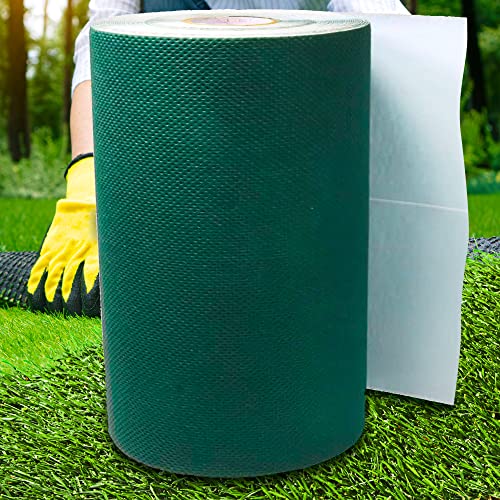
The Upstreet tape stands out for its split backer paper design, which lets you expose half the adhesive at a time. This feature significantly simplifies installation when working solo — you stick one turf piece down, peel the other half, and press the second piece into place without fighting the whole roll of tape. The non-woven fabric base carries a hot-melt pressure-sensitive adhesive that bonds aggressively to the synthetic turf backing.
At 82 feet long and 6 inches wide, this roll handles long straight seams with minimal splices. The tape is weatherproof and UV resistant, with the manufacturer estimating a lifespan of 6 to 8 years when installed correctly. Users report that it remains sticky enough to allow repositioning within the first few minutes, a valuable trait when aligning patterns or matching fiber direction on adjoining turf pieces.
A few reviewers noted that the tape is extremely sticky and will glue your fingers together if you are not careful. Install with a partner or at least use a roller to press the seam firmly. The dark green color helps hide small gaps in the seam, making the joint nearly invisible from a few feet away.
Why it’s great
- Split backer allows one-side-at-a-time installation
- 82 ft roll reduces the number of splices on long runs
- Weatherproof and UV resistant for outdoor longevity
Good to know
- Very sticky — difficult to handle without sticking to fingers
- Best used on clean, dry concrete or compacted bases
- May soften in extreme heat above 120°F
3. LMHOME Double-Sided Artificial Grass Tape (6 in x 33 ft)
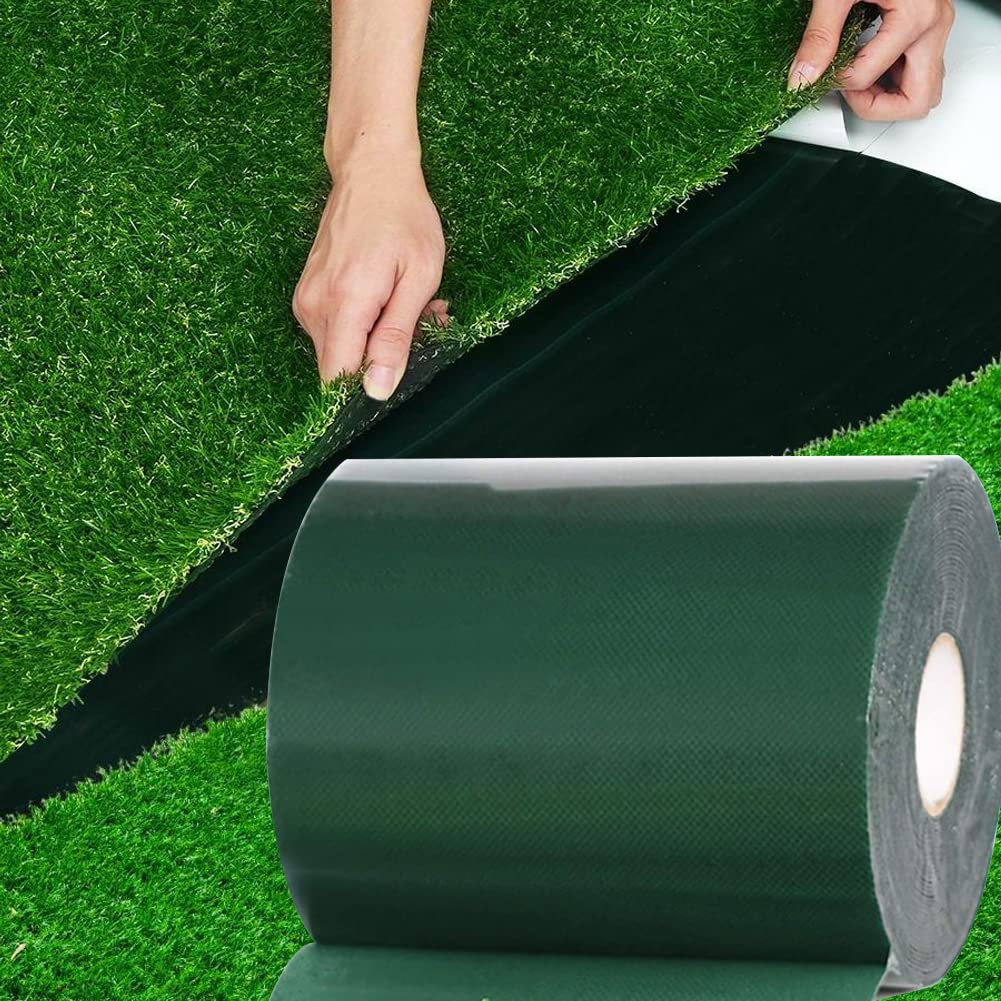
This double-sided tape offers a distinct advantage on rough or uneven sub-bases. Because both sides are adhesive, the tape grabs the underside of the turf as well as the ground surface, creating a mechanical lock that resists shifting on bumpy concrete or compacted gravel. The non-woven fabric core is coated with hot-melt pressure-sensitive adhesive that sticks on contact and builds strength over 24 hours.
The 33-foot length is ideal for smaller projects such as a balcony rug, a pet potty patch, or a single seam in a backyard play area. Users consistently praise the holding power, with one reviewer reporting daily abuse from three dogs and multiple kids with no seam separation. The tape is waterproof and UV resistant, with the manufacturer rating lifespan at 6 to 8 years under normal outdoor conditions.
The main drawback is that the double-sided format makes misalignment costly — once the tape touches both surfaces, repositioning is nearly impossible without damaging the turf backing. Measure twice and have a helper assist with laying the second turf piece. In hot climates, the adhesive can soften slightly, though most users report it holds well through summer heat.
Why it’s great
- Double-sided adhesion grips both turf and sub-base
- Works well on rough concrete and uneven surfaces
- Strong hold verified in high-traffic pet environments
Good to know
- No room for adjustment after contact — precision required
- 33 ft length limits use to small or medium projects
- Can be difficult to handle without fingers sticking to adhesive
4. COBARYEN Turf Seam Tape (6 in x 65.6 ft)

The COBARYEN tape offers a middle-ground length at 65.6 feet, which is enough for a typical backyard seam without the waste of a longer roll. The single-sided format uses a non-woven fabric base with a central peel release film. You stick the adhesive side to the bottom of one turf piece, remove the film, then press the second turf piece onto the exposed adhesive. This sequence is straightforward for DIY users and requires no special tools beyond a utility knife and a roller.
Users describe the adhesive as extremely sticky, with some cautioning that leaving the roll in a hot car or direct sun can cause the glue to melt into a messy puddle. When installed on clean, dry concrete at moderate temperatures, the bond holds securely in high-traffic walkways. One reviewer noted that the tape remained intact through several weeks of rain and daily foot traffic with no visible edge curling.
The main limitation is weather-related: in regions where summer temperatures exceed 120°F, the adhesive may soften enough to cause the seam to lift. In milder climates, it performs on par with more expensive tapes. The white release film is easy to remove in one piece, and the tape cuts cleanly with sharp scissors.
Why it’s great
- Easy single-sided installation process for DIY users
- 65.6 ft length suits most backyard projects
- Strong initial tack holds turf in place immediately
Good to know
- Adhesive can melt if exposed to extreme heat before installation
- Not recommended for climates above 120°F
- Single-sided format offers less grab on rough sub-bases
5. Shabebe Rock Glue (1 Gal)

While not a traditional turf adhesive, Shabebe Rock Glue solves a common secondary problem: loose gravel along turf edges and between pavers. This polyurethane-based binder comes as a 99% concentrated liquid with a honey-thick viscosity of 12,000 mPas. When mixed with water, one gallon covers up to 280 square feet, locking pea gravel, pebbles, and crushed granite in place without the white residue that many landscape glues leave behind.
The formula dries completely clear in 12 to 24 hours and is safe for kids, pets, and plants once cured — it has been tested by Intertek for environmental compliance. Users report that treated gravel survives heavy rain and leaf blowers without scattering, which keeps the border between turf and landscaping crisp. The spray-on application works for light bonding, but the mix method (combining glue with water and pouring it over the stones) delivers the strongest mechanical hold.
Some users experienced peeling when they did not follow the mixing ratio correctly. The manufacturer recommends erring on the heavy side with glue concentration for better adhesion on slopes or high-traffic walkways. This product is not a replacement for turf-to-turf seaming tape, but it is an excellent companion for securing the perimeter of an artificial grass installation.
Why it’s great
- Dries clear with no white or blue residue
- Non-toxic and pet-safe once fully cured
- High coverage — 1 gallon treats up to 280 sq ft when mixed
Good to know
- Not designed for bonding turf-to-turf seams
- Requires precise mixing ratio for optimal adhesion
- Best applied on dry, sunny days for proper curing
FAQ
Can I use standard construction adhesive on artificial grass?
How long does turf seam tape last outdoors?
Do I need glue if I already use seaming tape?
Will gravel binder work to secure turf edges?
Is there a pet-safe glue for artificial grass?
Final Thoughts: The Verdict
For most users, the glue for artificial grass winner is the Dap Weldwood Outdoor Carpet Adhesive because it bonds aggressively to plywood and concrete sub-bases where tape alone may fail. If you want a clean, mess-free installation with no odor, grab the Upstreet Turf Seaming Tape with its split backer for easy solo application. And for securing gravel borders around the turf perimeter, nothing beats the Shabebe Rock Glue‘s high-coverage, clear-drying formula.