
Nothing is more frustrating than a perfectly good piece of glass ruined by a single crack or a detached windshield trim that rattles at every bump. Finding a glue that actually bonds to slick, non-porous glass while staying clear and holding through weather, vibration, and daily use can feel like a gamble. The wrong choice leaves you with a foggy mess or a bond that pops loose within a week.
I’m Mohammad Maruf — the founder and writer behind Drink4Good. My buying guides focus on analyzing real-world adhesive chemistry, tensile strength data, and long-term durability specs so you can skip the trial and error.
Whether you are bonding a broken heirloom vase, reattaching a car windshield, or repairing a cracked picture frame, choosing the right formula from this list of the best glass glue means the difference between a permanent repair and a disappointing redo.
How To Choose The Best Glass Glue
Not all glass glues are created equal. A formula designed for windshield repair is overkill for a delicate jewelry setting, while a craft glue that dries flexible may not have the shear strength needed for an automotive panel. Focus on three key variables: curing mechanism, viscosity, and environmental resistance.
Understand the Curing Mechanism
Glass glues broadly fall into three chemistry families. Cyanoacrylate (CA) glues cure by reacting with moisture in the air and are ideal for small, fast repairs where clamping is possible. UV-curing resins remain liquid until exposed to ultraviolet light, then harden in seconds — perfect for clear repairs where light can pass through at least one substrate. Polyurethane adhesives cure by reacting with ambient moisture and are designed for large, structural bonds exposed to vibration and temperature swings, like windshield glass.
Match Viscosity to the Job
Thin (low-viscosity) glue wicks into hairline cracks and tight joints by capillary action — great for repairing cracked glassware or sealing hairline fractures. Medium viscosity offers a balance of flow and gap-filling, ideal for general bonding. Thick, gel-like formulas allow you to fill larger gaps and hold vertical surfaces without dripping. Choosing the wrong viscosity leads to glue running off the piece before it sets or failing to penetrate the crack.
Check for Weather and UV Resistance
If the bonded glass is exposed to direct sunlight, heat, or moisture (as in a car or outdoor decor), standard cyanoacrylate will yellow and degrade within months. Look for polyurethane or specialized UV-resistant formulas that maintain clarity and bond strength even after repeated freeze-thaw cycles. Waterproof ratings matter — a water-resistant craft glue will fail on a fish tank or exterior window.
Quick Comparison
On smaller screens, swipe sideways to see the full table.
| Model | Category | Best For | Key Spec | Amazon |
|---|---|---|---|---|
| FORTIVO Windshield Adhesive | Polyurethane | Automotive glass bonding | 310ml cartridge, primerless | Amazon |
| HeyClear UV Resin Kit | UV-Curing | Jewelry & craft repairs | 60g total, includes UV light | Amazon |
| ixirpro CA Glue Kit | Cyanoacrylate | General household & workshop | 3 viscosities + accelerator spray | Amazon |
| Bearly Art Craft Glue | PVA Craft | Paper & delicate art projects | 4 fl oz, dries clear, flexible | Amazon |
| ZKTOOL Suction Cup Set | Clamping Tool | Holding glass during glue curing | 6 clamps, sponge pads | Amazon |
In‑Depth Reviews
1. FORTIVO Polyurethane Windshield Adhesive
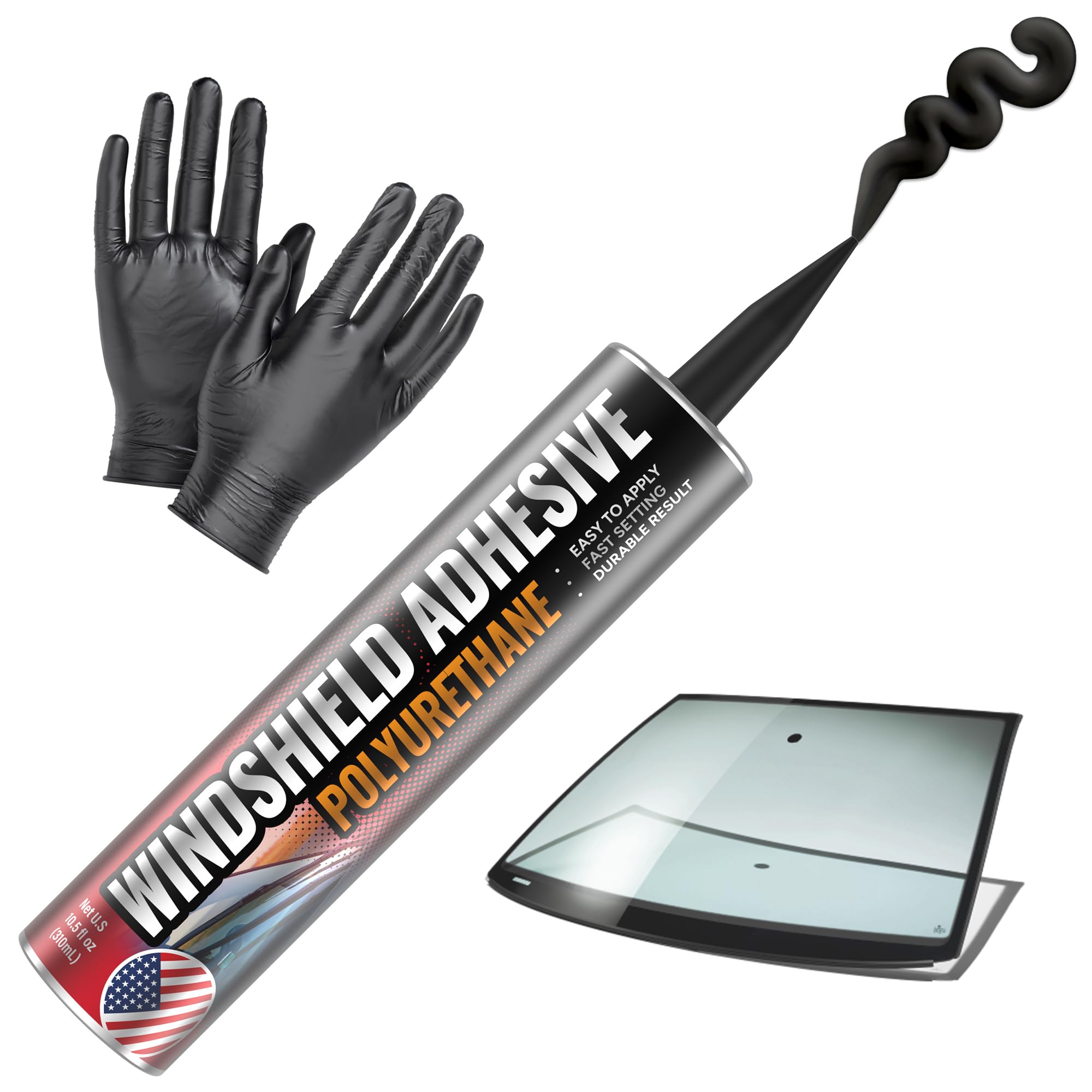
This polyurethane formula is a standout for anyone tackling automotive glass repairs. It cures with a robust, non-sagging bond that holds vertical and overhead panels without dripping, a trait that eliminates the mess often associated with standard windshield urethanes. The 310ml cartridge works with any standard caulking gun, and the manufacturer claims no primer is needed — a real time-saver when working on a cold driveway.
Real-world testing confirms the strength: one user applied it at 40°F without heating the tube and reported a rock-solid hold on a 16×12-inch tractor window after 24 hours. Others cite superior performance in hot, rainy weather, with the bond absorbing impacts and vibrations that would crack a brittle cyanoacrylate joint. The black color blends invisibly with factory automotive trim.
Keep in mind that polyurethane takes longer to fully cure than cyanoacrylate — expect a full 24 hours before the bond reaches maximum strength. Wear gloves, because this stuff is aggressively sticky and will ruin fabric. Be generous with the bead, as a dime-sized opening on the cut spout produces the most consistent application.
Why it’s great
- Weatherproof and vibration-resistant bond
- Works on vertical and overhead surfaces without sagging
- No primer required for typical automotive glass
Good to know
- Requires a caulking gun for application
- Full 24-hour cure time before handling
- Extremely sticky — use disposable gloves
2. HeyClear 60g UV Resin Kit with Light

For clear glass repairs where appearance matters — think stained glass, jewelry settings, or a broken picture frame — this UV resin kit delivers unbeatable clarity and precision. The thick, low-drip texture gives you control over the application area without running into adjacent surfaces. A key requirement: at least one of the materials being bonded must be transparent so the UV light can reach the resin.
The kit includes two 30ml bottles of resin, a compact USB-rechargeable UV flashlight, tweezers for handling tiny pieces, and a storage pouch. The light cures the resin in seconds, eliminating the wait time of traditional epoxy. Users have successfully repaired sunglasses, dashboard trim, and even the plastic actuator gear inside a digital safe after super glue failed. The screw-on applicator tip keeps the nozzle from clogging between uses.
One downside: the resin can develop a slight yellow tint as it cures, especially under prolonged UV exposure. It is not rated as water-resistant, so avoid using it on items that will be submerged or exposed to constant moisture. The curing process also requires the UV light to be held directly over the repair — hard-to-reach interior cavities may need a longer exposure time.
Why it’s great
- Cures in seconds under UV light — no clamping needed
- Thick formula resists dripping for precise applications
- Complete kit includes light, tweezers, and pouch
Good to know
- Requires transparent substrate for proper curing
- May yellow slightly over time with direct UV exposure
- Not water-resistant — avoid submersion
3. ixirpro CA Glue with Activator Kit
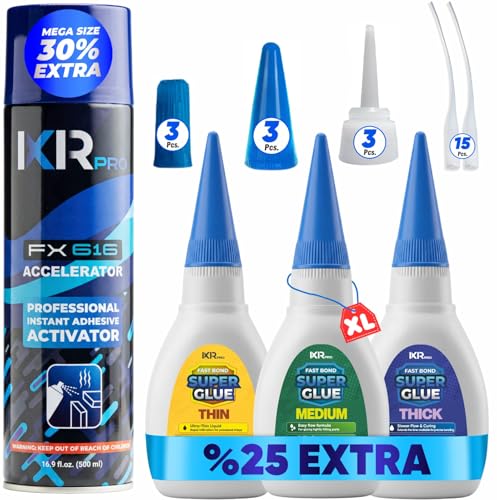
Cyanoacrylate glue is the workhorse of household repairs, and this kit optimizes it by offering three distinct viscosities plus a large accelerator spray. The thin formula wicks into hairline cracks in glass and stabilizes porous surfaces. Medium viscosity provides balanced flow for general bonding, while the thick formula fills small gaps and allows a few extra seconds of positioning time before the bond sets.
The included 16.9 oz accelerator spray is a standout feature — a quick mist on one surface and the bond cures in seconds, eliminating the need for extended clamping. Users have used it for 3D prints, woodworking, and even attaching loose hardware. One reviewer reported successfully gluing a freezer door handle and repairing eyeglass frames with the medium formula. The 15 precision microtips and clog-prevention pins keep the nozzles functional over multiple uses.
Be aware that some batches may arrive with mislabeled bottles — a few users noted the medium and thick viscosities were swapped. The accelerator also means you have zero working time once it touches the glue, so precise alignment before activating is critical. Store the bottles in the fridge in a sealed bag between uses to extend shelf life.
Why it’s great
- Three viscosities cover everything from crack wicking to gap filling
- Large accelerator spray cures bonds in seconds
- Includes precision tips and storage pins for nozzle longevity
Good to know
- Accelerator removes positioning time — align fast
- Occasional label mix-up between medium and thick
- Cyanoacrylate yellows under UV exposure over time
4. Bearly Art Precision Craft Glue

While not a structural glass adhesive, this craft-grade PVA formula earns its place for decorative glass, glitter, and paper projects where see-through clarity is non-negotiable. It dries completely transparent with no cloudiness, and the metal precision tips allow you to lay down a bead as thin as a hair — essential for mosaic work or attaching glass cabochons to a backing.
The formulation resists wrinkling and clumping on paper surfaces, and it remains flexible after curing, which prevents cracking in items that experience slight movement. Users find it superior to Mod Podge for strength, and it stays tacky long enough to reposition elements before drying. The 4 oz bottle is a generous size for detailed crafters, and it can be thinned slightly with water for quilling applications.
The downsides are typical of PVA adhesives: maximum bond strength takes a full 24 hours, and the glue is not waterproof. Avoid using it on items that will be washed or left outdoors. It works best on non-load-bearing glass-to-paper bonds rather than structural glass repairs.
Why it’s great
- Dries crystal clear with no fogging
- Multiple precision tips for controlled dispensing
- Flexible and crack-resistant after curing
Good to know
- 24-hour cure time to full strength
- Not waterproof — avoid moisture exposure
- Best for decorative, not structural, glass bonding
5. ZKTOOL 6PC Suction Cup Clamp Set

Sometimes the hardest part of a glass repair is holding the pieces together while the glue cures. This 6-piece suction cup clamp set is designed specifically for that task. Each clamp uses a lever-action mechanism to grip non-porous surfaces like glass and metal, applying steady pressure so your adhesive bond sets evenly. The sponge pads protect the glass surface from scratches and distribute clamping force.
Users report success holding rear windshields in place during convertible top repairs and securing panel trims while adhesives cure. The clamps require a specific installation sequence: press the suction cup onto the surface, squeeze out the air, then buckle the handle and tighten the screw. Wetting the entire suction cup before pressing it down improves adhesion dramatically — a step several initial reviewers missed.
Note that the clamps are not a glue themselves — they are a tool used alongside your adhesive. The suction can weaken after repeated use, and some users found the cups would occasionally lose grip after a single session on curved body panels. For flat or gently curved glass surfaces, however, they provide reliable hands-free clamping.
Why it’s great
- Provides even clamping pressure during glue curing
- Sponge pads prevent glass scratches
- Lever-action mechanism is easy to operate
Good to know
- Requires wetting the suction cup for a secure hold
- Not a standalone glue — use with adhesive
- Adhesion may degrade after multiple uses on curved panels
FAQ
Can UV resin glue bond two pieces of glass together?
Why does my cyanoacrylate glass glue turn white or foggy after curing?
Is polyurethane glass glue safe for drinking glasses or fish tanks?
How do I remove excess glass glue before it dries?
Final Thoughts: The Verdict
For most users, the best glass glue winner is the FORTIVO Polyurethane Windshield Adhesive because it delivers a weatherproof, vibration-resistant bond that can handle automotive panels, heavy-duty glass repairs, and even tractor windows with a single 310ml cartridge. If you need instant clarity and precision for jewelry or decorative glass, grab the HeyClear UV Resin Kit. And for everyday household repairs where you need three viscosity options and an accelerator, nothing beats the ixirpro CA Glue Kit.