
A loose ceramic tile or a small chip in your shower floor can stop a renovation cold. You need a bond that grips the porous underside of the tile and the subfloor or backer board beneath it — without staining the grout or failing after the first temperature swing.
I’m Mohammad Maruf — the founder and writer behind Drink4Good. I’ve spent years analyzing construction adhesive chemistries, epoxy formulations, and repair kit viscosities to see which products actually hold up under foot traffic, moisture, and thermal cycling.
If you’re tired of squeezing out tube after tube of glue that peels away or cures cloudy, this breakdown of the best glue for ceramic tile will save you time and money with five proven solutions for every repair scenario.
How To Choose The Best Glue For Ceramic Tile
Choosing a glue for ceramic tile starts with identifying the failure you’re trying to fix. A chipped edge that needs cosmetic hiding requires a different chemistry than a hollow-sounding floor tile that has lost its bond to the subfloor. The three main categories — construction adhesives, epoxy putties, and low-viscosity injection glues — each address a specific problem. Understanding the job before you open a tube is the single most important step.
Identity the Failure Point
Determine whether the tile is loose (air gap underneath), cracked (surface damage), or fully detached (clean break). For a loose tile that moves when stepped on, you need a thin, self-leveling adhesive that can flow into the cavity through drilled injection holes. For a chip or crack in the surface, a thick, paintable epoxy paste that can be sanded flush after curing is the better choice.
Match Viscosity to the Gap
Low-viscosity adhesives — those with a consistency similar to thin syrup or runny paint — are designed to seep into narrow spaces between the tile and substrate. Thicker pastes excel at filling larger voids, rebuilding missing corners, or bonding two broken halves together. If you use a thick putty to inject under a loose floor tile, it won’t reach the edges and will leave hollow spots. Conversely, a runny adhesive applied to a vertical chip will drip away before it sets.
Consider the Cure Environment
Temperature, humidity, and airflow all affect how quickly your glue sets. Construction adhesives like urethane-based formulas cure by reacting with moisture in the air or substrate; they perform poorly in freezing conditions. Epoxy putties cure via a chemical reaction between part A and part B and work reliably in cold or wet environments — some even underwater. A 24-hour full cure is the standard in this category; quick-set options exist but trade working time for speed.
Quick Comparison
On smaller screens, swipe sideways to see the full table.
| Model | Category | Best For | Key Spec | Amazon |
|---|---|---|---|---|
| Fix-A-Floor Squeezy | Injection Adhesive | Hollow / loose floor tiles | Self-leveling, 24 hr cure | Amazon |
| Fix-A-Floor Original | Injection Adhesive | Large-format tile repair | Custom tip, 24 hr cure | Amazon |
| Loctite Power Grab Crystal Clear | Construction Adhesive | General bonding / ceiling tiles | Crystal clear, 24 hr cure | Amazon |
| Endhokn Epoxy Putty | Epoxy Putty | Structural breaks / chip filling | Drills & sands, 24 hr cure | Amazon |
| Ankita Ceramic Tile Repair Kit | Surface Repair Kit | Cosmetic chips & cracks | Paintable paste, 24 hr cure | Amazon |
In‑Depth Reviews
1. Fix-A-Floor Squeezy All-in-One Repair Adhesive

The Fix-A-Floor Squeezy is the closest thing to a one-tool solution for loose ceramic tiles that still sit flush against the subfloor. Its self-leveling formula is runny enough to flow through the tiniest grout-line injection hole — a feature that matters when you’re working with 18×18 inch tiles that have no visible gap. Users report saturating the cavity beneath eight loose tiles in a single session and achieving a rock-solid bond after 24 hours with the weight of a heavy object on top.
The squeeze tube design eliminates the messy caulking gun setup that plagues the original Fix-A-Floor cartridge. The precision tip fits into holes as small as 1/8 inch, so you don’t have to widen existing grout cracks. Because the adhesive is non-toxic and low-odor, you can use it indoors without exhausting the room, and cleanup from minor seepage is straightforward before the material cures.
Some users note the tip still forces a minimum 1/4-inch hole, which feels oversized for hairline cracks in luxury vinyl planks. For ceramic tile repairs, however, the hole size is standard and the adhesive’s elastomeric properties allow it to flex slightly with underfloor heating cycles without cracking. This is the premium pick for anyone who wants a single box to solve hollow floors permanently.
Why it’s great
- Self-leveling formula flows deep under loose tiles through small injection holes
- Squeeze tube requires no caulking gun — cleaner, faster application
- Elastomeric bond works with radiant floor heating systems
Good to know
- Tip diameter may be too large for ultra-thin grout lines in some vinyl floors
- Full 24-hour cure required before foot traffic; adhesive stays fluid for hours
2. Fix-A-Floor Original Loose Tile Repair Adhesive
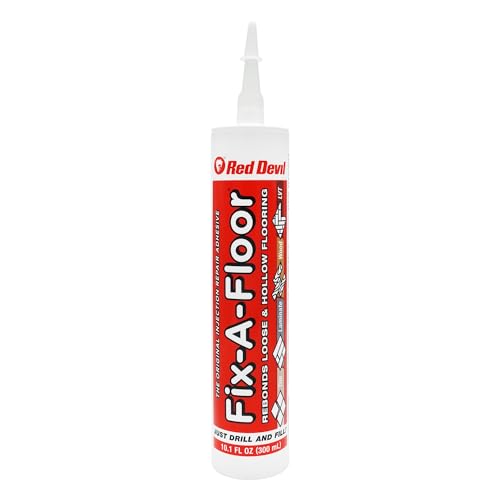
The original Fix-A-Floor cartridge has been the go-to for contractors repairing hollow 12×24 inch floor tiles for years. The trimmable nozzle gives you four cut points — 2.5mm, 1/8 inch, 3/16 inch, and 1/4 inch — so you can match the delivery width to your grout joint exactly. Once injected, the 1,500-2,000 cPs viscosity adhesive wicks under the tile and self-levels before curing into a permanent, crack-resistant bond.
A common user strategy is to drill two holes in the grout line on opposite sides of a hollow tile, inject until adhesive seeps from the far hole, then place a weight for 24 hours. The result is a tile that sounds solid when tapped and carries foot traffic without movement. The manufacturer explicitly warns against skeleton-style caulk guns, which lack the mechanical advantage to deliver consistent pressure and can cause the tube to leak at the crimp.
Multiple owners report success on older floors where thinset had failed decades ago. The adhesive bonds to concrete, plywood, and existing mortar residue equally well. The one consistent complaint is that the caulk gun delivery method creates more waste than the Squeezy version, and a few users recommend transferring the contents into a 30ml syringe with a blunt tip for better control in tight spaces.
Why it’s great
- Custom-trim nozzle fits various grout joint widths from hairline to 1/4 inch
- Proven track record with large-format porcelain and stone tiles
- Extremely strong bond that does not shrink or crack during the 24-hour cure
Good to know
- Requires a specific caulking gun type — skeleton guns cause leaking
- Tube packaging can be messy; some users transfer to syringes for precision work
3. Loctite Power Grab Ultimate Crystal Clear Construction Adhesive
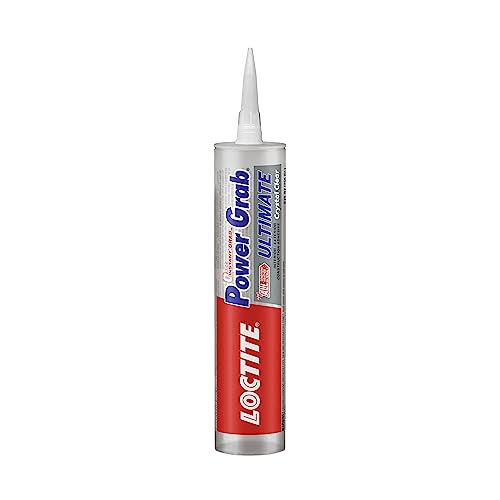
Loctite Power Grab Crystal Clear is not specifically marketed for tile injection, but its clear-drying chemistry and 450 PSI shear strength make it a strong candidate for bonding ceramic tiles to walls, backer boards, and even metal surfaces. The adhesive stays tacky enough to grab quickly, reducing the need for temporary bracing when securing decorative ceiling tiles or backsplash pieces in place.
The crystal-clear formula is the key differentiator here. Most construction adhesives dry yellow or tan, which is fine under floor tiles but unacceptable for glass mosaic or translucent stone where the bond line remains visible. Power Grab dries completely transparent and maintains that clarity through temperature swings from 0°F to 140°F. It’s also weatherproof and waterproof, so it holds up in exterior or bathroom applications where steam and condensation accumulate.
One limitation is cure speed in cold conditions. Users report that below-freezing temperatures significantly slow the cure, leaving the adhesive tacky after 24 hours even with supplemental heat. It also cleans up with mineral spirits rather than water, which adds a step to the process. For indoor tile-to-drywall bonding and pick-up work where you want the glue to disappear, this tube earns its place in the kit.
Why it’s great
- Dries completely clear — invisible bond line for glass and translucent tile
- Waterproof and temperature-resistant from 0°F to 140°F for exterior use
- Quick initial tack reduces bracing and nailing during setup
Good to know
- Low-temperature performance suffers — cure slows dramatically in freezing weather
- Cleanup requires mineral spirits instead of water
4. Endhokn Epoxy Putty 10.5oz White Stick

The Endhokn Epoxy Putty is a two-part, 300-gram stick that behaves like modeling clay before it cures into a hard, paintable surface. This is the right tool when you need to rebuild a broken corner on a ceramic tile, fill a deep chip that gap-filling caulk can’t handle, or reattach a sentimental salt shaker that snapped at the base. The 30-minute working time gives you enough window to shape and smooth the paste before it stiffens.
After the full 24-hour cure, the set epoxy can be drilled, threaded, sanded, and painted — a property that few adhesives in this price range offer. Users have successfully repaired cracked sink basins, filled pipe holes in exterior siding, and reattached stone lamp bases where previous glue failed due to chipped contact surfaces. The putty forms a tight mechanical lock even when the original mating surface is uneven or partially missing.
The formula is waterproof and temperature-resistant from -50°C to 130°C, so it works for pool equipment, outdoor fountain repairs, and kitchen sink edge fills. The main downside is that the putty has a slightly greasy feel when you’re kneading it, which can transfer oils to porous tile surfaces. A tiny dab of petroleum jelly on your fingertips helps produce a smoother finish, but the residual slickness needs to be cleaned before painting.
Why it’s great
- High plasticity allows sculpting and shaping for 30 minutes before setting
- Cured putty can be drilled, sanded, and painted — behaves like solid material
- Works underwater and in extreme temperatures from -50°C to 130°C
Good to know
- Greasy feel during kneading may transfer to tile surfaces before cleaning
- 24-hour full cure required; do not disturb during the first 30 minutes of setting
5. Ankita Ceramic Tile Repair Kit Pure White

The Ankita Ceramic Tile Repair Kit is a two-part epoxy paste engineered specifically for cosmetic surface fixes — chips, hairline cracks, and small holes in glazed ceramic and porcelain tiles. It comes in a Pure White shade that can be tinted with acrylic paint to match your tile color, and it cures to a high-gloss, non-porous finish that resists yellowing and chipping for years.
The application process is straightforward: mix the two parts, press the paste into the damaged area, scrape off excess with a putty knife, and let it cure for 24 hours before sanding. Users report nearly invisible repairs on 24×12 inch floor tiles damaged during installation, with the filled area blending seamlessly after a light sanding and polishing. The formula uses nanotechnology to achieve a super-hard final surface that does not peel or shrink under foot traffic.
Color matching is the kit’s biggest variable. While the Pure White base works perfectly with white, cream, and light gray tiles, users with complex multicolored or dark tiles found it difficult to achieve a seamless match even with paint mixing. A small test patch is strongly advised before committing to the full repair. For straightforward white tile touch-ups, this kit delivers professional-grade results at a fraction of replacing the entire tile.
Why it’s great
- Cures to a high-gloss, non-yellowing finish that blends with glazed tile
- Paintable and sandable for custom color matching after cure
- Requires no technical skill — mix, apply, and sand for an invisible repair
Good to know
- Color matching is difficult for non-white or dark tiles without paint mixing
- Best suited for small chips and cracks; not for structural bonding or loose tiles
FAQ
Can I use standard construction adhesive to bond ceramic tile to a concrete subfloor?
How long should I wait before walking on a tile repaired with injected glue?
Will epoxy putty bond to a damp tile or should I dry the surface first?
Final Thoughts: The Verdict
For most users, the best glue for ceramic tile winner is the Fix-A-Floor Squeezy because its self-leveling formula and squeeze-tube design make injection repairs fast, clean, and reliable for loose floor tiles. If you want a sculptable epoxy that can rebuild broken ceramic edges and drill like solid material, grab the Endhokn Epoxy Putty. And for an invisible bond on glass mosaic or backsplash work where the glue line must disappear, nothing beats the Loctite Power Grab Crystal Clear.