
Mud, ammonia smell, and constant cleaning are the three biggest headaches for any backyard chicken keeper. The right ground cover for your chicken run changes that equation entirely — it turns a wet, messy surface into a dry, manageable foundation that keeps your flock healthier and your maintenance routine far shorter.
I’m Mohammad Maruf — the founder and writer behind Drink4Good. I dig into the material science behind coop flooring, from rubber stall mats to upcycled coffee grounds, to find what actually holds up under wet conditions and heavy scratching.
Whether you are starting fresh or replacing a soggy mess, finding the right ground cover for chicken run means balancing absorbency, durability, odor control, and ease of cleanup against your climate and flock size.
How To Choose The Best Ground Cover For Chicken Run
Chicken run ground cover isn’t one-size-fits-all. The material you choose determines how often you clean, how dry your birds stay, and whether pests like rats can burrow in. Start by evaluating three factors: your climate’s rainfall, your willingness to replace material seasonally, and your flock’s scratching behavior.
Solid Mat vs. Loose Bedding: The Core Decision
A solid rubber mat (like the Mohawk Home stall mat) creates a permanent predator-deterrent floor that is easy to hose off but requires drainage underneath. Loose bedding options — hemp, coffee grounds, wheat straw — absorb moisture and support the deep-litter method but need periodic replacement. Heavy-flock owners often layer a mat base with loose bedding on top for the best of both worlds.
Moisture Wicking and Odor Control
Ammonia buildup from wet litter causes respiratory stress in chickens. Materials with high absorbency and low dust, like Eaton hemp bedding, keep the run drier longer. Spent coffee grounds (JavaEarth) naturally neutralize ammonia molecules, reducing the sharp smell that typically builds after a week of rain. Wheat straw, while comfortable, wicks moisture poorly and tends to mat into wet clumps quickly.
Cleanup Compatibility With Your Routine
If you prefer a quick scoop-and-replace system, nesting pads or small-bag bedding work well for smaller runs. For larger flocks, bag size and cost per square foot matter more. The Mohawk mat is a one-time purchase that never needs replacing; hemp and coffee grounds are recurring expenses but compost directly into garden fertilizer.
Quick Comparison
On smaller screens, swipe sideways to see the full table.
| Model | Category | Best For | Key Spec | Amazon |
|---|---|---|---|---|
| Mohawk Home Stall Mat | Solid Rubber | Permanent floor, predator barrier | 0.5″ thick recycled rubber | Amazon |
| Eaton Hemp Bedding | Loose Fiber | Deep-litter composting, odor control | 280% moisture absorbency | Amazon |
| JavaEarth Coffee Grounds | Loose Granular | Ammonia neutralization, fresh scent | 20 lbs loose spent grounds | Amazon |
| Natural Wheat Straw | Loose Vegetal | Cold-weather insulation, nesting | 1 lb vacuum-packed straw | Amazon |
| Trendiees Nesting Pads | Pre-Cut Pads | Clean egg collection, quick swap | 13″x13″ aspen excelsior | Amazon |
In‑Depth Reviews
1. Mohawk Home Heavy Duty Rubber Stall Mat

At half an inch thick with a dense recycled rubber construction, this 2×2 mat provides an impenetrable floor barrier that stops ground squirrels and rats from digging under your run while also cushioning the ground for your chickens’ feet. The anti-slip high/low backing pattern keeps the mat locked in place even when the top surface gets wet, so it won’t slide around on concrete, compacted dirt, or gravel.
Multiple verified buyers report using the mat as a chicken coop base specifically to stop predator tunneling, and the rubber holds up to daily hosing and sun exposure without cracking or fading. The 0.5-inch thickness absorbs impact from dropped feeders and heavy rain, and the material is easy to sweep or spray clean without trapping moisture underneath.
The mat arrived rolled and needed 48 hours to acclimate flat, which is standard for rubber stall mats. A light rubber odor faded within a few days of outdoor placement. Because it is 24×24 inches, plan to buy multiple mats and butt them together for larger runs — the edges fit tightly with minimal gaps that discourage pest entry.
Why it’s great
- Stops rodent digging completely with dense rubber barrier
- Hoses clean in seconds; never needs replacement
Good to know
- Requires 48 hours to flatten after unrolling
- Multiple mats needed for runs larger than 2×2 feet
2. Eaton Pet and Pasture Hemp Bedding

Eaton naturally grown hemp bedding absorbs roughly twice as much moisture as pine shavings or straw, which means the deep-litter method works effectively for up to six months without noticeable ammonia smell. The 28-liter bag compresses into a manageable size, and the fine flake texture allows chickens to scratch and forage naturally without kicking up dust clouds that irritate respiratory tracts.
Users report that this bedding stays dry far longer than paper or wood alternatives, with one reviewer noting zero odor after six months on the deep-litter system. The hemp is grown without pesticides or herbicides, and the material composts directly into the garden when the run is refreshed. It works equally well in nesting boxes, brooders, and the general run floor.
The bag is relatively small compared to bulk pine shavings — some users wish it came in a larger size for bigger flocks. The hemp flake does compress under heavy foot traffic, so you may need to fluff it weekly with a rake to maintain absorbency. The earthy scent is mild and pleasant, not overpowering.
Why it’s great
- Absorbs 2x more moisture than traditional bedding
- Nearly dust-free; safer for chicken respiratory health
Good to know
- Bag size smaller than bulk shavings alternatives
- Needs weekly fluffing to prevent compression
3. JavaEarth Loose Poultry Bedding
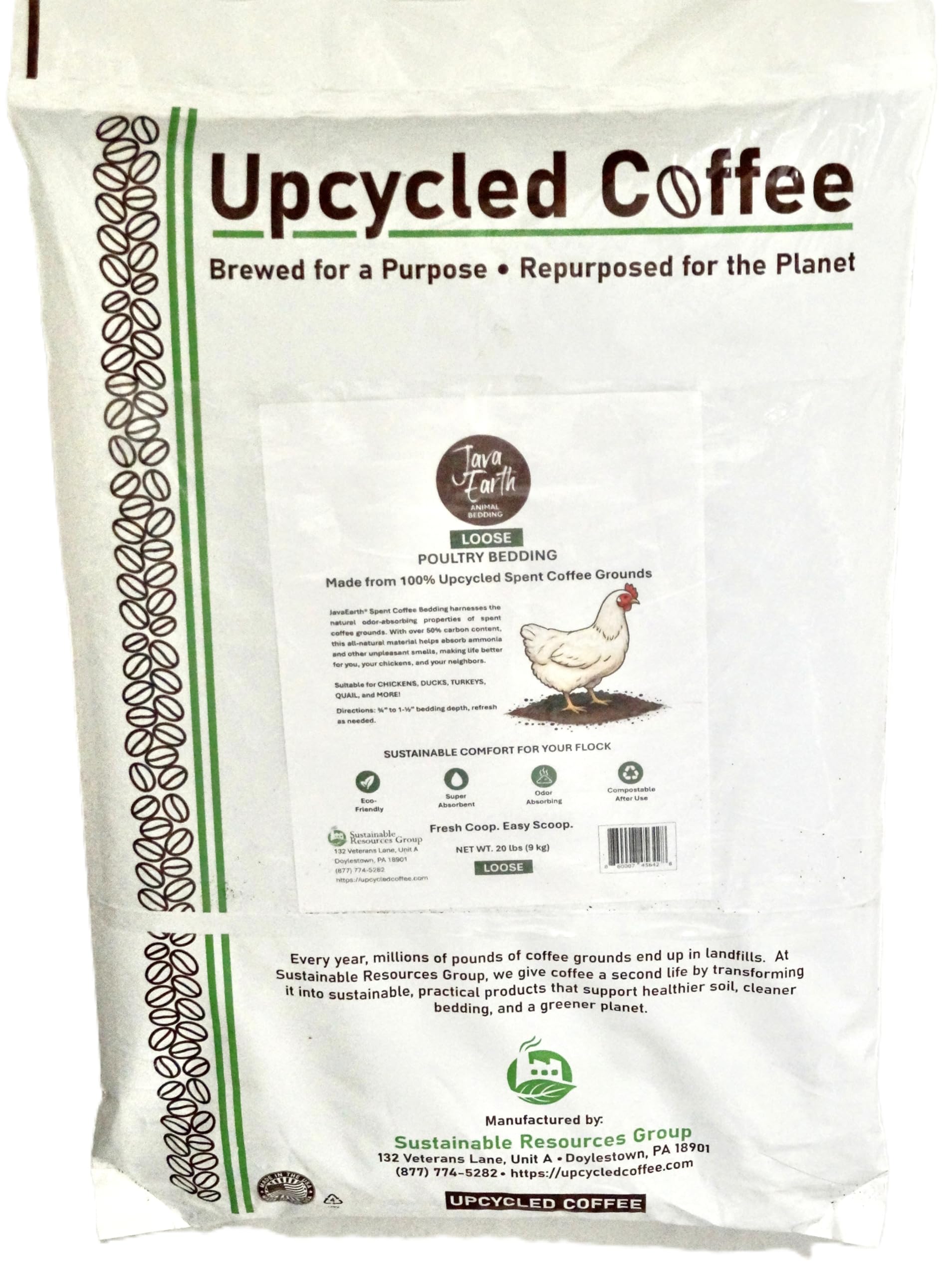
Made from upcycled post-brew coffee grounds, this 20-pound bag of loose bedding offers a unique approach to moisture and odor management. The fine, granular texture absorbs moisture quickly and clumps naturally, making scooping far easier than loose straw or shavings. The biggest advantage is the natural ammonia-neutralizing property of spent coffee grounds — the bedding actively reduces the sharp smell that builds up in humid runs.
Buyers consistently mention that the run smells like a coffee shop rather than a coop, which is a massive upgrade from the usual ammonia punch. The grounds are low dust overall, though some users note a mild dust cloud when first pouring from the bag — a quick light misting of water settles it instantly. The coffee aroma fades after the first few days and mellows into a neutral, earthy scent.
The 20-pound bag covers roughly 4 to 6 square feet at a 2-inch depth, so larger runs will need multiple bags. The pellets can get into water dishes if placed too close, so position the dishes on a raised platform or use a mat underneath. The material is completely compostable after use and adds organic matter to garden soil.
Why it’s great
- Neutralizes ammonia odor naturally with coffee compounds
- Clumps for easy scooping; less waste than loose shavings
Good to know
- Coverage area moderate; multiple bags needed for large runs
- Fine grounds can end up in water dishes if placed nearby
4. Trendiees Chicken Nesting Pads
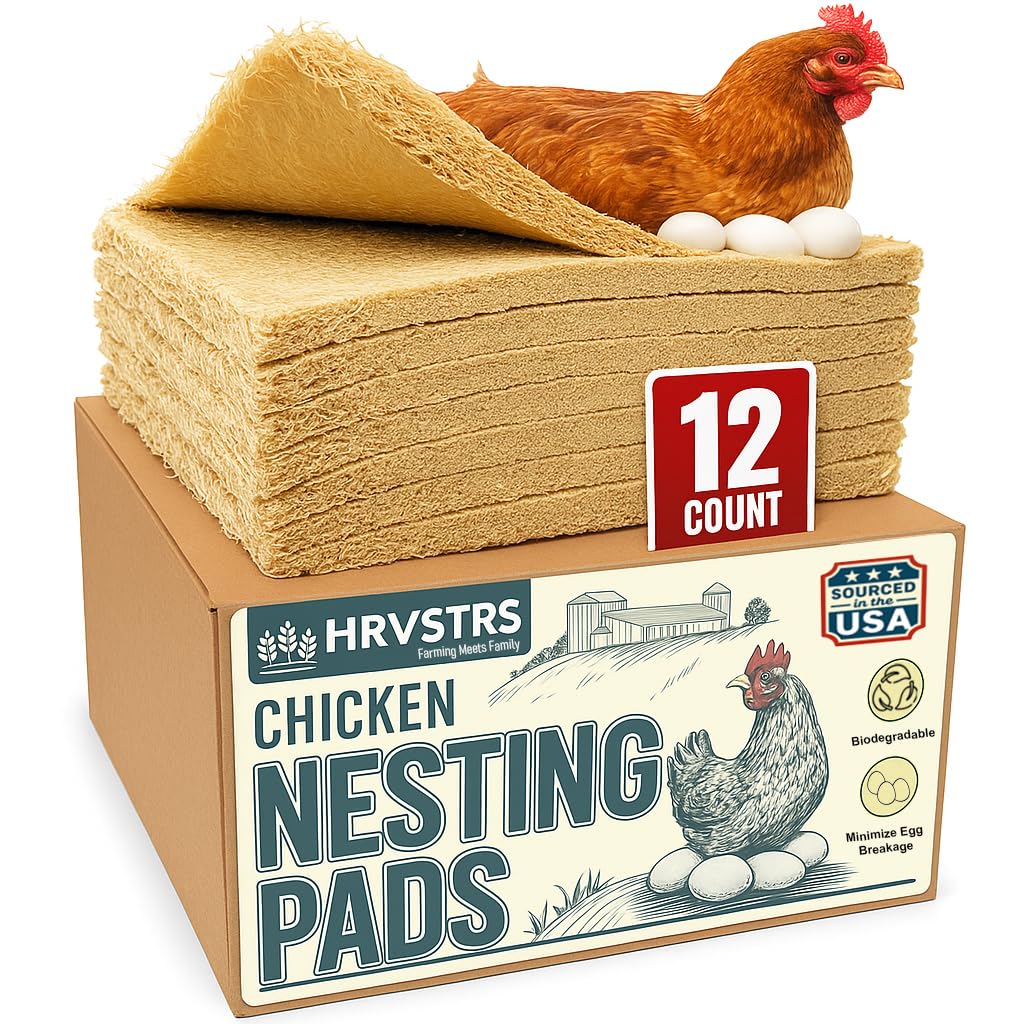
These 13-by-13-inch pre-cut aspen excelsior pads are designed specifically for nesting boxes, but they work equally well as a clean top layer inside a run with solid flooring. The integrated paper backing keeps each pad intact so you can lift the entire pad without loose fibers spilling everywhere. The aspen fibers wick moisture downward while the dense cushion prevents eggs from cracking against hard surfaces.
Users report that eggs come out significantly cleaner compared to loose shavings or straw, with droppings falling through the aspen layer rather than sticking to the eggs. The 12-pack lasts several weeks per nesting box before replacement, and each pad can be shaken out and reused once or twice before composting. The material is completely dust-free and contains no cedar or pine oils that might irritate chicken airways.
The pads sometimes stick slightly to the packing paper when first unboxed — simply place the pad with the paper on the bottom of the box and it resolves naturally. Each pad is about 2.5 inches thick when fluffed, providing good insulation during cold months. For run use, you would need multiple pads to cover ground area, so they are best reserved for nesting spaces.
Why it’s great
- Keeps eggs visibly cleaner than loose bedding alternatives
- Paper backing allows quick lift-and-replace cleanup
Good to know
- Best suited for nesting boxes, not full-run coverage
- Pads may stick to packing paper on first use
5. Natural Wheat Straw

This 100-percent natural sun-dried wheat straw is vacuum-sealed to keep it clean and odor-free until you open it. The dry, hollow stalks provide excellent insulation and a soft surface for chickens to walk and nest on, making it a solid choice for temporary cold-weather bedding or as a top layer over a more permanent base. The straw contains no chemicals or weed seeds, so it breaks down safely into garden compost.
Buyers have used this straw effectively for cat shelters, grass seeding, and chicken coop bedding. It retains warmth well during cold snaps, and the loose texture allows chickens to scratch and forage naturally. The vacuum packaging keeps the straw compact for storage but expands significantly — a 1-pound bag fluffs up to roughly enough for a 3-inch layer in a small nesting area.
The major limitation is quantity: a 1-pound bag is not enough for full run coverage beyond a small brooder or shelter space. Straw also wicks moisture poorly compared to hemp or coffee grounds, so it tends to mat and become soggy in wet conditions. It works best in dry climates or as a supplementary layer over a moisture-wicking base.
Why it’s great
- Natural, chemical-free material safe for animals and plants
- Provides good thermal insulation for cold weather
Good to know
- 1-pound bag covers very limited area
- Poor moisture wicking becomes soggy quickly in rain
FAQ
Can I use rubber stall mats directly on dirt for a chicken run?
How often should I replace loose bedding in a chicken run?
Does spent coffee ground bedding attract pests or pests like ants?
Final Thoughts: The Verdict
For most users, the ground cover for chicken run winner is the Mohawk Home Rubber Stall Mat because it stops predator digging, cleans with a hose, and never needs replacement. If you want a deep-litter system that controls odor naturally, grab the Eaton Hemp Bedding. And for a unique odor-neutralizing solution that makes your coop smell like a cafe, nothing beats the JavaEarth Coffee Grounds.