
Nothing kills a cosplay armor build or a foam RC plane faster than a glue that melts the foam itself. Standard super glues and solvent-based adhesives can chemically eat through EVA foam, leaving a pitted, brittle mess where a clean seam should be. The right adhesive grabs the closed-cell structure without dissolving it, creating a flexible bond that moves with the foam rather than cracking apart under stress.
I’m Mohammad Maruf — the founder and writer behind Drink4Good. I’ve spent years breaking down the chemical tolerances and real-world hold characteristics of specialty adhesives across the hobby and repair landscape, with a particular focus on low-surface-energy materials like EVA foam.
Whether you are building a foam helmet for next month’s convention or repairing a cracked cooler lid, picking the right bonding agent saves time, material, and frustration. My hands-on research across the current adhesive shelf narrows the field to the five best options, delivering a definitive breakdown of the best glue for eva foam in 2025 for any project size and skill level.
How To Choose The Best Glue For EVA Foam
EVA foam is a closed-cell material with a low surface energy, meaning most glues simply bead up rather than wetting the surface. The right adhesive chemically bridges this gap without corroding the foam cells. Understanding a few core specifications will save you from buying a product that either slides off or eats through your project.
Choose Contact Cement for Large Seams and Flexibility
Contact cement bonds by solvent evaporation: you apply it to both surfaces, let it dry to the touch, then press them together. The bond is instant and incredibly strong, yet stays flexible enough to handle the bending that foam armor, props, and shoe soles endure daily. This is the go-to chemistry for any project where the seam will face repeated stress.
Look for Foam-Safe or Odorless CA Glue for Small Repairs
Standard cyanoacrylate (super glue) releases heat as it cures, which can melt foam and produce fumes that fog acrylic windows. Foam-safe CA glues use a modified formula that cures cooler and emits no odor. They work best for tacking small parts, attaching details, or bonding foam to non-porous materials like plastic or fiberglass — but their bond is more rigid than contact cement, so avoid them on high-flex seams.
Consider Spray Adhesive for Large Surface Coverage
When you need to glue a large sheet of foam to a backing panel or upholster a curved surface, aerosol spray adhesive gives you an even, thin layer that won’t leave lumps or ridges. The key is finding a formula with enough tack strength to hold automotive-grade headliners, since that same grab force works perfectly on EVA foam panels.
Quick Comparison
On smaller screens, swipe sideways to see the full table.
| Model | Category | Best For | Key Spec | Amazon |
|---|---|---|---|---|
| Bob Smith Industries Super-Gold | Foam-Safe CA | Small details & terrain | Odorless, bonds in 5-15 seconds | Amazon |
| DAP Weldwood Contact Cement | Contact Cement | Heavy-duty laminating | Low VOC, 2.5-hour full cure | Amazon |
| Beacon Foam-Tac | Specialty Foam Glue | RC planes & EPP foam | UV blockers, 24-hour cure | Amazon |
| Barge Contact Cement | Contact Cement | Shoe repair & crafts | Toluene-free, dries clear | Amazon |
| 3M Headliner Adhesive | Spray Adhesive | Large panels & upholstery | Dries in 30-60 minutes | Amazon |
In‑Depth Reviews
1. Bob Smith Industries BSI-139H Super-Gold Odorless Foam Safe Super Glue
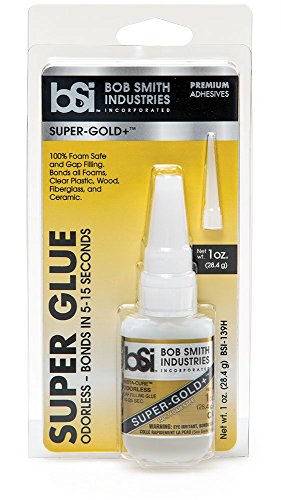
This is the only foam-safe super glue that won’t fog your clear canopies or melt delicate EVA details. The odorless formula cures at a lower temperature, which prevents the white residue and chemical burn that standard CA glues leave on craft foam. At 5-15 seconds of working time, you get just enough room to position small parts before the bond sets rigid.
The 1-ounce bottle includes a thin metal extender tip that lets you place droplets precisely, making it ideal for D&D terrain, diorama detailing, and attaching small foam embellishments to larger armor pieces. Multiple users report that this glue bonds silicone and other difficult substrates where ordinary super glues fail entirely.
The downside is that the bond stays brittle compared to contact cement — if you flex the joint repeatedly, it will snap. Keep this glue in your kit for stationary connections and detail work rather than load-bearing seams. For high-stress foam joints, reach for a contact cement instead.
Why it’s great
- Zero odor and no foam melting
- Bonds in under 15 seconds
- Excellent for hard-to-bond plastics and silicone
Good to know
- Bond is rigid — not suited for high-flex seams
- Small bottle goes quickly on large builds
- Can bond instantly on some materials, so test first
2. DAP 00107 Weldwood Original Contact Cement (3-Pack)
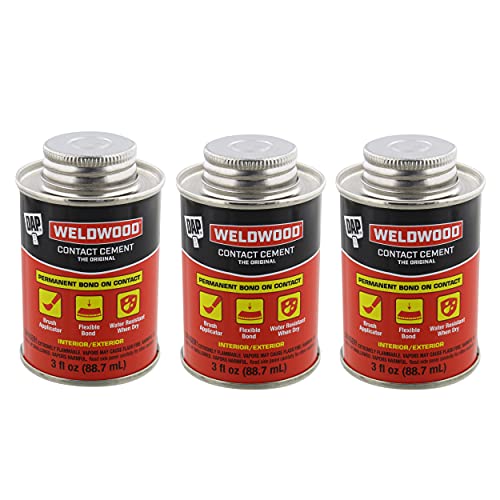
Weldwood Original is the contact cement that professional upholsterers and costumers have trusted for decades. The solvent-based formula creates a permanent, flexible bond that remains workable for about 15 minutes after application, then cures fully in 2.5 hours. This three-pack gives you enough adhesive to laminate an entire EVA foam suit without running to the store mid-build.
The key to using it correctly is applying a thin coat to both surfaces, letting the solvent evaporate until the glue feels dry to the touch, then pressing the pieces together. The bond grabs instantly and gains strength as it cures. Users consistently note that it outperforms shoe repair glues and holds up to heavy walking when used on footwear soles.
Be aware that the solvent fumes are strong — this is not a glue you want to use indoors without ventilation. The three-pack provides individual smaller cans that are easier to manage than a single large can, and the low-VOC formulation is less harsh than the original red-label version, but still requires respiratory caution.
Why it’s great
- Industry-standard flexible bond for foam laminating
- Three cans provide generous coverage for large projects
- Proven reliability for shoe soles and heavy laminates
Good to know
- Strong solvent fumes require good ventilation
- Metal can lids can be difficult to open
- Water-based green label alternative is less effective
3. Beacon Foam-Tac Powerful Glue (2-Ounce)
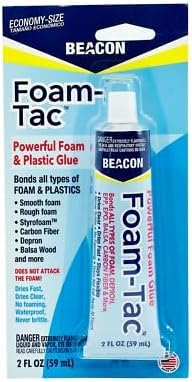
Foam-Tac was engineered specifically for the RC aircraft community, which means it had to solve the twin problems of bonding low-density EPP and EPO foam while surviving outdoor UV exposure. The formula includes a specialized adhesion promoter and UV blockers, so joints won’t yellow or degrade when the finished project sits in sunlight. It remains flexible after curing, which is critical for foam wings that flex during flight.
The glue applies as a thick, snot-like string that requires a bit of technique — users recommend using pins or rubber bands to hold pieces while it cures. It doubles as a wire-tacking adhesive to clean up servo wiring in RC builds. The 24-hour full cure time is longer than contact cement, but the resulting bond absorbs shock and vibration without cracking.
On the downside, the extreme thickness makes precise application difficult. There is no nozzle included, so you will want a small spatula or toothpick for detailed work. If you only need a glue for occasional hobby repairs, the 2-ounce bottle will last through many builds, but regular RC builders may find themselves reordering frequently.
Why it’s great
- UV-resistant formula prevents yellowing outdoors
- Flexible bond ideal for RC foam and moving joints
- Works on EPP, EPO, Depron, and balsa wood
Good to know
- Thick, stringy consistency is tricky to apply precisely
- 24-hour cure time requires patience or clamping
- No nozzle included for fine tip placement
4. Barge Contact Cement All-Purpose with Pixiss Spreaders (2oz Bundle)

Barge Contact Cement is the classic choice for crafters who need a reliable bond for EVA foam without the harsh toluene solvents of older formulas. This toluene-free variant dries clear and creates a strong, water-resistant hold that performs well on leather, vinyl, rubber, and foam alike. Included in the bundle are five Pixiss paste spreaders that make it far easier to achieve a thin, even coat on foam edges and large panels.
The paste consistency allows you to spread the cement precisely where you need it without drips running into unwanted areas. It dries tacky in about 10-15 minutes, at which point you can press the two surfaces together for an instant bond that continues to strengthen over 24 hours. Multiple users have successfully repaired Birkenstock soles and other high-stress footwear applications with this product.
The 2-ounce tube is small — perfect for occasional repairs and small craft projects, but you will burn through it quickly if you are laminating a full cosplay suit. The cap can also accumulate dried glue over time, making it harder to reseal. For the price, the included spreaders make this bundle a solid entry point if you are new to contact cement.
Why it’s great
- Toluene-free formula reduces harsh chemical exposure
- Dries clear for invisible seams on light-colored foam
- Paste spreaders give excellent control for thin coats
Good to know
- Small tube size limits use to small repairs only
- Cap buildup can prevent proper sealing
- Dries yellowish on some materials, not fully transparent
5. 3M Headliner & Fabric Adhesive (18.1 oz Aerosol, Pack of 2)

When you need to bond a large EVA foam panel to a curved backing — such as lining the interior of a trunk or attaching foam to a helmet shell — spray adhesive is the most efficient method. This 3M formula is designed for automotive headliners, which means it must hold fabric and foam to plastic and metal surfaces under heat and humidity. It delivers an even, spider-web spray pattern that coats the surface without puddling.
The adhesive sets fast enough to complete a full headliner job in a single afternoon, with a 30-60 minute dry time that allows you to position the foam before the bond becomes permanent. Users praise it for professional-looking results on automotive interiors and DIY upholstery projects. The two-pack provides ample coverage for multiple large projects or one very big one.
The downsides are that the spray is very sticky — if you misposition the foam, you cannot easily peel it off without tearing the material. Beginners should practice on scrap first. The aerosol cans also require careful storage to avoid nozzle clogging, and some users note that the strong tack makes it easy to wrinkle thin fabric or foam if you are not deliberate in your placement.
Why it’s great
- Even spray coat covers large areas quickly
- Heat and moisture resistant for automotive-grade hold
- Two cans provide generous project coverage
Good to know
- Instant tack makes repositioning impossible
- Can wrinkle thin materials if not applied carefully
- Aerosol nozzle can clog if not cleaned after use
FAQ
Can I use regular super glue on EVA foam?
How do I apply contact cement to EVA foam without making a mess?
Is Barge or Weldwood better for cosplay foam armor?
Final Thoughts: The Verdict
For most users, the best glue for eva foam winner is the DAP Weldwood Original Contact Cement (3-pack) because it delivers the strongest flexible bond for large laminating projects at a reasonable per-project cost. If you want a foam-safe super glue for quick detail work and small repairs, grab the Bob Smith Industries Super-Gold. And for covering wide panels with an even coat, nothing beats the 3M Headliner Adhesive two-pack.