
Mismatched materials are the silent killers of DIY repairs. When a flexible rubber part needs to lock onto a rigid plastic surface, most general-purpose glues fail because they can’t handle the differential movement. The bond either shatters under tension or peels away after a few temperature cycles. Getting this joint right demands an adhesive formulated to bridge the flexibility gap between these two very dissimilar substrates.
I’m Mohammad Maruf — the founder and writer behind Drink4Good. I’ve spent years analyzing peel-strength data, open-time windows, and solvent compatibility across hundreds of specialty bonding agents to separate real solutions from marketing claims.
Whether you are reattaching a car trim piece, sealing a marine rub rail, or bonding a gasket, this review of the best glue for rubber to plastic targets only formulations that deliver a lasting structural hold across both material classes without becoming brittle.
How To Choose The Best Glue For Rubber To Plastic
The core challenge is material incompatibility. Rubber flexes and stretches; plastic stays rigid. To succeed, your adhesive must be able to hold both sides under movement without cracking. Here are the critical factors to evaluate before you buy.
Chemistry Type: Contact, CA, or Polyurethane?
Contact adhesives (neoprene-based) bond when both surfaces are coated, dried, and pressed together—they offer high initial tack and remain flexible. Cyanoacrylate (CA) glues cure in seconds and create a rigid joint that can shatter under impact. Polyurethane formulas expand as they cure, filling gaps and staying slightly flexible. For rubber-to-plastic, a contact or polyurethane adhesive generally outperforms standard CA glue.
Peel Strength vs. Tensile Strength
Most glues advertise tensile strength (pulling force). For a rubber-to-plastic joint, peel strength (the force needed to lift the rubber away from the plastic) is the more relevant metric. A high-peel-strength bond resists the constant tugging that occurs when rubber is flexed or stretched. Always check if peel strength data is available for the specific adhesive.
Open Time and Clamping Requirements
Open time is the window you have to position parts after applying glue. Some formulations dry in 30 seconds, which allows no room for error. Others give you five minutes or longer to align the pieces. Most polyurethane and construction adhesives also require clamping pressure for the first 24 hours to achieve full bond strength. Factor this into your workflow.
Temperature and Weather Resistance
A glue used on an automotive part or a boat rub rail must survive temperature swings from freezing to intense summer heat. Check the product’s operating temperature range. Some adhesives soften above 140°F; others remain stable up to 250°F. For outdoor or engine-compartment repairs, this spec is non-negotiable.
Quick Comparison
On smaller screens, swipe sideways to see the full table.
| Model | Category | Best For | Key Spec | Amazon |
|---|---|---|---|---|
| 3M Scotch-Weld PR100 | Cyanoacrylate | Precise, small repairs | Handling time under 20 seconds | Amazon |
| 3M Hi-Strength 94 ET | Spray Contact | Large surface lamination | Open time up to 60 minutes | Amazon |
| Gorilla Max Strength Construction | Hybrid | Gap-filling, clear finish | Dries clear, waterproof seal | Amazon |
| Berkland Marine 5200 | Polyurethane | Watertight marine bonding | 24-hour fast cure | Amazon |
| RH Adhesives S-18 | Neoprene Contact | Flexible, multi-material joints | 24-hour full cure | Amazon |
In‑Depth Reviews
1. 3M Scotch-Weld Plastic & Rubber Instant Adhesive PR100

This is the specialist you bring out when standard super glue has already failed. The 3M Scotch-Weld PR100 is a low-viscosity cyanoacrylate engineered explicitly for low-surface-energy plastics and elastomers including EPDM, Santoprene, and heavily plasticized PVC. The thin formula wicks into tight gaps and reaches handling strength in under 20 seconds, which is critical when you are holding two slippery materials together by hand without a clamp.
Multiple users report it bonding silicone rubber to itself—a notoriously difficult joint—when used with the matching 3M primer. It also excels on ABS, nylon, and glass-filled plastics for small-part assembly like gasket attachment or electronics repairs. The flexible bottle lets you control drop size, from a single pinpoint to a steady bead. It is expensive per ounce, but for a tiny quantity of a high-stakes repair, it gives you a chemical weld that holds up to shear and vibration.
The primary trade-off is the 24-hour full cure before you can stress the joint to its rated overlap shear strength. It also requires careful storage: check the expiration date and keep it refrigerated between uses to extend shelf life. For any repair where speed and strength on difficult plastics are the priority, this is the premium choice.
Why it’s great
- Handling strength in under 20 seconds speeds up assembly.
- Engineered for problematic substrates like EPDM and silicone rubber.
- Low viscosity wicks into hairline cracks and tight joints.
Good to know
- Expensive per ounce compared to standard CA glues.
- Requires refrigeration between uses to prevent premature curing.
- Full cure strength takes 24 hours.
2. 3M Hi-Strength 94 ET Spray Adhesive
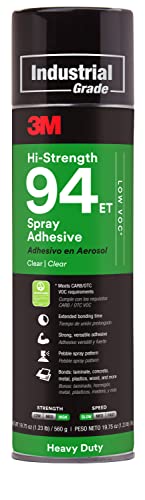
When you need to bond a large rubber sheet to a plastic panel, brush-on or squeeze-tube glues become impractical. The 3M Hi-Strength 94 ET is a spray contact adhesive that creates an aggressive initial tack with a generous 60-minute bonding window. That extended open time is a lifesaver when you are aligning flexible foam, rubber matting, or carpet backing to a rigid plastic substrate and need to shift positioning multiple times.
This formula is GREENGUARD certified and low-VOC, making it a safer option for indoor van conversions or automotive interior work where ventilation is limited. It bonds metals, wood, rubber, and plastic with a durable film that resists heat and humidity. Users have used it to stick foam soundproofing to plastic in freezing temperatures without peeling, which speaks to its temperature tolerance.
For this to work effectively, you must spray both surfaces, let the solvent flash off for about 30 minutes until the glue is dry to the touch, then press them together. The bond is immediate and strong on contact—there is no sliding after mating. The can lasts about 18 months if stored properly. Use in a well-ventilated area and wear a mask; the fumes are potent during application.
Why it’s great
- Up to 60 minutes open time allows careful large-surface alignment.
- Low-VOC and GREENGUARD certified for safer indoor use.
- Excellent bond strength on foam, rubber, and plastic laminates.
Good to know
- Requires spraying both surfaces and a 30-minute flash-off period.
- Can is consumed faster than tube adhesives on large projects.
- Strong solvent odor during application.
3. Gorilla Max Strength Construction Adhesive
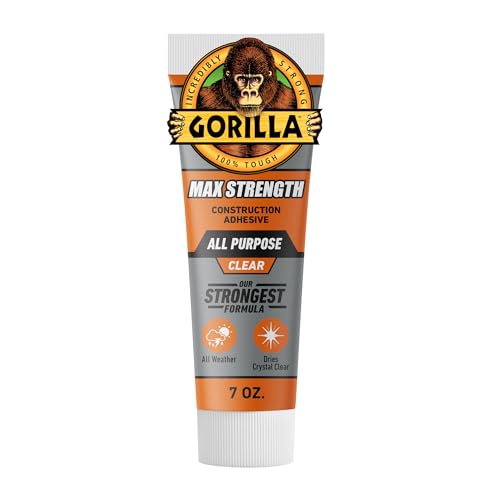
Gorilla took their toughest construction adhesive formula and made it crystal clear. This hybrid paste is designed for projects where the glue line will be visible—mending a rubber seal on a clear plastic window, for example, or attaching trim where a white or yellow glue would stand out. It dries to a hard rubber consistency that remains flexible enough to absorb the movement between rubber and plastic without cracking.
The gap-filling property sets it apart from thin CA glues. If your plastic and rubber surfaces are uneven or have a slight gap, this paste fills the void and forms a waterproof seal. Users have reported it surviving car interior heat to hold magnets to armrest plastic, and sealing AC unit covers where water resistance was critical. It bonds in roughly 30 seconds but stays repositionable for about 5 minutes, giving you a brief window for adjustments. Cleanup of uncured glue requires rubbing alcohol; once cured, it is nearly impossible to remove.
Despite the “Max Strength” label, it is not a structural adhesive for load-bearing joints. It is best for medium-duty repairs where appearance and weather resistance matter most. The squeeze tube can release gobs of glue if you cut the nozzle too large, so trim conservatively. It is a strong, clear, waterproof option for around-the-house rubber-to-plastic fixes.
Why it’s great
- Dries crystal clear, leaving an invisible bond line.
- Waterproof and gap-filling for uneven surfaces.
- Stays flexible after cure, resisting peel and shock.
Good to know
- Not recommended for structural or heavy load-bearing joints.
- 24-hour full cure time; clamping is required for best results.
- Very sticky; difficult to remove from skin once cured.
4. Berkland Marine Adhesive Sealant 5200 Fast Cure
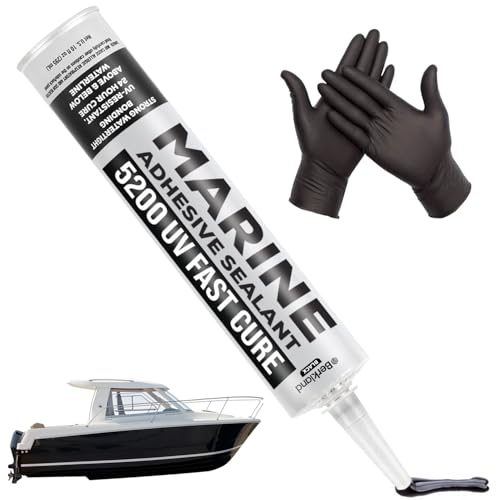
When the rubber-to-plastic joint must also be watertight, move to a marine-grade polyurethane. The Berkland 5200 Fast Cure in black creates a permanent flexible bond that stays sealed above and below the waterline. A user report of bonding protective rubber strips to an inflatable boat—flexible rubber to what is often a PVC or Hypalon plastic hull—demonstrates exactly the difficult scenario this adhesive was built for.
The fast-cure formulation reaches tack-free status in 2 hours and handling strength in 24 hours, significantly faster than the traditional 7-day cure of standard 5200. It bonds fiberglass, gelcoat, wood, metal, and most plastics with a strong, flexible seal that resists UV fading and saltwater erosion. The black pigment hides well on dark trim, rub rails, and hull joints, though it is not intended where a clear finish is needed.
Cleanup during application is messy; the polyurethane expands as it cures and sticks aggressively to skin. Gloves are included, and you should use them. Once cured, this is a permanent installation—the bond is often stronger than the base material, making it a destructive removal process. It is the right choice for outdoor marine or automotive repairs where waterproof performance is non-negotiable, but it is overkill for simple household fixes.
Why it’s great
- Permanent watertight seal for above and below waterline use.
- Fast cure reaches handling strength in 24 hours, not 7 days.
- UV resistant black pigment resists chalking and fading in sun.
Good to know
- Messy application; polyurethane is difficult to clean off skin.
- Black finish is limited to applications where a dark seal line is acceptable.
- Permanent bond cannot be removed without damaging the surface.
5. RH Adhesives S-18 All-Purpose Adhesive
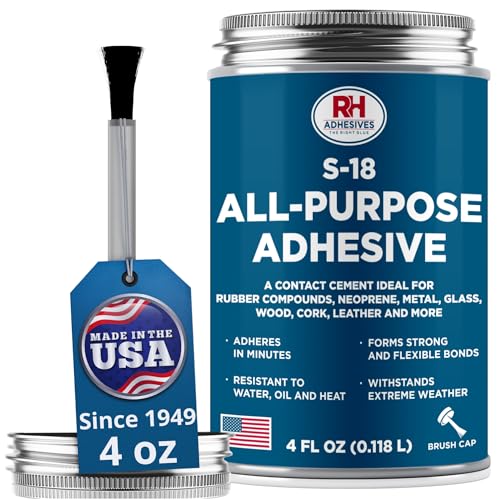
The S-18 from RH Adhesives is an old-school neoprene contact cement that has been made in the USA since 1949. It is a proven choice for bonding rubber (SBR and neoprene) to metal, but it works equally well on many plastic surfaces. The film it creates after drying is flexible, waterproof, and heat resistant—an important combination for outdoor applications like attaching rubber seals to plastic enclosures.
Users have had success with it repairing leather boots, gluing neoprene mats to car bodies for hail protection, and bonding felt to plastic. The can format requires you to brush or dab the adhesive onto both surfaces, let it dry to a tacky state, and then press them together. This contact-bond method delivers immediate initial strength without clamps, though the manufacturer recommends a 24-hour cure for maximum peel strength.
However, the S-18 is not without limitations. It is flammable and emits strong solvent fumes, so it requires heavy ventilation. There is also a report of a bond failing under sustained heat and rain when used in a demanding exterior hail-protection setup, suggesting it is best suited for indoor or protected outdoor applications rather than continuous submersion. It is a reliable, budget-friendly entry point for flexible rubber-to-plastic repairs that do not demand premium chemical performance.
Why it’s great
- Flexible neoprene base stays pliable, ideal for rubber movement.
- Heat resistant and waterproof for protected outdoor use.
- Contact bond provides immediate grab without clamping.
Good to know
- Strong solvent fumes require very good ventilation.
- Best for indoor or protected outdoor use; may fail in continuous heavy rain.
- Can thicken over time if the can is not sealed tightly.
FAQ
Do I need a special primer for rubber before applying adhesive?
Can I use super glue for a rubber to plastic repair that will flex?
How do I prepare a rubber surface for gluing?
Final Thoughts: The Verdict
For most users, the best glue for rubber to plastic winner is the 3M Scotch-Weld PR100 because it is the only adhesive in this roundup specifically engineered to tackle difficult plastics and synthetic rubbers with sub-20-second handling strength. If you want even coverage and a long repositioning window for large panels, grab the 3M Hi-Strength 94 ET spray. And for a waterproof marine application where the bond must survive saltwater and UV, nothing beats the Berkland Marine 5200.