
Scrolling past pizza ads on social media while holding a rubbery, crumbly slice from a box mix is a specific kind of misery. The dream of a gluten-free crust that actually crackles under the teeth, bends without breaking, and tastes like something you’d pay for at a pizzeria has sent countless home cooks through a frustrating cycle of trial, error, and wasted ingredients. The gap between what’s marketed as pizza flour and what actually bakes like one is wide, and the wrong bag of starch blend guarantees a sad, dense disc every time.
I’m Mohammad Maruf — the founder and writer behind Drink4Good. I’ve spent hundreds of hours analyzing flour blends, fermentation behaviors, and starch-to-protein ratios so you don’t have to gamble your Saturday night pizza dough on a glossy label and a marketing promise.
The search for the best gluten free flour for pizza comes down to understanding how each blend handles hydration, rise, and browning — because the bag’s ingredient list tells you everything about the crust’s final crunch.
How To Choose The Best Gluten Free Flour For Pizza
Not every gluten-free flour blend is built for high-heat pizza baking. The difference between a crust that shatters and one that chews like a foam mat comes down to three variables: starch composition, protein content, and the presence of binders like xanthan gum. Here is the breakdown of what matters most.
Starch Base — The Crunch Decider
A flour blend anchored by rice starch combined with potato or tapioca tends to deliver the crispiest bottom and airiest crumb. Pure tapioca or cassava flours create a gummy, flat texture that works for flatbreads but fails under the weight of sauce and mozzarella. Look for blends that list rice flour or potato starch as the first ingredient if your goal is a Neapolitan-style cornicione with visible air pockets.
Yeast Compatibility and Fermentation Window
Some pre-mixed crust packets include yeast and are designed for a quick 30-minute rise — ideal for weeknight pizza but limiting if you want to develop flavor through a longer cold ferment. Bulk flours without added yeast give you full control over proofing time and can handle a 24-hour refrigerator rise that deepens the overall taste. If you plan to ferment overnight, skip mixes that come with yeast packets and buy a standalone blend like Caputo Fioreglut.
Allergen Profile Beyond Gluten
Many gluten-free pizza flours still contain wheat starch (gluten-removed), dairy, eggs, or soy. If you are cooking for someone with celiac disease, the bag must be certified gluten-free and produced in a dedicated facility. For top-9 allergen-free households, look for labels that explicitly state the absence of wheat, milk, eggs, peanuts, tree nuts, soy, fish, shellfish, and sesame — blends like gfJules cover this completely.
Quick Comparison
On smaller screens, swipe sideways to see the full table.
| Model | Category | Best For | Key Spec | Amazon |
|---|---|---|---|---|
| Antimo Caputo Fioreglut 2.2 lb | Premium | Authentic Neapolitan crust | Rice & potato starch blend | Amazon |
| gfJules Pizza Crust Mix | Mid-Range | Allergen-free households | 17 oz, top-9 free | Amazon |
| Bob’s Red Mill GF Pizza Crust Mix | Mid-Range | Thick, chewy crust fans | Whole grain, dairy free | Amazon |
| Chebe Pizza Crust Mix | Budget | Quick tapioca-based crust | 7.5 oz, soy & nut free | Amazon |
| Antimo Caputo Fioreglut 11 lb | Premium | Bulk baking & weekly use | 11 lb bulk, long ferment | Amazon |
In‑Depth Reviews
1. Antimo Caputo Fioreglut 2.2 lb
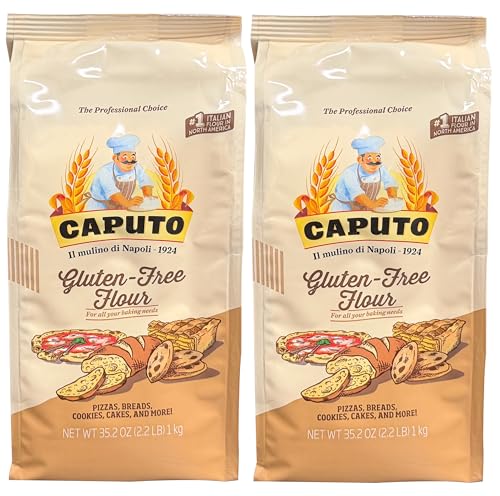
This is the flour that professionals like Chef Vince Rodolfo of Good Pie in Las Vegas use to serve gluten-free Neapolitan pizza indistinguishable from wheat-based versions. The proprietary blend of rice starch, potato starch, rice flour, and soy flour is designed specifically for high-temperature ovens and 24-hour cold fermentation. When hydrated correctly, the dough stretches without tearing and bakes into a crust with visible alveolation — small air bubbles in the cornicione that signal proper gluten-free fermentation.
Home bakers report making pizza three times a week without digestive issues, even those with celiac sensitivity. The flour handles hydration levels around 80% to 90%, which is higher than most gluten-free blends, producing an open crumb rather than a dense cake texture. Users switching from cheaper blends notice immediately that the crust lifts easily from the peel and holds structural integrity under heavy toppings.
The 2.2-pound bag is the sweet spot for a household baking every weekend. It does not include a yeast packet, which is actually an advantage if you want to control fermentation temperature and timeline. The only real friction is the price per pound — it sits at the premium end — but the consistency of results eliminates the waste of failed dough batches that cheaper blends produce.
Why it’s great
- Professional-grade crust with real air pockets
- Handles long cold fermentation beautifully
Good to know
- Contains soy flour — not top-9 allergen free
- Premium price per pound for small batch
2. gfJules Certified GF Pizza Crust Mix
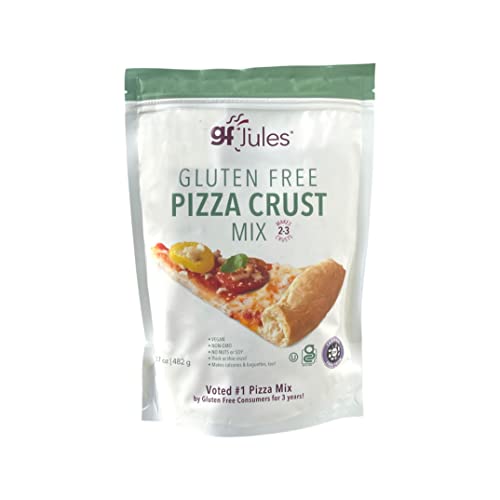
gfJules consistently earns the “non-GF family member approval” badge in customer reviews, which is the highest compliment a gluten-free pizza product can receive. The mix uses a proprietary flour base with added Italian spices built into the dry blend, creating an herb-forward flavor profile that masks the starchiness common in rice-based crusts. The 17-ounce pouch yields two to three 12-inch thin crusts, depending on how thinly you spread the extremely sticky batter.
The dough behaves differently than wheat dough — it is wetter and requires oiled hands or a silicone spatula to spread onto parchment paper — but the final texture after a pre-bake on a preheated stone is genuinely crispy on the bottom and chewy inside. Multiple reviewers note that the crust stays pick-up-able, meaning it does not require a fork even after sauce and toppings are added. The mix also works as a no-rise option (directions available on the website) for impatient pizza nights.
Certified free from the top nine allergens and produced in a dedicated gluten-free facility, this is the safest bet for households managing multiple food sensitivities. The mix includes two yeast packets and supports both traditional rise and quick-bake methods. The only downside is the stickiness of the batter during preparation — first-time users should definitely use parchment and oiled tools rather than attempting to roll it out.
Why it’s great
- Flavor built in with Italian spices
- Certified top-9 allergen free — very safe
Good to know
- Extremely wet batter — messy to spread
- No bulk option for frequent bakers
3. Bob’s Red Mill GF Pizza Crust Mix (4-Pack)

Bob’s Red Mill has been a pantry staple for gluten-free baking since long before the category went mainstream, and their pizza crust mix upholds the reputation for reliability. Each 1-pound package includes its own yeast packet and makes two 12-inch thick-style crusts. The whole-grain flour blend yields a hearty, nutty flavor that pairs well with robust toppings like pepperoni and roasted vegetables rather than delicate Margherita-style pies.
The dough is notably sticky — a common theme among gluten-free mixes — but experienced users recommend spraying the parchment paper with cooking oil and using wet hands to press it into shape. Rolling it thin is crucial because the crust rises more during baking; thicker edges produce a pillowy, bread-like cornicione that some prefer over the cracker-thin style. The finished crust delivers a chewy interior with a crispy outer shell that holds up under standard baking temperatures of 425°F to 450°F.
The four-pack brings the effective cost per crust down compared to single-pouch competitors, making it a solid choice for families who make pizza weekly. The mix is dairy-free and can be made without eggs by following the package instructions. Critics note that the flavor is plainer than blends with added seasonings, so you will need to season your sauce or dough separately to build depth.
Why it’s great
- Thick, chewy crust with good structural integrity
- Four-pack offers good value for regular bakers
Good to know
- Very sticky dough — requires parchment trick
- Plain flavor needs additional seasoning
4. Chebe Gluten Free Pizza Crust Mix (2-Pack)

Chebe takes a different approach than the rice-based blends by building its crust around tapioca starch, which produces a distinctly crunchy texture that some families absolutely love. The mix is also rice-free, potato-free, and tree nut-free, making it a viable option for those with multiple starch sensitivities. Each 7.5-ounce box yields one thin crust, and the two-pack covers two pizza nights without committing to a large bulk bag.
Customer feedback highlights a common preparation strategy: pre-bake the crust on parchment on a preheated pizza stone for seven minutes before adding toppings, then finish for another seven to ten minutes. This two-stage bake is critical for achieving the advertised crunch — skipping the pre-bake results in a denser, less appealing base. The dough requires a binder like pecorino Romano or another hard cheese mixed in to hold together properly, which means this is not a vegan-friendly option out of the box.
Some users eventually move on to making their own tapioca-based dough from scratch once they learn the formula, which suggests the flavor is solid but the value per box is on the higher side considering the small yield. For someone who wants a quick, crunchy pizza experience without dealing with bulk flour storage, Chebe delivers a consistent result that satisfies the craving for a crispy bottom crust.
Why it’s great
- Distinctly crunchy, not gummy
- Free from rice and potato starches
Good to know
- Requires cheese binder for structure
- Small yield — 7.5 oz per crust
5. Antimo Caputo Fioreglut 11 lb Bulk
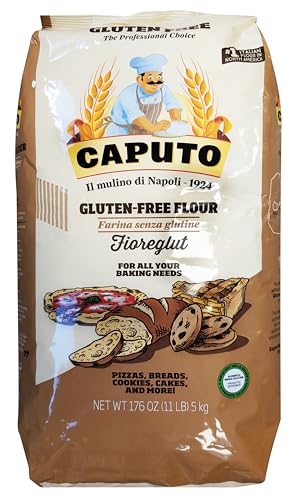
The 11-pound bulk version of the same Caputo Fioreglut blend delivers the best cost-per-pound for anyone who bakes gluten-free pizza (or bread, or pasta) with serious frequency. The flour is exactly the same proprietary rice and potato starch blend used by Neapolitan pizzerias; the only difference is the bag size. Home bakers who repackage it into freezer-safe containers report using it for weekly pizza dough, focaccia, and even sourdough starter maintenance without any degradation in performance over months of storage.
The blend absorbs hydration at a 1:0.9 ratio, meaning 500 grams of flour takes about 450 grams of water for a standard dough. The resulting dough is extensible enough to stretch by hand, unlike many gluten-free doughs that crack and tear. Fermentation at room temperature for 8 to 12 hours produces a crust with real sourdough complexity, and a 24-hour cold ferment pushes the flavor even further toward something that rivals wheat-based artisan pizza.
The largest bag is not ideal for casual bakers who make pizza once a month — the flour can go stale before it is used up if not stored properly. But for households that bake multiple times per week, or for those who want to experiment with breads and bagels beyond pizza, the 11-pound bag is the most intelligent long-term purchase in this category. Customers consistently rate it five stars and note that non-GF eaters cannot tell the difference.
Why it’s great
- Best cost-per-pound for frequent bakers
- Handles hand-stretching and cold fermentation
Good to know
- Large bag requires proper freezer storage
- Contains soy flour — not for soy allergies
FAQ
Can I use Caputo Fioreglut for bread and pasta too?
Why does my gluten-free pizza dough feel so sticky?
Is any gluten-free pizza flour safe for celiacs?
Final Thoughts: The Verdict
For most users, the best gluten free flour for pizza winner is the Antimo Caputo Fioreglut 2.2 lb because it produces the closest texture to real Neapolitan pizza with visible air bubbles and a tender, crispy bottom that holds up to hand-slicing. If you need a certified top-9 allergen-free option for a sensitive household, grab the gfJules Pizza Crust Mix. And for bulk bakers making pizza every week, nothing beats the Antimo Caputo Fioreglut 11 lb bag for the best value and consistent professional-grade results.