
Bettas are labyrinth fish that spend most of their time near the surface, but the substrate you choose directly impacts their fin health, stress levels, and water chemistry. A gravel that is too sharp can tear delicate fins, while certain dyes and coatings can leach toxins into a small, enclosed tank.
I’m Mohammad Maruf — the founder and writer behind Drink4Good. I’ve analyzed dozens of substrate formulas and customer feedback to isolate the specific grain sizes, coatings, and pH neutrality that make a gravel truly safe for Betta fish.
By focusing on non-toxic materials, rounded edges, and easy cleanability, this guide presents the best gravel for betta fish across multiple styles and budgets.
How To Choose The Best Gravel For Betta Fish
Selecting a Betta-compatible substrate comes down to three main factors: grain shape, chemical safety, and practicality. Bettas have long, delicate fins that can catch on sharp or irregular rock edges, leading to tears or infections. Always run your hand through the gravel before adding it to the tank — if it feels rough or jagged, it can harm your fish.
Grain Size and Edge Roundness
Gravel between 1/8-inch and 1/4-inch is ideal for Bettas. Small enough to allow beneficial bacteria to colonize without trapping large pockets of waste, yet large enough to avoid being inhaled. Smooth, rounded pebbles are non-negotiable — sharp edges are the number one cause of fin rips in heavily decorated Betta tanks.
Coating and pH Neutrality
Many colored aquarium gravels use a resin or epoxy coating to lock in dye. A high-quality coating should be non-toxic and inert, meaning it will not raise pH or hardness. Natural river rocks are generally safer for Bettas who prefer soft, slightly acidic water (pH 6.5-7.0). Avoid any gravel that claims to buffer pH upward unless you specifically need hard water.
Ease of Cleaning and Size of Bag
Bettas are low-bioload fish, but uneaten food still settles. Gravel that is too large allows debris to sink below the surface where it rots. A 5-pound bag typically covers a 5 to 10-gallon tank with a 1-inch layer, which is the standard depth for Betta setups. Sand-type substrates look natural but require more careful vacuuming to avoid disturbing anaerobic pockets.
Quick Comparison
On smaller screens, swipe sideways to see the full table.
| Model | Category | Best For | Key Spec | Amazon |
|---|---|---|---|---|
| Spectrastone Turquoise | Colored Gravel | Colorful community tanks | 5 lb, non-toxic coating | Amazon |
| Aqua Natural Galaxy Sand | Fine Black Sand | Dramatic planted aquascapes | 10 lb, 1-2 mm grain | Amazon |
| FANTIAN Pea Gravel | Natural River Rock | Natural biotope setups | 5 lb, 1/4 inch mixed | Amazon |
| YISZM Natural River Rock | Stone Mix | Natural color variety | 5 lb, 1/4 inch polished | Amazon |
| Pulovin White Pebble | Light Colored Stone | Bright, clean tank aesthetics | 5 lb, 1/5-3/8 inch | Amazon |
In‑Depth Reviews
1. Spectrastone Special Turquoise Gravel

The Spectrastone Turquoise gravel is a long-standing favorite for Betta keepers because of its guaranteed pH-neutral, non-toxic epoxy coating. Each 5-pound bag contains rounded, smooth granules that will not scratch acrylic tanks or tear delicate Betta fins. The consistent 1/8-to-1/4-inch grain size creates a balanced substrate layer that allows water to circulate while preventing waste from settling too deep.
Customer reviews confirm zero fading after nearly a year underwater, and the color remains vivid even under strong LED lighting. Rinsing is straightforward — a few passes in a bucket until the water runs clear eliminates the slight dust from the coating process. The weight is sufficient for a standard 5-gallon Betta setup at a 1-inch depth.
For Betta owners who want a colorful yet completely inert substrate, this is the most reliable option available. The coating holds up well against regular gravel vacuuming and does not peel or flake, even with aggressive cleaning.
Why it’s great
- Guaranteed pH neutral — safe for soft water Bettas
- Vibrant turquoise stays colorful for over a year
- Smooth, rounded edges prevent fin damage
Good to know
- 5 pounds is just enough for a 5-gallon tank
- Coated gravel may not suit a fully natural biotope look
2. Aqua Natural Galaxy Sand

The Aqua Natural Galaxy Sand is a fine black sand that sparkles under aquarium lighting, creating a dramatic backdrop for live plants and dark-colored Betta varieties. It is ethically sourced in the USA and contains no artificial dyes or coatings. The grain size is approximately 1-2 millimeters, which is fine enough for bottom-dwelling tank mates like Corydoras but still heavy enough to stay put during water changes.
Bettas housed with this substrate tend to display strong natural coloration because the dark background contrasts their fins. The sand supports plant root growth well and does not compact into an impenetrable layer if stirred occasionally. Expect to rinse this sand thoroughly — several customers noted that multiple wash cycles are needed to eliminate floating fines and initial cloudiness.
The 10-pound bag provides generous coverage for a 10-gallon tank, though some users found it insufficient for a full 1-inch layer in a 20-gallon long. For standard 5 to 10-gallon Betta habitats, this is a premium natural option that elevates the entire aquascape.
Why it’s great
- Dramatic black color makes Betta fins pop
- Fine grain is safe for delicate barbels and fin edges
- Ethically sourced natural USA sand
Good to know
- Requires vigorous rinsing or it will cloud the water
- 10 pounds may not be enough for a 20-gallon setup
3. FANTIAN Pea Gravel

The FANTIAN Pea Gravel mimics the natural riverbed environment that Bettas would encounter in the wild. These 1/4-inch stones are naturally rounded, so there is no risk of sharp edges damaging your fish. The bag arrives dry and surprisingly dust-free — several customers reported they could add it directly to the tank after a single rinse, with no significant clouding.
The mixed natural color palette includes tans, grays, and earthy browns that do not fade or leach. This is a safe choice for keepers who avoid any artificial dyes or coatings. The weight is accurate at 5 pounds, enough for a 1-inch layer in a 5-gallon tank. A few users noted that one bag is insufficient for depth in a 10-gallon tank, so plan accordingly for larger enclosures.
This gravel also works well with planted setups because the gaps between stones allow root systems to spread without becoming waterlogged. It is equally effective as a top dressing for potted plants if you ever repurpose the leftovers.
Why it’s great
- No coating, no dyes — truly inert natural stone
- Zero dust out of the bag, minimal cleaning required
- Smooth rounded texture is gentle on Betta fins
Good to know
- 5 pounds is light for a 10-gallon tank
- Mixed earthy colors, not uniform
4. YISZM Natural River Rock Gravel

The YISZM Natural River Rock gravel stands out for its polished, smooth finish and unique multicolor blend that includes soft greens, creams, and earth tones. These 1/4-inch stones are naturally formed and free of any artificial coatings, making them an excellent choice for keepers who want an attractive natural look without chemical risk. The polished surface makes them noticeably smoother than standard pea gravel.
Betta owners report that the rounded shape creates an ideal environment — no sharp edges, and the smooth texture allows easy siphoning of waste during water changes. The natural color mix does not fade under aquarium lights, and the stones are heavy enough to stay in place even with strong filter flow. Rinsing is quick because the polishing process removes most surface dust.
The 5-pound bag provides adequate coverage for a 5 to 7-gallon Betta tank. For larger habitats, ordering multiple bags is recommended. Some users consider the price per pound slightly high compared to bulk river stones, but the consistent polish and color variety justify the premium for a display-focused aquarium.
Why it’s great
- Polished, ultra-smooth surface — no fin rips
- Unique soft color mix not found in standard gravel
- Natural stone with zero chemicals or coatings
Good to know
- Price per pound is higher than bulk options
- Color variation is random between bags
5. Pulovin White Aquarium Pebbles
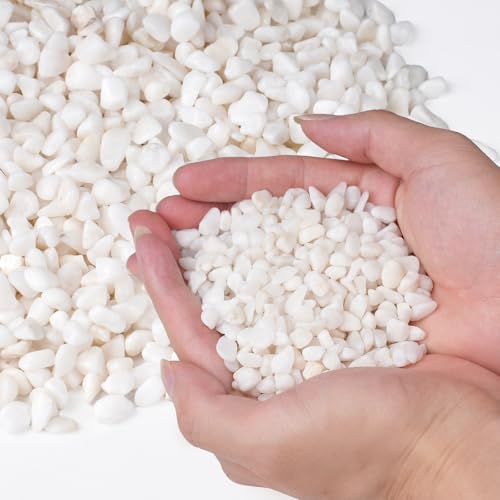
The Pulovin White Aquarium Gravel is a budget-friendly option for keepers who want a clean, bright substrate that makes their Betta the center of attention. The stones are a mix of natural white and cream tones, ranging from 1/5 to 3/8 inch, with a slightly irregular shape that still feels smooth to the touch. The white color reflects light well and can make a dark-colored Betta stand out dramatically.
These pebbles are naturally formed and environmentally friendly, with no coatings or dyes. They require a standard rinse before use but produce minimal dust compared to sand or fine gravel. The 5-pound bag is sufficient for a small 5-gallon Betta tank at a 1-inch depth. Some users repurpose these stones for potted plant drainage, showing their non-reactive nature.
The main limitation is the irregular shape — while smooth, some stones have flatter surfaces that could theoretically trap debris if not vacuumed regularly. For Bettas kept in clean tanks with weekly maintenance, this is not a practical concern. The white color also shows algae more quickly than darker substrates, so expect to clean more frequently.
Why it’s great
- Clean white aesthetic brightens the tank
- Natural uncoated stone is safe and inert
- Minimal dust, quick and easy rinsing
Good to know
- White color shows algae growth quickly
- Irregular shapes may require more thorough vacuuming
FAQ
How often should I vacuum gravel in a Betta tank?
Is sand or gravel safer for Betta fins?
Can I mix different gravel colors for my Betta tank?
Final Thoughts: The Verdict
For most users, the best gravel for betta fish winner is the Spectrastone Special Turquoise Gravel because it offers a guaranteed pH-neutral coating, smooth rounded edges, and vibrant color that lasts. If you want a natural biotope look, grab the FANTIAN Pea Gravel for its dust-free, uncoated river stones. And for a dramatic planted display, nothing beats the Aqua Natural Galaxy Sand with its deep black finish that makes Betta colors pop.