
Buying a guitar amp means choosing not just a volume tool, but a creative partner. The wrong one leaves you fighting thin, boxy tone, while the right one makes every chord feel alive. Whether you are a bedroom noodler, a weekend jammer, or a player recording demos at home, the amp you plug into defines your sound more than your guitar does. The market is split between classic analog combos and modern digital modelers, and each camp has a different answer to your core problem: how do you get great, usable tone at home without breaking the bank or deafening your neighbors?
I’m Mohammad Maruf — the founder and writer behind Drink4Good. For this guide, I have spent dozens of hours analyzing the hardware specs, user feedback, and tonal characteristics of the most popular practice and stage amplifiers on the market.
After comparing wattage, speaker size, channel architecture, and built-in effects across nine different models, I have narrowed the field to the best options for every playing scenario to help you find the best guitar amps for your specific needs and budget.
How To Choose The Best Guitar Amps
Finding the right amp starts with being honest about where you play and what sound you are chasing. A 50-watt monster with a 12-inch speaker will sound glorious but may be unusable at apartment-friendly volumes, while a tiny 10-watt practice amp might leave you frustrated the second you try to play with a drummer. The goal is to match three things: your physical space, your tonal ambition, and your willingness to tweak settings.
Wattage and Speaker Size
This is the single most important spec for a guitarist buying their first or second amp. Wattage determines headroom — the point at which the amp starts to distort. For pure bedroom practice, 10 to 20 watts is plenty. For rehearsals with a band, look for at least 20 to 30 watts, and for small gigs without PA support, 40 to 50 watts is a safe bet. Speaker size matters just as much: an 8-inch speaker will sound tight but boxy, a 10-inch offers a good balance of punch and fullness, and a 12-inch is the gold standard for low-end thump and projection.
Analog vs. Digital Modeling
Traditional solid-state and tube amps give you a fixed, honest circuit that responds dynamically to your picking attack. Modeling amps simulate dozens of classic amp circuits and effects inside one box. Analog amps win on simplicity, feel, and dynamic response. Modeling amps win on versatility, headphone usability, and direct recording convenience. Beginners often benefit from a modeling amp’s built-in effects and presets, while experienced players chasing a specific, responsive tone usually prefer an analog circuit with a few quality pedals.
Built-in Effects and Connectivity
Modern amplifiers do much more than amplify. Built-in reverb, delay, chorus, and distortion can save you hundreds on pedals during the early years. Headphone jacks, aux inputs for backing tracks, and USB or Bluetooth for recording and streaming are now standard features on mid-range and premium models. If you plan to record demos or jam silently at night, look for an amp with a direct USB audio interface or a dedicated headphone output that mutes the speaker. If you gig, an effects loop and a line out with cabinet simulation become essential.
Quick Comparison
On smaller screens, swipe sideways to see the full table.
| Model | Category | Best For | Key Spec | Amazon |
|---|---|---|---|---|
| BOSS Katana-50 Gen 3 | Digital Modeling | Versatile home-to-stage player | 50W / 12″ speaker / 12 amp characters | Amazon |
| Yamaha THR10II | Digital Modeling | Desktop practice & recording | 10W stereo / 15 amp models / Bluetooth | Amazon |
| Orange Crush 20RT | Solid-State Analog | Rich analog tone in a compact box | 20W / 8″ speaker / built-in tuner | Amazon |
| Marshall MG30GFX | Solid-State | Classic rock with built-in FX | 30W / 10″ speaker / 4 channels | Amazon |
| Line 6 Spider V 20 MKII | Digital Modeling | Feature-rich practice & app control | 20W / 8″ speaker / 200+ effects via app | Amazon |
| Blackstar ID:Core V4 Stereo 10 | Digital | Stereo sound with studio recording | 10W stereo / 2×3″ speakers / USB-C | Amazon |
| Coolmusic BP-40 | Battery-Powered Combo | Portable acoustic performance | 40W / 8″ woofer + tweeter / 3 channels | Amazon |
| Fender Frontman 20G | Solid-State | Simple, reliable beginner practice | 20W / 8″ speaker / 2 channels | Amazon |
| JOYO JAM Buddy II | Battery-Powered Modeler | Ultra-portable practice with drum machine | 10W dual 2″ speakers / 36 drum patterns | Amazon |
In‑Depth Reviews
1. BOSS Katana-50 Gen 3
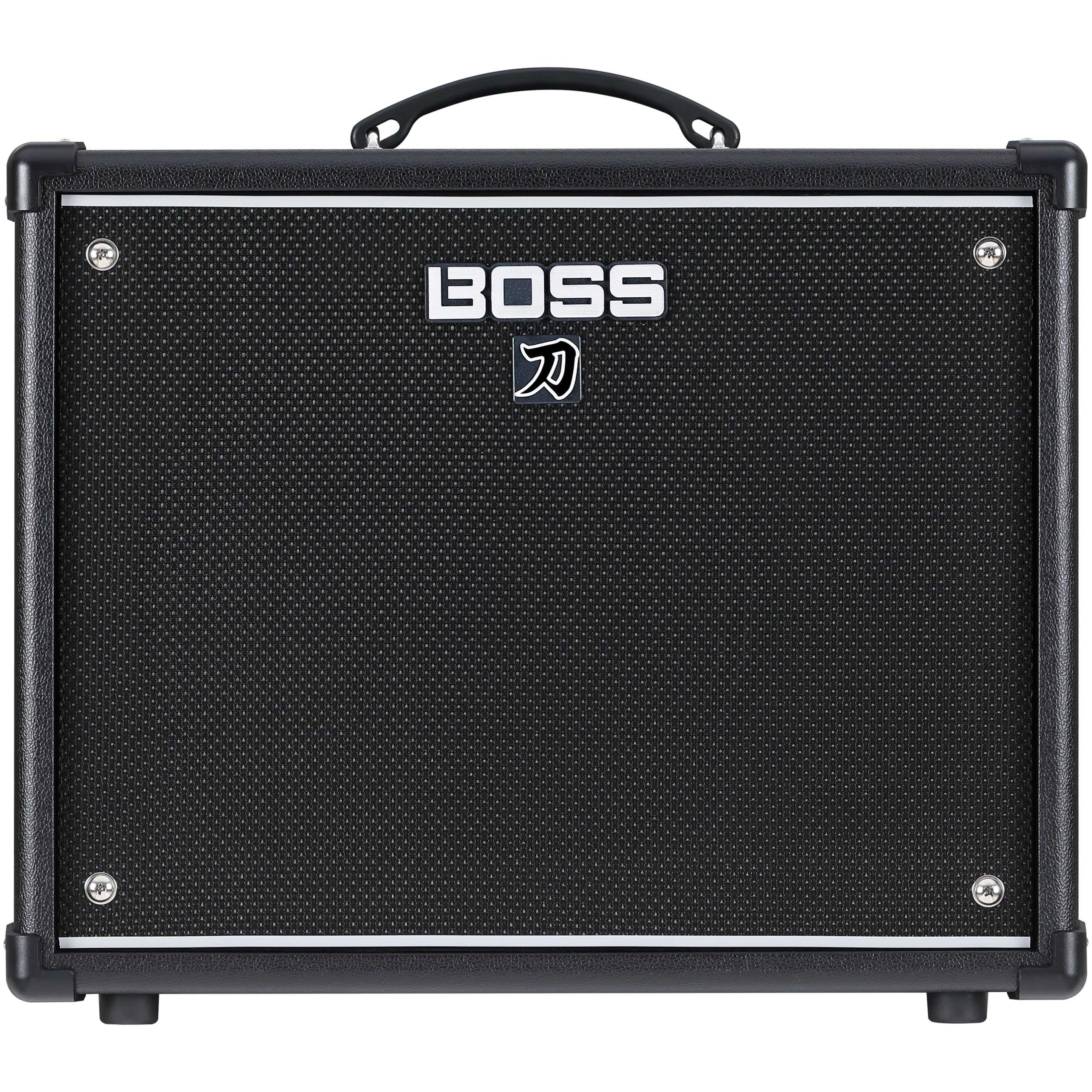
The BOSS Katana-50 Gen 3 is the amp that keeps evolving. Now in its third generation, the platform uses refined Tube Logic circuitry to deliver an expressive edge-of-breakup feel that was previously reserved for boutique tube amps. The custom 12-inch speaker pushes enough air to fill a rehearsal room, while the 0.5-watt power setting lets you crank the preamp at bedroom volumes without waking the house. Six amp characters — Clean, Crunch, Lead, Brown, Acoustic, and the new Pushed type — each have a selectable variation, giving you twelve distinct voices in one compact 50-watt combo.
The five independent effects sections (Booster, Mod, FX, Delay, Reverb) are usable simultaneously, which means you can run a compressor, chorus, phaser, delay, and reverb all at once without menu-diving. The BOSS Tone Studio app unlocks deeper editing, allowing you to swap effects, adjust parameters, and save presets for different songs or playing styles. The USB port handles both audio and MIDI, making it a capable recording interface for quiet home studio sessions.
At roughly 30 pounds, it is not the lightest practice amp on this list, but the tonal flexibility, the quality of the effects, and the power scaling make it the single most versatile amp for a guitarist who wants one box that does everything from silent practice to small gigs. The absence of a built-in Bluetooth receiver is a minor inconvenience, but the Katana-50 Gen 3 delivers a level of sound quality and response that outpaces every other amp in its tier.
Why it’s great
- Tube Logic technology delivers authentic, dynamic tube-like feel at any volume
- Twelve distinct amp characters with five simultaneous effects slots
- Power scaling down to 0.5W for flexible home practice
Good to know
- No built-in Bluetooth for wireless streaming
- Some users find the BOSS Tone Studio app has a learning curve
2. Yamaha THR10II

The Yamaha THR10II redefines what a desktop practice amp can be. Instead of a boxy black cube, this amplifier looks like a vintage radio and sits elegantly on a desk, bookshelf, or nightstand. Inside its compact stainless steel chassis are 15 guitar amp models, 3 bass amp models, 3 acoustic mic models, and a flat mode — all of which respond with a realism that rivals far more expensive modeling gear. The extended stereo technology creates a wide, immersive soundstage that makes you forget you are listening to a 10-watt unit.
Bluetooth audio playback lets you stream backing tracks or your favorite songs from your phone, and the dedicated volume control for the audio input means you can balance your guitar and the music independently. The THR Editor app for desktop and mobile unlocks deep tweaking of EQ, effects, and cab simulations. The USB connectivity works plug-and-play for both recording and playback, which is a significant advantage over amps that require complex driver installations. The separate headphone output is quiet, clean, and full-range, making this an exceptional silent practice tool for apartment dwellers.
This amp excels at low-volume playing where most solid-state combos sound thin and lifeless. The THR10II retains punch and clarity at any volume, revealing picking articulation and string texture that other practice amps mask. While it will never compete with a 12-inch speaker for stage volume, as a desktop workstation for tone exploration, recording demos, and silent practice, the Yamaha THR10II remains the benchmark.
Why it’s great
- Superb low-volume tone quality with wide stereo imaging
- Bluetooth audio streaming with independent volume control
- Full-featured app editor for deep parameter control
Good to know
- USB cable not included in the box
- Settings memory can have minor recall inconsistencies
3. Orange Crush 20RT

The Orange Crush 20RT is a pure analog solid-state amp that sounds like it has tubes hiding in its metal chassis. The custom 8-inch Voice of the World speaker is not the largest on this list, but Orange’s proprietary design gives it a surprisingly full and punchy character. The clean channel is warm and touch-sensitive, breaking up naturally when you dig in, while the dirty channel delivers the signature Orange crunch — aggressive, gritty, and saturated without being fizzy. The built-in chromatic tuner is accurate and responsive, a feature often missing from amps in this tier.
The digital reverb is the one concession to the modern world, and honestly, it is the weakest link in the chain. It works, but it is shallow and does not have the lush depth you would want for ambient or surf sounds. The headphone output allows silent practice, but the sound is noticeably thinner than the speaker output. For players who care about the feel of a responsive analog circuit and do not need a dozen effects, the Crush 20RT delivers a premium playing experience in a compact, 16-pound package. The clean-to-crunch transition is organic and musical, making it a joy for blues, rock, and jazz players who rely on picking dynamics.
Some owners have reported the stock speaker failing under sustained full-volume use, but upgrading to a Jensen C8R transforms the amp into a serious performer. Even in its stock form, the Orange Crush 20RT offers a level of analog character and build quality that justifies its price for any player who values simplicity and tone over features.
Why it’s great
- Rich analog clean and dirty tones with natural compression
- Built-in chromatic tuner is accurate and convenient
- Lightweight and compact for easy transport
Good to know
- Reverb is thin and one-dimensional
- Stock 8″ speaker can be fragile at full volume over time
4. Marshall MG30GFX

The Marshall MG30GFX delivers that iconic Marshall look and sound in a 30-watt, 10-inch speaker combo. Four channels — Clean, Crunch, OD1, and OD2 — cover everything from jangly cleans to saturated lead tones. The 3-band EQ is pronounced and effective, letting you dial in the classic Marshall mid-range bark or scoop it out for modern metal. The built-in digital effects include chorus, phaser, flanger, delay, and octave, which are usable but not as deep as dedicated modeling platforms. They are great for adding texture during practice and saving you from needing pedals early on.
The custom 10-inch, 30-watt speaker has a distinctive character. It is tighter than a 12-inch but has more low-end authority than an 8-inch. The headphone output and MP3/line-in make silent practice and backing track jamming straightforward. At nearly 24 pounds, this is the heaviest 30-watt combo on the list, so portability is a moderate concern. Some users have observed that the clean channel requires careful EQ adjustment to avoid a boxy sound, but once dialed in, the MG30GFX delivers that unmistakable Marshall flavor that suits classic rock and hard rock players perfectly.
The MG30GFX is a solid-state workhorse that prioritizes immediately usable sounds over deep menu systems. The effects are limited but tasteful, and the four-channel layout with a simple EQ is forgiving for beginners while satisfying for intermediate players. If you want the look, feel, and attitude of a Marshall stack without the weight, expense, or maintenance of a tube head, the MG30GFX is a compelling choice for both home and rehearsal use.
Why it’s great
- Authentic Marshall tone with four distinct channels
- Pronounced 3-band EQ for precise tone shaping
- Built-in digital effects cover essential modulation and delay
Good to know
- Heavy for its size at nearly 24 pounds
- Clean channel can sound boxy without careful EQ adjustment
5. Line 6 Spider V 20 MKII

The Line 6 Spider V 20 MKII is a serious update to one of the most popular modeling amps ever made. The new Speaker Mode enhances the low-end response and improves the overall feel, addressing the thinness that plagued earlier Spider models. There are 16 onboard presets, each with three simultaneous effects and independent reverb, giving you a huge range of usable tones right out of the box. The built-in tuner and tap-tempo function are welcome additions for live practice.
The real power lies in the free Spider V Remote app. Connect via USB or Bluetooth, and you unlock over 200 amps and effects from Line 6’s legendary HX modeling library. You can edit and record on Mac, PC, iOS, and Android, turning the Spider V 20 into a portable recording interface. The 8-inch speaker is adequate for practice, though the tone is noticeably more detailed and enjoyable through headphones, where the full modeling fidelity shines. The wood enclosure helps reduce the hollow, buzzy resonance that plagues plastic practice amps.
This amp is ideal for the player who wants to explore hundreds of classic and modern sounds without buying a single pedal. The learning curve for the app is gentle, and the ability to save and recall presets is a huge time saver during practice. The main trade-off is that the speaker does not do full justice to the high-quality amp models, but the headphone output reveals the true depth of the HX modeling. For bedroom practice and tone experimentation, the Spider V 20 MKII offers immense value for its price tier.
Why it’s great
- Access to 200+ HX-quality amps and effects via the free app
- Improved low-end response with the new Speaker Mode
- 16 presets with tap-tempo and built-in tuner
Good to know
- Stock 8″ speaker cannot fully deliver the amp models’ potential
- Occasional connectivity issues reported with the mobile app
6. Blackstar ID:Core V4 Stereo 10

The Blackstar ID:Core V4 Stereo 10 packs a serious amount of studio-grade technology into a compact 10-watt stereo combo. Two 3-inch speakers create a stereo image that is wide and immersive, making every effect sound three-dimensional. The six amp voices range from pristine cleans to searing leads, and Blackstar’s patented ISF control lets you sweep from a tight American voicing to a loose, vocal British character. The power reduction feature drops the output from 10 watts down to 1 watt, allowing you to push the preamp into natural saturation without overwhelming a small room.
The CabRig Lite emulated output is a standout feature at this level. It includes user controls for cabinet and mic placement, giving you genuinely usable direct tones for recording, streaming, or silent practice via headphones. The 4-channel USB-C output handles low-latency recording and professional re-amping, making this amp a legitimate audio interface for your computer. The built-in modulation, delay, and reverb effects are rich and adjustable, and the stereo spread makes them feel much larger than the small footprint suggests.
A small subset of users have reported occasional buzzing noises and USB connectivity drops during long sessions, which can be frustrating during recording. However, for the majority of players, the ID:Core V4 Stereo 10 delivers studio-quality tones and connectivity in a package that costs significantly less than dedicated modeling hardware. If your primary use case is home recording, streaming, or headphone practice, this is one of the most capable tools in its class.
Why it’s great
- Stereo speakers with wide, immersive soundstage
- CabRig Lite emulated output with mic placement controls
- USB-C for low-latency recording and re-amping
Good to know
- Occasional buzzing noises reported by some users
- USB connectivity can be intermittent with certain laptops
7. Coolmusic BP-40

The Coolmusic BP-40 is a battery-powered acoustic guitar amplifier designed for buskers, park performers, and anyone who needs good sound away from a wall outlet. The 40-watt output drives a coaxial speaker system with an 8-inch woofer and a piezo tweeter, producing clear, full-range sound that flatters acoustic guitars and vocals alike. The three-channel input section lets you plug in an acoustic guitar, a microphone, and a keyboard or backing track source simultaneously, each with its own gain and reverb controls. The built-in Bluetooth receiver streams music from your phone between sets.
The rechargeable battery runs for 5 to 8 hours depending on volume, and the amp can also operate plugged into mains power indefinitely. The enclosure features a durable leather-like cloth covering and a metal grille that can withstand the bumps of transport. A speaker pole mount on the bottom allows you to elevate the unit for better projection during outdoor performances. The DI output makes it easy to connect to a larger PA system when needed, and the headphone jack offers silent practice.
The BP-40 is optimized for acoustic instruments, which means it does not handle high-gain electric guitar distortion as well as a dedicated electric guitar amp. The plastic cabinet construction means it is lightweight at around 17 pounds, but it can sound a bit hollow compared to wood-enclosed amplifiers. For its intended use — portable, battery-powered acoustic amplification — the Coolmusic BP-40 delivers strong performance and versatility at a price that undercuts most competitors with similar features.
Why it’s great
- True battery-powered operation with 5-8 hours of runtime
- Three independent channels for guitar, mic, and line input
- Speaker pole mount and DI out for flexible performance
Good to know
- Plastic enclosure can sound hollow compared to wood cabs
- Not ideal for high-gain electric guitar tones
8. Fender Frontman 20G

The Fender Frontman 20G is the entry-level workhorse that Fender has perfected over decades. This 20-watt solid-state combo features a classic 8-inch Fender Special Design speaker inside a closed-back cabinet that produces surprisingly full low end for its size. The clean channel with volume and 3-band EQ is where this amp shines — it delivers that chimey, articulate Fender clean sound that has defined countless recordings. The separate Drive channel is switchable and offers passable distortion that works for classic rock and blues practice, though it is not subtle enough for modern high-gain genres.
The control layout is minimalist and intuitive, with no menu diving or complex presets to confuse beginners. The 1/8-inch auxiliary input connects to phones or laptops for backing track playback, and the 1/8-inch headphone jack mutes the speaker for silent practice. At just 11 pounds, it is easy to move from bedroom to living room or to carry to a friend’s house for a casual jam session. The 2-year warranty is a welcome safety net for a first amp that might see rough treatment from a younger player.
The Frontman 20G is not a feature-rich modeling amp, and it lacks built-in reverb, which some players will miss. The drive channel is basic, and experienced guitarists will likely outgrow it quickly. But for its intended audience — beginners and casual players who want a simple, reliable amp with authentic Fender clean tones — the Frontman 20G is a near-perfect entry point into the world of electric guitar amplification.
Why it’s great
- Authentic Fender clean tone with 3-band EQ
- Simple, beginner-friendly controls with no learning curve
- Lightweight and portable at only 11 pounds
Good to know
- No built-in reverb or effects
- Drive channel is basic and lacks modern high-gain character
9. JOYO JAM Buddy II
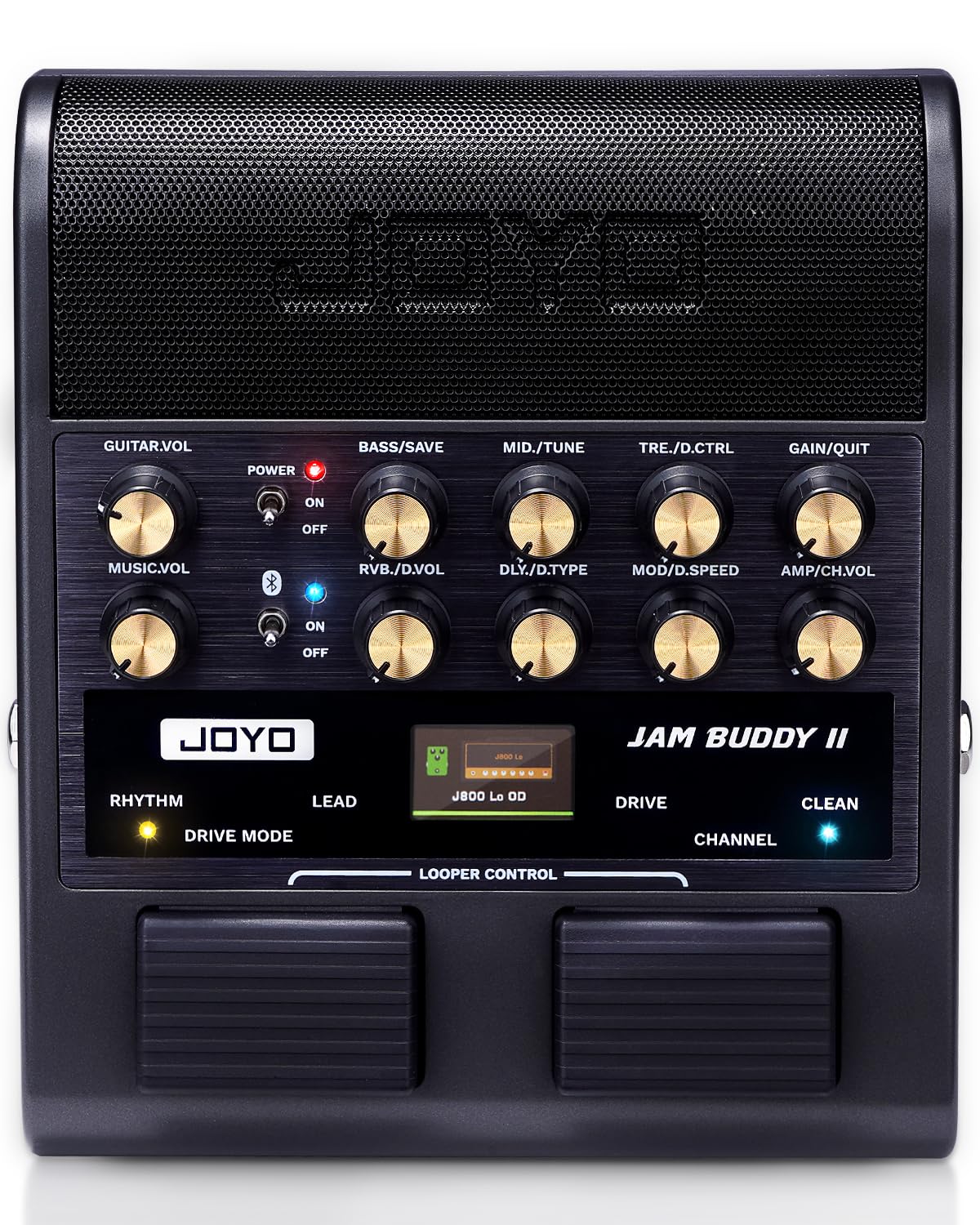
The JOYO JAM Buddy II is a complete practice ecosystem packed into a palm-sized, 940-gram unit. Dual 2-inch full-range speakers and a bass radiator produce a balanced, surprisingly loud sound for such a tiny footprint. The 14 amp head models cover everything from clean jazz and blues to high-gain metal, and the 9 built-in effects (Mod, Delay, Reverb) can be edited deeply via the small LED screen and multi-function knob. The three independent channels — Clean, Rhythm, Lead — each support a one-tap memory save function, so you can store your favorite tones and recall them instantly during practice.
The built-in 36-pattern drum machine and 30-second looper are game-changers for practice. You can set a drum groove, loop a chord progression, and solo over the top without needing any external gear. The OTG USB-C audio interface connects directly to a phone or computer for recording, live streaming, or composing, and the dedicated volume knobs for guitar and Bluetooth audio let you balance your mix precisely. The rechargeable battery offers up to 5 hours of playtime on a full 3-hour charge, and the auto power-off feature after 20 minutes of inactivity preserves battery life during breaks.
The JAM Buddy II is not a traditional amp replacement for gigging or band practice. The dual 2-inch speakers cannot compete with a 10- or 12-inch driver for volume or low-end authority. But as a portable practice tool, recording interface, and creative sketchpad that fits in a backpack, it is unmatched. The build quality is solid with an aluminum alloy and ABS chassis, and the included phone mount is a thoughtful touch. For travelling musicians, beginners exploring tones, or apartment players who want a silent practice rig, the JOYO JAM Buddy II is an exceptional value.
Why it’s great
- Ultra-portable with rechargeable battery and 5-hour runtime
- Built-in 36-pattern drum machine and 30-second looper
- OTG USB-C audio interface for phone/computer recording
Good to know
- Small speakers limit volume and bass response
- Not suitable for live performance or band rehearsals
FAQ
Can I use a bass guitar with a regular electric guitar amp?
How many watts do I need for practice versus band rehearsal?
What is the difference between a combo amp and a head and cabinet setup?
Final Thoughts: The Verdict
For most players, the best guitar amps winner is the BOSS Katana-50 Gen 3 because it combines the dynamic feel of an analog amp with the versatility of digital modeling, all in a stage-ready 50-watt package with power scaling for home use. If you want a desktop workstation with exceptional low-volume tone and wireless streaming, grab the Yamaha THR10II. And for pure analog character with no menus or presets, nothing beats the compact, responsive Orange Crush 20RT.