
That elusive balance between crushing gain and note definition often separates a usable distortion pedal from a muddy mess on your board. You need a circuit that preserves pick attack and chord clarity while delivering the saturation your amp alone cannot produce.
I’m Mohammad Maruf — the founder and writer behind Drink4Good. I analyze circuit topology, clipping diode types, and headroom specs to identify the pedals that actually translate to usable tone on stage or in the studio.
This guide is built around user experience data and raw specs to help you navigate the best options on the market and find your ideal guitar distortion pedals for your rig and style.
How To Choose The Best Guitar Distortion Pedals
Selecting a distortion pedal is less about brand loyalty and more about matching the circuit’s gain character to your amplifier’s natural voice. A pedal that sounds tight through a Fender Twin can turn flabby through a Vox AC30 if the mid-range voicing is off.
Clipping Stage and Symmetry
The type of diode used in the clipping stage determines the distortion’s texture. Symmetrical clipping (two identical diodes) produces a smooth, compressed distortion with even-order harmonics. Asymmetrical clipping (differing diodes) yields a more open, amp-like breakup with odd-order harmonics that feel more dynamic under the fingers.
Bypass Type and Signal Integrity
True bypass removes the pedal from your signal path entirely when disengaged, preserving your guitar’s pure tone. Buffered bypass uses an internal amplifier to drive the signal through long cable runs, preventing high-frequency loss. The choice depends on your chain length; a buffer can save your tone on a large board, while a true bypass pedal keeps things simple on a smaller setup.
Headroom and Power Requirements
Headroom refers to the pedal’s ability to handle a strong input signal before clipping—critical for high-output humbuckers. Pedals with boosted power rails, like the Soul Food, maintain clarity at higher gain settings. Current draw, measured in milliamps, matters for powering multiple pedals from a single supply; lower draw units like the Big Muff Pi (3 mA) are easier to daisy-chain than higher-draw units.
Quick Comparison
On smaller screens, swipe sideways to see the full table.
| Model | Category | Best For | Key Spec | Amazon |
|---|---|---|---|---|
| MXR Super Badass | Distortion | Versatile full-spectrum gain | 100% analog, true bypass | Amazon |
| Fulltone OCD | Overdrive/Distortion | AMP-like responsiveness | MOSFET clipping, HP/LP mode | Amazon |
| Electro-Harmonix Big Muff Pi | Fuzz/Distortion | Sustained, singing leads | 3 mA current draw | Amazon |
| Fender Hammertone Distortion | Distortion | Light drive to heavy crunch | Active 2-band EQ | Amazon |
| Boss DS-1 Bundle | Distortion | Rock, punk, grunge | 10 mA draw, rugged chassis | Amazon |
| Ibanez TS808 | Overdrive | Warm blues and classic rock | Mid-hump EQ voicing | Amazon |
| Electro-Harmonix Soul Food | Overdrive | Transparent clean boost/OD | 40 mA, buffered bypass option | Amazon |
In‑Depth Reviews
1. MXR Super Badass Distortion

The MXR Super Badass Distortion uses a full 3-band EQ — bass, mid, and treble — to sculpt the entire frequency spectrum, not just a single tone knob. This gives you precise control over the mid-range push that defines whether a pedal cuts through a live mix or gets buried. The 100% analog signal path preserves the natural attack of your pick.
Reviewers consistently describe the distortion as thick yet articulate, with ample gain on tap that handles everything from bluesy breakup to tight metal palm-muting. The gain knob sweeps smoothly without introducing excessive noise, and the true bypass switching keeps your clean tone intact when the pedal is off.
The casing is noticeably lighter than some competitors like the MXR Boost, but the unit is built to survive pedalboard traffic. It works well as a main distortion source or as a boost into an already overdriven amp, making it a strong candidate for players who want one pedal that does many jobs.
Why it’s great
- Full 3-band EQ for precise tonal shaping
- Versatile enough for blues, rock, punk, and metal
- Clean, low-noise gain sweep
Good to know
- Thinner metal housing compared to some flagship pedals
- Best with warm, uncolored amplifiers for optimal tone
2. Fulltone OCD Guitar Overdrive Pedal
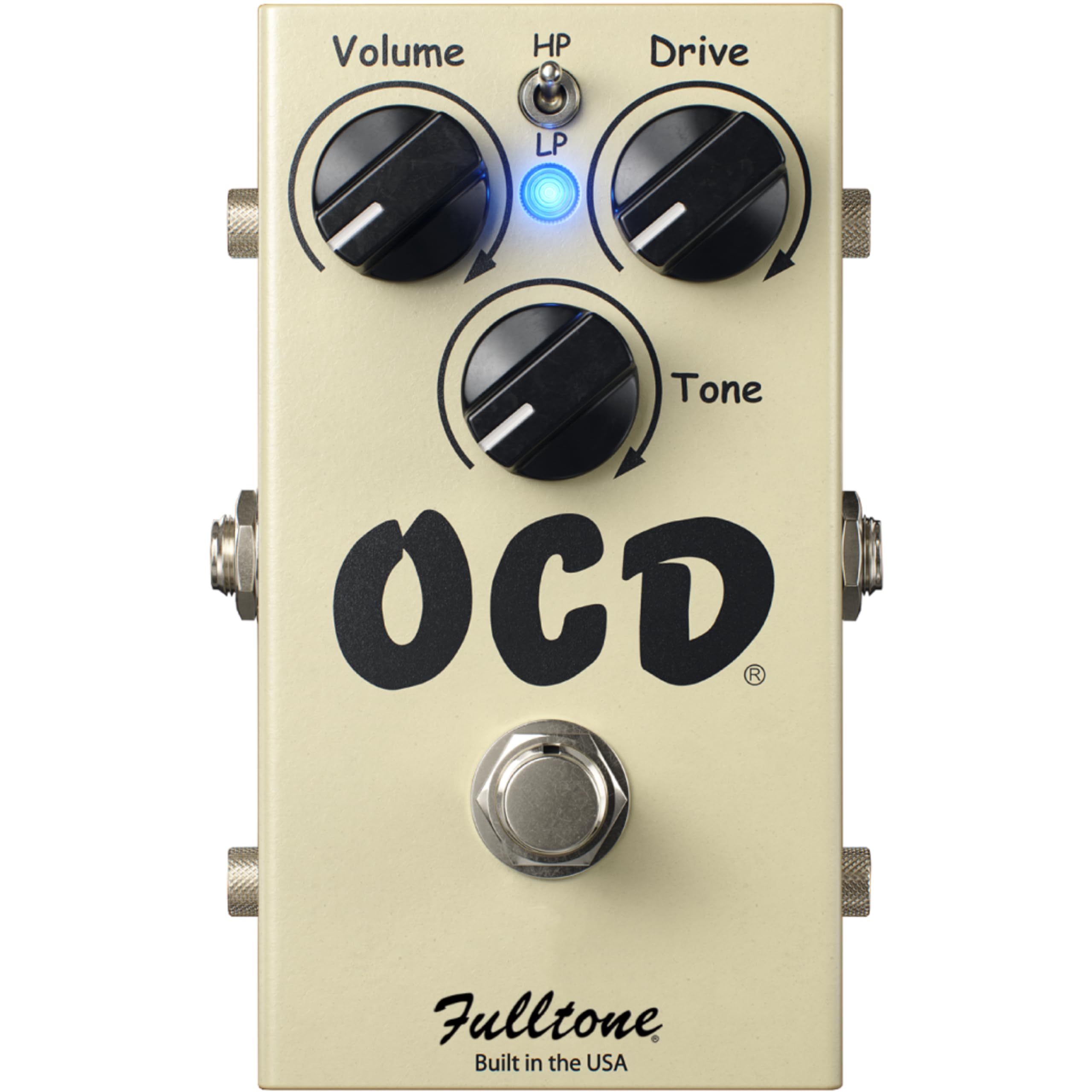
The Fulltone OCD uses a Class-A input stage paired with a MOSFET clipping circuit to emulate the compression and breakup pattern of a pushed tube amplifier. The HP/LP toggle switch flips between an aggressive, British-style upper-mid push and a smoother, American-style transparent response, giving you two distinct voices in one enclosure.
Player feedback highlights its dynamic responsiveness — the pedal cleans up when you roll back your guitar’s volume knob, much like a real amp. The buffered bypass ensures no signal degradation on large boards, and the three-knob layout makes it easy to dial in sounds quickly. Many users pair it with Orange, Vox, or Marshall amps for maximum tonal synergy.
Some users note that the tone knob is subtle and that the pedal can deliver fuzz-like characteristics at extreme settings. It is not the best match for Fender clean amps, where it can sound darker than expected. No power adapter is included, so factor that into your setup.
Why it’s great
- Two voicing modes for diverse amp pairing
- Dynamic response to picking and volume changes
- Rugged metal construction for live use
Good to know
- Can sound dark on Fender-style clean amps
- No power adapter included in the box
3. Electro-Harmonix Big Muff Pi

The Big Muff Pi offers a unique form of distortion that sits between fuzz and traditional overdrive, characterized by its singing sustain and thick, scooped-mid voicing. It is the pedal behind the wall-of-sound tones of Smashing Pumpkins and the extended lead sustain of David Gilmour, thanks to its massive gain stage and tone control that sweeps from dark to biting.
At only 3 mA current draw, it is one of the most power-friendly pedals on this list, making it easy to integrate into any pedalboard power setup. The new NYC-made version includes a battery door and an external power jack, upgrades from vintage models that lacked these conveniences.
Reviewers caution that the Big Muff is not versatile for players seeking a single pedal for all distortion needs — it is a specific, recognizable voice that works best for certain styles. The power adapter requires a 2 mm hollow plug with center-negative polarity, which may not match standard 2.1 mm supplies without a converter.
Why it’s great
- Iconic sustain and harmonic texture for leads
- Very low current draw for easy power integration
- Improved build quality over vintage units
Good to know
- Niche sound not suited for all genres
- Non-standard power plug size
4. Fender Hammertone Distortion Pedal

The Fender Hammertone Distortion uses active 2-band bass and treble EQ controls to fine-tune the distortion character from a light overdrive to a heavy crunch. The pedal offers a vintage-inspired fuzz character at low gain settings, reminiscent of a Tone Bender, while higher gain settings push into a splatty, gated territory that reacts aggressively.
Its top-mounted jacks make it pedalboard-friendly, allowing tighter cable routing compared to side-mounted units. The true bypass footswitch ensures no tone suck when the pedal is off, and the painted steel enclosure is built to withstand stage use.
Some users note that the pedal can sound dark out of the box, requiring adjustment of an internal trim pot to dial in high frequencies. The octave effect from the mod switch is subtle and may not meet expectations for players seeking a pronounced octave-up sound. It delivers a distinct vintage fuzz texture rather than modern high-gain saturation.
Why it’s great
- Active bass and treble for versatile EQ shaping
- Top-mounted jacks for compact pedalboard layout
- True bypass preserves signal purity
Good to know
- May require internal trim pot adjustment for brightness
- Octave effect is subtle and not for pronounced pitch shifts
5. Boss DS-1 Distortion Bundle

The Boss DS-1 is a standard in rock, punk, and grunge distortion, known for its bright, cutting tone that preserves low-end tightness. The tone knob sweeps from sharp, aggressive highs to smooth, warm lows, allowing you to shift from rhythm chugging to singing lead tones without a separate EQ pedal.
This bundle includes a power supply, instrument cable, patch cable, picks, and a polishing cloth — everything you need to hit the ground running. The all-metal chassis is road-ready and has proven its durability for decades, making it a reliable choice for touring musicians and weekend warriors alike.
Some users note that the distortion level is comparable to a Fender FM 212 DSP’s clean channel, meaning it may not offer significantly more gain than your amp’s built-in distortion. It excels more as a tone shaper than a high-gain monster, and the small footprint belies its powerful presence in shaping classic rock sounds.
Why it’s great
- Classic tone with versatile EQ sweep
- Bundle includes essential accessories for immediate use
- Extremely durable metal construction for touring
Good to know
- Gain level may not exceed some amp distortion channels
- Focused on classic rock tones; less suitable for modern high-gain
6. Ibanez TS808 Tube Screamer Overdrive
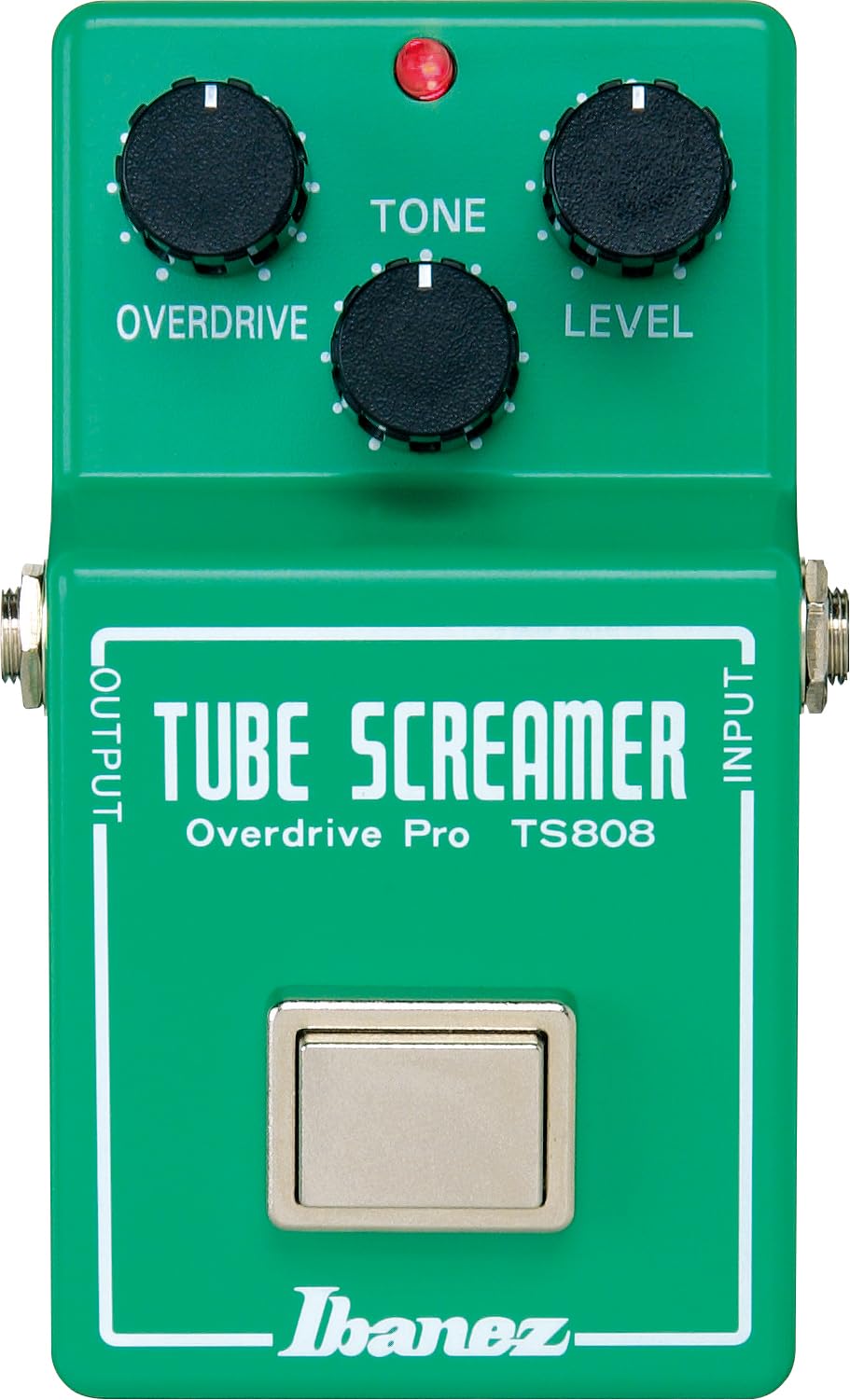
The Ibanez TS808 is the original Tube Screamer circuit that defines the warm, mid-humped overdrive tone heard on countless blues and rock records. The tone control, drive, and level knobs give you smooth, natural tube-like saturation that pushes an amp without excessive distortion, making it a legendary boost pedal for solos.
Reviewers consistently call it a must-have for any pedal board, noting its ability to tighten up high-gain amps and add a rich mid-range presence that helps single-note lines cut through a mix. The die-cast zinc construction and rugged rubber stopper ensure it handles the stomping abuse of live performance.
The TS808 is an overdrive, not a distortion pedal — it provides a gentle, warm breakup rather than high-gain saturation. Players expecting a modern metal tone will need to use it as a boost into an already dirty amp. The price point is premium, but the build quality and sound have retained value for decades.
Why it’s great
- Signature warm mid-hump that cuts through any mix
- Excellent as a clean boost for high-gain amps
- Durable zinc die-cast construction
Good to know
- Not a high-gain distortion pedal
- Premium price for a simple overdrive circuit
7. Electro-Harmonix Soul Food Overdrive

The Electro-Harmonix Soul Food uses boosted power rails to achieve extended headroom and note definition, giving it a transparent character that adds gain without coloring your amp’s natural voice. It is widely recognized as an accurate Klon Centaur clone at a fraction of the cost, offering that same addictive overdrive that sounds like your amp running on the edge.
The selectable true bypass or buffered bypass mode gives you flexibility to protect your tone on any board size. With 40 mA current draw, it requires a dedicated power supply slot but rewards you with a clean, responsive overdrive that works beautifully with tube amps like Fender Bassbreaker or Roland Cube series.
Some users report a noticeable pop when engaging the pedal, especially with the drive turned up. It is not a high-gain distortion pedal and will not satisfy players seeking aggressive distortion. The unpainted metal case may show wear over time, but the sound quality and value remain strong for transparent overdrive enthusiasts.
Why it’s great
- Transparent overdrive that preserves amp character
- Selectable bypass mode for signal chain flexibility
- Excellent Klon-style circuit at an accessible price
Good to know
- May produce an audible pop when engaging
- Higher current draw than minimalist pedals
FAQ
What is the difference between overdrive, distortion, and fuzz?
How do I know if a pedal’s bypass type matters for my setup?
What does headroom mean in a distortion pedal?
Final Thoughts: The Verdict
For most users, the guitar distortion pedals winner is the MXR Super Badass Distortion because it offers a full 3-band EQ for precise sculpting and covers everything from bluesy edge to modern metal without swapping pedals. If you want amp-like dynamic response, grab the Fulltone OCD. And for singing sustain and classic fuzz texture, nothing beats the Electro-Harmonix Big Muff Pi.