
Every stroke of a brush on fine, thin hair carries a risk. The wrong bristles snap strands, the wrong tension pulls at the root, and the wrong cushion creates friction that leads to breakage. For those with delicate hair, the daily detangling ritual often becomes a battle against a brush designed for thicker, coarser textures — and the hair shaft loses every time.
I’m Mohammad Maruf — the founder and writer behind Drink4Good. I’ve spent years analyzing how brush geometry, bristle flexibility, and cushion density interact with fragile hair types, helping readers find tools that preserve rather than tear.
This guide breaks down the specs that matter: bristle spacing, flex rating, and ergonomic design. Finding the hair brush for fine thin hair means prioritizing tools that glide through tangles without yanking at the scalp or snapping already vulnerable strands.
How To Choose The Best Hair Brush For Fine Thin Hair
Fine hair presents a unique challenge: the individual strand diameter is smaller, making each hair more susceptible to snapping under tension. Thin hair adds another dimension — fewer total strands means any breakage is more visually noticeable. The brush you choose must balance detangling power with extreme gentleness.
Bristle Spacing And Flex Rating
The distance between bristles determines how much hair is caught per stroke. For fine thin hair, wider spacing reduces the mass of hair pulled at once, lowering tension along the shaft. Flexible bristles — often marketed as IntelliFlex or soft-flex — bend under pressure rather than forcing through tangles, which prevents the sudden snap that rigid plastic bristles cause.
Cushion Depth And Scalp Protection
A deep, springy cushion absorbs the force of each stroke, preventing the bristle base from slapping against the scalp. On fine hair, a firm cushion transmits more shock to the root, which can exacerbate shedding. Look for removable cushions that allow easy cleaning — trapped hair and product buildup create roughness that snags delicate strands.
Wet Versus Dry Use Design
Fine hair is at its weakest when wet — the cuticle swells and the shaft elongates, making breakage more likely. A brush designed specifically for wet use will have vented channels or flexible teeth that separate strands without friction. Many all-purpose brushes lack this distinction, so checking whether the model is rated for wet detangling is a critical decision point.
Quick Comparison
On smaller screens, swipe sideways to see the full table.
| Model | Category | Best For | Key Spec | Amazon |
|---|---|---|---|---|
| Tangle Teezer Extra Gentle | Mid-Range | Ultra-fine strands prone to shedding | Wider bristle spacing (fewer total bristles) | Amazon |
| Tangle Teezer Plant-Based Ultimate | Premium | Fine, fragile, color-treated hair | Two-tiered soft-flex teeth, plant-based plastic | Amazon |
| Olivia Garden Aurora Detangler | Mid-Range | Fine to medium hair with daily tangles | Removable cushion for easy cleaning | Amazon |
| Wet Brush Original Detangler | Budget-Friendly | Wet and dry detangling on fine hair | IntelliFlex bristles with 55% less breakage claim | Amazon |
| Norsewood Boar Bristle Brush | Budget-Friendly | Adding shine and distributing scalp oils | Boar and nylon bristle blend | Amazon |
In‑Depth Reviews
1. Tangle Teezer Extra Gentle Detangler
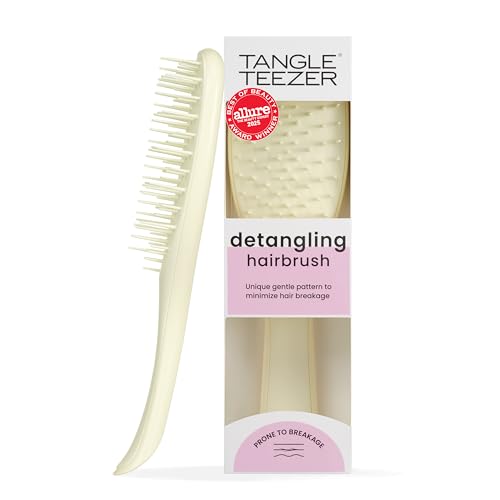
This brush was engineered specifically for fragile strands. The defining feature is the wider spacing between bristles — fewer teeth per square inch compared to a standard detangler — which means each stroke catches less hair mass, dramatically reducing tension on fine shafts. At only 2.22 ounces, it exerts almost no downward weight on the hair during use.
The bristles are concentrated in a dense center patch, while the outer edges are more widely spaced. This dual-zone layout provides targeted detangling at the crown while minimizing pull along the perimeter where breakage often starts. Clinical testing cited by the manufacturer reports 77% of users experienced less hair fall and 89% less pulling, figures that align with the engineering logic of reduced bristle density.
Users with fine, wavy, and curly hair consistently report that this brush slides through knots without the resistance that triggers snapping. The one-piece construction means no cushion cavity for hair to accumulate, simplifying cleaning. For very thick or coarse textures, the bristles may flex too much, but for the intended fine-thin profile, this lack of rigidity is precisely what makes it safe.
Why it’s great
- Widest bristle spacing in this roundup reduces strand tension
- One-piece design prevents hair build-up inside the brush head
- Extremely lightweight, comfortable for daily use
Good to know
- Bristles may bend too much for thick or coarse hair
- Not ideal for deep scalp massage due to high flex
2. Tangle Teezer Plant-Based Ultimate Detangler
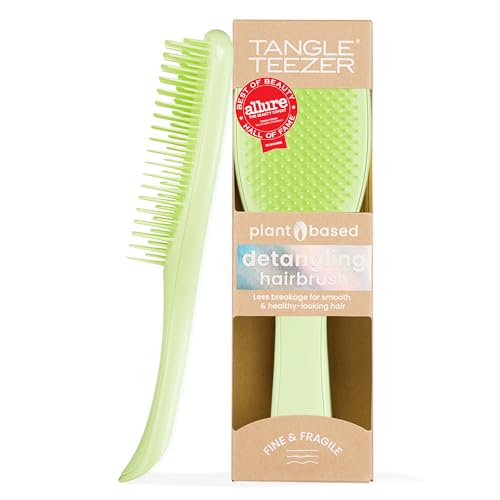
This model from Tangle Teezer uses a patented two-tiered tooth system. The longer, flexible teeth work through knots while the shorter teeth smooth the cuticle afterward, creating a two-stage detangling action that reduces the number of passes. The material itself — 85% castor bean-derived plastic — is one grade softer than the standard Ultimate Detangler, specifically calibrated for color-treated and fragile strands.
The ergonomic shape fits naturally in the palm, with a curved back that follows the contour of the scalp. Users with arthritis or grip limitations have reported the handle shape provides more leverage without requiring tight clamping. The open structure allows water to flow through during shower use, making it effective for distributing conditioner evenly without product pooling.
Reviewers with fine, thin hair routinely call this their daily driver, noting that shedding visibly decreases after switching from a standard paddle brush. The dishwater-safe rating makes sanitation effortless — a significant advantage because residue buildup on bristles creates microscopic roughness that abrades fine hair. The trade-off is the feel: the plant-based plastic has a lighter, less dense weight that some perceive as cheap, though functionally it reduces stress on the hair.
Why it’s great
- Two-tiered tooth technology tackles knots and smoothes in one pass
- Softer bristle grade ideal for fragile, color-treated strands
- Dishwasher-safe for thorough cleaning
Good to know
- Plant-based plastic feels less substantial than standard brushes
- Shorter teeth may not reach through very long, thick hair
3. Olivia Garden Aurora Detangler Brush
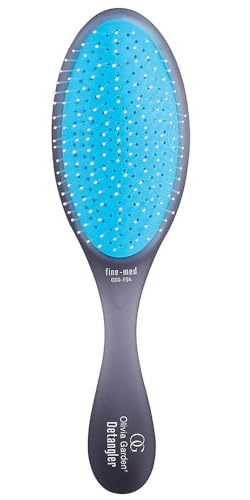
The Aurora Detangler distinguishes itself with a removable cushion that can be squeezed out for cleaning. This matters for fine hair because accumulated lint, dust, and oil residue on the cushion surface create friction that catches delicate strands. The cushion itself has a medium-depth flex — firmer than the Tangle Teezer models but soft enough to absorb shock without transmitting force directly to the root.
Olivia Garden positions this brush specifically for fine to medium hair, which is reflected in the bristle layout. The bristles are packed at a density that balances detangling efficiency with gentleness—not as wide as the Extra Gentle but wider than a standard paddle brush. Users with fine, straight hair report it glides without catching knots, and the scalp-massage feel is described as pleasant rather than abrasive.
At 2.4 ounces and 9.4 inches in length, it strikes a portable profile that fits easily into a gym bag or travel kit. The flat-backed design means it sits stable on a countertop. Reviewers over 60 have specifically praised the easy-grip handle and the reduced hair loss during daily brushing routines compared to conventional salon brushes.
Why it’s great
- Removable cushion allows complete cleaning behind the bristles
- Scalp-hugging design distributes pressure evenly
- Slim profile packs well for travel
Good to know
- Cushion may need replacement after extended use
- Not as gentle as the Extra Gentle for ultra-fine hair
4. Wet Brush Original Detangler
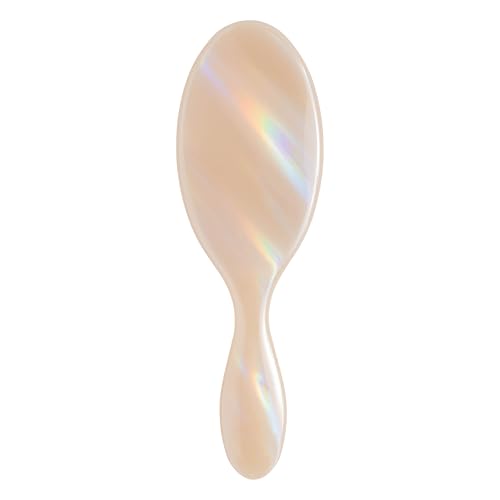
The Wet Brush Original is the most widely recognized detangling tool on the market, and its reputation is built on the IntelliFlex bristle technology. These bristles are designed to flex and spring back rather than resist, allowing them to slip through tangles rather than force them apart. The manufacturer claims 55% less breakage compared to a standard brush, a figure corroborated by many user accounts.
The cushion is generously padded, which helps distribute the brushing force across a wider area of the scalp. This is particularly beneficial for fine hair because it reduces the peak pressure at any single root. The light overall weight — 0.64 ounces — means the brush head does not drag down the hair shaft during use, a subtle but important factor for thin hair that can be weighed down easily.
One recurring observation from long-term users concerns the colored coating on limited editions: after one to two months of daily use, the iridescent finish may begin to wear. Functionally the brush remains effective, but the cosmetic degradation is worth noting. The wider paddle shape works well for straight and wavy fine hair, though some users with extremely fine hair report that even this brush can be swapped for an even gentler model.
Why it’s great
- IntelliFlex bristles minimize pulling on tangles
- Very lightweight, won’t drag on thin strands
- Works well on both wet and dry hair
Good to know
- Coating on limited editions may wear over time
- Bristle density may still be too high for some ultra-fine types
5. Norsewood Boar Bristle Hair Brush
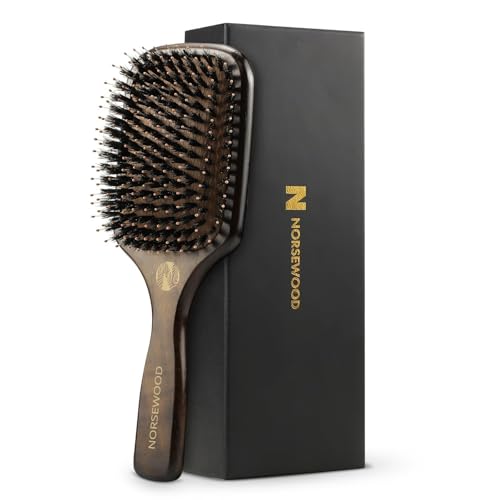
Boar bristle brushes serve a different function than plastic detanglers: they redistribute natural scalp oils along the hair shaft, adding shine and softness. This Norsewood model combines 100% boar bristles with nylon pins to penetrate the hair layer more effectively. For fine thin hair, oil distribution can reduce static and flyaways without adding product weight.
The rubber cushion is softer and more forgiving than a traditional wooden paddle brush base, reducing the risk of scalp irritation. The brush head is smaller than a full-size paddle brush, which gives more control when working around the crown and nape areas where fine hair often thins first. The included mini-rake cleaning tool is essential — boar bristles trap oils and dead skin cells, and regular cleaning prevents build-up that would transfer back onto clean hair.
Weighing 7.83 ounces, this is the heaviest brush in this roundup, and the weight is noticeable during extended styling sessions. Users with arthritis or wrist strain may find the bulk less comfortable than the ultra-light plastic options. This brush is best suited for dry brushing and finishing, not for wet detangling where the boar bristles would become waterlogged and lose effectiveness.
Why it’s great
- Boar bristles distribute natural oils for healthy shine
- Soft rubber cushion protects the scalp
- Includes cleaning rake and storage pouch
Good to know
- Heavier than plastic detanglers, may fatigue the wrist
- Not suitable for wet detangling
FAQ
Should I brush fine thin hair when it is wet or dry?
How often should I replace a brush for fine thin hair?
Final Thoughts: The Verdict
For most users, the hair brush for fine thin hair winner is the Tangle Teezer Extra Gentle Detangler because its wider bristle spacing directly addresses the core problem of strand tension. If you want an eco-friendly option with two-tiered detangling, grab the Tangle Teezer Plant-Based Ultimate. And for distributing natural oils and adding lightweight shine to dry hair, nothing beats the Norsewood Boar Bristle Brush.