
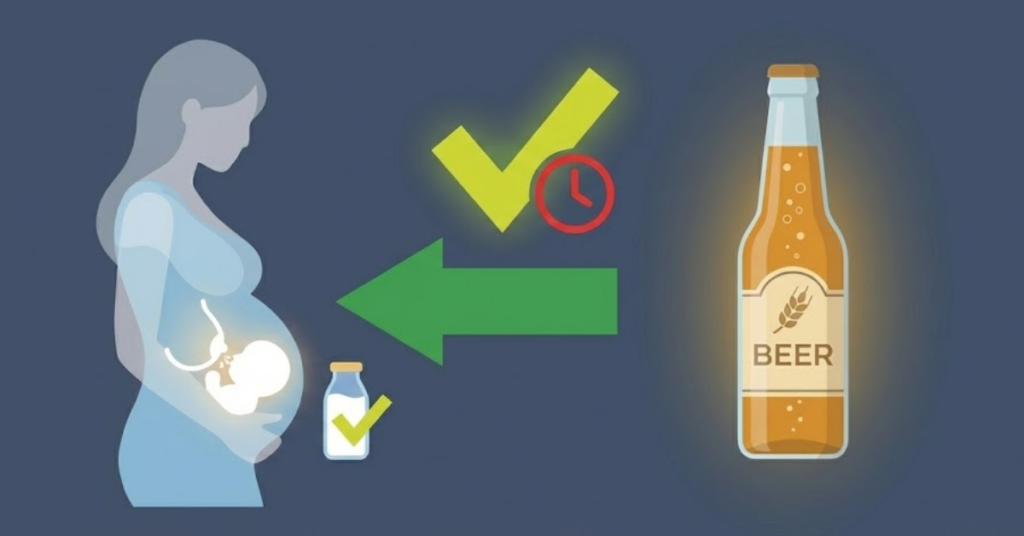
Yes, you can drink beer while breastfeeding if you limit the amount and wait about two hours per drink before nursing or using pumped milk.
Can I Drink Beer While Breastfeeding? Safety Basics
Many parents ask, “Can I drink beer while breastfeeding?” because they miss a casual drink yet want to keep their baby safe. The short answer is that an occasional beer, timed well, usually fits with breastfeeding for a healthy baby. There is no completely risk-free level of alcohol for infants, so the safest option is not drinking at all while nursing. Still, research and major health agencies describe ways to keep exposure low when a parent decides to drink.
Alcohol moves from your blood into your milk at similar levels. As your body breaks down the alcohol, the level in milk falls too. A common rule from public health sources is to wait at least two hours per standard drink before breastfeeding again. One standard drink means a typical beer, not an oversized pint or a strong craft can. Larger or stronger drinks need more time. Regular heavy drinking is not compatible with safe breastfeeding and calls for medical care and extra help.
Standard Drinks And Wait Times While Breastfeeding
To keep things practical, it helps to know what counts as “one drink” and how long many experts suggest waiting. This first table gives a broad view of common beer servings and conservative wait times often mentioned in breastfeeding guidance.
| Drink Type | Typical Serving | Minimum Wait Before Nursing |
|---|---|---|
| Regular Beer (~5% ABV) | 12 oz / 355 ml | At least 2 hours |
| Light Beer (~4% ABV) | 12 oz / 355 ml | About 2 hours |
| Strong Beer (6–7% ABV) | 12 oz / 355 ml | 2.5–3 hours |
| Craft IPA Or Ale (7–9% ABV) | 12 oz / 355 ml | 3–4 hours |
| Pint Of Regular Beer | 16 oz / 473 ml | 3–4 hours |
| Two Regular Beers | 2 × 12 oz | 4–5 hours |
| Heavy Or Binge Drinking | 3+ drinks in one sitting | Skip nursing, use stored milk or formula |
These time frames match advice from sources such as
CDC guidance on alcohol and breastfeeding,
which suggests waiting about two hours after one standard drink. Your body size, liver health, and how fast you drink can shift this slightly, so these numbers stay on the cautious side.
How Alcohol From Beer Reaches Breast Milk
Alcohol does not sit in your milk permanently; it moves in and out as levels in your blood rise and fall. After you drink beer, alcohol enters your bloodstream through your stomach and small intestine. Levels usually peak about 30–60 minutes after drinking, sometimes a bit longer if you drink slowly or have a meal at the same time. During that window, alcohol levels in milk usually match blood levels.
As your liver breaks down the alcohol, the level in your blood drops. Milk follows the same pattern. No trick or pumping method forces alcohol out faster. Time is the main factor. That is why “pump and dump” after a single drink does not clear the alcohol; it only removes that batch of milk and might ease breast fullness. Once your body clears the alcohol and you feel completely clear-headed again, newly produced milk has negligible alcohol content.
Does Beer Increase Milk Supply?
There is a long-standing myth that dark beer or stout boosts milk production. Older traditions suggested that a nursing parent should drink beer to bring in milk or keep supply strong. Modern research does not back up that idea. Studies show that alcohol can change how babies feed at the breast and may reduce the amount of milk they take during a session. Some research also notes that regular alcohol intake can reduce total milk production over time.
Any small rise in hormones that trigger milk flow is usually offset by slower milk transfer at the breast. In simple terms, beer is not a galactagogue. Foods or supplements that contain barley or brewer’s yeast without alcohol are a separate topic. When the question is “Can I drink beer while breastfeeding to boost supply?” the answer is no. Beer is not a supply tool; at best it is an occasional drink that needs careful timing so that your baby sees as little alcohol as possible.
Drinking Beer While Breastfeeding: Timing Tips That Help
Once you understand how alcohol behaves in your body, timing a drink becomes easier. Many clinicians and lactation resources suggest drinking right after a full feed or pumping session. That way you give your body the longest break before your baby is likely to want to nurse again. If your baby usually nurses every three hours, a single small beer right after a feed may be cleared by the time the next feed comes.
A helpful way to think about it is “time since last drink,” not only “number of drinks.” One standard drink, then no more, and at least a two-hour gap before nursing again sits near the conservative end of common advice from sources such as
Cleveland Clinic guidance on alcohol and breastfeeding. Two drinks in an evening calls for a longer break and, for many families, stored milk, donor milk, or formula for one or two feeds.
Sample Plans For A Single Beer
A few simple patterns can make an occasional beer feel less stressful:
- Drink right after a full feed. Nurse or pump until breasts feel soft, then have one regular beer.
- Set a timer. Start a two-hour timer after the last sip. Treat that as the earliest time you would nurse again.
- Keep a small freezer stash. Having one or two bags of milk on hand can make evenings out much easier.
- Choose lower-strength beer. A light beer or smaller serving lowers total alcohol and shortens practical wait times.
If your baby wakes before the timer ends and seems hungry, this is where pumped milk, donor milk, or formula comes in handy. You still hold and comfort your baby as usual; the feed just comes from a bottle instead of the breast in that window.
When You Should Skip Nursing And Use Stored Milk
There are times when the answer to “Can I drink beer while breastfeeding?” leans closer to “not right now.” If you have had several drinks, feel tipsy, or find your balance or judgment affected, you should not nurse or care for your baby alone. Alcohol does not only reach milk; it also changes reaction time, coordination, and safe sleep habits.
In that situation, it is safer to:
- Ask a sober adult to feed and care for the baby.
- Offer previously pumped milk or formula until you are fully clear-headed again.
- Pump only for comfort if your breasts feel full, then discard that milk.
Large or repeated drinking sessions while breastfeeding can harm both the nursing relationship and your baby’s development. Anyone who feels stuck in a pattern of frequent drinking benefits from talking with a doctor, midwife, or counselor about safer options and treatment.
Risks Of Drinking Too Much Beer While Nursing
Occasional light drinking with careful timing has not been shown to harm healthy term babies in research so far. Heavy or regular drinking is a different story. Studies in humans and animals link high or frequent alcohol exposure to drowsiness, poor feeding, slower weight gain, and possible long-term effects on movement and learning. Daily drinking or binge drinking creates longer windows where alcohol stays in milk at higher levels.
Alcohol also changes the way babies sleep. They may fall asleep faster but wake more often or spend less time in deep, restful sleep. Over time, that pattern can affect mood and growth. On the parent side, alcohol increases the risk of unsafe sleep situations, such as falling asleep on a sofa with the baby. Even when milk levels are low, those safety issues matter. That is why most guidelines urge small amounts, spaced out, with clear breaks between drinks and feeds.
Health Situations That Call For Extra Caution
Some families face higher risk and need stricter limits. You may need to avoid beer completely or keep it for rare occasions if:
- Your baby was born early, has a low birth weight, or has health problems.
- You are taking medication that interacts with alcohol or affects the liver.
- You have a history of liver disease, substance use disorder, or other health issues linked to drinking.
- You are the only adult caring for the baby overnight.
In these cases, it makes sense to ask your own health team for clear advice tailored to your body, your baby, and your medicines. Written guidelines are helpful, but individual health history always matters.
Planning Ahead For Beer And Breastfeeding
A bit of planning turns the question “Can I drink beer while breastfeeding?” into a straightforward schedule instead of a source of stress. Start by looking at your baby’s usual pattern. Many babies have one longer stretch of sleep in the evening. Placing a drink right at the start of that stretch lowers your baby’s exposure. If your baby is still very unpredictable, you may want to wait or keep alcohol for later months.
Pumping during the day for an evening event can build a small stash. Label and freeze milk in small portions so you waste less if your baby only wants a little. Talk through the plan with your partner, family member, or sitter. Clarify who will handle feeds and diaper changes if you drink more than one beer or feel drowsy. Clear roles before the event reduce spur-of-the-moment decisions later.
Quick Planning Checklist
- Feed or pump right before your first sip.
- Limit yourself to one standard beer at a time on nursing nights.
- Set a timer for the next safe feed window.
- Keep at least one bottle of milk or formula ready just in case.
- Arrange for a sober adult to be “on duty” if you might have more than one drink.
Myths And Misconceptions About Beer And Breastfeeding
A lot of the stress around alcohol and breastfeeding comes from mixed messages. Clearing up a few myths makes decisions easier:
- “Beer boosts milk supply.” Research shows alcohol can reduce milk transfer at the breast and may lower overall supply when drinking is frequent.
- “Pump and dump fixes everything.” Pumping does not lower alcohol in your blood. It only removes the milk already present in your breasts.
- “If I feel fine, milk is alcohol-free.” Feeling sober is a helpful clue but not a perfect measure. Waiting at least two hours per standard drink adds a safety margin.
- “Non-alcoholic beer is always safe.” Some “non-alcoholic” beers still contain small amounts of alcohol. Check labels and treat them like a low-alcohol drink if in doubt.
When family members repeat older sayings about stout or strong beer for milk, you can share that newer research paints a different picture. Good latch, frequent nursing, rest, and adequate calories are the real pillars of milk supply, not alcohol.
Risk Levels And Safer Choices With Beer
This second table pulls together patterns of beer drinking with practical advice for breastfeeding. It sits closer to decision time, when you may be weighing what to do on a given night.
| Drinking Pattern | Breastfeeding Advice | Safer Plan |
|---|---|---|
| One small beer once a week | Generally compatible with nursing a healthy term baby | Drink after a feed, wait 2 hours, keep a bottle ready |
| One or two beers on weekends | Needs careful timing and stored milk for some feeds | Space drinks, plan extra wait time, use pumped milk if needed |
| Beer several nights per week | Raises risk for milk supply and baby exposure | Cut back, add alcohol-free nights, talk with a health professional |
| Heavy single session (3+ beers) | Not safe to nurse or care for baby alone until fully sober | Use stored milk or formula, have a sober caregiver in charge |
| Baby under 1 month old | Extra sensitive period for both parent and baby | Many guidelines suggest avoiding alcohol in this early phase |
| Preterm or medically fragile baby | Higher risk with any alcohol exposure | Avoid beer or get personalized advice from your care team |
Balanced Answer: Can I Drink Beer While Breastfeeding?
So where does all this leave a nursing parent who enjoys beer once in a while? For a healthy term baby, occasional light drinking with smart timing fits within current guidance from many medical groups. No level of alcohol exposure is proven completely safe, but research has not found harm from rare, small amounts when long breaks separate drinking and nursing.
A simple way to stay on the safe side is to follow these points:
- Keep drinks small and infrequent, with at least a few dry days every week.
- Drink right after a full feed or pump, not right before.
- Wait at least two hours per standard drink before nursing again.
- Use stored milk or formula if you drink more than planned or still feel the effects.
- Skip beer completely and talk with your care team if your baby is fragile or you have health concerns linked to alcohol.
With clear information, many parents find a middle path that respects both their own social life and their baby’s safety. If doubts linger on a specific situation, bring the question to your doctor, midwife, or a skilled lactation consultant who knows your history. That way, the answer to “Can I drink beer while breastfeeding?” reflects not only general science but also your body, your baby, and your daily life.