
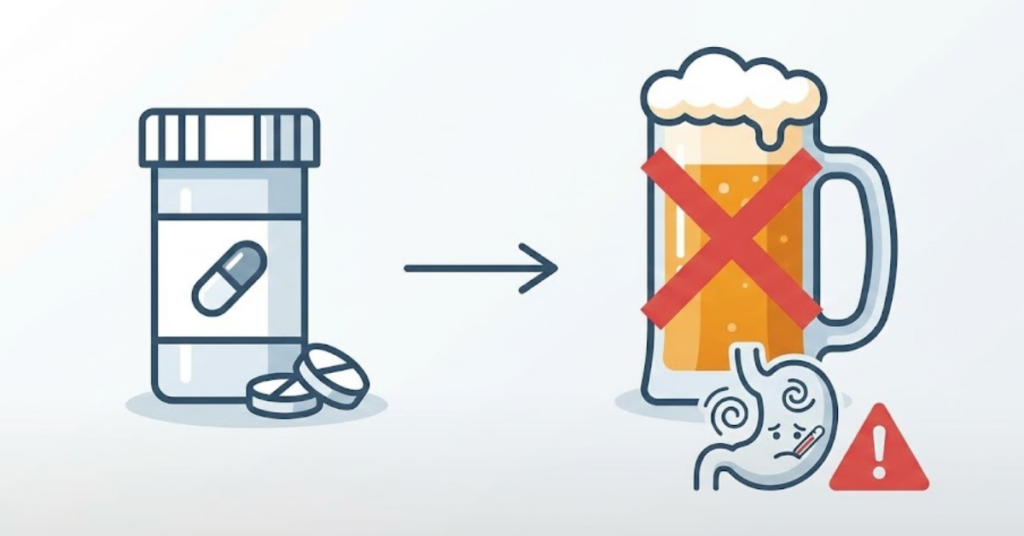
No, drinking beer while on antibiotics is usually discouraged because alcohol can worsen side effects and, with some drugs, trigger harsh reactions.
“Can I drink beer while on antibiotics?” comes up for a lot of people right after they pick up a prescription. You might feel mostly fine, plans are already set with friends, and a cold beer sounds harmless. Yet mixing beer and antibiotics can bring extra side effects, slow down recovery, and in some cases cause very nasty reactions.
This guide walks through when alcohol and antibiotics clash, which drugs carry the biggest beer risk, and how long you should wait before you drink again. It’s based on medical sources such as NHS guidance on antibiotics and alcohol and Mayo Clinic advice on antibiotics and alcohol, but it doesn’t replace a one-to-one chat with your own doctor or pharmacist.
Can I Drink Beer While On Antibiotics? Common Advice
Health services across the world give a pretty steady message on alcohol and antibiotics. For many common antibiotics, small amounts of beer may not block the drug from working. Even then, doctors usually tell people to skip alcohol or at least wait until the course ends. For a few specific drugs, beer is a flat “no” until the medicine has cleared your system.
The main worries fall into three groups. First, some antibiotics react directly with alcohol and can cause flushing, pounding heart, chest discomfort, and strong nausea. Second, beer and antibiotics share side effects such as stomach upset, so taking both stacks the odds you’ll feel lousy. Third, alcohol makes it harder for your body to rest and heal, which means your infection may drag on.
| Antibiotic Type | Beer Interaction Risk | Typical Advice |
|---|---|---|
| Metronidazole | Very high (disulfiram-like reaction) | No alcohol during course and 48–72 hours after last dose |
| Tinidazole | Very high | No alcohol during course and at least 72 hours after last dose |
| Cefotetan / Similar Cephalosporins | High | Avoid beer during treatment and short period after |
| Linezolid | High with some beers and wines | Avoid tap beer and red wine during treatment |
| Trimethoprim-Sulfamethoxazole | Moderate to high | Alcohol often discouraged; follow label and doctor advice |
| Doxycycline / Tetracyclines | Moderate | Alcohol can raise side effects and may weaken effect with heavy use |
| Amoxicillin, Penicillin Family | Lower, but still present | Small amounts might be allowed, though many doctors still advise avoiding beer |
| Azithromycin / Macrolides | Lower to moderate | Alcohol can aggravate nausea and stomach upset |
Labels on your box or bottle should always take first place. If the leaflet says no alcohol, treat that as a firm rule. If it doesn’t mention alcohol at all, that never means “drink freely”; it just means you and your prescriber need to weigh your own health, dose, and how badly you still feel from the infection.
How Alcohol And Antibiotics Affect Your Body
To understand why beer and antibiotics can clash, it helps to see how both move through your body. Most antibiotics are broken down by your liver and cleared through your kidneys. Beer adds more work for the same liver and can change how quickly medicines are processed. At the same time, alcohol itself leads to drowsiness, dehydration, and blood pressure swings.
Liver And Drug Processing
Your liver handles most of the clean-up work for both beer and antibiotics. Some drugs, such as metronidazole and certain cephalosporins, share pathways that alcohol also uses. When both reach the liver together, odd by-products can form. That’s what sets off the classic “disulfiram-like” reaction: facial flushing, pounding heart, cramps, and intense nausea.
Even where no direct clash exists, regular drinking can inflame liver tissue or slow down drug breakdown. That can leave antibiotics in your system longer than planned or strain a liver that’s already working flat out. People with existing liver disease, hepatitis, or heavy long-term drinking habits face extra risk here and should take extra care about any alcohol while on treatment.
Gut Side Effects From Beer And Antibiotics
Stomach upset is one of the most common gripes with antibiotics. Nausea, loose stool, cramps, and taste changes show up often in drug leaflets. Beer on its own can irritate the stomach lining and speed up gut movement. Put both together and side effects tend to feel stronger, with higher chances of vomiting or diarrhea just when you need to keep medicine down.
On top of that, both alcohol and antibiotics disturb the mix of bacteria in your gut. Many people notice more gas, bloating, or discomfort while on a course. Heavy drinking during this time can stretch that misery out and may raise the odds of yeast infections or other follow-on problems once the main infection fades.
Sleep, Dehydration, And Recovery
When you’re sick, sleep and hydration matter a lot. Beer makes you pee more, which dries you out, and it breaks up sleep quality even when it seems to “knock you out” at first. That pushes your body to work harder against the infection, just when the antibiotic needs steady help from your own defences.
Several medical reviews, such as work cited by Healthline and major clinics, point out that modest alcohol intake may not ruin antibiotic effect for every drug, yet it can still slow recovery and raise side-effect rates. That trade-off rarely favours having a drink during a short course of pills.
Drinking Beer While On Antibiotics Safely: Timing And Amounts
If you’re midway through a course and a beer invite lands, the safest move is almost always to skip it until your treatment ends. In day-to-day practice, doctors sometimes give more flexible advice for drugs with low alcohol interaction and in people who are otherwise healthy. Even then, the details matter: which antibiotic you take, how strong the dose is, and how your body usually reacts to alcohol.
High-Risk Antibiotics Where Beer Is Off The Table
Certain drugs sit in a “no beer at all” bucket. Metronidazole and tinidazole are the main ones here. NHS guidance and many hospital formularies warn against any alcohol during treatment and for 48–72 hours after the last dose. The same goes for cefotetan and some other cephalosporins that can trigger the same reaction when mixed with alcohol.
Linezolid needs extra care for a different reason. This drug can raise levels of a substance called tyramine when taken with some drinks, including tap beer and red wine. That mix can spike blood pressure. If you’re on linezolid, stay away from those drinks entirely until your prescriber tells you the course has fully cleared.
Lower-Risk Antibiotics Where Small Amounts Might Be Allowed
For many common antibiotics, such as amoxicillin or standard macrolides, modest alcohol intake doesn’t seem to blunt the drug’s killing power in healthy adults. Even so, clinics such as Cleveland Clinic and Healthline still suggest avoiding alcohol during the course, because the mix leads to more nausea, dizziness, and dehydration than either one alone.
If your doctor has clearly said a single small beer is acceptable with your current antibiotic, stick to that limit. Sip slowly, drink plenty of water, and avoid taking your pill at the exact same moment as the beer. Never stretch that into heavy drinking or a binge “to catch up” after several dry days; that’s when accidents, severe dehydration, and poor sleep pile up.
How Long To Wait After Finishing Antibiotics
There’s no single waiting time that fits every drug, but some patterns appear in medical guidance. For metronidazole and tinidazole, services such as the NHS advise at least 48–72 hours after the last dose before any alcohol. Some sources suggest similar gaps for cefotetan and close relatives because traces of the drug hang around for a while.
For lower-risk antibiotics in healthy adults, many doctors tell patients they can have a drink once they’ve taken the last dose and feel back to normal. Still, waiting a day or two gives your liver a chance to clear leftover drug and lets you check that no late side effects are brewing. If you had any liver trouble, severe side effects, or a long course, ask your doctor or pharmacist how long to stay off alcohol.
Common Symptoms When Beer And Antibiotics Mix
Reactions from mixing beer with antibiotics range from mild discomfort to emergency situations. Paying attention to early warning signs helps you act early if a simple mistake turns into something more serious. The table below brings together frequent symptoms people report when alcohol and antibiotics clash.
| Symptom | Possible Cause | Suggested Response |
|---|---|---|
| Flushing And Warm Face | Disulfiram-like reaction with drugs such as metronidazole | Stop drinking, rest, sip water; call urgent care if it worsens |
| Nausea And Vomiting | Stacked stomach side effects from beer and antibiotic | Pause alcohol and medicine, then call a doctor for guidance |
| Racing Or Irregular Heartbeat | Alcohol interaction with certain antibiotics | Seek urgent medical help, especially with chest pain or faintness |
| Severe Headache Or High Blood Pressure | Linezolid with tap beer or red wine, or other triggers | Stop drinking and contact emergency services or urgent clinic |
| Bad Diarrhea | Gut irritation, possible C. difficile infection | Call a doctor promptly, especially if there is blood or fever |
| Yellow Skin Or Eyes | Liver stress or injury | Go to emergency care right away |
| Rash, Swelling, Trouble Breathing | Allergic reaction to the antibiotic | Call emergency services at once |
If any of these symptoms appear after mixing beer with antibiotics, don’t wait to see if they pass on their own. Stop drinking alcohol, avoid taking any more doses until a doctor has advised you, and seek urgent care if breathing, heart rhythm, or consciousness feel off in any way.
Practical Tips If You Usually Drink Beer
Staying off beer for a week or two can feel tough, especially if it’s part of your normal way to relax or socialise. Planning ahead makes it easier to stick to safe boundaries while your body clears the infection and the antibiotic. A few small changes go a long way here.
Try swapping beer for sparkling water, soda, or a low-sugar mocktail at social events. Holding a drink in your hand helps you feel included without taking in alcohol. Eat before you head out so hunger doesn’t tempt you toward stronger drinks. Let close friends know you’re on antibiotics; a simple line like “I’m on pills for an infection so I’m off alcohol this week” usually stops peer pressure before it starts.
At home, keep your pills somewhere separate from alcohol so you don’t reach for both at once out of habit. Set phone reminders for your doses, add a big glass of water to each reminder, and treat the end of the course as your main target. You can always plan a small celebratory drink a few days after your last pill, once your doctor has said that’s safe for your situation.
When To Call A Doctor Or Pharmacist
Even if you’ve read every leaflet, personal health details matter. Age, liver or kidney disease, other medicines, and how severe your infection is all change the level of risk from beer. A short chat with a doctor, nurse, or pharmacist often gives a clear “yes, no, or maybe later” answer for your exact antibiotic.
Reach out for medical advice as soon as possible if you drank beer by mistake during a course that forbids alcohol, such as metronidazole or tinidazole. The same goes if labels are unclear or you take more than one medicine at once, including herbal products or over-the-counter pain relief. Bring a list of everything you’re taking so the clinician can spot hidden interactions.
Seek emergency help if you notice chest pain, severe shortness of breath, swelling of the face or throat, confusion, or collapse after mixing alcohol with antibiotics. These signs can point to a dangerous reaction that needs fast treatment. Drug makers and public health bodies such as the CDC stress that antibiotics help most when used carefully and exactly as prescribed; that careful use includes smart choices about alcohol during the course.
So, can you drink beer while on antibiotics? For the safest course, treat most antibiotic rounds as a short alcohol “time-out,” especially when labels or trusted sites tell you to avoid mixing. The infection clears faster, side effects stay milder, and you can enjoy that next beer once your body and your medicine have had time to finish the job.