
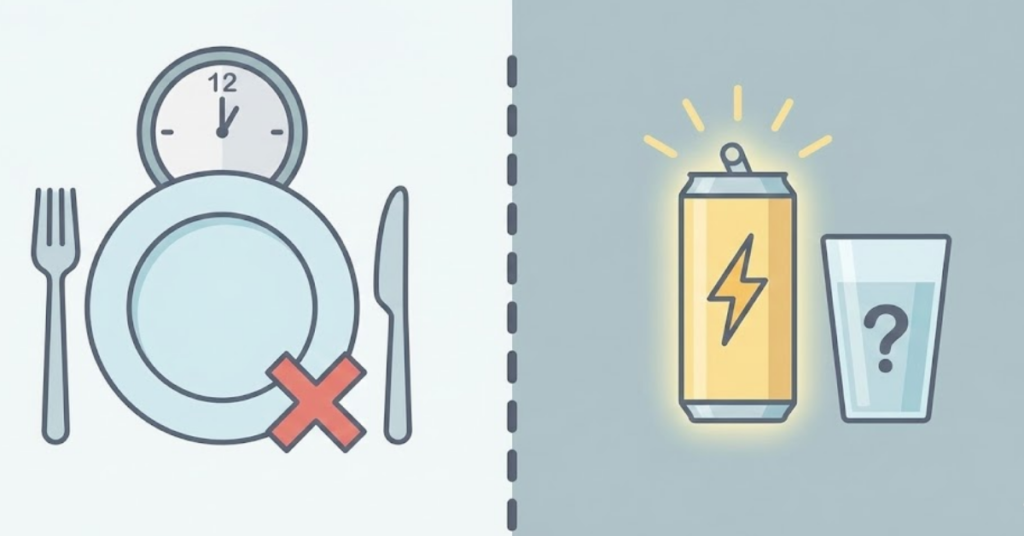
Yes, you can drink some energy drinks while fasting, but sugar, calories, and sweeteners often break a fast or raise health risks.
What Fasting Means For Drink Choices
Before deciding whether energy drinks fit inside a fast, it helps to define what “fasting” means for your goal. Some people fast for blood sugar control or weight loss, some for metabolic health, and others for religious or time-restricted eating habits. Each reason sets different lines for what counts as breaking a fast.
A strict water fast usually allows only water and plain electrolytes with no sugar, calories, or sweetened flavor drops. A more flexible fasting window for weight management may allow low- or zero-calorie drinks that do not trigger hunger too much or raise blood sugar. Medical fasts for labs or procedures rely on instructions from a clinician, and those printed directions always outrank any general rule about energy drinks.
Can I Drink Energy Drinks While Fasting? Health Context
When readers ask “can i drink energy drinks while fasting?” they usually want to protect both their fasting results and their heart, sleep, and digestion. Energy drinks pack more than caffeine. They often carry sugar, sweeteners, acids, and extra stimulants such as taurine or guarana, which can change how a fast feels and how safe it is for a given person.
Most nutrition guidance for adults focuses on total daily caffeine, not on a single brand. For healthy adults, several expert groups and the U.S. Food and Drug Administration suggest staying under about 400 milligrams of caffeine per day from all sources combined. Exceeding that range with several cans of energy drink can raise heart rate, blood pressure, and anxiety symptoms, especially during a fast when there is no food in the stomach to buffer caffeine.
Energy Drinks While Fasting: Types Of Fasts And Typical Rules
Energy drinks interact with fasts in different ways depending on sugar content, calories, and additives. The table below shows how common kinds of fasts line up with popular energy drink styles. Brands vary widely, so the label always matters more than the marketing words on the can.
| Fasting Style | Typical Rule For Energy Drinks | Why This Rule Exists |
|---|---|---|
| Strict Water Fast | Energy drinks not allowed | Sugar, flavors, and stimulants move the fast away from plain water. |
| Intermittent Fasting For Weight Loss | Zero-calorie versions sometimes allowed in the fasting window | Goal is low calories while keeping hunger manageable. |
| Religious Or Spiritual Fast | Depends on faith rules; often only water or nothing | Traditions set the boundary, not calories or macros. |
| Metabolic Health Or Blood Sugar Fast | Sugary energy drinks avoided; some use unsweetened caffeine instead | Added sugar can spike blood glucose and insulin. |
| Time-Restricted Eating With Flexible Drinks | Some people include diet energy drinks in the fasting window | They prioritize eating hours over a strictly clean fast. |
| Medical Fasting Before Tests Or Surgery | Follow written medical directions; energy drinks usually not allowed | Stomach contents and blood chemistry can affect test results and safety. |
| Athletic Fasting Protocols | Sports staff may permit certain caffeine drinks before training | Performance goals sometimes outweigh a strict definition of fasting. |
This table shows why one answer rarely fits everyone. The label on the can, your reason for fasting, and your health history all affect whether an energy drink belongs in your fasting hours.
What In Energy Drinks Can Break A Fast
Energy drinks share a few core ingredients that matter when you are fasting. Caffeine comes first. Sugar, sugar alcohols, and nonnutritive sweeteners follow close behind. Then come extra stimulants, vitamins in large doses, and acids that shape taste.
Any drink with added sugar or cream almost always breaks a fast in the strict sense because it delivers calories and raises blood sugar. Even one standard full-sugar can can add more than 150 calories, which moves the body away from a low-calorie fasting state. Artificially sweetened or “zero sugar” options may contain minimal calories, yet they still can change appetite, gut comfort, and cravings in ways that feel different from plain water or black coffee.
How Caffeine Hits During A Fast
Caffeine is a stimulant that can boost alertness for a few hours. Large amounts can also cause jitters, racing heartbeats, and sleep problems. Research and expert reviews point to roughly 400 milligrams of caffeine per day as a common upper limit for most healthy adults, with lower ranges advised for pregnant people and for anyone with heart rhythm or blood pressure concerns.
During a fast, caffeine hits the system faster because there is no food in the stomach. That can make a dose that feels mild with breakfast feel harsh when taken alone. People who already battle reflux or stomach pain sometimes notice more burning or nausea when they drink strong energy drinks on an empty stomach.
What Sweeteners Do To A Fast
Sugary energy drinks deliver a clear calorie load and usually end a fast aimed at weight loss or metabolic health. Even diet versions can influence a fasted state. Some people find that sweet taste without calories makes them hungrier later in the day. Others feel fine and prefer a diet drink over coffee or tea.
Health Risks Of Mixing Energy Drinks And Fasting
Energy drinks already carry warnings for some groups, even without fasting. Public health agencies such as the National Center for Complementary and Integrative Health point out links between heavy energy drink intake and problems such as heart rhythm changes, raised blood pressure, anxiety, sleep loss, and dehydration.
Fasting can magnify some of those risks. With no food buffer, acids and carbonation in energy drinks can irritate the stomach lining. Strong caffeine doses may trigger palpitations or shakiness in people who usually tolerate smaller amounts. Dehydration risk rises when a person drinks caffeinated, sugary beverages instead of water or unsweetened tea through their fasting window.
Who Should Avoid Energy Drinks While Fasting
Certain people do better with plain water, herbal tea, or simple coffee during a fast. Children and teenagers already face warnings about energy drink use because their nervous and cardiovascular systems are still developing. Pregnant and breastfeeding people often need stricter caffeine limits. Anyone with a history of heart disease, high blood pressure, arrhythmias, seizures, or anxiety disorders should talk with a clinician before mixing fasting, stimulants, and intense exercise.
People who take drugs that affect heart rhythm, blood pressure, or blood sugar also need advice specific to them. In some cases, even one strong can on an empty stomach can interact with medicine levels. If a clinician has advised you to avoid energy drinks in general, that advice applies even more during fasts.
Label Reading For Energy Drinks During A Fast
Checking the label on an energy drink can quickly show whether it fits your fasting rules. Sugar, total calories, caffeine content, and the serving size line tell most of the story. Many cans hold two servings, so the caffeine listed on the panel may need to be doubled for the full container.
The following table can help you scan energy drink packaging with a fasting lens. Use it as a quick checklist before you decide whether that can belongs in your fasting window or in a fed meal instead.
| Label Detail | What To Check | Fasting-Friendly Choice |
|---|---|---|
| Serving Size | Is the whole can one serving or two? | Plan caffeine and calories for the entire container. |
| Total Calories | Look for calories per serving and per can. | For a strict fast, choose zero or near-zero calories. |
| Added Sugars | Check grams of added sugar and percent of daily value. | A fasting window usually calls for no added sugar. |
| Caffeine Per Serving | Compare the amount with your daily caffeine plan. | Aim to stay within safer daily limits. |
| Sweetener List | Scan for sucralose, aspartame, acesulfame K, or sugar alcohols. | Keep total sweetener exposure moderate through the day. |
| Extra Stimulants | Look for taurine, guarana, or herbal blends. | Stacking many stimulants during a fast can feel rough. |
| B Vitamins And Other Additives | Note unusually high percentage values per serving. | Short fasts rarely need mega-dosed vitamins. |
Practical Ways To Use Or Skip Energy Drinks During A Fast
Some adults choose to keep energy drinks in their routine during a flexible fasting schedule. Others decide that fasting hours feel smoother with simpler drinks. If you still want an energy drink, one of the safer approaches is to limit it to days when you are not stacking other caffeine sources such as coffee, pre-workout powders, or strong tea.
For many people, plain water, mineral water, unsweetened black coffee, and unsweetened tea serve as core fasting drinks. These options deliver hydration and, in the case of coffee and tea, moderate caffeine without the sugar load or additive blend seen in many energy drinks. If you miss flavor, a squeeze of lemon, cucumber slices, or a mild electrolyte tablet without sugar can make water more appealing without breaking most fasting rules.
When To Move Energy Drinks Outside The Fasting Window
For some people, shifting energy drinks into the eating window makes more sense. Drinking them with a meal or snack can soften caffeine’s impact on the stomach and may reduce jitters. It also keeps the fasting block closer to a true low-calorie state, which matters for readers who fast to manage weight, blood sugar, or metabolic markers.
Final Answer On Energy Drinks And Fasting
In practice the answer sits somewhere between “rarely” and “only with care.” For a strict water fast, the answer to “can i drink energy drinks while fasting?” is no, because calories, sweeteners, and additives change the fast. For flexible intermittent fasting aimed mainly at calorie control, an occasional zero-sugar can may fit if your total caffeine stays in a safer range and your body handles the drink well.
The safest baseline is to treat energy drinks as an occasional tool, not a daily fasting habit. Read labels, count caffeine from all sources, and match your choice to the exact fasting rule set you follow. When in doubt, plain water, coffee, or tea usually fits fasting goals with fewer surprises than a neon-colored can.