
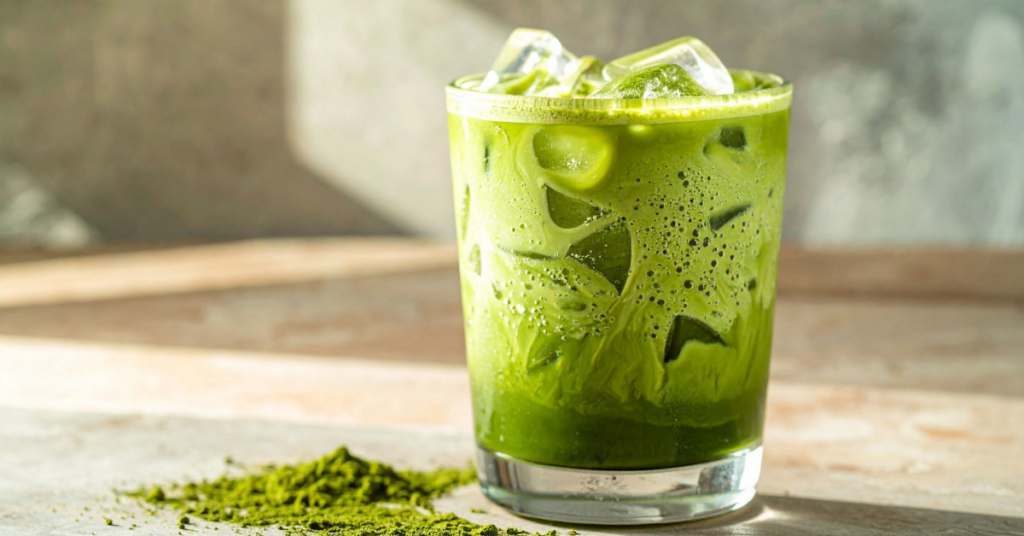
An 8-ounce matcha latte usually contains about 35–70 milligrams of caffeine, with larger or stronger drinks reaching 100 milligrams or more.
If you have ever typed how many milligrams of caffeine are in a matcha latte? into a search box, you already know how confusing the numbers can look. One cafe menu says “light caffeine,” another says “extra matcha shot,” and the drink sizes keep changing. To make sense of it, you need to look at how much matcha powder actually goes into the cup and how that translates into milligrams of caffeine.
Matcha is ground green tea leaves, so you drink the whole leaf, not just an infusion. That means the caffeine in a matcha latte is tied closely to the grams of powder used. Research suggests matcha powder usually contains around 18–45 milligrams of caffeine per gram, with real drinks landing in a fairly wide range, from under 40 milligrams in a small mild latte to well over 100 milligrams in a strong cafe serving.
Quick Answer: How Many Milligrams Of Caffeine Are In A Matcha Latte?
Most home and cafe matcha latte recipes use around 1–3 teaspoons of powder, or roughly 2–6 grams. Using typical lab values for caffeine per gram of matcha, that gives a ballpark range of about 35–180 milligrams per drink, depending on size and strength.
To keep things practical, it helps to group matcha lattes into light, standard, and strong pours. The table below shows common recipes and their estimated caffeine range. These are not strict rules, but they line up well with both home recipes and cafe style drinks.
| Matcha Latte Style | Matcha Powder (Approx.) | Estimated Caffeine (mg) |
|---|---|---|
| Home 8 oz, light | 1 tsp (~2 g) | 35–90 |
| Home 8 oz, standard | 1.5 tsp (~3 g) | 55–135 |
| Home 8 oz, strong | 2 tsp (~4 g) | 70–180 |
| Cafe 12 oz, light | 1–1.5 tsp (2–3 g) | 35–135 |
| Cafe 12 oz, standard | 2 tsp (~4 g) | 70–180 |
| Iced 16 oz, standard | 2–2.5 tsp (4–5 g) | 70–220 |
| Iced 16 oz, extra matcha | 3 tsp (~6 g) | 110–260 |
These ranges assume matcha powder with roughly 18–44 milligrams of caffeine per gram, which matches recent lab data and summary ranges from health writers who track matcha caffeine closely.
Matcha Latte Caffeine Milligrams By Size And Recipe
Now that you have a quick overview, it helps to zoom in on where those numbers come from. A matcha latte is not a single fixed drink. “How many milligrams of caffeine are in a matcha latte?” depends on three main levers: serving size, grams of matcha per serving, and how your barista or recipe builder likes to mix the drink.
Serving Size And Cafe Portion Habits
Most cafes offer matcha lattes in at least two sizes, often around 8–12 ounces for hot drinks and 12–16 ounces for iced. Milk and ice take up a lot of that volume. The actual matcha dose does not always scale in a straight line with cup size, but bigger cups still tend to contain more powder, so they often carry more caffeine.
Many chains use a scoop system for matcha powder. A small hot latte might use one scoop, a medium uses two, and an iced large can carry two or three. Each scoop usually equals about 1–1.5 teaspoons, so every extra scoop stacks another 30–90 milligrams of caffeine on top of the base drink, depending on the strength of the powder.
Amount Of Matcha Powder Per Drink
The grams of matcha powder in the cup matter more than anything else. Lab tests and detailed guides report that matcha powder typically contains somewhere around 18.9–44.4 milligrams of caffeine per gram, with some variation from batch to batch.
Put that into real drinks and you get this picture:
- 2 grams matcha (about 1 teaspoon) – roughly 35–90 mg caffeine.
- 3 grams matcha (about 1.5 teaspoons) – roughly 55–135 mg caffeine.
- 4 grams matcha (about 2 teaspoons) – roughly 70–180 mg caffeine.
Those figures match well with guides that frame an 8-ounce matcha drink at around 60–70 milligrams of caffeine on average, and stronger cups reaching higher values.
Matcha Grade, Water Ratio, And Milk Style
Matcha grade changes caffeine a little, but not as much as serving size. Higher grade matcha often has slightly more amino acids and may be whipped with less liquid for a more intense base, so the sip can feel stronger even if the caffeine per gram is similar.
Brewing style matters as well. A latte that starts with a thick, traditional matcha whisked in a small amount of hot water can taste bolder than one made by shaking powder straight into milk. Since you still drink the full powder dose in each case, the caffeine total stays tied to grams of matcha, not just the flavor strength.
Milk choice, sweeteners, and flavor syrups do not add caffeine here. They change calories and texture, but the matcha powder still carries nearly all of the caffeine load.
How Many Milligrams Of Caffeine Are In A Matcha Latte Compared With Coffee?
When people ask how many milligrams of caffeine are in a matcha latte?, they often want to know how that compares with a regular coffee habit. In rough terms, a standard matcha latte lands below a strong coffee but well above plain brewed green tea.
The figures below combine data from recent matcha caffeine summaries with broad caffeine ranges for common drinks.
| Drink Type | Typical Serving | Approx. Caffeine (mg) |
|---|---|---|
| Matcha latte, mild | 8 oz, ~2 g matcha | 35–90 |
| Matcha latte, strong | 12 oz, 3–4 g matcha | 70–180 |
| Brewed coffee | 8–12 oz | 80–150 |
| Espresso shot | 1 oz | 60–75 |
| Black tea | 8 oz | 40–70 |
| Green tea (non-matcha) | 8 oz | 20–45 |
| Cola or soft drink | 12 oz | 20–45 |
So a modest 8-ounce matcha latte can sit in the same caffeine range as a small brewed coffee, while a large, extra-strong matcha latte can easily rival or exceed a tall drip coffee. The difference many people feel is linked less to the raw caffeine number and more to matcha’s mix of caffeine with the amino acid L-theanine, which is known for a calmer, more even energy curve.
Safe Daily Caffeine Limits And Matcha Lattes
Once you know how many milligrams of caffeine are in your usual matcha latte, the next step is to see where that fits against daily caffeine limits. Guidance from the U.S. Food and Drug Administration frames 400 milligrams of caffeine per day as a level that is not generally linked with negative effects in healthy adults.
If your go-to drink is a mild 8-ounce matcha latte with around 40–70 milligrams of caffeine, that can leave room for several cups in a day before you reach that 400 milligram mark. A large, strong matcha latte can carry 150 milligrams or more, so two or three of those can bring you close to that daily limit.
Some groups need a lower ceiling. Pregnancy, certain heart conditions, and some medications can change how the body handles caffeine. Large reviews and medical centers both point out that people in these groups may need tighter limits and tailored advice from a clinician who knows their history.
For a general reference, you can check the FDA’s consumer update on caffeine, which lays out common serving ranges and explains why sensitivity differs from one person to another. Linking your own matcha latte habit to that chart gives you a clear view of where you stand in a typical day.
To read that overview, see the FDA guidance on daily caffeine intake.
How To Estimate Caffeine In Your Own Matcha Latte
Labels for matcha often do not show exact caffeine values, and cafe menus rarely list milligrams, so a simple way to estimate can help. You can get a useful ballpark number with a short checklist.
Step 1: Find Out How Many Scoops Or Teaspoons
Ask your barista how many scoops or grams of matcha go into each cup size, or check the back of your matcha tin at home. Many brands list serving size in grams and offer a rough caffeine range per serving. Health writers who compile matcha data often use about 2 grams per teaspoon as a working average, which fits well with lab tests.
Step 2: Use A Simple Caffeine Range Per Gram
A practical rule of thumb is to assume around 20–40 milligrams of caffeine per gram of matcha. The true value for your specific tin might sit slightly outside that window, but this range lines up with recent research and careful summaries from nutrition writers.
So if your drink uses 3 grams of matcha and you pick a midpoint of 30 milligrams per gram, you land around 90 milligrams of caffeine for that latte.
Step 3: Adjust For Size, Extra Scoops, And Other Drinks
If you switch from a small hot latte to a large iced one with an extra scoop, your caffeine intake can double quickly. Add that to other drinks in your day, such as coffee, tea, or soda, and you can see how close you are to the 400 milligram daily mark.
Verywell Health’s matcha caffeine overview breaks down these ranges in more detail and is a handy reference when you want hard numbers for grams and cup sizes.
For a closer look at those ranges, see Verywell Health on matcha caffeine levels.
How To Order Or Make A Matcha Latte With Less Or More Caffeine
Once you understand how the grams add up, you can shape your matcha latte toward a gentler or stronger caffeine hit without giving up the flavor you like.
Tips For A Milder Matcha Latte
- Choose the smallest cup size first. A short or 8-ounce cup usually carries the lowest caffeine load.
- Ask for “one scoop only.” In many cafes, that trims caffeine more than any milk change.
- Thin the base a little. Use the same scoop of matcha with more milk and ice instead of adding more powder.
- Avoid stacking other high-caffeine drinks. If you start the day with coffee, pick a lighter matcha latte later on.
Tips For A Stronger Matcha Latte
- Add an extra half scoop instead of a huge jump. That raises caffeine without pushing the drink over the top.
- Pick a smaller cup with more powder. A short, rich latte can feel punchy without loading on extra milk or sugar.
- Whisk thoroughly. A well-mixed base can taste bolder, so you may not need another full scoop.
In both cases, keep an eye on your total daily caffeine intake, not just the grams in one latte. Two strong matcha lattes plus coffee and soda can bring you close to guideline levels faster than you might expect.
Who Should Be Extra Careful With Matcha Latte Caffeine?
Most healthy adults can enjoy matcha lattes in moderation within the 400 milligram daily guideline, but some people may need a softer limit or even avoid caffeine. Medical reviewers and large safety assessments point out that pregnancy, some heart rhythm issues, certain anxiety conditions, and a range of medications can change the way caffeine feels and behaves in the body.
If you notice trouble sleeping, a racing heart, shakiness, or stomach upset after matcha lattes, that is a sign to dial back the dose, shrink the cup, or move your drink earlier in the day. Caffeine sensitivity is personal, so two people can drink the same latte and feel very different results.
For anyone with a medical condition or who is pregnant or breastfeeding, checking caffeine plans with a qualified clinician is the safest route. Bring rough numbers like the ones in this guide to that visit, so you can talk through matcha latte caffeine in concrete terms rather than guessing.
Once you know how many milligrams of caffeine are in your usual matcha latte and how that fits your daily limit, you can enjoy the drink with a lot more confidence. The grams of matcha in the cup set the range, and with a little attention to serving size and scoops, you can steer that range toward the steady lift that suits your own day.