
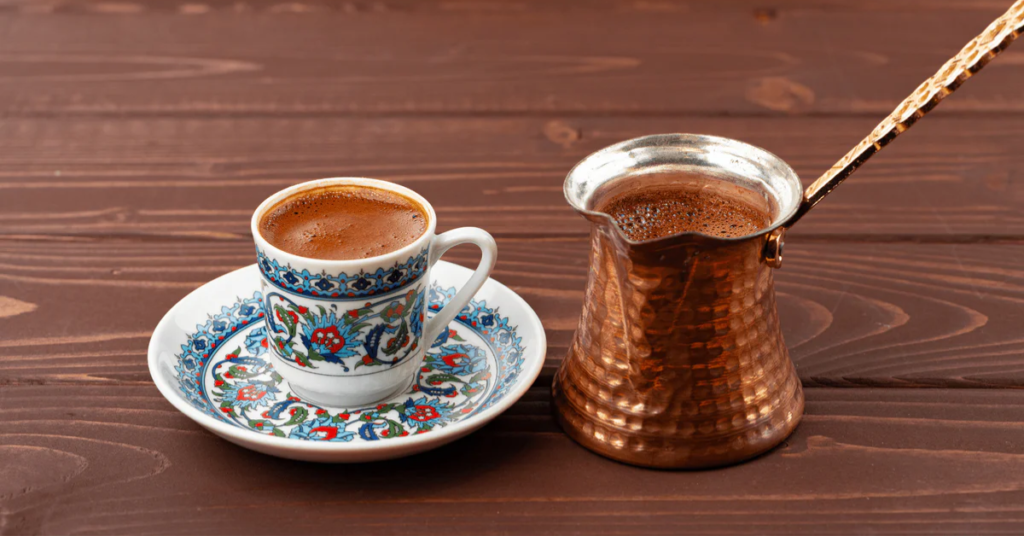
A small 60 ml cup of Turkish coffee usually holds around 50–80 milligrams of caffeine, though recipes, beans, and cup size can push that range higher.
Turkish coffee has a bold taste and a long history, so questions about its strength never stop. When someone asks how many milligrams of caffeine are in turkish coffee, they usually want a clear range, how it compares to other drinks, and how many tiny cups still keep them in a safe zone for the day.
This drink is brewed with very finely ground coffee simmered in a small pot, often with sugar, then poured unfiltered into a demitasse. Because the grounds stay in the cup and the liquid is dense, the caffeine level in Turkish coffee sits on the higher side for the volume you drink.
Typical Caffeine Range In Turkish Coffee Cups
Most data sets and brand information point to a similar picture. A classic 50–70 ml cup of Turkish coffee often lands between 50 and 80 milligrams of caffeine, with some stronger brews rising beyond that when the cup size grows or the recipe uses extra coffee per serving.
One well known Turkish coffee brand reports about 60 milligrams of caffeine in a 65 ml cup, which lines up with other lab based estimates for this brewing style.brand data
| Cup Size (Approximate) | Brew Style | Estimated Caffeine (mg) |
|---|---|---|
| 40 ml very small cup | light dose, single simmer | 35–55 |
| 50 ml small cup | standard dose, single simmer | 50–65 |
| 60 ml classic cup | standard dose, double simmer | 55–80 |
| 70 ml full demitasse | heaped spoon of coffee | 70–100 |
| 80 ml larger cup | strong dose, long simmer | 80–115 |
| 90 ml large cup | extra ground coffee | 90–130 |
| Decaf Turkish style | decaffeinated beans | <5–15 |
These numbers sit in the same ballpark as other careful estimates, which usually list a 60–70 ml serving of Turkish coffee at around 50–65 milligrams of caffeine. Different beans and brewing habits shift each cup, yet the general range stays fairly steady across sources.
Since home brewers rarely weigh every ingredient, your cup will not match a lab report exactly. Treat the ranges as a working map that helps you judge how strong each serving feels for your body.
How Many Milligrams Of Caffeine Are In Turkish Coffee? By Brew Strength
So, how many milligrams of caffeine are in Turkish coffee when you change the dose or cup size? The answer moves with several brewing choices, especially how much ground coffee you spoon into the pot and how long the drink simmers.
Grind Size, Coffee Dose, And Brewing Style
Turkish coffee uses an ultra fine grind, almost like powder. This large contact area lets water pull caffeine from the grounds very quickly. A common recipe starts with a heaped teaspoon of coffee per 60 ml of water, which already creates a dense brew.
If you add more coffee per cup, run the boil for longer, or pour slightly larger servings, each demitasse can easily slide toward the upper end of the range in the first table. Strong house recipes that use generous scoops can nudge a 70–90 ml serving past 100 milligrams.
Bean Variety And Roast Level
Most Turkish coffee blends rely on Arabica beans, sometimes with a share of Robusta. Robusta beans usually carry more caffeine by weight, so blends with a higher Robusta ratio tend to brew stronger cups at the same dose.
Roast level matters as well. Darker roasts lose a small amount of mass but not much caffeine, which means a scoop of very dark beans can deliver slightly more caffeine than the same scoop of lighter beans, simply because more beans fit into the spoon.
Sweeteners And Flavorings
Many people brew Turkish coffee with sugar already in the pot or add cardamom and other spices. These ingredients change taste and aroma but do not raise the caffeine level. They can, however, mask the strength, so a sweet cup might still deliver a serious caffeine hit.
Milligrams Of Caffeine In Turkish Coffee Versus Other Drinks
To understand where Turkish coffee sits on the spectrum, it helps to compare it with drinks you might already track. A small demitasse can feel mighty, yet the total caffeine content may stay lower than a full mug of regular brewed coffee.
Many nutrition and health agencies mention that brewed coffee often carries around 95 milligrams of caffeine per 240 ml mug, while a single espresso shot tends to land near 60–75 milligrams in 30 ml. These figures give you a simple yardstick for judging how Turkish coffee fits into your day.
How Turkish Coffee Compares Cup For Cup
Because Turkish coffee comes in smaller cups, the raw caffeine per serving is often similar to a single espresso or a small brewed coffee, even though the flavor feels more intense. A 60 ml cup with 60–80 milligrams of caffeine lines up with many espresso servings, but at half the liquid volume.
When you stretch that to two or three cups across a morning, total intake starts to resemble several mugs of filter coffee. For someone who drinks both Turkish coffee and other caffeinated drinks in the same day, those numbers add up quickly.
Comparing Caffeine Density
Caffeine density looks at how much caffeine you drink per milliliter of liquid. A typical mug of filter coffee sits around 0.4 milligrams per milliliter. Turkish coffee often sits in the 0.8–1.25 milligrams per milliliter range, which explains why one sip feels so powerful.
Energy drinks and strong teas fall somewhere in the middle. A standard can of energy drink or a tall glass of black tea usually carries less caffeine per milliliter than a concentrated Turkish coffee, even if total caffeine per can or glass can be similar or higher.
Safe Daily Caffeine Limits With Turkish Coffee
Global health bodies spend a lot of time reviewing caffeine safety. European food safety panels state that up to about 400 milligrams of caffeine per day from all sources appears safe for most healthy adults, while pregnant people are often advised to stay closer to 200 milligrams or less.EFSA caffeine opinion
Translating that into Turkish coffee servings, a healthy adult who does not have caffeine sensitivity might stay within common guidance by keeping total intake around four to six small cups per day, depending on brew strength and other drinks in the mix.
| Daily Pattern | Example Drinks | Approx Total Caffeine (mg) |
|---|---|---|
| Light Turkish coffee day | 1 small cup Turkish, 1 black tea | 90–130 |
| Moderate Turkish coffee day | 2 small cups Turkish | 120–160 |
| Mixed coffee day | 1 Turkish, 1 brewed coffee | 140–190 |
| Heavy Turkish coffee day | 3 strong cups Turkish | 210–270 |
| High but still typical day | 2 Turkish, 1 energy drink | 250–320 |
| Near upper guidance day | 3 Turkish, 1 brewed coffee | 320–400 |
| Pregnancy style limit | 1 Turkish, mostly caffeine free drinks | 60–120 |
Everyone processes caffeine at a different pace. Genetics, liver health, medication, and sleep patterns all shape how wired you feel after each serving. Some people feel alert and steady on several cups, while others notice jitters, a racing pulse, or broken sleep after just one.
If you notice side effects such as restlessness, fast heartbeat, stomach upset, or sleep trouble, scaling back your Turkish coffee servings or spreading them across the day can help. People with heart rhythm issues, high blood pressure, or anxiety often need tighter personal limits and should check with a health professional before raising their intake.
Practical Tips For Enjoying Turkish Coffee Caffeine Safely
Once you know the typical milligrams of caffeine in Turkish coffee, it becomes much easier to plan your day. You can decide how many small cups fit your schedule and your body, rather than guessing and feeling wired late at night.
Set A Personal Caffeine Budget
Many adults feel comfortable picking a daily ceiling such as 200, 300, or 400 milligrams and then counting cups against that figure. With Turkish coffee, think in units of roughly 60–80 milligrams per small serving and leave some room for tea, chocolate, or soft drinks.
Keeping a simple note on your phone for each cup you drink during the day can also keep you honest about totals, especially when café visits stack up quickly daily.
Time Your Cups Wisely
Drinking Turkish coffee late in the day can push caffeine close to bedtime, which tends to shorten sleep or make it lighter. Keeping your last cup at least six hours before you plan to sleep often helps your body wind down more smoothly.
Watch Sugar And Add Ons
Sweet, rich Turkish coffee pairs easily with desserts and snacks. Sugar does not alter caffeine, yet it can strain blood sugar and dental health when servings pile up. If you drink several cups a day, balancing sweet and unsweetened versions may keep the habit easier on your body.
So, How Many Milligrams Of Caffeine Are In Turkish Coffee Overall?
Put simply, a single 50–70 ml cup of Turkish coffee usually holds somewhere around 50–80 milligrams of caffeine, with stronger recipes and larger cups climbing toward 100 milligrams or more.
When you see the question how many milligrams of caffeine are in turkish coffee, the real answer is a range shaped by cup size, coffee dose, bean blend, and brewing style. Understanding that range helps you enjoy the deep flavor of this drink while still staying within daily caffeine limits that fit your health and routine.