
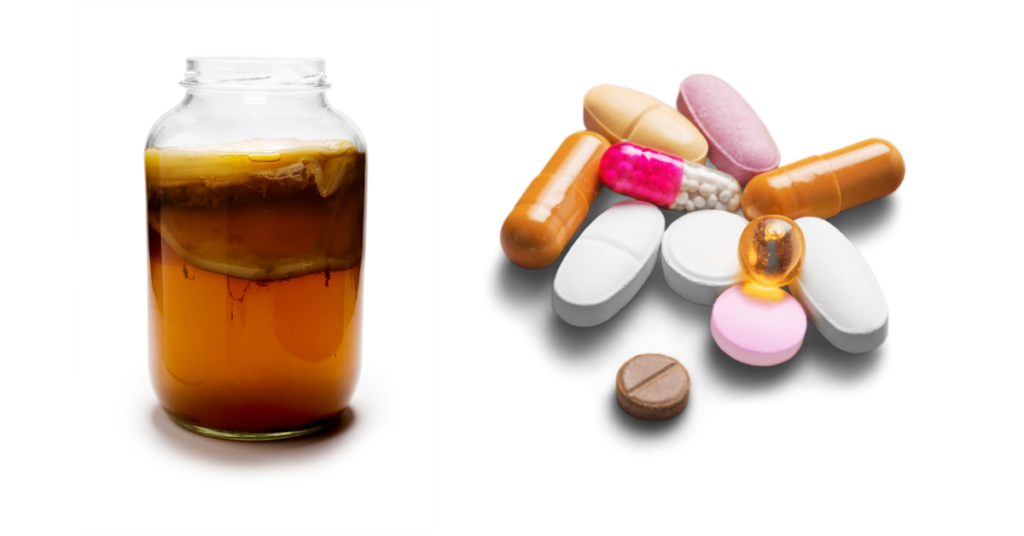
Yes, you can generally drink kombucha while taking antibiotics, but you must wait at least two hours after your dose to prevent the medication from killing the beneficial probiotics.
You just picked up a prescription for antibiotics, and your first thought goes to your stomach. We all know that while these drugs knock out infections, they often take the good gut bacteria down with them. It feels natural to reach for a bottle of kombucha to counteract that damage. This fizzy, fermented tea is famous for its probiotic content, so it seems like the perfect companion to a course of strong medication.
However, mixing fermented foods with medical treatments is rarely straightforward. You have timing issues to consider, potential chemical interactions, and the surprising reality that some antibiotics simply do not mix well with even the trace amounts of alcohol found in fermented drinks. You want to heal your infection without wrecking your digestive system, and getting the details right matters.
Can I Drink Kombucha While Taking Antibiotics?
The short answer is usually yes, but timing is everything. If you drink kombucha at the exact same time you swallow your antibiotic pill, you likely waste your money. Antibiotics are powerful bacteria killers. They cannot distinguish between the “bad” bacteria causing your sinus infection and the “good” bacteria living in your bottle of GT’s or Health-Ade.
When you consume them together, the medication neutralizes the probiotics before they ever have a chance to colonize your gut. To get any benefit, you need a strategy. Most pharmacists and nutrition experts recommend a buffer zone. A gap of two to four hours between taking your medication and drinking your probiotic tea allows the antibiotic to absorb into your bloodstream and start working systemically, lowering the concentration in your stomach when the probiotics arrive.
You also need to verify which specific medication you are taking. While most antibiotics interact harmlessly with fermented tea, a few classes of drugs have severe reactions to alcohol. Since kombucha is a fermented product, it naturally contains trace amounts of alcohol. For most people, this is negligible, but for certain prescriptions, it can cause illness.
Understanding Antibiotic Classes And Kombucha Risks
Not all antibiotics work the same way. Some target cell walls, while others stop bacteria from reproducing. Knowing which class of drug you are on helps you decide if that bottle of fermented tea is safe or if you should stick to water until your course finishes.
The table below breaks down common antibiotic categories and how they typically interact with fermented beverages like kombucha. This helps you spot potential red flags before you sip.
Common Antibiotic Interactions With Fermented Drinks
| Antibiotic Class | Interaction Risk Level | Safety Recommendation |
|---|---|---|
| Penicillins (Amoxicillin, Penicillin V) | Low | Safe to drink. Maintain a 2-hour gap to protect probiotics. |
| Cephalosporins (Cephalexin, Cefdinir) | Low to Moderate | Generally safe. Watch for stomach upset as these can be harsh on the gut. |
| Nitroimidazoles (Metronidazole, Tinidazole) | High (Danger) | Avoid completely. Blocks alcohol metabolism, causing severe vomiting/nausea. |
| Tetracyclines (Doxycycline, Minocycline) | Moderate | Dairy interferes with these, but water-based kombucha is okay. Watch for acidity issues. |
| Fluoroquinolones (Ciprofloxacin, Levofloxacin) | Moderate | Avoid caffeine-heavy kombucha. These drugs amplify caffeine effects, causing jitters. |
| Macrolides (Azithromycin, Clarithromycin) | Low | Safe to drink. Space out consumption to reduce nausea risks. |
| Sulfonamides (Bactrim, Septra) | Low | Drink plenty of plain water alongside kombucha to prevent kidney crystals. |
| Oxazolidinones (Linezolid) | High (Danger) | Avoid. Acts as an MAOI; tyramine in aged/fermented foods can spike blood pressure. |
The Alcohol Connection: When To Abstain
You might not think of kombucha as an alcoholic beverage, but fermentation always produces alcohol as a byproduct. Commercial kombucha usually stays under 0.5% ABV to remain classified as non-alcoholic, but home-brewed versions can climb higher. Under normal circumstances, your body processes this tiny amount without you noticing. However, antibiotics like Metronidazole (often sold as Flagyl) and Tinidazole change the rules completely.
These specific drugs inhibit an enzyme usually responsible for breaking down alcohol in your liver. If you introduce even a small amount of alcohol—like the traces in kombucha—while on these drugs, you can experience a “disulfiram-like reaction.” The symptoms are nasty: flushing, throbbing headache, shortness of breath, and violent vomiting. It is similar to the reaction caused by medication used to treat chronic alcoholism.
If your doctor prescribes one of these nitroimidazoles, you must pause your kombucha habit immediately. You should wait at least 48 to 72 hours after your final dose before resuming any fermented drinks. It simply isn’t worth the risk of a severe physical reaction.
Probiotic Strains Vs. Antibiotic Potency
One common question is whether the specific bacteria in kombucha are tough enough to survive a course of antibiotics. Kombucha typically contains strains like Gluconacetobacter, Lactobacillus, and varying types of yeast like Saccharomyces.
Antibiotics target bacteria, but they generally do not kill yeast. This is where kombucha offers a unique advantage over a standard bacterial probiotic pill. The beneficial yeasts, particularly Saccharomyces boulardii (often found in fermented drinks), are naturally resistant to antibiotics. While your medication might wipe out the bacterial component of the drink, the yeast component survives and can help maintain intestinal barrier function and reduce the risk of antibiotic-associated diarrhea.
To maximize the bacterial survival rate, follow the spacing rule religiously. Taking a few sips of kombucha throughout the day is better than chugging a whole bottle at once. This constant, low-level introduction of beneficial microbes gives them a better chance of finding a foothold in your digestive tract during the windows when antibiotic levels in your gut are lowest.
Managing Acidity And Stomach Upset
Antibiotics often come with a side order of nausea, heartburn, or stomach pain. They can strip the protective mucous lining of the stomach or simply irritate the tissue. Kombucha is acidic, with a pH usually between 2.5 and 3.5. For a healthy stomach, this acidity aids digestion. For a stomach already irritated by strong medication, it can add fuel to the fire.
If you notice burning sensations or increased nausea after drinking your tea, listen to your body. You might need to dilute the kombucha with water or switch to a less acidic probiotic source, like a capsule or a high-quality yogurt (if dairy is allowed with your specific prescription). You never want to aggravate an already sensitive system. It is smart to drink your kombucha with a small meal rather than on an empty stomach to buffer that acidity.
Histamine Intolerance Risks
A lesser-known side effect of antibiotic use is the temporary disruption of DAO, an enzyme that breaks down histamine in the body. When your gut flora is decimated, your ability to process histamine from food can drop. Fermented foods like sauerkraut, kimchi, and kombucha are naturally high in histamine.
If you suddenly develop headaches, skin flushing, or a runny nose after drinking kombucha while on medication, you might be experiencing temporary histamine intolerance. This isn’t an allergic reaction to the drug, but a functional issue caused by the lack of gut bacteria. In this case, you should stop drinking fermented beverages until you finish your course and give your gut a week or two to recover.
Caffeine Interactions With Fluoroquinolones
Many people forget that kombucha is brewed from black or green tea, meaning it contains caffeine. While the amount is lower than coffee (usually 10-15mg per serving), it is still present. This becomes relevant if you are prescribed antibiotics from the fluoroquinolone class, such as Ciprofloxacin (Cipro) or Levofloxacin (Levaquin).
These drugs inhibit the metabolism of caffeine. This means the caffeine stays in your system much longer than normal, leading to increased heart rate, anxiety, and insomnia. If you are taking these specific medications, even the mild caffeine kick from kombucha might feel like a triple shot of espresso. Switching to a water kefir or a caffeine-free probiotic supplement is a safer choice during treatment.
Alternatives To Kombucha During Treatment
If you find that kombucha is too acidic or risky during your treatment, you have other options. The goal is to keep the microbiome diverse without causing interactions.
- Water Kefir: Similar to kombucha but often less acidic and caffeine-free.
- Probiotic Capsules: Easier to time specifically two hours after a dose. Look for strains like Lactobacillus rhamnosus GG.
- Miso Soup: Provides probiotics in a warm, soothing format that is gentle on an upset stomach.
- Prebiotic Foods: Instead of adding bacteria, feed the ones you have left with garlic, onions, and bananas.
Strategic Timing For Best Results
You have decided to proceed. How do you schedule your day? Let’s say you have to take your antibiotic twice a day, at 8:00 AM and 8:00 PM. Here is a sample schedule that maximizes safety and probiotic survival:
- 8:00 AM: Take Antibiotic with water and food (if required).
- 10:30 AM: Drink half a serving of kombucha. The antibiotic has moved out of the stomach.
- 2:00 PM: Lunch with prebiotic fiber.
- 8:00 PM: Take Antibiotic dose.
- 10:30 PM: Small probiotic snack or sip (optional), or just rest.
This staggered approach ensures that the antibiotic hits the infection hard, while the probiotics slip in during the safe windows to do repair work.
Comparing Probiotic Sources
Is kombucha actually the best tool for this job? Sometimes a targeted supplement works better than a beverage. The table below compares kombucha against other common probiotic sources so you can choose the right tool for your gut rehabilitation.
Kombucha Vs. Other Probiotic Options
| Probiotic Source | Typical Colony Forming Units (CFU) | Pros and Cons During Antibiotics |
|---|---|---|
| Kombucha | Varied (Millions to Billions) | Pros: Contains beneficial yeast. Cons: Acidity, alcohol trace, caffeine content. |
| High-Potency Capsules | 10 Billion to 50 Billion+ | Pros: Consistent dose, no alcohol, acid-resistant coating. Cons: Can be expensive, pill fatigue. |
| Yogurt / Kefir (Dairy) | Billions | Pros: Soothing on stomach. Cons: Calcium can block absorption of tetracyclines. |
| Sauerkraut (Raw) | Millions | Pros: High fiber + bacteria. Cons: High sodium and histamine levels. |
| Probiotic Soda | Varied (Often added Bacillus coagulans) | Pros: Caffeine-free usually. Cons: Often high sugar, lower strain diversity. |
Rebuilding Gut Health After The Course
Once you swallow that final pill, your work isn’t done. In fact, the week following your antibiotic course is the most important time for drinking kombucha. Your gut is like a cleared garden plot—empty and ready for seeds. If you don’t plant flowers (good bacteria), weeds (bad bacteria or yeast) will take over.
You can increase your kombucha intake slightly during this post-antibiotic phase. The yeast and bacteria will help re-acidify the gut environment, making it hospitable for native flora to return. Combine this with a diet rich in diverse plant fibers. The National Center for Complementary and Integrative Health suggests that while probiotics are helpful, dietary diversity is the strongest predictor of a healthy microbiome.
Focus on “polyphenols”—compounds found in berries, nuts, and green tea—which also act as fuel for your good bacteria. Since kombucha is tea-based, it provides a double dose of support: the microbes themselves and the polyphenols from the tea leaves.
Can I Drink Kombucha While Taking Antibiotics? A Final Safety Check
Before you open that bottle, do a quick mental checklist. Is your antibiotic on the “no alcohol” list (Metronidazole/Tinidazole)? Are you taking a drug that interacts with caffeine (Cipro)? Do you feel nauseous already?
If you pass these checks, then yes, incorporating fermented tea is a smart move. It provides a source of live cultures that may help mitigate the collateral damage in your intestines. Just remember that it is not a magic shield. You still need to rest, hydrate with plain water, and follow your doctor’s instructions for the full course of medication.
Watch Out For Sugar Content
One detail often overlooked is the sugar in commercial kombucha. Bad bacteria and yeast (like Candida) thrive on sugar. Antibiotic use can sometimes lead to Candida overgrowth because the bacterial competition is dead. If you drink a brand of kombucha loaded with 15 or 20 grams of sugar per bottle, you might inadvertently feed the yeast overgrowth you are trying to prevent.
Read the label closely. Look for brands that have lower residual sugar, ideally under 6-8 grams per serving. This ensures you get the sour, fermented benefits without dumping a fuel source for opportunistic organisms into your compromised digestive tract.
Home Brew Safety During Treatment
If you brew your own kombucha, exercise extra caution while you are sick. Your immune system is already distracted fighting an infection. Home brews are wild ferments, meaning there is a higher risk—however small—of contamination compared to controlled commercial environments. The CDC warns that people with compromised immune systems should be wary of unpasteurized foods.
While you are actively taking antibiotics and your body is under stress, it might be safer to stick to a trusted commercial brand that undergoes regular safety testing. Save your home brew for when you are back to 100% health and your immune defenses are fully operational.
Why Your Doctor Might Not Mention It
Doctors focus primarily on clearing the infection. They may not discuss diet or probiotics unless you ask. This doesn’t mean diet doesn’t matter. It just means the medical priority is the acute illness. Taking the initiative to support your gut is up to you. By understanding the interactions we covered—like the caffeine issue with fluoroquinolones or the dairy block with tetracyclines—you become an active participant in your recovery rather than a passive patient.
Drinking kombucha can be a refreshing part of that recovery process. It tastes good, it feels proactive, and assuming you navigate the timing and drug interactions correctly, it offers tangible benefits for your gut health. Keep the timing gap wide, check your labels, and listen to your stomach.