
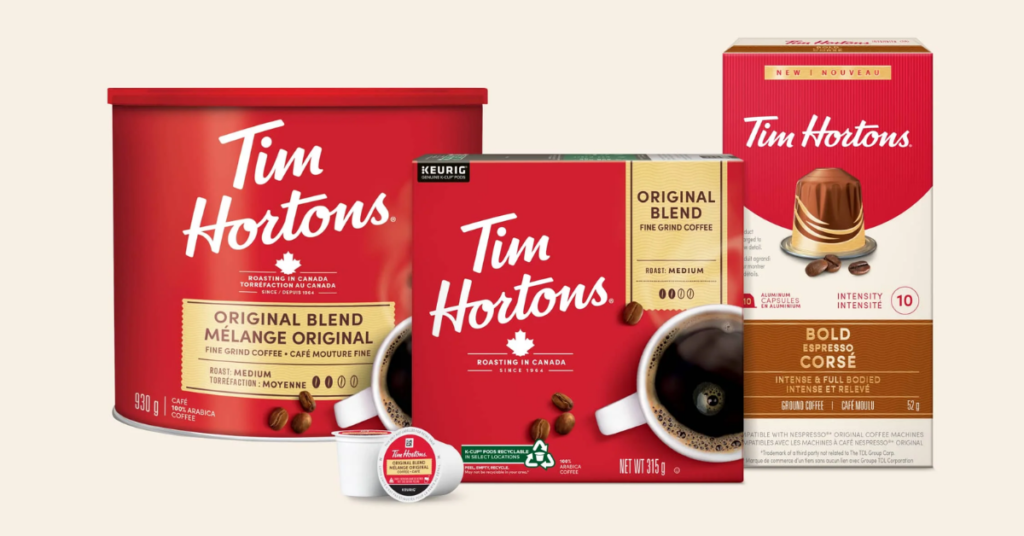
A medium Tim Hortons original blend coffee has about 205 milligrams of caffeine, with other sizes ranging from roughly 80 to 330 milligrams.
How Many Milligrams Of Caffeine Are In Tim Hortons Coffee? By Size
When people ask how many milligrams of caffeine are in tim hortons coffee, they usually want clear numbers by cup size. Tim Hortons brewed original blend is fairly strong for a mainstream chain, and the caffeine jumps quickly as the cup gets larger.
Based on data compiled from Tim Hortons information and independent caffeine testing, you can use the ranges below as a practical guide for brewed original blend coffee in Canada and the United States.
| Brewed Coffee Size | Approximate Volume | Estimated Caffeine (mg) |
|---|---|---|
| Extra Small Original Blend | 8 fl oz (240 mL) | ~80 mg |
| Small Original Blend | 10–12 fl oz (300–355 mL) | ~140 mg |
| Medium Original Blend | 14 fl oz (425 mL) | ~205 mg |
| Large Original Blend | 20 fl oz (563 mL) | ~270 mg |
| Extra Large Original Blend | 24 fl oz (678 mL) | ~330 mg |
| Medium Dark Roast | 14 fl oz (425 mL) | ~195 mg |
| Medium Decaf Coffee | 14 fl oz (425 mL) | ~9 mg |
Numbers like these vary a little by batch and country, yet they line up with figures published by caffeine monitoring sites and past Tim Hortons caffeine reports for brewed coffee sizes and styles.
Original Blend Versus Dark Roast And Decaf
Tim Hortons original blend has slightly more caffeine than the dark roast at the same size, which matches what researchers see with many brands. A large dark roast brewed coffee usually lands near 260 milligrams, while the same large original blend sits close to 270 milligrams of caffeine.
Decaf brewed coffee still carries a small dose. A large decaf from Tim Hortons often has around 12 to 15 milligrams of caffeine, so it is far lower than the regular brews but not zero. People who are very sensitive to caffeine still need to count those small amounts, especially when they add several cups across the day.
How Many Milligrams Of Caffeine Tim Hortons Coffee Contains Per Serving
Another way to look at how many milligrams of caffeine are in tim hortons coffee is to think in terms of caffeine per ounce. A large 20 ounce brewed original blend sits near 270 milligrams of caffeine, which works out to around 13 to 14 milligrams per fluid ounce.
That figure is fairly high for drip coffee. Many brewed coffees sit near 80 to 100 milligrams in an 8 ounce cup, which comes out to around 10 to 12 milligrams per ounce. Tim Hortons brewed original blend leans a little stronger than that average, especially in the larger sizes, so a single large or extra large cup can deliver close to the full daily caffeine limit for some people.
Espresso based drinks at Tim Hortons use shots that hover around 125 milligrams of caffeine per shot. A simple americano or latte built on one shot will usually fall near the same level as a medium brewed coffee, while drinks built on two shots can push past the caffeine in a large brewed cup.
Why Caffeine Numbers Can Shift
Caffeine levels are not carved in stone. Bean origin, grind, water temperature, brew time, and the exact recipe a store follows all nudge the final number up or down from the averages in the table.
Drinks bought in busy locations during rush hours might pour slightly shorter or longer shots than drinks poured in quiet periods. Coffee that sits in a pot also changes concentration as it evaporates. These shifts are usually small, yet anyone tracking caffeine closely should treat posted values as estimates, not lab grade measurements.
Is Tim Hortons Coffee Strong Compared To Regular Coffee?
Many people try to judge whether a cup of Tim Hortons coffee has more caffeine than a basic brewed coffee at home. Most nutrition references place a standard 8 ounce brewed coffee near 80 to 100 milligrams of caffeine, so a medium Tim Hortons brewed coffee at roughly 205 milligrams already lines up with about two home style cups in a single serving.
A large or extra large brewed coffee at Tim Hortons can reach 270 to 330 milligrams of caffeine. That total sits close to three to four regular 8 ounce coffees, which explains why a single big drive thru cup can feel very strong compared with a small mug at the kitchen table.
Compared with many chain lattes or blended drinks, Tim Hortons plain brewed coffee tends to have more caffeine per dollar and per ounce. Once cream, sugar, and flavor syrups enter the picture, caffeine often drops a little while calories climb, so brewed coffee remains the option that delivers the most stimulation for the least add ons.
How Tim Hortons Stacks Up Against Other Chains
Different chains roast and brew their coffee in slightly different ways, yet most large brewed coffees end up somewhere between 200 and 350 milligrams of caffeine. In that context, Tim Hortons sits near the middle to upper end of the range. It is not the strongest coffee available, yet it is strong enough that size and refills matter when someone tracks their daily intake.
This is why many nutrition educators use a large brewed coffee as a simple way to picture a whole day of caffeine. One extra large Tim Hortons brewed coffee gets many adults close to the recommended daily ceiling, so adding energy drinks, colas, or more coffee on top can push the total above comfort level very quickly.
Daily Caffeine Limits And Tim Hortons Cup Counts
Health agencies in Canada and the United States point to about 400 milligrams of caffeine per day as a sensible upper limit for most healthy adults. Health Canada frames this limit across coffee, tea, energy drinks, and other sources, and gives lower advice for people who are pregnant, nursing, or planning a pregnancy.
To keep things simple, many public health pages describe 400 milligrams as roughly three small brewed coffees, or one extra large restaurant coffee plus a little more. For Tim Hortons drinkers, that means a large or extra large brewed coffee can easily take up most of the daily budget on its own, as the numbers on the Health Canada caffeine in foods page make clear.
| Group | Suggested Limit (mg/day) | Tim Hortons Brewed Coffee Equivalents |
|---|---|---|
| Healthy Adults | ~400 mg | About 2 medium or 1 large + 1 small |
| Pregnant, Planning, Or Nursing | ~300 mg | About 1 medium + 1 small brewed coffee |
| Teens | ~2.5 mg per kg body weight | Often no more than 1 small coffee |
| Children | Lower, based on body weight | Often better to avoid brewed coffee |
| Caffeine Sensitive Adults | Highly individual | May need to stick with decaf or half caf |
These limits come from agencies such as Health Canada and the U.S. Food and Drug Administration and are meant as general advice, not medical orders. Anyone with heart rhythm issues, anxiety disorders, reflux, or sleep problems may need a lower personal limit than the numbers in the table.
Caffeine Safety Basics
Too much caffeine can trigger jitters, fast heartbeat, headache, or sleep loss. People who rapidly stack several strong coffees or energy drinks in a short window feel these effects most. Spreading coffee across the day and pairing it with food often softens the peaks.
It also helps to watch hidden caffeine sources. Soft drinks, energy drinks, strong tea, pre workout powders, and over the counter pain tablets often add large doses on top of brewed coffee. A person who drinks one large Tim Hortons coffee in the morning and several colas later in the day can easily pass 400 milligrams of caffeine without realizing it.
Using Official Nutrition Tools For Tim Hortons Coffee
Because recipes and cup sizes change from time to time, anyone who needs exact numbers for health reasons should cross check their usual drink in the current Tim Hortons nutrition tools. You can use the Tim Hortons nutrition explorer to see calories, sugars, and other details for many drinks, and older public caffeine charts can help fill gaps when a specific drink is not shown.
Government health sites that track caffeine in foods also give helpful baselines. They explain how much caffeine sits in a standard brewed coffee, soft drink, or energy drink, and lay out the daily limits for adults, pregnant people, teens, and children in clear tables.
Practical Tips For Managing Caffeine At Tim Hortons
Knowing the caffeine in your Tim Hortons coffee is only half the story. The other half is using that knowledge to match your drink to your day, sleep schedule, and health needs. A few small shifts can keep coffee enjoyable without pushing your system too hard.
Adjust Cup Size And Timing
If a large brewed coffee leaves you wired, the easiest fix is to step down one size. Swapping a large original blend for a medium can trim about 65 milligrams of caffeine, which many people feel as a gentler lift with fewer side effects. Stopping caffeine a few hours before bedtime also makes deep sleep easier.
On heavy days when you still want the flavor, consider spacing two small coffees several hours apart rather than draining one extra large cup in a single stretch. The total caffeine may end up similar, yet the impact on your body often feels smoother.
Use Decaf And Half Caf Smartly
Mixing regular and decaf coffee is a simple way to cut caffeine without giving up the Tim Hortons taste you like. Many people ask staff to fill half the cup with brewed decaf and half with regular coffee, which drops the caffeine to somewhere between the two. This works well for late afternoon visits when a full dose would interfere with sleep.
Full decaf still contains a small amount of caffeine, so anyone with strict limits should count a medium decaf as roughly 6 to 10 milligrams. That number is tiny compared with regular brewed coffee, yet it still matters for people who react strongly even to modest doses.
Match Drink Choice To Your Caffeine Budget
If you already had a strong morning coffee at home, you might treat a Tim Hortons visit later in the day as a place for decaf, tea, or a small specialty drink rather than another large brewed coffee. Reading the menu with caffeine in mind turns each drink into a choice that fits within your daily limit instead of a guess.
When in doubt, a small or medium brewed coffee gives plenty of flavor and alertness for most adults without pushing close to the 400 milligram mark on its own. That way, there is still room for tea, chocolate, or a soft drink during the rest of the day if you want them.